Stepfather and mother accused of abandoning children in Portugal
A stepfather and mother have been formally charged with child abandonment in Portugal.

Setúbal, Portugal
Latest news and stories from Alcácer do Sal.
A stepfather and mother have been formally charged with child abandonment in Portugal.

A Portuguese court has ordered the preventive detention of a French mother and her partner after they allegedly abandoned her two young sons on a roadside near Alcácer do Sal. The couple, identified as Marine Rousseau and Marc Ballabriga, face charges of aggravated abandonment, with the stepfather also accused of physical assault. The children are currently in the care of Portuguese authorities while the legal process determines if the parents will be tried in Portugal or extradited to France.
Update: Stepfather filmed assaulting child in café
New evidence has emerged in the case, including footage from a local café showing the stepfather assaulting one of the young children. This discovery has strengthened the charges of qualified physical assault against him as the couple remains in pre-trial detention.
Preventive detention (prisão preventiva) is a court-ordered measure that keeps a suspect in custody before trial when a judge decides there is a real risk they might flee, tamper with evidence, or pose a danger to others. It is temporary and not a conviction; in the recent case five of the 37 alleged members were ordered to await the investigation in preventive detention by the Central Criminal Investigation Court. Those detained should request a lawyer and can seek consular assistance if they are foreign nationals, while family or lawyers can ask the court to review or lift the measure.

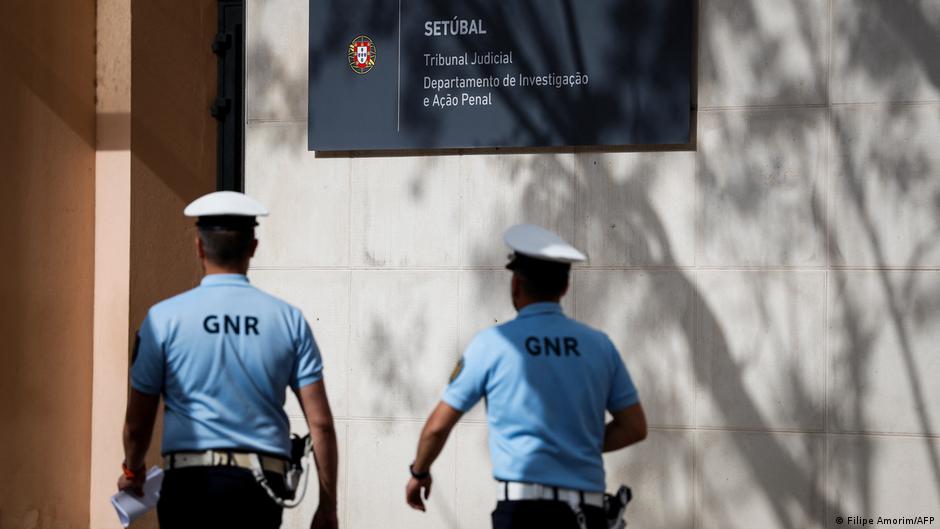
The mother and stepfather of two young French brothers, aged 3 and 5, were arrested by the National Republican Guard (Guarda Nacional Republicana or GNR) in Fátima. The children were found abandoned near a road in Alcácer do Sal earlier this week, and the case is now under investigation by the Judicial Police (Polícia Judiciária or PJ) for suspected domestic violence and child abandonment.

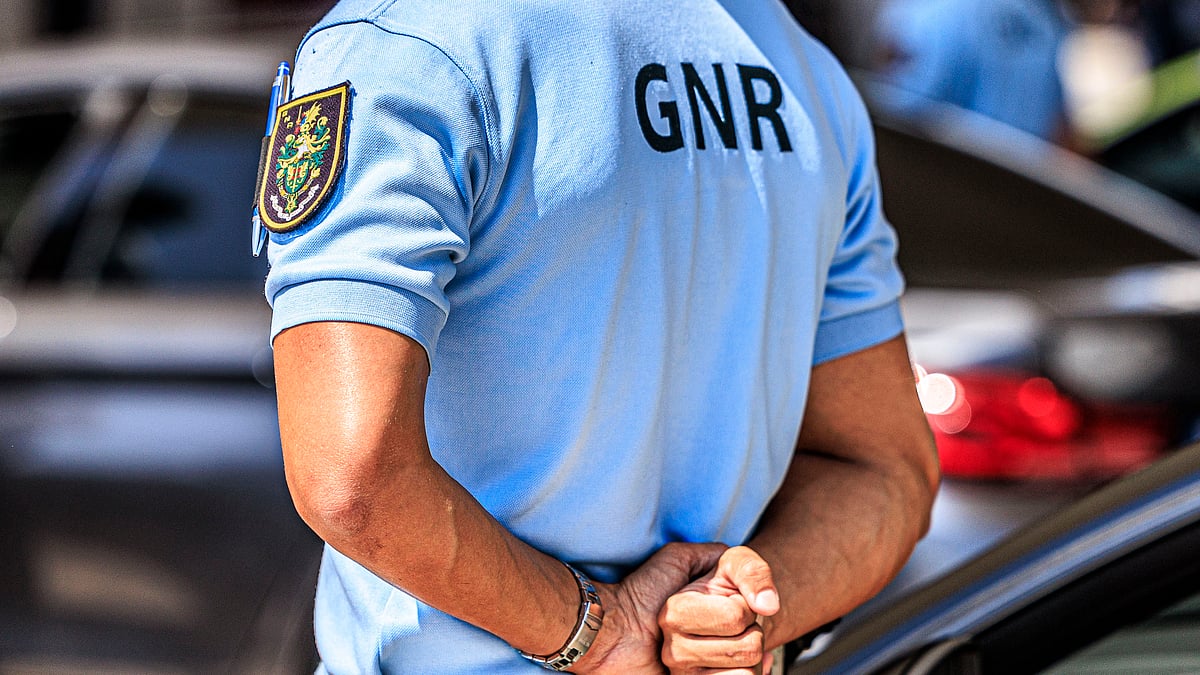
The GNR (Guarda Nacional Republicana) is Portugal's national gendarmerie—a military police force founded in 1911, with origins dating to 1801. With over 22,600 personnel, GNR patrols 94-96% of Portuguese territory, covering rural areas, medium towns, and highways. Members are military personnel subject to military law, responsible for public order, customs, coastal control, environmental protection (SEPNA), firefighting/rescue (GIPS), border control, and ceremonial guards. GNR vs. PSP: The PSP (Polícia de Segurança Pública) is Portugal's civilian police force, covering major cities (Lisbon, Porto, Faro) and large urban areas—only 4% of territory but roughly half the population. PSP handles airport security, diplomatic protection, and private security regulation. Both share core missions (public order, crime prevention), but differ in nature: GNR is military with military training; PSP is civilian with police-focused training.

The PJ (Polícia Judiciária) is Portugal's national criminal investigation police agency, founded in 1945. Operating under the Ministry of Justice and supervised by the Public Ministry (prosecutors), the PJ is a "higher criminal police body" specializing in serious and complex crimes. Mission: The PJ assists judicial and prosecuting authorities by investigating terrorism, organized crime, homicide, kidnapping, drug trafficking, corruption, cybercrime, financial crime, and money laundering. It conducts forensic examinations, operates Portugal's Interpol and Europol liaison offices, and maintains specialized units including the National Counterterrorism Unit and National Anti-Corruption Unit. Difference from PSP/GNR: While PSP (civilian urban police) and GNR (military rural police) focus on preventive policing, public order, and investigating minor crimes, the PJ exclusively handles serious crime investigation requiring specialized technical and scientific expertise. PSP and GNR report to the Ministry of Internal Affairs; PJ reports to the Ministry of Justice. PJ officers receive higher pay and prestige but face greater operational risk.
Two young French brothers, aged three and five, were discovered alone on a road between Alcácer do Sal and Comporta after allegedly being left in a forest by their parents as part of a game. The children were taken to Setúbal Hospital for health checks and are currently under the care of the French embassy while the Public Ministry (Ministério Público) manages the case as an urgent judicial procedure.
The Ministério Público (Public Prosecution Service) is Portugal's independent state prosecution body, responsible for leading criminal investigations, bringing charges, and representing the public interest in court.
The MP operates autonomously from the government and the police, though it directs criminal investigations carried out by the Polícia Judiciária, PSP, and GNR. It is led by the Procurador-Geral da República (Attorney General), who is appointed by the President on the government's proposal.
The MP gets involved in high-profile cases including corruption, financial crime, and incidents of potential institutional negligence. It also defends the legality of government actions and protects citizens' fundamental rights through the courts.

Residents of Alcácer do Sal have recounted distress from recent floods as authorities install housing blocks for displaced people, Correio da Manhã reports. Local services are providing temporary accommodation while recovery and damage assessments continue. Those in the affected area should contact the municipality for assistance and check insurance or emergency support options.

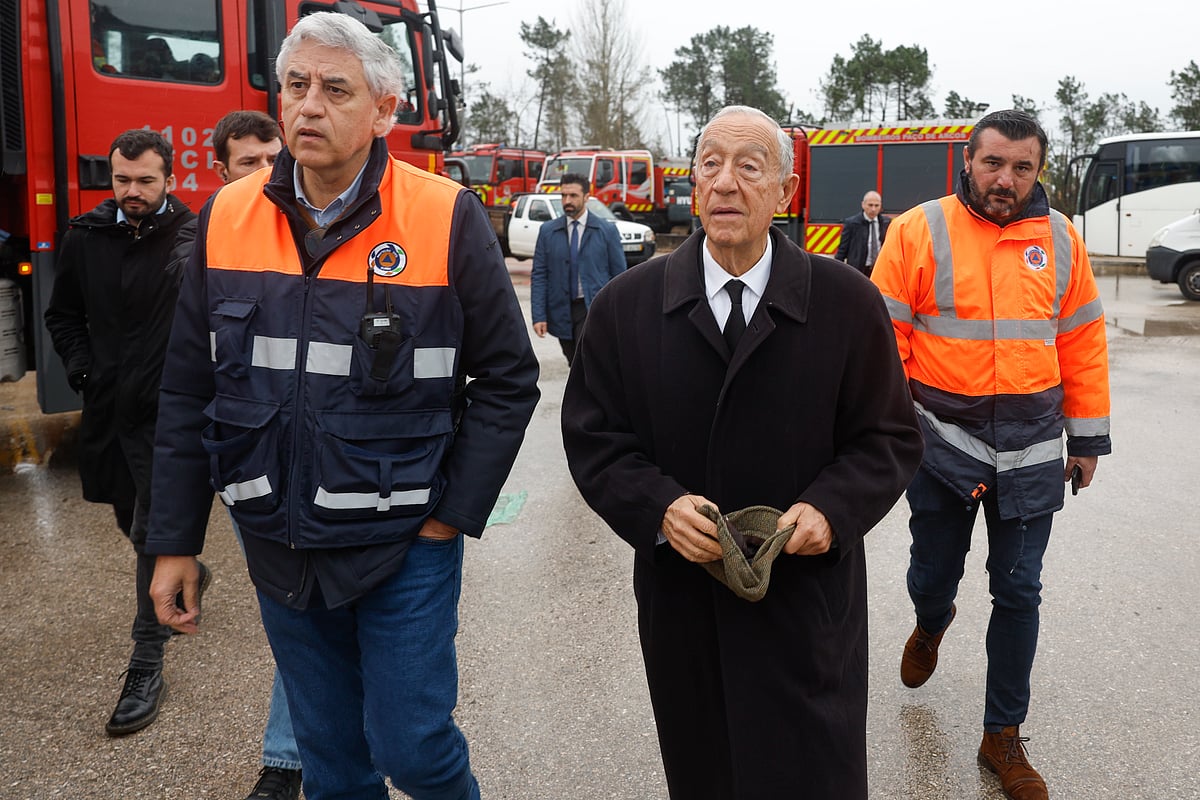
President of the Republic Marcelo Rebelo de Sousa urged starting discussions on a national disaster fund during a visit to flood-hit Alcácer do Sal, saying Portugal lacks a dedicated fund while other countries and the EU have one. He praised local leaders and volunteers, and said worsening storms make planning for collective responses sensible. Residents in flood-prone areas should monitor any proposed fund for details on eligibility and compensation mechanisms.
Update: Marcelo presses government during flood tour
Multiple outlets report the president used a visit to Alcácer do Sal to press the Government and propose a new disaster fund, saying Portugal should follow EU peers that already have such mechanisms. Observador and ECO noted the visit praised local officials and volunteers while also pushing for formal talks on how a fund would work.

Electoral Mandate and Democratic Consensus:
Marcelo Rebelo de Sousa was elected President of Portugal on January 24, 2016, winning 52.0% of the vote in the first round—a decisive victory in a fragmented field. He campaigned as an independent, positioning himself as a unifying figure after years of austerity from Portugal's 2011–14 bailout, promising to repair political divisions and restore national confidence. His campaign emphasized moderation and cross-party consensus, a departure from his decades-long association with the center-right Social Democratic Party (PSD). Upon taking office on March 9, 2016, he suspended his party membership for the duration of his presidency.
His 2021 re-election proved extraordinary: Rebelo de Sousa secured 60.7% of the vote—the third-highest margin in Portuguese presidential electoral history since the 1974 Carnation Revolution. Historically, he became the first candidate ever to win in all 308 municipalities and the vast majority of parishes, ranging from 51.3% in Beja District to 72.16% in Madeira. This unprecedented sweep reflected his broad appeal across social, geographic, and ideological divides.
Constitutional Role and Crisis Leadership:
Portugal operates as a semi-presidential system where the president, while largely ceremonial, exercises meaningful influence over national security, foreign policy, and military affairs as Supreme Commander of the Armed Forces. Rebelo de Sousa leveraged this authority during Portugal's response to the COVID-19 pandemic. In March 2020, he requested parliamentary authorization for a state of emergency—the first nationwide declaration in 46 years of democratic history—to contain the crisis. He voluntarily quarantined after potential COVID-19 exposure in March 2020, and later tested positive in January 2021 while remaining asymptomatic. His measured handling of the pandemic, balancing public health with institutional continuity, contributed to his landslide 2021 re-election.
Diplomatic Engagement and International Presence:
Rebelo de Sousa has conducted extensive state visits representing Portugal's interests across diverse regions: the Vatican, Spain, Mozambique, Morocco, Brazil, Switzerland, Cuba, the United Kingdom, Greece, the United States, and Angola. A notable diplomatic highlight occurred in 2019 when he joined President Emmanuel Macron at the Bastille Day military parade in Paris, representing European military cooperation and the European Intervention Initiative. These engagements positioned Portugal as an active participant in global affairs, particularly regarding colonial history and Atlantic security partnerships.
Colonial Legacy and Historical Accountability:
During his presidency, Rebelo de Sousa has publicly supported making restitution and acknowledging abuses committed during Portugal's colonial history and the country's role in the Atlantic slave trade. This position marked a significant policy shift, as Portugal historically avoided confronting its imperial past compared to other European powers. His stance reflected evolving attitudes within Portuguese society toward historical accountability.
Controversies and Public Criticism:
Rebelo de Sousa's presidency has not been without controversy. In 2023, allegations emerged that he had intervened to expedite treatment for Brazilian twins with Zolgensma, an expensive rare disease medication, raising questions about presidential influence and potential corruption. These claims implicated his son and generated criticism across Portuguese political and media sectors. Additionally, in April 2024, Rebelo de Sousa made controversial remarks comparing the speed of Prime Ministers António Costa and Luís Montenegro using orientalist language that drew public rebuke. In August 2025, he called U.S. President Donald Trump a "Russian asset" at a PSD event, demonstrating his willingness to make provocative foreign policy statements.
Constitutional Constraints and Legacy:
Under Portugal's constitution, Rebelo de Sousa is barred from running for a third consecutive term, meaning his presidency concludes with elections scheduled for January 18, 2026. His decade-long tenure has established him as one of Portugal's most popular recent heads of state, characterized by broad consensus-building and institutional stability. Whether future presidents can replicate his cross-party appeal remains an open question for Portuguese democracy as it enters a new era.
A permanent disaster fund is a government reserve set aside to pay for emergency relief, repairs and reconstruction after natural catastrophes so money is available quickly rather than through ad‑hoc budget measures. Portugal’s government has proposed creating such a fund after recent storms to speed help to affected families and municipalities and to reduce reliance on one-off emergency allocations. Residents, insurers and local councils should follow the legislation because it will change how and when compensation and repair money is released.
The President of the Republic (Presidente da República) is Portugal's head of state, elected by direct popular vote for a five-year term, renewable once. The role is largely ceremonial but carries significant reserve powers that become crucial during political crises.
Key presidential powers include: appointing the Prime Minister (based on election results and parliamentary consultations), dissolving the Assembly of the Republic and calling new elections, vetoing legislation (which parliament can override), referring laws to the Constitutional Court, and declaring states of emergency.
The President also represents Portugal internationally, serves as Commander-in-Chief of the armed forces, and plays a moderating role in political disputes. António José Seguro has served as President since March 2026, following the two-round presidential election in January 2026.