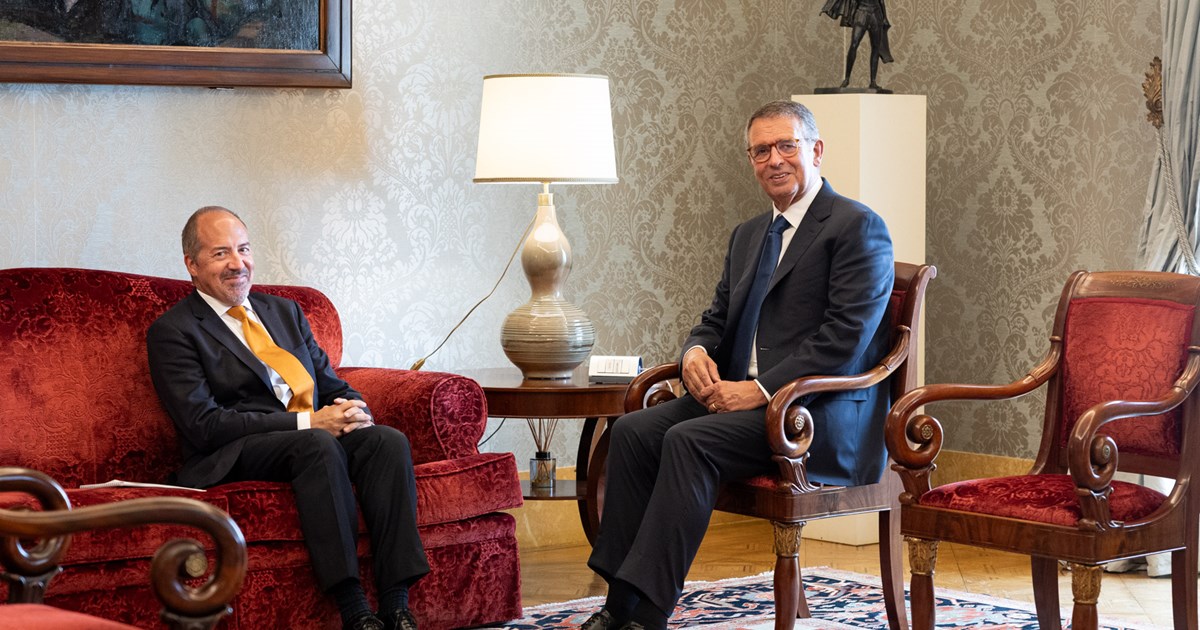
President of the Republic received the Governor of the Bank of Portugal
The President held an official meeting with the Governor of the Bank of Portugal.
Latest news and stories about economic indicator in government in Lisbon, Lisboa, Portugal for expats and residents.
The President held an official meeting with the Governor of the Bank of Portugal.
The government is set to submit the 2027 State Budget (Orçamento do Estado) to Parliament on October 9th. The Socialist Party (Partido Socialista or PS) has already announced it will abstain, ensuring the proposal's approval and leaving the government solely responsible for its implementation.
Update: President Seguro endorses budget cooperation between Government and PS
In his Republic Day address on October 5th, President António José Seguro welcomed the rapprochement between the Government and the Socialist Party regarding the State Budget. Seguro urged political parties to move past adversarial politics and form cross-party commitments on urgent priorities, including housing, healthcare, and cost-of-living challenges.

António José Martins Seguro (born March 11, 1962, in Penamacor) is a lawyer, political scientist, and the current President of the Portuguese Republic, inaugurated on March 9, 2026 after winning the two-round presidential election in January–February 2026.
Career: He led Socialist Youth (1990–1994), served as MEP (1999–2001), was Minister Adjunct to PM António Guterres (2001–2002), and led the PS parliamentary group (2004–2005). Elected PS Secretary-General in 2011 with 68%, he led the opposition during Portugal's bailout era. In 2014, António Costa defeated him in party primaries by a landslide, prompting Seguro's resignation and a decade-long retreat from politics. He returned in 2025, launching the movement UPortugal and announcing his presidential candidacy in June. He received official PS backing in October 2025 and won the presidency in February 2026.
Political philosophy: Seguro positions himself as representing a "modern and moderate" left, advocating financial responsibility while opposing austerity. As President, he has emphasized institutional trust, efficient governance, and a collaborative relationship with the government while maintaining rigorous constitutional oversight.

Portuguese 10-year government bond yields exceeded 4% this Friday for the first time since March 2017. The benchmark rate peaked at 4.0141% during the afternoon before closing at 3.971%. Investors are selling bonds due to worsening inflation outlooks, which increases the cost for the state to finance its debt.

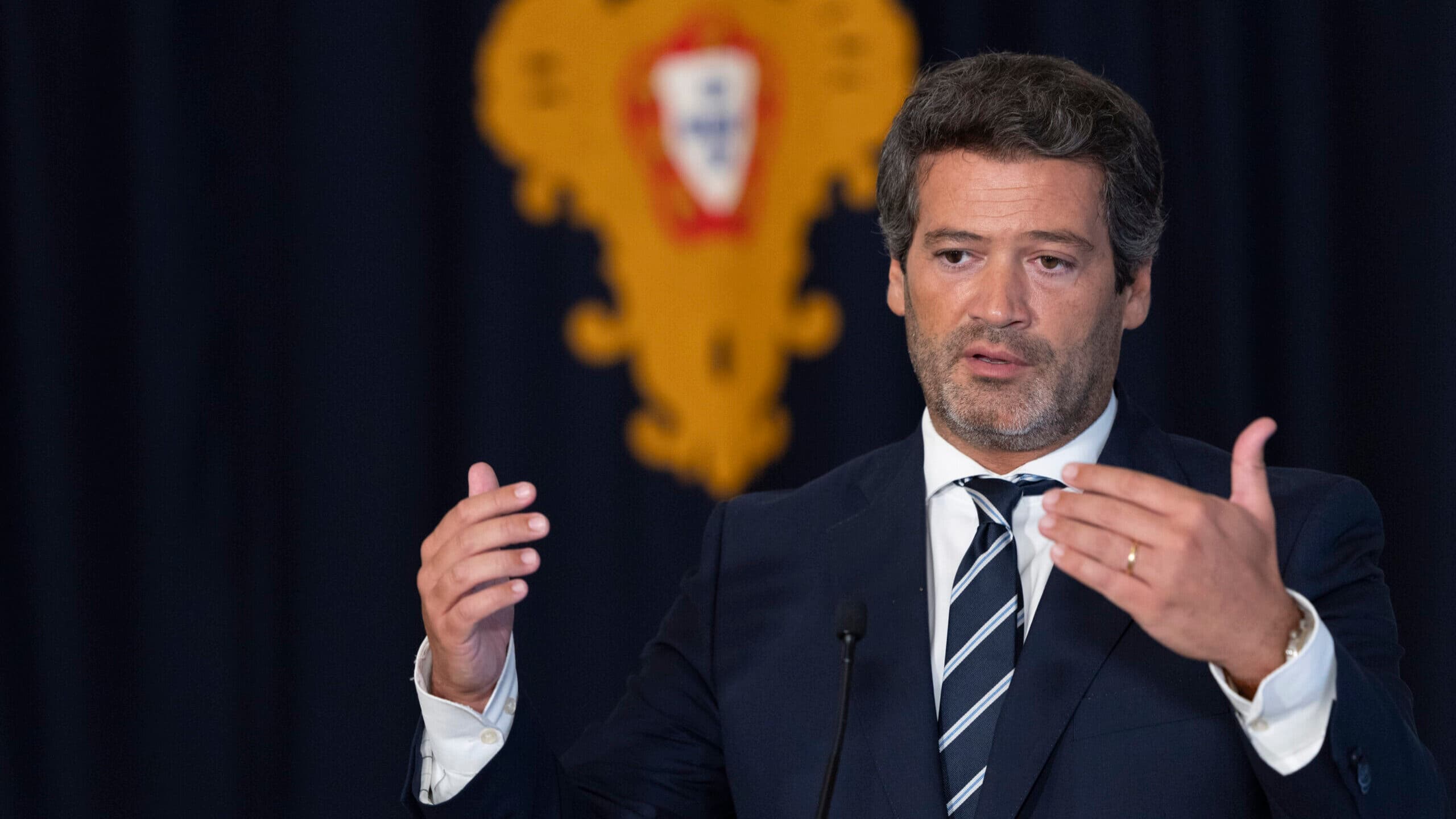
Prime Minister Luís Montenegro dismissed concerns regarding the rise in public debt to 92.9% of GDP in the second quarter of 2026, promising surprising economic results by year-end. However, Chega leader André Ventura criticized the government's handling of the economy, labeling the debt figures as evidence of incompetence and poor management.

Luís Filipe Montenegro Cardoso de Morais Esteves (born February 16, 1973, in Porto) is a Portuguese lawyer and center‑right politician who has served as Prime Minister of Portugal since April 2, 2024. A long‑time member of the Social Democratic Party (PSD), he is the leading figure of the post‑Troika generation of Portuguese conservatives. Montenegro was elected to the Assembly of the Republic in 2002 for the Aveiro district and remained an MP for 16 years, becoming PSD parliamentary leader from 2011 to 2017 during the bailout and austerity period under Prime Minister Pedro Passos Coelho. He was a prominent defender of strict austerity measures, arguing in 2014 that “the life of the people is no better, but the life of the country is a lot better,” a phrase that has followed his public image since. After an unsuccessful leadership bid against Rui Rio in 2020, Montenegro won the PSD leadership in 2022. He then forged the centre‑right Democratic Alliance (PSD–CDS‑PP and allies), which won a plurality of seats in the 2024 legislative election. Refusing to partner with the far‑right Chega, which he has called “often xenophobic, racist, populist and excessively demagogic,” he formed a minority government as head of the XXIV Constitutional Government on April 2, 2024. His first government fell in March 2025 after a no‑confidence vote linked to a conflict‑of‑interest affair, but fresh elections saw the Democratic Alliance increase its seat share, allowing Montenegro to return as prime minister leading the XXV Constitutional Government. His importance to Portugal lies in attempting to re‑center the traditional centre‑right after the crisis years, defending liberal‑conservative economics and EU alignment while drawing a sharp line against formal cooperation with the radical right, thus shaping how Portuguese democracy manages its new multi‑party era.

André Ventura, born January 15, 1983, is a lawyer, academic, and Portugal's most prominent far-right leader. He founded Chega ("Enough") in 2019 after his PSD mayoral campaign attacked the Romani community. Chega surged from 1.3% in 2019 to 22.8% in May 2025, becoming parliament's second-largest party and making Ventura Leader of the Opposition.
His platform emphasizes immigration restrictions, law-and-order policies, constitutional reform, and contains inflammatory anti-Romani rhetoric that has triggered multiple discrimination convictions and investigations. Politically classified as far-right by international media, Ventura cultivates alliances with European far-right figures including Marine Le Pen and Santiago Abascal.

Chega ("Enough") is a Portuguese far-right populist party founded in 2019 by André Ventura. It positions itself as an anti-establishment movement against what it calls a "rotten and corrupt system" of PS-PSD dominance. The party surged from 1.3% in 2019 to 22.8% in May 2025, becoming parliament's second-largest force with 60 seats. Chega's core platform emphasizes strict immigration control—ending automatic CPLP residency, deporting non-independent immigrants, implementing job-market quotas, and requiring five-year social security contributions before benefit access. It advocates radical constitutional reform, including reducing parliament to 100 members, abolishing the prime minister position for a presidential system, and dismantling public healthcare. Law-and-order policies include life imprisonment and chemical castration proposals.
The party is defined by inflammatory anti-Romani rhetoric, with Ventura convicted multiple times for discrimination. Chega maintains international alignments with European far-right figures including Marine Le Pen, Santiago Abascal, and Matteo Salvini. Mainstream Portuguese parties, including Prime Minister Luís Montenegro's government, have imposed a cordon sanitaire, refusing coalition with Chega despite its parliamentary strength.
Following a population data revision by the National Statistics Institute (Instituto Nacional de Estatística or INE), Portugal's GDP per capita is projected to fall to 77% of the European average in 2025. Economist Óscar Afonso estimates this decline will cause Portugal to drop three places in the European rankings, falling behind Estonia, Croatia, and Romania.
The INE housing price index (Índice de Preços da Habitação) tracks changes in residential property transaction prices across Portugal, published quarterly by the National Statistics Institute (INE). It covers both new and existing dwellings and breaks data down by region, property type, and buyer nationality.
The index is a key reference for policymakers debating housing affordability measures, for lenders assessing mortgage risk, and for buyers and investors tracking market trends. It has shown sustained price growth since 2015, with particularly sharp increases in Lisbon, Porto, and the Algarve driven by international demand, tourism, and housing shortages.
Related INE publications include monthly housing transaction data, rental indices, and construction statistics. Together, they provide the most comprehensive picture of Portugal's property market.
Finance Minister Joaquim Miranda Sarmento stated that the difference between the government's deficit projection and the Bank of Portugal's (Banco de Portugal or BdP) forecast is not significant. Miranda Sarmento argued that strong tax revenue and social security contributions indicate the economy is performing better than initial indicators suggested. He also highlighted a record reduction in public debt as a key fiscal achievement.
Banco de Portugal is Portugal's central bank, founded in 1846. It is a member of the European System of Central Banks (ESCB) and the Eurosystem, working alongside the European Central Bank (ECB) to implement monetary policy in the euro area.
Its main functions include supervising banks and financial institutions, ensuring financial stability, managing Portugal's gold and foreign currency reserves, and producing economic research and statistics. It also operates the payment systems infrastructure and issues banknotes.
Banco de Portugal is led by a Governor — currently Mário Centeno (since 2020) — who also sits on the ECB's Governing Council. For residents, the central bank matters because it regulates the banks they use, sets macroprudential rules (such as mortgage lending limits), and provides a complaints mechanism for banking disputes.