The postal company CTT - Correios de Portugal reported a 41.6% decline in profits for the first half of 2026, totaling 12.9 million euros. The drop is attributed to restructuring costs and financial challenges related to international operations, including the Spanish firm Cacesa.
The national postal service (CTT - Correios de Portugal) reported a net profit of €50.7 million for 2025, an 11.4% increase driven largely by e-commerce and its banking division. The announcement comes as CEO João Bento prepares to leave the company after seven years at the helm. Shareholders should note that the board has proposed a dividend payment of 19 cents per share following the strong financial performance.
AliExpress is set to appeal a 550 million euro fine imposed by the European Commission, arguing the penalty for failing to curb illegal product sales under the Digital Services Act is disproportionate.
The European Central Bank reports that consumers in southern Europe are the primary users of Chinese e-commerce platforms, with Greece ranking first, followed by Portugal and Spain.
The Chinese company is “surprised” by the EU's decision. The Commission states that AliExpress does not have enough staff to monitor illegal products. The €550 million fine is the highest to date.
Starting July 1, the European Union is implementing a temporary 3-euro customs fee on low-value imports from non-EU countries, particularly e-commerce goods under 150 euros. The measure aims to ensure fair competition for European businesses, improve safety compliance, and combat customs fraud, as millions of small parcels—mostly from China—enter the EU daily. The fee will remain in place until July 2028, when a new European customs system is expected to be fully operational.
KuantoKusta seeks to democratise access for small merchants to the entire consumer base across Portugal. The digital platform, founded in 2025 as a price comparison site, is committed to facilitating the entry of these retailers into e-commerce through its marketplace, which currently hosts 1,200 stores. Simultaneously, it offers consumers the ability to compare prices, consider purchases, and complete transactions, all within the KuantoKusta platform, which invested approximately 150,000 euros in technology last year and plans to spend nearly 300,000 euros this year. According to Rita Faria, KuantoKusta generated 40 million euros in sales for associated retailers last year, a growth of around 15% compared to 2024. The platform currently features a catalogue of two million products across 16 categories. The business is heavily influenced by peak shopping seasons like Christmas or Black Friday, but generates around 23,000 orders in a typical month, with that figure potentially doubling during peak periods. Currently, the star category on KuantoKusta is Health and Beauty, which has become the primary driver by value. The Pets category is the standout performer, recording 46% growth in volume and 51% in value in the first four months of this year compared to the same period in 2025. Meanwhile, the Image and Sound category shows a trend towards premiumisation, with the average transaction value rising by over 15%. Data from KuantoKusta indicates that inflation and the geopolitical climate have shifted consumption patterns, with the growth in Health and Beauty driven by a focus on wellness and more accessible pricing. While demand for technology products remains high, consumers are making more conscious purchases, leading to a decrease in the average transaction value to around 90 euros. Bynd has a 30 million euro fund to invest in tech startups, and Porto City Council, Sonae Sierra, and Solive launch 331 affordable rental homes.
The Portuguese company Bloop, a marketplace that acts as a social shopping network, announced this Tuesday its entry into the Spanish market, a strategic step that marks the start of the internationalisation of the platform founded by Francisco Rodrigues. Launched at the end of 2025, Bloop has surpassed 60,000 downloads and brings together around 200 active sellers.
Counterfeit goods in the design sector cause 420 million euros in losses in Portugal, with the clothing sector accounting for the largest share of the impact, according to the European Union Intellectual Property Office (EUIPO). Data from the EUIPO indicates that in Portugal, counterfeiting causes annual losses of 337 million euros in the clothing sector and 83 million euros in the bags, jewellery, and watch sectors. Globally, in the European Union, the fashion and clothing sector suffers estimated annual losses of 12 billion euros, while counterfeit bags, jewellery, and watches cost genuine manufacturers approximately 2.7 billion euros in lost sales each year. Survey results show that half of EU consumers value good design, and about three in four (73%) are willing to pay more for a product with enhanced design. However, driven by the expansion of e-commerce and the influence of social media, more counterfeit products have emerged, with about 13% of Europeans stating they have intentionally purchased such items, a figure that rises to 26% among younger consumers aged 15 to 24. Portugal was the 5th EU country with the most counterfeit items seized in 2024.
Sociedade Ponto Verde estimates that in 2024, at least 6.2 million euros remained unpaid to the packaging management system by producers and packers whose packaging entered the country via e-commerce. This figure is expected to nearly double by 2028. Sociedade Ponto Verde is responsible for...
Agentic artificial intelligence will turn online stores upside down. The impact will be most profound for retailers and the labour market. Investors are forcing tech companies to rethink their revenue sources.
Artificial intelligence (AI) has already established itself in e-commerce, but its impact does not depend solely on the sophistication of the models. This conclusion emerged from the panel at the 8th Talk .IA, organised by ECO and dedicated to the intersection of technology and e-commerce: gains only truly appear when AI is integrated into operations.
InPost began 2026 with strong revenue momentum, reaching 910.5 million euros, a 31% year-on-year growth that accompanies a 32 percentage point increase in managed parcel volumes, totalling 359.2 million in the first quarter. Performance was driven by international growth and the rapid expansion of its locker network across Europe, according to the European logistics company that delivers parcels out-of-home using automated lockers and local small businesses (pack points). Business outside of Poland, where the company was founded, now accounts for 53% of group revenue. Adjusted EBITDA stood at 212.7 million euros, down 4% year-on-year, reflecting strong performance in Poland and the Eurozone alongside investments related to operational transformation in the UK following the integration of Yodel. Founder and CEO Rafał Brzoska highlights that, across all geographies, they continue to grow above the e-commerce market, expanding their pan-European out-of-home logistics platform and the convenience offered to both consumers and merchants.
The partnership was announced in December 2024 but is only now being concluded. It is an alliance between CTT and DHL to create a giant in the e-commerce sector on the Iberian Peninsula.
Artificial intelligence (AI) is playing an increasingly central role in e-commerce, from the personalisation of offers and marketing to how companies anticipate demand, manage stock, adjust prices and automate customer service. Against this backdrop, the 8th Talk .IA will look at the intersection between AI...
A year (and a bit) after Curiouz was born online, it appeared at Milan Design Week for the first time. It has accumulated over 280,000 euros in sales and aims to accelerate in the United States to reach its first million in sales. Curiouz went to the Italian city to establish a physical presence, something new for a company that was born online.
Home Business Smart Ways to Cut Payment Processing Costs for Your Online Store Smart Ways to Cut Payment Processing Costs for Your Online Store Making payments is an obligatory component of operating any online store, which can also be a rather serious expense if it is not managed properly.
WTO members spanning 70 percent of global trade — including Australia, China, Britain and the EU — will implement the agreement among themselves in their domestic legislation.
Visa is preparing to test the future of e-commerce using Artificial Intelligence. The payment processing giant has launched 'Visa Agentic Ready' to prepare card-issuing banks for a new era in the sector, creating a test environment for AI agents capable of searching for, selecting, and purchasing products for consumers. The program, aimed at the European market, focuses on testing and validating secure transactions initiated by AI in a controlled environment. Rita Mendes Coelho, Visa Portugal's country manager, stated that payments must evolve alongside the way people search and shop. Visa and Mastercard already have AI agents in advanced stages of development.
CTT will partner with DHL Spain to combine high-efficiency parcel delivery networks in e-commerce to strengthen efficiency and boost growth in this area.
The European Commission has approved the partnership and joint venture between CTT - Correios de Portugal and DHL eCommerce Spain, which had been announced on 19 December 2024, the Portuguese company reported today.
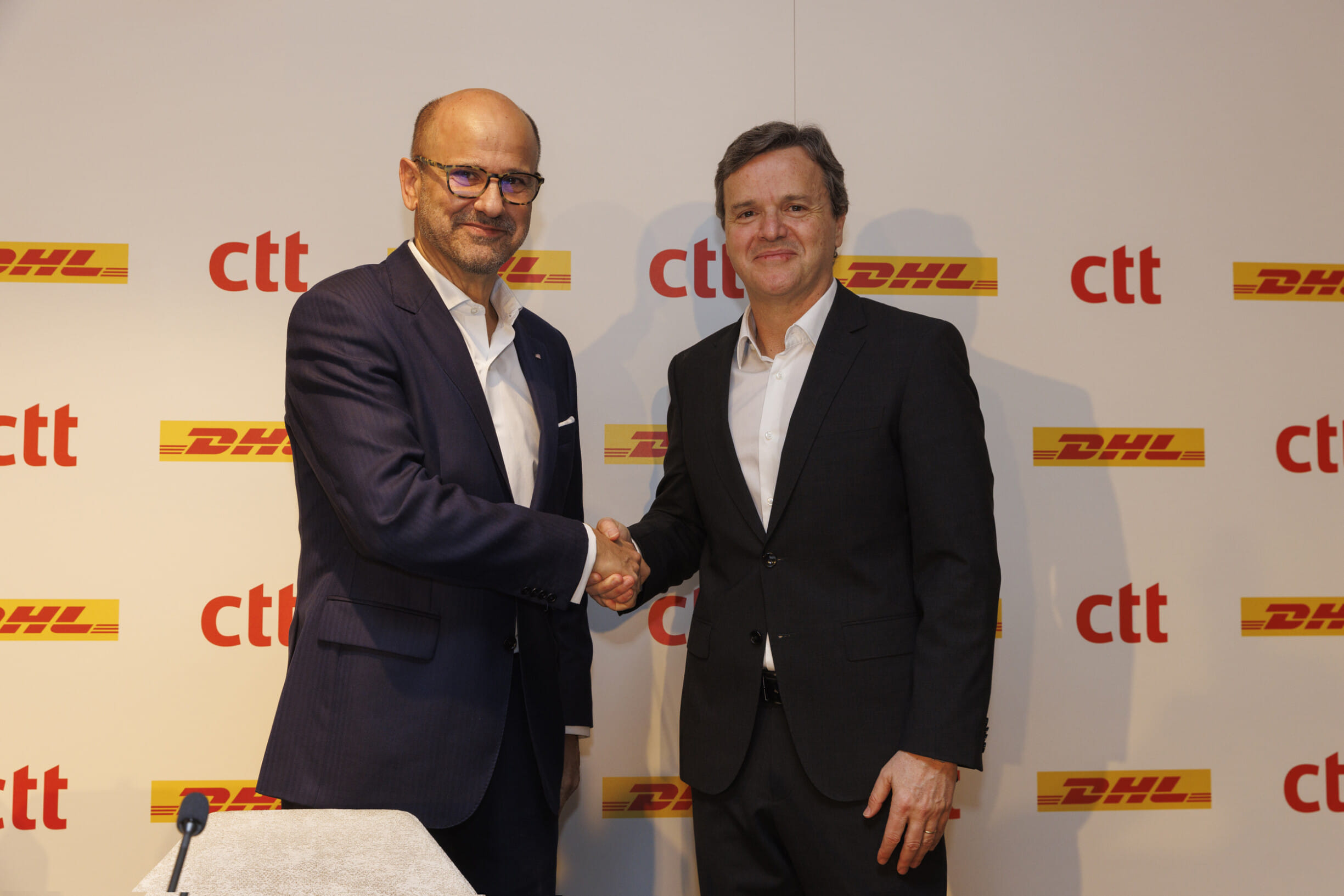
CTT announced this Thursday, March 19, that the partnership and joint venture established with DHL eCommerce Spain, exactly one year and three months ago, has now been approved by the European Commission. The strategic alliance between CTT Expresso and DHL eCommerce aims to distribute parcels in Portugal and Spain through cross-shareholdings and the combination of high-efficiency delivery networks for B2B and B2C e-commerce, including out-of-home solutions. According to CTT, the joint network will have a daily capacity exceeding one million shipments on the Iberian Peninsula, which together constitutes the fourth-largest market in Europe. The agreement also anticipates combined revenues of one billion euros and the creation of joint ventures in both countries to operationalise activities. With the EC's authorisation—an essential prerequisite—the parties are moving to the final stages of the transaction, subject to approval under the EU Foreign Subsidies Regulation (FSR) and customary closing conditions. The deal is expected to close in May of this year. Under the agreed framework, CTT Expresso acquires DHL eCommerce Portugal and a 25% stake in DHL eCommerce Spain, while DHL eCommerce obtains 25% of CTT Expresso. Both parties may subsequently increase their stakes up to a maximum of 49%. In Portugal, CTT Expresso will take over DHL eCommerce's local operations, sharing responsibility for parcel handling and distribution across the territory. In Spain, the model will be complementary: CTT Express will focus on B2C services and DHL eCommerce on B2B activities. CTT CEO João Bento highlighted that the partnership combines experience and shared values in the parcel logistics sector, allowing CTT Expresso to accelerate its growth and strengthen its position on the Iberian Peninsula. Pablo Ciano, CEO of DHL eCommerce, noted that the alliance aims to create a high-performance network that offers quality, reliability, and value to B2B and B2C customers in both markets. CTT is investing two million euros and creating 350 jobs with a new centre in Rio de Mouro.