

Agustina Bessa-Luís, novelist of the North, dies in Porto: 3 June 2019
She grew up between the Tâmega and the Douro, broke through with A Sibila in 1954 and wrote more than fifty books about the families of northern Portugal. When she died, the government declared a day of national mourning.
At a glance
- Agustina Bessa-Luís died at her home in Porto on Monday 3 June 2019, aged 96, after a long illness. She had withdrawn from public life soon after her last novel came out in 2006.
- Born in Vila Meã, Amarante, on 15 October 1922, she made her name with A Sibila (1954), a novel of a rural family in the north that won the Delfim Guimarães and Eça de Queirós prizes.
- She published more than fifty books: novels, stories, plays, biographies, essays and children's books, many of them set among the families of the Douro and Minho.
- Manoel de Oliveira used her writing in nine films: seven drawn from her novels, a play or a story, among them Francisca (1981), Vale Abraão (1993) and O Convento (1995), one with dialogue she wrote for it, and one in which she reads her own text.
- She won the Camões Prize in 2004, ran the Porto daily O Primeiro de Janeiro and the Teatro Nacional D. Maria II, and in 1985 backed Freitas do Amaral for president.
A Monday in Porto
Agustina Bessa-Luís died at home in Porto on Monday 3 June 2019. She was 96. Illness had kept her out of public life for more than a decade, and her last novel, A Ronda da Noite, had come out in 2006.
The government met that day in an extraordinary session, by electronic means, and decreed a day of national mourning for 4 June. Its communiqué said her work had marked Portuguese literature decisively in the second half of the twentieth century. President Marcelo Rebelo de Sousa put a note on the Presidency's website: he bowed, he wrote, before her genius.
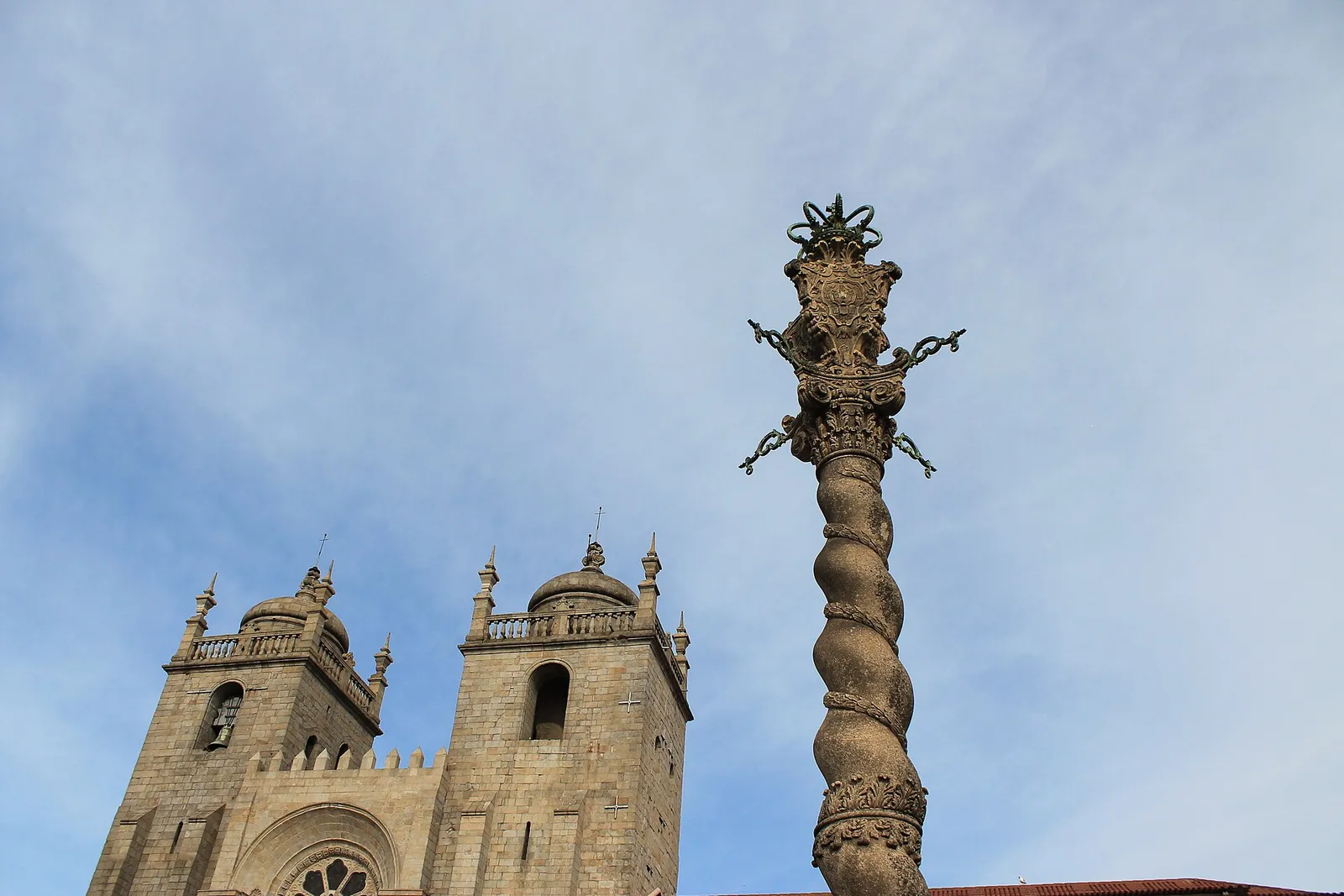
On the Tuesday her body lay in Porto Cathedral, the Sé, from 10.30 in the morning. Marcelo arrived at about 3.30 in the afternoon with the culture minister, Graça Fonseca, and the mayor of Porto, Rui Moreira. At four the Bishop of Porto, Manuel Linda, led the funeral rites. Asked outside whether she should go to the National Pantheon, the President said that was for her family and parliament to decide, and that for now she was in the pantheon of every Portuguese heart.
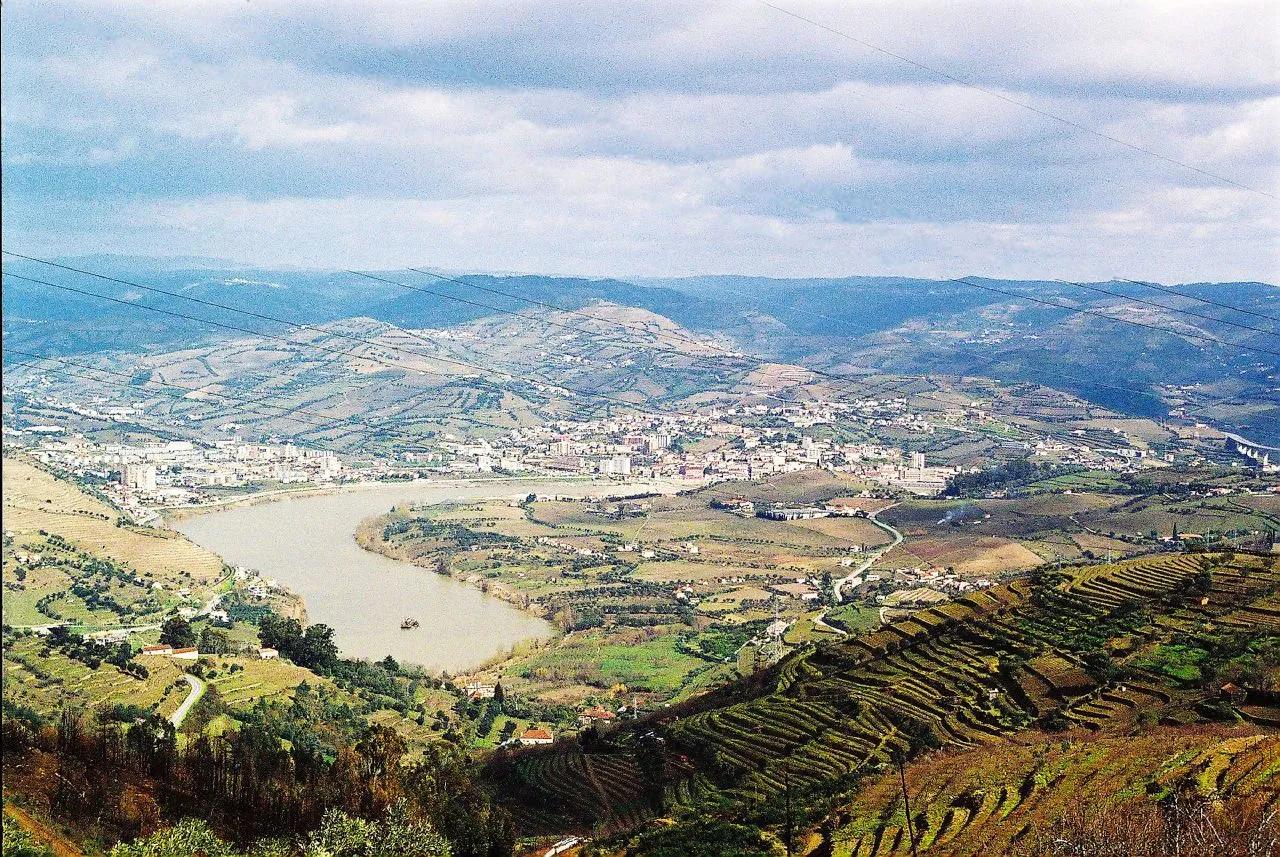
Then the coffin left the city for Peso da Régua, a wine town upriver on the Douro, where she was buried with only her family present. Her husband, Alberto Luís, had died in November 2017. On Friday 7 June the Assembly of the Republic passed a vote of mourning unanimously.
- Born
- Sunday 15 October 1922, Vila Meã, Amarante
- Died
- Monday 3 June 2019, at home in Porto, aged 96
- Full name
- Maria Agustina Ferreira Teixeira Bessa
- Best-known book
- A Sibila (1954)
- Main prize
- Prémio Camões, 2004
- Buried
- Peso da Régua cemetery, 4 June 2019
A girl from Vila Meã
She was born at 7.10 pm on Sunday 15 October 1922 in Vila Meã, in the municipality of Amarante, on a day of heavy rain. She was the second child of Artur Teixeira Bessa and Laura Jurado Ferreira. Later, when critics called her writing torrential, she said she laughed, because it seemed to her it had been guided by the rain of the day she was born.
Her father had left a farming family for Brazil at the age of 12 and came back with money; he went into entertainment and gambling, and managed the casino at Póvoa de Varzim, on the coast north of Porto. Her mother descended from a Spanish woman from Zamora. The Bessas moved often. The fixed point was the summer at her grandfather's house in the Douro, which had a good library.
That country, the valleys of the Tâmega and the Douro east of Porto, gave her most of her subjects. The Dicionário de Literatura Portuguesa describes her work as an analysis of a changing society in Entre Douro e Minho, the old province between the two rivers.
The couple lived in Coimbra, then in Esposende on the Minho coast, and from 1950, by most accounts, in Porto; her biographer Isabel Rio Novo says she settled there for good only in the 1970s. Their only child, Mónica, became a painter and museum curator. Alberto Luís, a lawyer, also fixed the text of his wife's books, and she credited him with his support and “unconditional love”.
A Sibila, 1954
Her first published book was a short novel, Mundo Fechado (“Closed World”), in 1948, praised by the poet Teixeira de Pascoaes and the novelist Aquilino Ribeiro. Os Super-Homens (1950) and the stories of Contos Impopulares (1951 to 1953) followed.
She finished A Sibila on 16 January 1953 and entered it for the Delfim Guimarães prize, a contest run by the publisher Guimarães, under the pseudonym Stavroguine, from a character in Dostoevsky's Demons. The jury of Vitorino Nemésio, Branquinho da Fonseca, Álvaro Lins and Tomás de Figueiredo gave it the prize. The book came out in 1954 and won the Eça de Queirós prize that year.
The sibyl of the title is Quina, a woman of a farming family whose house, the Casa da Vessada, stands in the country near Amarante. She gains a name as a seer, and with it influence and money, and restores the house her father had run down. Her story is pieced together by Germa, a young relative from a later generation, and the novel ranges over about a century, from around 1850 to 1950. Observador's obituary says Quina was modelled on Agustina's aunt Amélia, her father's sister.
The national book directorate's author record names the influence of post-symbolist writers such as Raul Brandão, and of Proust and Bergson, and calls her style unique, paradoxical and enigmatic, with an aphoristic streak. In her books, it says, women move by instinct and act as forces of permanence; men are beings of projects who speed up time.
“That fictional world, simply by appearing, shifted the centre of literary attention.”
The book found a place on school curricula and had reached its 31st edition by 2019. The literary historian António José Saraiva, in his published correspondence with Óscar Lopes, ranked her with Fernando Pessoa as the two writers of real genius Portugal produced in the twentieth century.
More than fifty books
After A Sibila she seldom let a year pass without a book. There were family sagas, such as the three novels of As Relações Humanas (1964 to 1966); historical novels, such as Fanny Owen (1979) and A Corte do Norte (1987); lives of Saint Anthony (1973), the poet Florbela Espanca (1979) and the Marquis of Pombal (Sebastião José, 1981); essays on Camilo Castelo Branco, Kafka and Dostoevsky; plays; and children's books.
Agustina Bessa-Luís's books by decade of first edition
titles
- All listed titles
- Novels
Lisboeta's count from the list of works in the national book directorate's author record, as reproduced by Montalegre municipal library in October 2014. Each title is counted once, by the year of its first edition; two omnibus reissues (2001 and 2007) are left out. Novels are the titles the list marks as romance; Mundo Fechado (1948) is listed as a novella. The list also counts booklets, essays and photographic albums, so it runs well past the “more than fifty books” usually quoted. The titles of the 2010s are stories, essays and letters published after she stopped writing.
Show the data
| All listed titles | Novels | |
|---|---|---|
| 1940s | 1 | 0 |
| 1950s | 7 | 5 |
| 1960s | 9 | 7 |
| 1970s | 10 | 5 |
| 1980s | 26 | 8 |
| 1990s | 22 | 8 |
| 2000s | 17 | 6 |
| 2010s | 4 | 0 |
The 1980s were her busiest decade. Os Meninos de Ouro (1983) won the Portuguese Writers' Association's grand prize for the novel, which she won again for O Princípio da Incerteza: Jóia de Família (2001). She also spoke to a wider public: morning chronicles on the state radio in 1978 and 1979, and in 2005 an RTP television programme, Ela por Ela, in conversation with the journalist Maria João Seixas.
Camilo Castelo Branco, the nineteenth-century novelist of northern passions, was the writer she kept returning to. Eduardo Lourenço placed her in a neo-romantic current, much influenced by Camilo, and RTP's educational service calls her his heir, using irony against the closed world of the northern aristocracy.
Twenty-five years with Manoel de Oliveira
Fanny Owen began as a commission. In the late 1970s the actress Linda Beringel and the director João Roque asked Agustina to write the dialogue for a film about Fanny Owen, a young woman caught in a true nineteenth-century triangle with José Augusto Pinto de Magalhães, a landowner of Santa Cruz do Douro, and his friend Camilo Castelo Branco. The film was never made. She wrote a novel instead, using the lovers' surviving letters and diaries and Camilo's own fiction.
She sent a copy to the Porto film director Manoel de Oliveira and his wife, Maria Isabel. Fanny's husband was one of Maria Isabel's ancestors, and her family still lived in the house of José Augusto's brother and kept Fanny's letters. Oliveira had just pulled out of another film, a comedy, after a last-minute disagreement with its author. He turned to this one, and Francisca, 166 minutes long, came out in 1981.
According to people at the screening, Agustina disliked it and said so, at times out loud. It was the first round of a partnership that lasted nearly 25 years and was seldom calm. Rita Novas Miranda, who has studied it, counts nine texts by Agustina behind Oliveira's films, five of them commissions. For Vale Abraão (1991) he asked her for a Portuguese Madame Bovary, set in the Douro valley. The film of 1993 was shown in the Directors' Fortnight at Cannes, and she never tired of praising it.
| Film | Year | Agustina's part |
|---|---|---|
| Francisca | 1981 | From her novel Fanny Owen (1979) |
| Visita ou Memórias e Confissões | Shot 1982, shown 2015 | She wrote the dialogue for Oliveira's film about his house |
| Vale Abraão | 1993 | From her novel Vale Abraão (1991), written at Oliveira's request |
| O Convento | 1995 | From her novel As Terras do Risco (1994), which he scripted before she had finished it |
| Party | 1996 | Dialogue from her play Party: Garden-Party dos Açores |
| Inquietude | 1998 | One of three stories: her A Mãe de um Rio |
| Porto da Minha Infância | 2001 | She reads one of her texts on screen |
| O Princípio da Incerteza | 2002 | From her novel Jóia de Família (2001) |
| Espelho Mágico | 2005 | From her novel A Alma dos Ricos (2002) |
Years as given by Observador and Sábado. Rita Novas Miranda dates Porto da Minha Infância to 2002. Oliveira asked for Visita to be shown only after his death, which came on 2 April 2015, at 106.
The worst row was over O Convento, with Catherine Deneuve and John Malkovich. Oliveira wrote the script before she had finished the novel, and she asked him in writing to take her name off the credits. By 1996 they had made peace: she wrote the dialogue for Party and, by Observador's account, used Michel, the character played by Michel Piccoli, to satirise Oliveira's views on women.
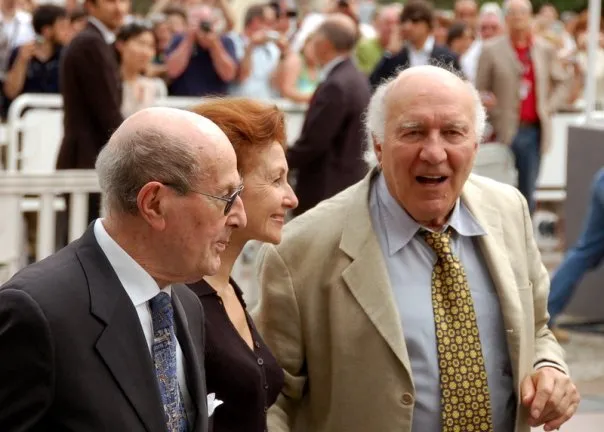
O Princípio da Incerteza was shown at Cannes in May 2002, a few days before the novel won its prize. At Venice in 2005, presenting Espelho Mágico, Oliveira joked that Agustina liked not liking his films, and that he liked that she didn't. Her own view, set down in 2006, was that the proper function of cinema is to make people fall in love.
The Camões Prize and a public life
In 2004, aged 81, she was chosen unanimously for the Camões Prize, the award for the whole work of a writer in Portuguese that the governments of Portugal and Brazil set up in 1988. The jury, which included the critic Eduardo Prado Coelho and the poet Vasco Graça Moura, praised her prose. She was the sixteenth laureate and the fourth woman, after Rachel de Queiroz, Sophia de Mello Breyner Andresen and Maria Velho da Costa. The University of Évora gave her its Vergílio Ferreira prize the same year.
“The work of Agustina Bessa-Luís represents the creation of a fictional world of incomparable richness.”
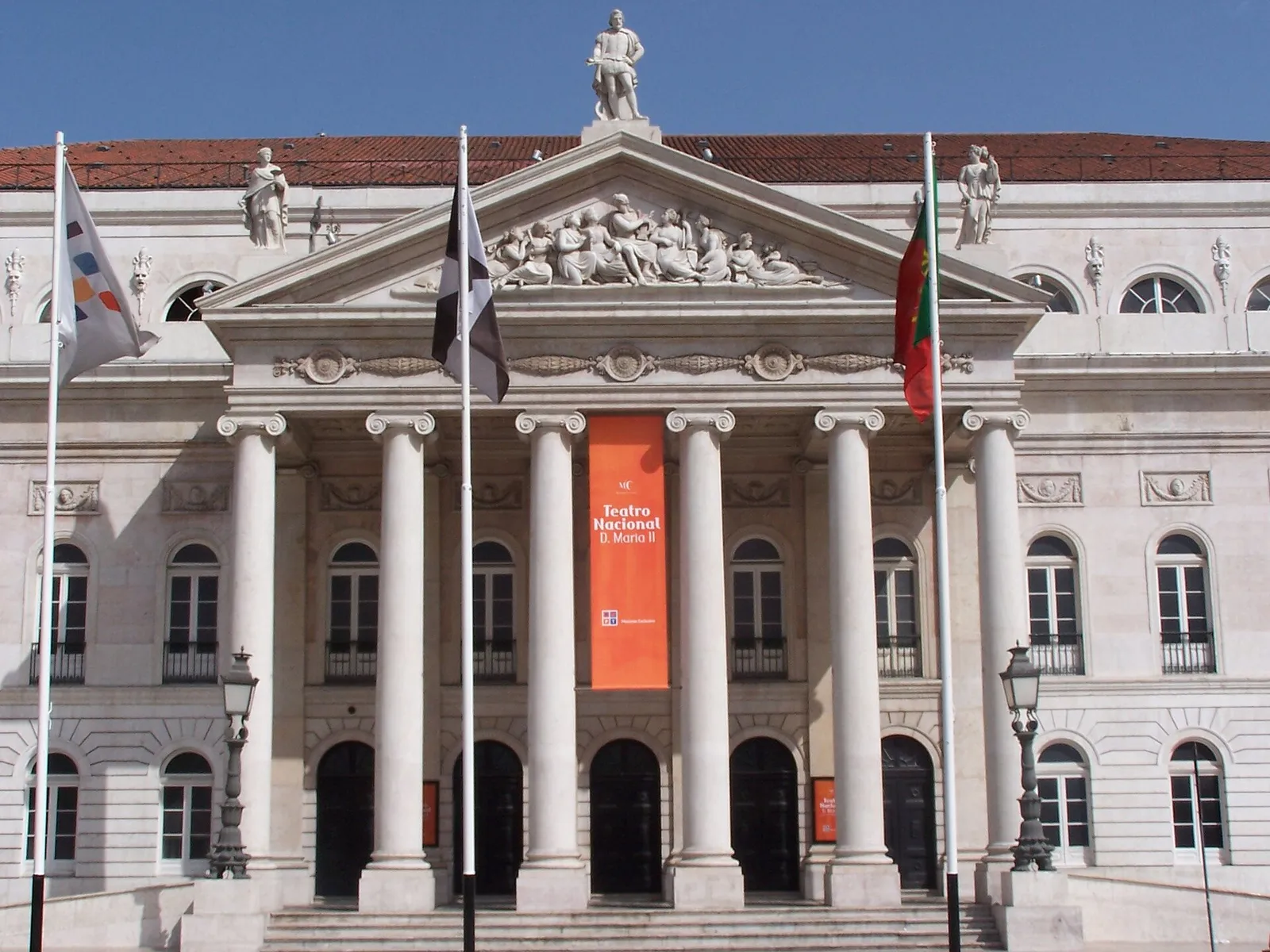
She did not stay at her desk. In 1959 she represented Portugal at the Rencontre de Lourmarin in Provence, and in 1961 and 1962 she sat on the board of the European Community of Writers in Rome. In 1986 and 1987 she ran O Primeiro de Janeiro, the paper in which she had once placed her advertisement. From 1990 to 1993 she directed the Teatro Nacional D. Maria II in Lisbon, and she sat on the Alta Autoridade para a Comunicação Social, the media regulator of the day.
In 1969, under the dictatorship, she was invited to stand for parliament alongside Francisco Sá Carneiro, one of the young liberals Marcelo Caetano's regime put on its lists; nothing came of it. In the presidential campaign of 1985 to 1986 she was the mandatária, the official public sponsor, of Diogo Freitas do Amaral, the candidate of the right, who lost the second round to Mário Soares.
Eduardo Lourenço, writing in the Jornal de Letras on 23 June 1985, defended her right to choose and said that nothing in her work or her public acts had ever placed her on the left. The historian Rui Ramos later wrote that she often seemed the only writer who was not of the left, and that some never forgave her for it.
In 1992, when the under-secretary for culture, António Sousa Lara, kept José Saramago off the shortlist for the European Literary Prize, he added her Vale Abraão at the suggestion of the head of the book institute. Observador later published a fax she sent to the Portuguese Society of Authors asking that Saramago not give up his candidacy.
Silence, and the books since
She finished her last novel, A Ronda da Noite, in 2006 and withdrew from public life soon afterwards; the book came out that September. A summary of Isabel Rio Novo's biography in the Postal do Algarve dates the first of a series of small strokes to early 2007; RTP's educational service says a stroke in 2008 left her unable to leave home. She never wrote again.
The books went on appearing. Her daughter and the family organised the papers, which Mónica Baldaque said in 2013 included hundreds of slips of notes and aphorisms. The Gulbenkian Foundation published drafts of unfinished novels and three volumes of essays and articles, and from 2016 or 2017 (accounts differ) Relógio D'Água began reissuing her work, ending a link with Guimarães Editores that dated back to A Sibila.
15 October 1922
Born in Vila Meã, Amarante
26 July 1945
Marries Alberto Luís
1948
Mundo Fechado, her first published book
1954
A Sibila; Eça de Queirós prize
1979
Fanny Owen
Filmed by Manoel de Oliveira as Francisca (1981).
1985
Sponsors Freitas do Amaral's presidential candidacy
1986–1987
Directs O Primeiro de Janeiro
1990–1993
Directs the Teatro Nacional D. Maria II
1993
Oliveira's Vale Abraão at Cannes
2004
Camões Prize
2006
A Ronda da Noite, her last novel
November 2017
Death of Alberto Luís
3 June 2019
Dies in Porto, aged 96
Isabel Rio Novo's unauthorised biography, O Poço e a Estrada, came out a few months before her death, and her daughter criticised it. In 2018 the University of Trás-os-Montes and Alto Douro, in Vila Real, made her its first woman honorary doctor. On 23 November 2024 the city of Porto presented a commemorative edition of A Sibila illustrated by Frederico Draw, who had also worked on a mural of her in the city.
Her place in Portuguese letters shows in her prizes. A Sibila won the Delfim Guimarães and Eça de Queirós prizes, two of her later novels won the Writers' Association's grand prize, and in 2004 she became the fourth woman to win the Camões Prize. A Sibila has been on school curricula and had reached its 31st edition by 2019.
Nine of Manoel de Oliveira's films use her writing, from Francisca in 1981 to Espelho Mágico in 2005, and Visita, shot in 1982, was shown only in 2015. Many of her books are set in the North, among the families of the Douro and the Minho, and she was buried at Peso da Régua, in the Douro country of Vale Abraão.
FAQs
When and where did Agustina Bessa-Luís die?
She died at her home in Porto on Monday 3 June 2019, aged 96, after a long illness. The government declared national mourning for 4 June, the day of her funeral at Porto Cathedral, and she was buried at Peso da Régua.
What is A Sibila about?
A Sibila (1954) follows Quina, a woman of a farming family near Amarante who becomes known as a seer and restores the family house, the Casa da Vessada. Her life is reconstructed by a younger relative, Germa, across about a century. It won the Delfim Guimarães and Eça de Queirós prizes.
Which Manoel de Oliveira films are based on her books?
Francisca (1981, from Fanny Owen), Vale Abraão (1993), O Convento (1995, from As Terras do Risco), Inquietude (1998, in part), O Princípio da Incerteza (2002) and Espelho Mágico (2005). She also wrote the dialogue for Party (1996) and for Visita ou Memórias e Confissões, and she reads one of her texts on screen in Porto da Minha Infância (2001).
When did Agustina Bessa-Luís win the Camões Prize?
In 2004, aged 81, by a unanimous jury. She was the prize's sixteenth laureate and its fourth woman winner.
Was Agustina Bessa-Luís involved in politics?
She never held elected office, but she was the public sponsor of Freitas do Amaral's presidential candidacy in 1985 to 1986, sat on the media regulator and ran the national theatre. She also backed the yes vote in the 2007 abortion referendum.
On the timeline
Open the timelineNearby moments from portugal in europe (1986–today).
Cristiano Ronaldo scores a hat-trick in a 3–3 draw with Spain in Sochi, completing it with an 88th-minute free kick curled into the top corner. At 33 he becomes the oldest player to score a World Cup hat-trick (a record Lionel Messi took in 2026) and the first to score at eight consecutive World Cups and European Championships.
At a ceremony in Lisbon closing his Diamond Jubilee year, the Aga Khan formally designates the Henrique de Mendonça Palace on Rua Marquês de Fronteira as the Seat of the Ismaili Imamat, making the city the global headquarters of the Nizari Ismaili Muslims, the Shia community he leads. Tens of thousands of Ismailis from around the world gather in Lisbon for the celebrations.
Death in Lisbon of Odette Ferreira, aged 93, the microbiologist who helped identify HIV-2. In 1985 she flew to the Pasteur Institute in Paris with patients' blood samples hidden in her coat to keep them warm, and as head of the national AIDS programme she launched the pharmacy needle exchange 'Diz Não a Uma Seringa em Segunda Mão' ('Say no to a second-hand syringe').
Death of Agustina Bessa-Luís
Death of Agustina Bessa-Luís in Porto, aged 96. Her 1954 novel 'A Sibila' made her one of the great voices of 20th-century Portuguese fiction; she went on to win the Camões Prize in 2004, and her long creative partnership with the director Manoel de Oliveira produced films such as 'Francisca' and 'Vale Abraão'.
Death from Covid-19 of the immunologist Maria de Sousa, born in Lisbon in 1939. In London in 1966 she and Delphine Parrott described the 'thymus-dependent areas' of lymph nodes, now called T zones; in Glasgow in 1971 she coined 'ecotaxis'. Back in Portugal she trained a generation of scientists in Porto through the GABBA doctoral programme.
Portugal and the Portuguese-speaking world celebrate the first World Portuguese Language Day, proclaimed by UNESCO the previous November. Spoken by more than 260 million people across four continents, Portuguese is among the most widely spoken languages on Earth; with the pandemic raging, the celebrations move largely online.
Sculptor João Cutileiro dies in Lisbon aged 83. He scandalised traditionalists with his boyish, unheroic statue of King Sebastião in Lagos, and later with his stone monument to the 25 April revolution at the top of Lisbon's Parque Eduardo VII, still one of the city's most argued-over landmarks.
Coming up in history
All long reads 5 June 1443The Constant Prince: Infante Fernando dies a hostage in Fez, 5 June 1443
 6 June 1801The Treaty of Badajoz, 1801: how Portugal lost Olivença
 7 June 1594Roderigo Lopes: Elizabeth I's Portuguese doctor, hanged at Tyburn in 1594
 8 June 2022Paula Rego, the Lisbon-born painter of hard stories, dies at 87
29 sources
Archives, scholarship and reporting this article was checked against.
- 1Morreu Agustina Bessa-LuísObservador, 3 June 2019
- 2
Morreu a escritora Agustina Bessa-LuísSábado, 3 June 2019
- 3
Este mês lemos… Agustina Bessa-Luís (biography and curiosities, by Marisa Sousa)Biblioteca Municipal de Coimbra, 2024
- 4
Autor em destaque: Agustina Bessa-Luís (author record of the Centro de Documentação de Autores Portugueses, DGLB, with list of works and prizes)Biblioteca Municipal de Montalegre, monthly agenda, October 2014
- 5
Da ineficácia da ficção: Fanny Owen, Francisca (Rita Novas Miranda)Moderna Språk 119 (1), 2025, pp. 80–89
- 6Agustina e Manoel de Oliveira, uma longa colaboração com altos e baixosObservador, 3 June 2019
- 7Morreu Agustina Bessa-LuísRTP Notícias, 3 June 2019
- 8
Comunicado do Conselho de Ministros extraordinário de 3 de junho de 2019Governo da República Portuguesa
- 9
Marcelo Rebelo de Sousa: Agustina está no Panteão do coração de todos os portugueses24 Notícias (Lusa), 4 June 2019
- 10
- 11Morreu Agustina Bessa-Luís, a escritora que marcou a nossa literaturaDiário de Notícias, 3 June 2019
- 12
No universo de AgustinaRTP Ensina
- 13
Writers, Land of Culture: Agustina Bessa-LuísVisit Baião (Câmara Municipal de Baião)
- 14
Entrevista a Isabel Rio Novo: “A vida de Agustina era a escrita”Postal do Algarve
- 15
Apresentação do livro «A Sibila», de Agustina Bessa-LuísMuseu da Cidade do Porto, November 2024
- 16
A Sibila (novel, 1954; edition with a preface by Gonçalo M. Tavares)Relógio D'Água, 2023
- 17
O essencial sobre Miguel Torga (Isabel Vaz Ponce de Leão)Imprensa Nacional-Casa da Moeda
- 18
Manoel de Oliveira, Agustina Bessa-Luís e a arte de filmar o tempo da palavra: um olhar sobre Vale Abraão (Vivian Leme Furlan)Todas as Musas 10 (2), 2019
- 19
Francisca (Manoel de Oliveira, 1981), Venice ClassicsLa Biennale di Venezia, 2019
- 20
Vale AbraãoQuinzaine des Cinéastes (Directors' Fortnight), Cannes
- 21
- 22Prémio Camões: lista dos 31 distinguidosDiário de Notícias (Lusa), May 2019
- 23
Agustina Bessa-Luíse-cultura, Centro Nacional de Cultura
- 24Agustina, a escritora sem medo (Rui Ramos, opinion)Observador, 4 June 2019
- 25
As eleições legislativas de 1969Assembleia da República (text by Ricardo Revez)
- 26
Mapa do resultado do 2.º sufrágio da eleição para Presidente da República, realizada em 16 de Fevereiro de 1986Comissão Nacional de Eleições, Diário da República, I série, n.º 55, 7 March 1986
- 27
A escolha de Agustina (Eduardo Lourenço, Jornal de Letras, Artes e Ideias, no. 159, 23 June 1985)Ler Eduardo Lourenço (reprint), 2014
- 28A história do veto ao Evangelho de José Saramago (Joana Stichini Vilela, 25 April 2017)Observador
- 29
Image credits
- The Douro at Peso da Régua, seen from the Lamego side in January 2006. Agustina Bessa-Luís spent childhood summers in the Douro, set Vale Abraão there and was buried at Régua. Vitor Oliveira from Torres Vedras, PORTUGAL, CC BY-SA 2.0, via Wikimedia Commons.
- Manoel de Oliveira (left) and Michel Piccoli (right) at the Cannes festival in 2001. Piccoli had played Michel in Party (1996), for which Agustina wrote the dialogue. Georges Biard, CC BY-SA 3.0, via Wikimedia Commons.
- The Teatro Nacional D. Maria II on Rossio square, Lisbon, in 2004. Agustina directed the national theatre from 1990 to 1993. Fulviusbsas, Public domain, via Wikimedia Commons.
- The towers of Porto Cathedral and the pillory column in front of it, in 2016. Agustina's body lay in the cathedral on 4 June 2019 before the funeral rites. John Samuel, CC BY-SA 4.0, via Wikimedia Commons.