

Presença, the Coimbra magazine that printed Pessoa: 4 June 1927
Three young writers in Coimbra started a “sheet of art and criticism” in March 1927 and took up the cause of the poets of Orpheu, a Lisbon scandal of 1915. In its fifth issue Fernando Pessoa joined them, under two names.
At a glance
- Presença, subtitled “folha de arte e crítica” (sheet of art and criticism), was launched in Coimbra on 10 March 1927 by José Régio, João Gaspar Simões and Branquinho da Fonseca, aged 25, 24 and 21 on the day of the launch.
- Its fifth issue, dated 4 June 1927, carried Fernando Pessoa's first contribution: the poem “Marinha” under his own name and a set of aphorisms, “Ambiente”, signed by his heteronym Álvaro de Campos.
- Régio's essays in the first issues called Pessoa, Mário de Sá-Carneiro and Almada Negreiros, the poets of the 1915 magazine Orpheu, the masters of Portuguese modernism; the scholar Enrico Martines says it was the first time they were given that title.
- Pessoa published 47 texts in Presença in and after his lifetime, among them “Tabacaria” (1933), and exchanged 111 letters with its directors; issue 48 (July 1936) was given over to him after his death.
- The magazine ran to 54 issues in a first series (1927 to 1938) and two in a second (1939 to 1940). It is remembered as the voice of Portugal's “second modernism”.
Two pieces from Lisbon in a Coimbra sheet
The fifth issue of Presença was dated 4 June 1927. It was a small literary paper, made in Coimbra by students and recent graduates of the university, and it called itself a “folha de arte e crítica”, a sheet of art and criticism. That issue carried two pieces sent from Lisbon. One was a poem, “Marinha” (Seascape), signed Fernando Pessoa. The other, “Ambiente”, was a set of aphorisms signed Álvaro de Campos.
There was no Álvaro de Campos. He was one of Pessoa's heteronyms, invented poets with their own lives and styles. Pessoa explained the idea the following year in the same magazine: a heteronymous work, he wrote, is “by the author outside his own person” (in the Casa Fernando Pessoa's translation).
Pessoa was 38, nine days short of his 39th birthday. He earned his living in Lisbon drafting business letters in English and French for firms that traded abroad. Twelve years earlier he had helped launch Orpheu, the magazine that scandalised Lisbon in 1915, but he had published no book of verse in Portuguese, and his heteronyms existed only in scattered magazines.
By June the three men who ran Presença were 25, 24 and 22. Issue 5 began a working friendship that lasted until Pessoa's death in 1935: Enrico Martines, who has studied the correspondence, counts 111 letters between Pessoa and the directors, and 47 texts by Pessoa printed in the magazine during and after his lifetime.
A dictatorship, a scandal and a dead friend
Presença was born under a military dictatorship. Army officers had overthrown the First Republic on 28 May 1926, and on 22 June 1926 the new government imposed prior censorship of the press. A month before the first issue came out, a republican revolt in Porto and Lisbon, from 3 to 9 February 1927, was crushed by government troops.
Presença kept out of party politics. Its founders believed that art answered to the individual artist, not to a cause, and the magazine spent most of its life arguing about poetry, fiction, painting and film. That position would later draw fire from young writers on the left.
After 1915 the Orpheu group scattered. Sá-Carneiro took his own life in a Paris hotel in April 1916, aged 25. Pessoa went on writing, but Orpheu had brought its poets more scandal than understanding, and outside a small Lisbon circle he was still little read.
In Coimbra, the university town, a student had been reading them. José Régio's degree thesis in Romance Philology, defended in 1925, was on “currents and individualities in modern Portuguese poetry”, and in it he defended the Orpheu poets.
Three young men and the Café Central
José Régio was the pen name of José Maria dos Reis Pereira, born in Vila do Conde on 17 September 1901. He came to Coimbra to study and graduated in 1925. His first book of poems, Poemas de Deus e do Diabo (Poems of God and the Devil), signed José Régio, came out in 1925 by most accounts; some date it to 1926. He became the group's chief theorist.
João Gaspar Simões was born in Figueira da Foz on 25 February 1903, the son of a merchant who wanted him in business. He enrolled in law at Coimbra in 1921, hated it and finished only in 1932. By 1927 he was married, living in Figueira da Foz and meeting Régio every week at the Café Central in Coimbra.
António José Branquinho da Fonseca, the youngest, was born in Mortágua, in the Beira, on 4 May 1905. His father was the republican writer and campaigner for popular education Tomás da Fonseca. He came to Coimbra at 16 to finish school at the Liceu José Falcão, where Gaspar Simões was a classmate, and went on to read law.
They had worked together before. In 1924 Simões, Branquinho and others, including the poets Afonso Duarte and Vitorino Nemésio, founded Tríptico, a Coimbra magazine that ran to nine issues in 1924 and 1925 and printed Régio among others.
The idea for a new paper came from Branquinho, and another member of the circle, Edmundo de Bettencourt, chose its name. The first issue came out on Thursday 10 March 1927, with Régio, Simões and Branquinho as directors. Régio and Simões stayed with it from the first issue to the last.
Ages on 4 June 1927, the date of issue 5
years
Ages worked out from the birth dates given by the cited sources: Pessoa 13 June 1888, Régio 17 September 1901, Gaspar Simões 25 February 1903, Branquinho da Fonseca 4 May 1905.
Show the data
| Age | |
|---|---|
| Fernando Pessoa | 38 |
| José Régio | 25 |
| João Gaspar Simões | 24 |
| Branquinho da Fonseca | 22 |
“Living literature”
Régio set out the programme on page one of the first issue, in an essay called “Literatura Viva”, living literature. Its opening lines set out the idea the group would defend for 13 years.
“In art, everything that is original is alive. Everything is original that comes from the most untouched, truest and most intimate part of an artistic personality.”
For Régio a work of art was the expression of a personality, and the critic's job was to find that personality in the work. Originality and sincerity were the tests, and academicism was the enemy. The group read Freud, Bergson and Dostoevsky, and wrote about film and painting as seriously as about poetry.
That creed sat awkwardly with the poet they admired most. Pessoa's work rests on what critics call a poetics of feigning: the heteronyms were masks, and the poet, in one of his best-known lines, is a feigner. Régio got round the problem by reading the heteronyms as sides of one rich and complex personality. Martines argues that Pessoa used Presença to set out his poetics of feigning and to test it in dialogue with the younger generation.
In 1960 the critic Eduardo Lourenço turned the question into an accusation. His essay “Presença ou a contra-revolução do modernismo português” (later reprinted with a question mark) argued that Presença's cult of personality and sincerity missed what Orpheu had done, since Pessoa and Sá-Carneiro wrote out of an absence of being, not a self to be expressed. Presença, he said, was a counter-revolution. Gaspar Simões, Jorge de Sena, Óscar Lopes and David Mourão-Ferreira answered him.
Calling Orpheu's poets masters
Pessoa's name appeared in Presença from the start. In “Literatura Viva” Régio held him up as an example of a superior writer. In issue 3, in April 1927, his essay “Da Geração Modernista” (On the modernist generation) called Pessoa, Sá-Carneiro and Almada Negreiros masters of Portuguese modernism, the first time, Martines notes, that they were given the title. He thinks the praise is the likeliest reason Pessoa sent work for issue 5.
The fifth issue also carried an unpublished poem by Sá-Carneiro, and over the next decade the magazine printed other members of the Orpheu circle: Sá-Carneiro again, Almada, Luís de Montalvor, Ângelo de Lima, Raul Leal, Mário Saa and António Botto. It also published bibliographical tables of their work. Pessoa's own, the “Tábua Bibliográfica” in issue 17 (December 1928), set out how he divided his writing between his own name and the heteronyms.
Simões also wrote about Pessoa. His essay “Fernando Pessoa e as vozes da inocência” (Fernando Pessoa and the voices of innocence) appeared in issue 29. Pessoa wrote to him on 4 January 1931 that he had liked it: “There are points I think right, others I don't, and others again about which I am uncertain myself” (translated from Portuguese).
| Issue | Date | What appeared |
|---|---|---|
| 1 | 10 March 1927 | Régio's “Literatura Viva” names Pessoa as an example of a superior writer |
| 3 | April 1927 | Régio's “Da Geração Modernista”, on Pessoa, Sá-Carneiro and Almada |
| 5 | 4 June 1927 | Pessoa's first contribution: “Marinha” (Pessoa) and “Ambiente” (Álvaro de Campos) |
| 17 | December 1928 | Pessoa's “Tábua Bibliográfica”, on orthonyms and heteronyms |
| 27 | June–July 1930 | From here to 41-42 Pessoa appears in every issue except 28 and 40 |
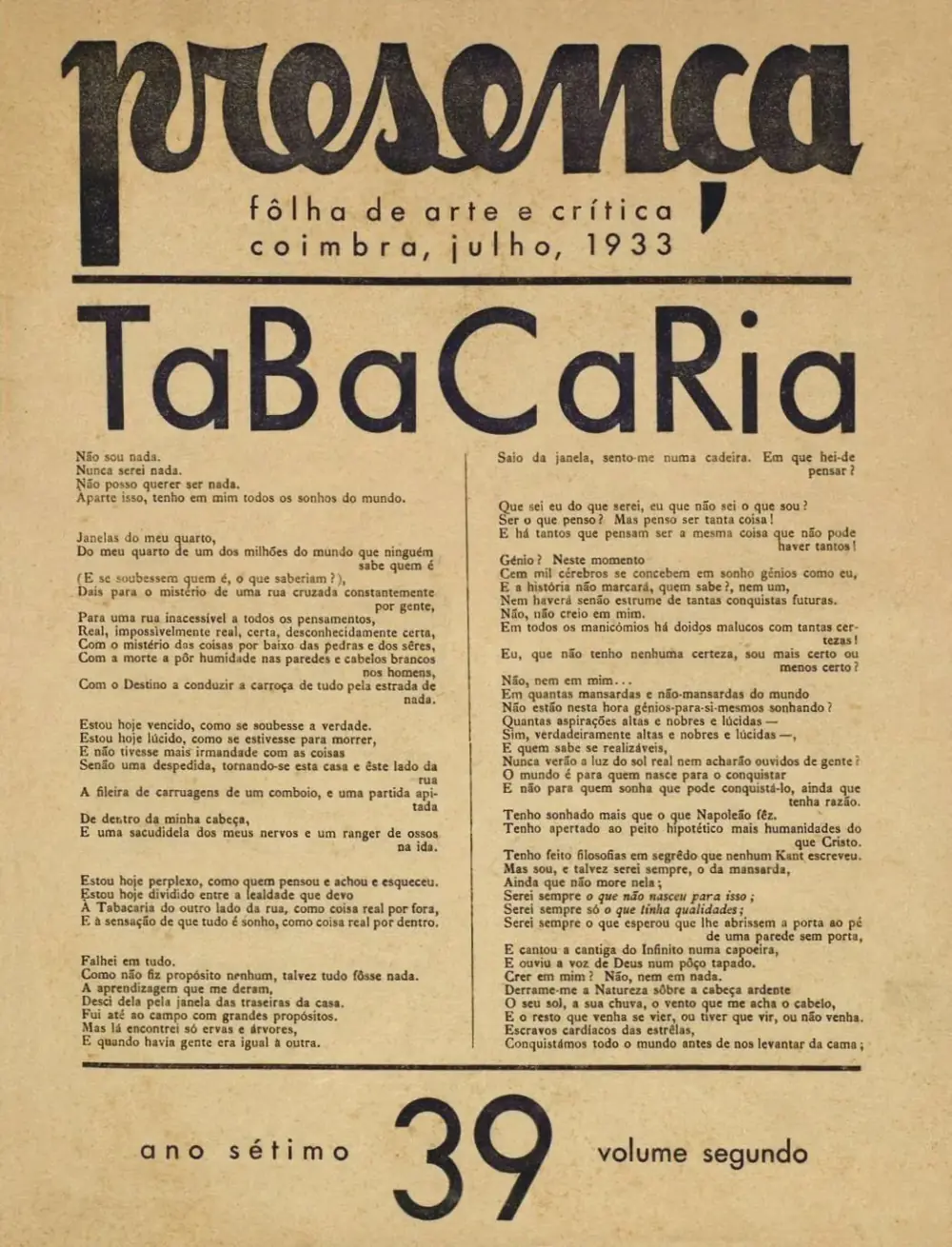
| 39 | July 1933 | “Tabacaria” (The Tobacco Shop), signed Álvaro de Campos |
| 41-42 | May 1934 | Last contribution in his lifetime |
| 48 | July 1936 | Issue given over to Pessoa, who died in November 1935 |
| 49 | 1937 | His letter of 13 January 1935 to Casais Monteiro on the origin of the heteronyms |
Dates as given by Martines (2022), Cattapan (2013), the Casa Fernando Pessoa and the Hemeroteca Municipal de Lisboa.
Quarrels, a death and the last issue
In June 1930 the group split. Branquinho da Fonseca, Edmundo de Bettencourt and the young poet Adolfo Rocha, later famous as Miguel Torga, sent Régio and Simões an open letter announcing that they were leaving. They objected to an atmosphere of mutual flattery and to a magazine that treated its writers as masters and pupils.
Pessoa ended up on the directors' side, partly because he had just had a prickly exchange of letters with Rocha about Rocha's book Rampa. When Simões asked him to show his support with more frequent work, Pessoa promised to appear in every issue as long as he was told in time. From issue 27 to his last contribution in his lifetime, in issue 41-42 (May 1934), he missed only two issues.
The poet Adolfo Casais Monteiro joined the direction, from issue 33 according to the modernismo.pt archive, or from 1930, when Branquinho left, in the Camões Institute's account.
“I never set out to be a Master or a Leader: a Master, because I don't know how to teach, nor whether I would have anything to teach; a Leader, because I can't even fry an egg.”
Pessoa died in Lisbon on 30 November 1935. Presença paid homage in issue 47, gave him the whole of issue 48 in July 1936, and in 1937 printed his long letter to Casais Monteiro on how the heteronyms were born.
By the late 1930s Presença was under fire from the weeklies O Diabo and Sol Nascente and from young neo-realist writers, who wanted art to take on social and political questions. Some younger contributors, among them Fernando Namora and Mário Dionísio, left. Régio restated the old line in his 1939 editorial for a second series, and argued with Álvaro Cunhal in the pages of the review Seara Nova. A falling-out between Casais Monteiro and Gaspar Simões finished the magazine in 1940.
10 March 1927
Issue 1
Régio's “Literatura Viva”.
April 1927
Issue 3
Régio's “Da Geração Modernista”.
4 June 1927
Issue 5
Pessoa's first contribution, under his own name and as Álvaro de Campos.
December 1928
Issue 17
Pessoa's “Tábua Bibliográfica”.
June 1930
The split
Branquinho da Fonseca, Edmundo de Bettencourt and Adolfo Rocha leave.
July 1933
Issue 39
“Tabacaria”.
30 November 1935
Pessoa dies in Lisbon
July 1936
Issue 48
Devoted to Pessoa.
1939
Second series
Two issues, the last in February 1940.
What the founders did next
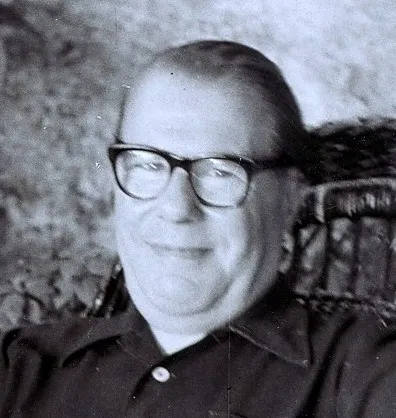
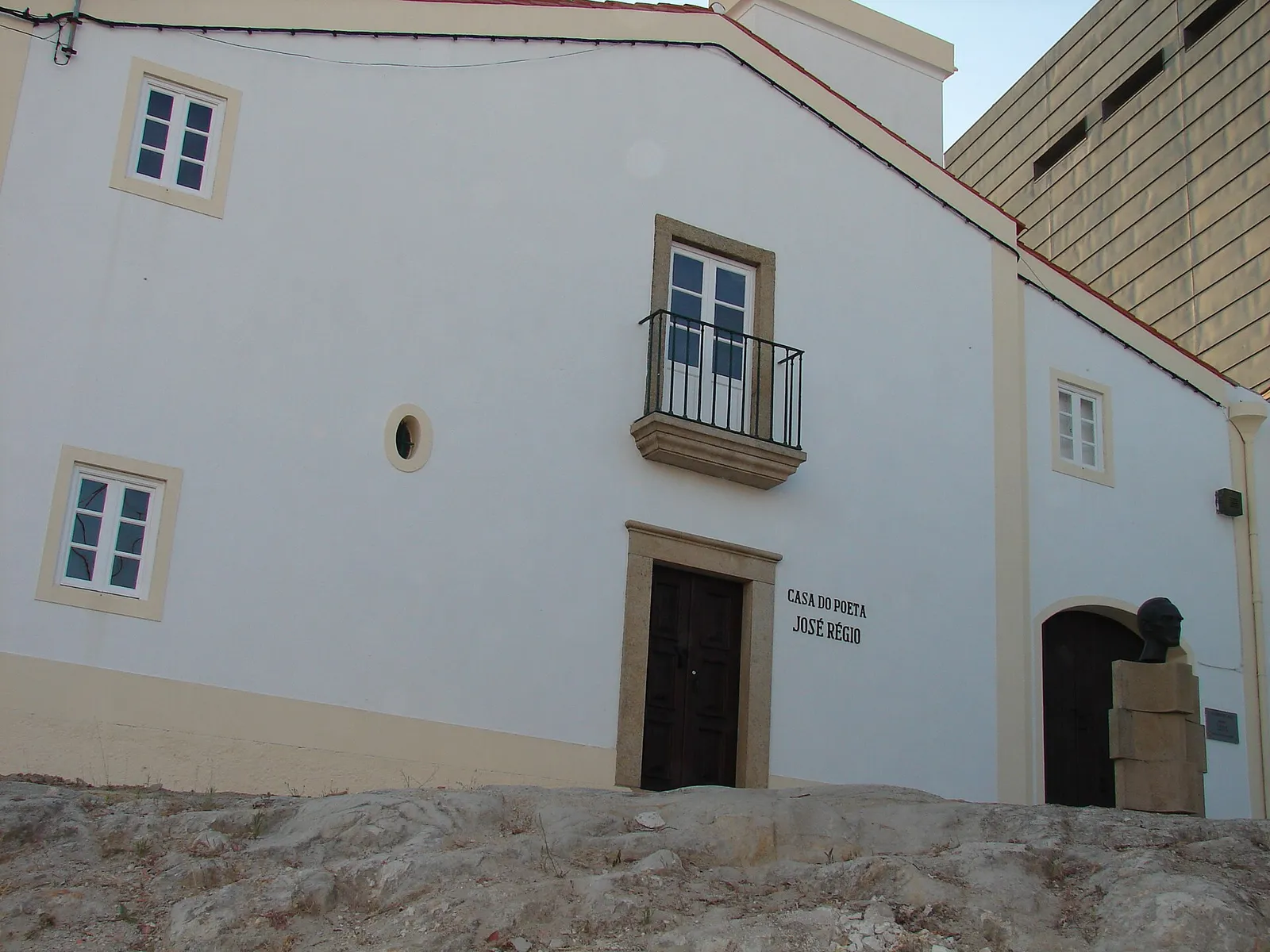
Régio became a secondary-school teacher. He was appointed to the liceu in Portalegre, in the Alentejo, in 1930 and taught there until he retired in 1962. He moved back to Vila do Conde for good in 1966 and died there on 22 December 1969, aged 68.
Gaspar Simões became, in the critic Eugénio Lisboa's words, the most substantial and persistent critic in Portuguese literary history, reviewing new books every week for the Diário de Lisboa and later for other papers, including the Diário de Notícias. His Vida e Obra de Fernando Pessoa (1950) is still a standard reference, and his História do Movimento da “Presença” (1958) told the magazine's story from the inside. He died in Lisbon on 6 January 1987, aged 83.
Branquinho da Fonseca took his law degree on 4 July 1930, a few weeks after leaving Presença, and became a civil registrar in Marvão and Nazaré. Under the pen name António Madeira he published the novella O Barão (The Baron) in 1942, his most celebrated book. From 1943 he was curator of the Museu-Biblioteca Condes de Castro Guimarães in Cascais, where he fitted out a bus as a travelling library.
In 1958 the Calouste Gulbenkian Foundation asked him to repeat the experiment across the country. He ran its Serviço de Bibliotecas Itinerantes from its first vans until his death on 7 May 1974. The rules were his: open shelves, free loans and books taken home until the van's next visit.
- First vans
- 15 Citroëns, presented in Lisbon in May 1958
- Books per van
- About 2,000
- Books lent, all years
- About 97 million
- Readers, counted cumulatively
- Almost 29 million
- Places served, all years
- 3,900
Why Presença still matters
Presença gave Pessoa a steady place to publish and a younger generation to argue with. Some of his most admired poems first appeared in its pages, “Tabacaria” among them, and Martines calls it perhaps the magazine that worked hardest to spread Pessoa's names.
It also helped fix the canon. Scholars now date Portuguese modernism from Orpheu, which in 1927 was not obvious, and Cattapan concludes that Régio's criticism made Orpheu easier for the public of the time to accept, preparing a wider reception that came decades later. Presença itself is remembered as the magazine of Portugal's “second modernism”.
Its writers then built Pessoa's posthumous reputation. Publication of his unpublished work began in 1942, on the initiative of Gaspar Simões and Luís de Montalvor. The same year Casais Monteiro edited a two-volume anthology of his poetry, and in 1950 Simões published his life of the poet, Vida e Obra de Fernando Pessoa.
FAQs
What was Presença?
Presença, subtitled “folha de arte e crítica” (sheet of art and criticism), was a literary magazine published in Coimbra from 10 March 1927 to 1940. It was founded by José Régio, João Gaspar Simões and Branquinho da Fonseca and is associated with Portugal's “second modernism”.
What did Fernando Pessoa publish in Presença no. 5?
Issue 5, dated 4 June 1927, carried his first contribution: the poem “Marinha” under his own name and a set of aphorisms, “Ambiente”, signed by his heteronym Álvaro de Campos.
Was “Tabacaria” first published in Presença?
Yes. Álvaro de Campos's “Tabacaria” (The Tobacco Shop) first appeared in Presença no. 39, Coimbra, in July 1933.
Why did Branquinho da Fonseca and Miguel Torga leave Presença?
In June 1930 Branquinho da Fonseca, Edmundo de Bettencourt and Adolfo Rocha (later Miguel Torga) left with an open letter to Régio and Simões, objecting to the magazine's atmosphere and to its way of treating writers as masters and pupils.
How many issues of Presença were there?
Fifty-four issues in the first series (1927 to 1938) and two in a second series (1939 to 1940), 56 in all. A special issue marked the fiftieth anniversary in 1977.
On the timeline
Open the timelineNearby moments from dictatorship and the estado novo (1926–1974).
General Manuel Gomes da Costa launches a military uprising in Braga that spreads quickly through the army. Within days the government falls, President Bernardino Machado resigns and parliament is shut, ending almost 16 years of unstable parliamentary rule and opening the way to the military dictatorship that became Salazar's Estado Novo.
The February Revolt, the first serious attempt to topple the military dictatorship installed in 1926, ends with the surrender of the last rebels in Lisbon, a day after Porto, shelled from across the Douro, gave in. Estimates put the dead at about 100 in Porto and about 90 in Lisbon.
Presença prints Pessoa
Fernando Pessoa makes his debut in 'Presença', the Coimbra magazine of the second wave of Portuguese modernism. Issue no. 5 carries his poem 'Marinha', signed under his own name, alongside 'Ambiente', a set of aphorisms signed by his heteronym Álvaro de Campos — the start of a collaboration that would run until 1934 and bring the still little-known poet to a new generation of readers.
At Lisbon's Santa Marta Hospital, the neurologist Egas Moniz obtains the first successful cerebral angiogram, injecting contrast into the carotid artery so that the brain's blood vessels show up on X-ray — a technique still at the heart of neuroradiology. His 1949 Nobel Prize, by contrast, honoured the lobotomy, a procedure now discredited.
Miguel Januário de Bragança, styled Miguel II by the Miguelist monarchists and son of the deposed absolutist King Miguel I, dies in exile in Austria. Born in 1853 and barred from Portugal by the banishment law against his branch of the family, he was the grandfather of Duarte Pio, today's Duke of Braganza.
António de Oliveira Salazar, a Coimbra economics professor, becomes Minister of Finance after demanding a veto over any rise in other ministries' spending. Within a year he had balanced the budget, the springboard for his rise to Prime Minister in 1932 and four decades in power.
Coming up in history
All long reads 6 June 1801The Treaty of Badajoz, 1801: how Portugal lost Olivença
 7 June 1594Roderigo Lopes: Elizabeth I's Portuguese doctor, hanged at Tyburn in 1594
 8 June 2022Paula Rego, the Lisbon-born painter of hard stories, dies at 87
 9 June 1815Olivença and Article 105: Portugal at the Congress of Vienna, 1815
21 sources
Archives, scholarship and reporting this article was checked against.
- 1
Pessoa, presença e a frente comum contra Adolfo Rocha (Miguel Torga) (Enrico Martines)Revista do Centro de Estudos Portugueses (UFMG), v. 42, n. 67, 2022, pp. 80-95
- 2
PresençaModernismo: Arquivo Virtual da Geração de Orpheu
- 3
José Régio na Presença: arte viva, modernismo e crítica (Julio Cesar Rodrigues Cattapan)Boletim de Pesquisa NELIC, Universidade Federal de Santa Catarina, v. 13, n. 20, 2013, pp. 58-77
- 4
Fernando Pessoa nas páginas da Presença (Enrico Martines)Pessoa Plural, 28 (2025), pp. 5.37-5.51; record in IRIS, Università di Parma
- 5
João Gaspar Simões (by Eugénio Lisboa)Camões, Instituto da Cooperação e da Língua, Figuras da Cultura Portuguesa
- 6
54º Anniversary of death of José RégioMuseu Nacional Soares dos Reis, 22 December 2023
- 7
Branquinho da Fonseca: centenary article (José Maria Rodrigues Filho)Ecos (Universidade do Estado de Mato Grosso), no. 3, June 2005
- 8
Fernando Pessoa (the orthonym)Casa Fernando Pessoa (Lisbon City Council, EGEAC)
- 9
- 10
- 11Orpheu: 100 anos da revista que escandalizou LisboaObservador, 25 March 2015
- 12
Representações da revolta de fevereiro de 1927 em órgãos de imprensa do Porto e de Lisboa (Daniel Filipe Soares da Silva)Omni Tempore, Encontros da Primavera 2023, 9 (2024), pp. 121-145, Universidade do Porto
- 13
Uprising of February 1927Museu do Aljube – Resistência e Liberdade, 2 February 2025
- 14
- 15
- 16
Autopsicografia / Autopsychography, by Fernando PessoaPoetry International
- 17
Tabacaria / Tobacco Shop (Casa Fernando Pessoa edition)Casa Fernando Pessoa
- 18
Fernando Pessoa (efeméride), by João Carlos Oliveira, 7 June 2013Hemeroteca Digital, Câmara Municipal de Lisboa
- 19
Portalegre e Vila do Conde assinalam 50 anos da morte de José RégioNotícias ao Minuto (Lusa), 2019
- 20Bibliotecas itinerantes vão hoje além da leitura e prestam também apoio socialRTP Notícias (Lusa)
- 21
«I know not what tomorrow will bring»: 83 anos do desaparecimento de PessoaImprensa Nacional-Casa da Moeda
Image credits
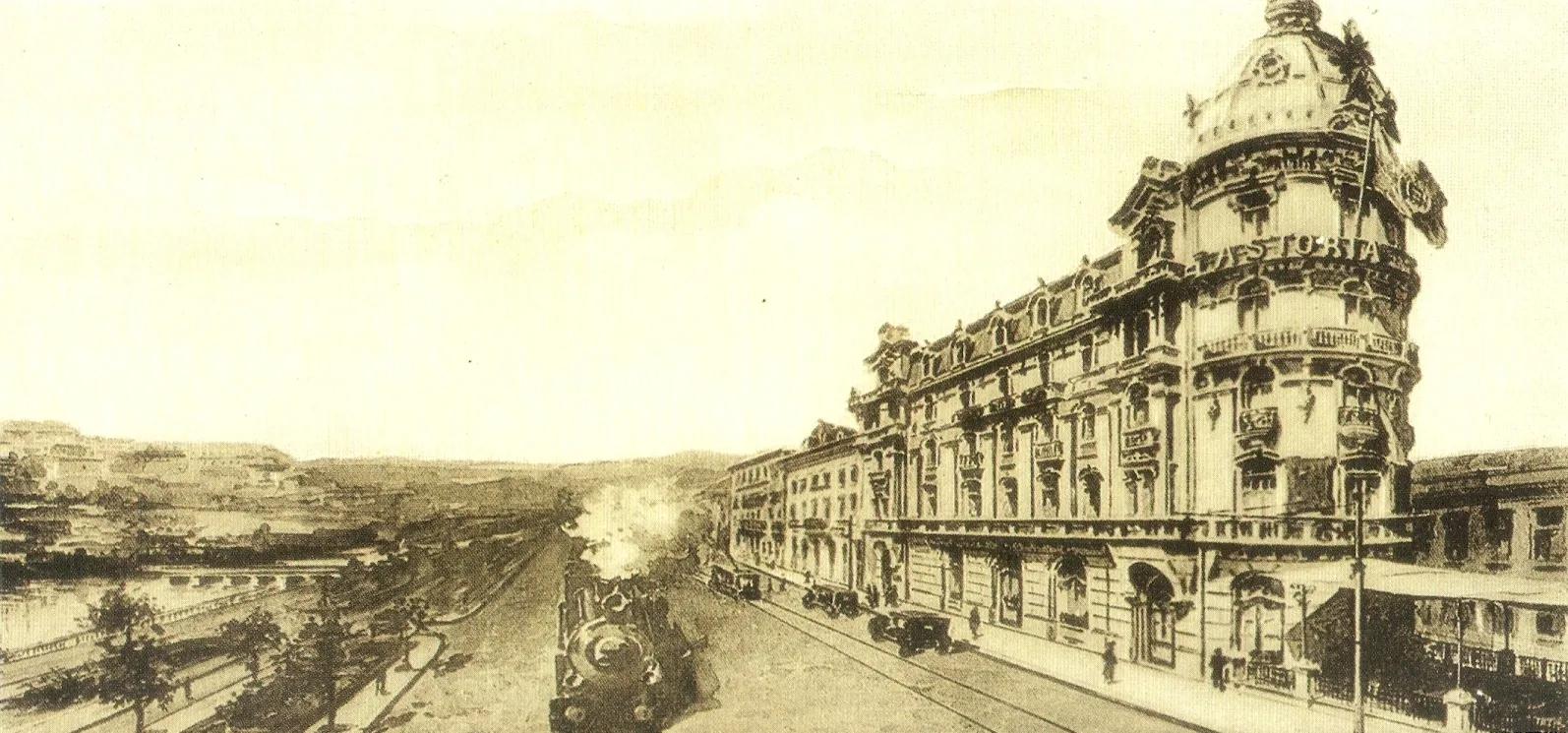
- Coimbra in 1924: a train of the Lousã line runs along the Avenida Emídio Navarro, beside the Mondego, past the Hotel Astória. Presença was launched in the university town three years later. Unknown author, Public domain, via Wikimedia Commons.
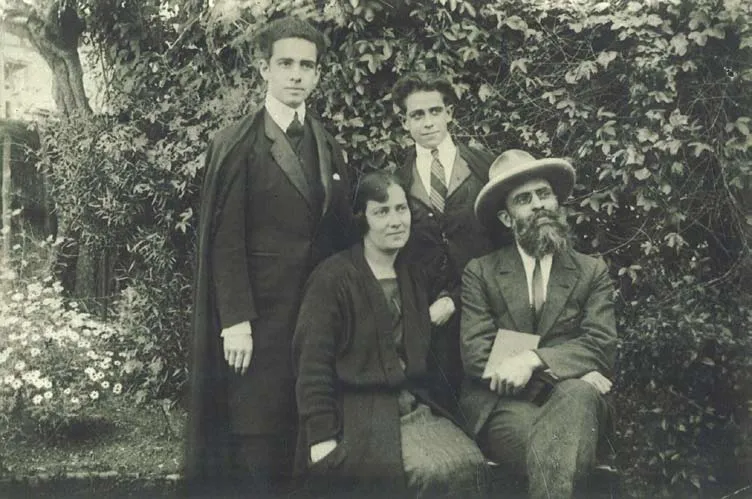
- Branquinho da Fonseca (standing, left, in a student's cape) in Coimbra around 1923, with his mother, Clotilde Madeira, his father, the writer Tomás da Fonseca (seated, right), and Tomás Branquinho da Fonseca. Four years later he co-founded Presença. Unknown author, Public domain, via Wikimedia Commons.
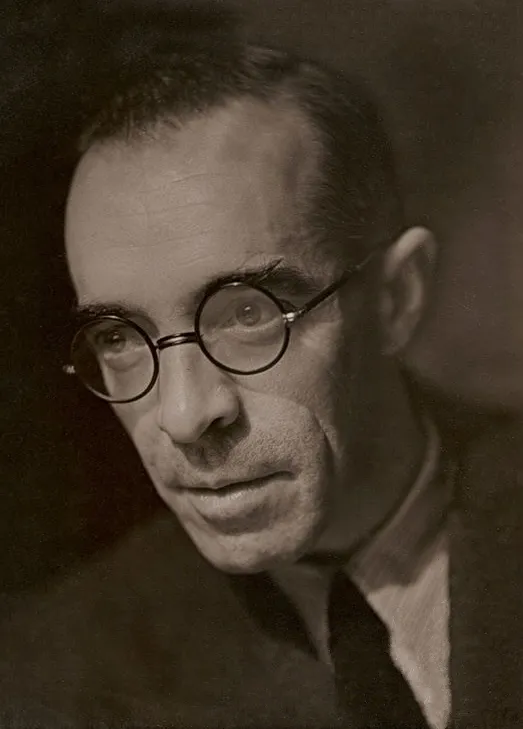
- José Régio around 1947. He was Presença's chief theorist and wrote much of its criticism. Unknown author, Public domain, via Wikimedia Commons.
- The front page of Presença no. 39, July 1933, given over to Álvaro de Campos's “Tabacaria”. The magazine had used a lower-case masthead since issue 4. Pmms2005, CC BY-SA 4.0, via Wikimedia Commons.
- João Gaspar Simões in 1963. He and Régio were the only founders who stayed with Presença from first issue to last. Delfim Santos, Public domain, via Wikimedia Commons.
- The Casa do Poeta José Régio in Portalegre, photographed in 2006. Régio lived here for decades while teaching at the town's liceu; it opened as a museum in 1971. Carlasfonseca, CC BY-SA 4.0, via Wikimedia Commons.