

The Constant Prince: Infante Fernando dies a hostage in Fez, 5 June 1443
Left behind as surety after the failed attack on Tangier in 1437, the youngest son of João I spent more than five and a half years as a prisoner while Portugal argued over whether a city was worth a prince. Writers from Camões to Calderón made him a martyr who chose his chains. His own letters asked to come home.
At a glance
- Infante Fernando, the youngest son of King João I and Philippa of Lancaster, died a prisoner in Fez on 5 June 1443, aged 40.
- He had been handed to the Moroccans on 16 October 1437 as surety that Portugal would return Ceuta, the price of letting its beaten army leave the beach at Tangier.
- The Cortes of Leiria split four ways in 1438 and King Duarte chose delay. The regency later agreed to give Ceuta up, but the deal collapsed and the city stayed Portuguese.
- His entrails reached the Monastery of Batalha in 1451 and his bones in the early 1470s, exchanged for the wives and son of the lord of Arzila, captured in 1471.
- Camões and Calderón's play El príncipe constante made him a martyr who refused freedom at Ceuta's price, though he had himself argued that Ceuta should be given for him.
A coffin over the gate of Fez
In June 1443 a man of 40 lay dying in a dark cell in Fez. He was a king's son. His secretary, Frei João Álvares, who shared his captivity, later wrote that in his last hours the Virgin Mary, St John the Evangelist and his own patron, the Archangel Michael, came to comfort him. He died on 5 June, five years and seven months after he had been handed over as a hostage.
His captors did not bury him. Rui de Pina, the royal chronicler, wrote that the body was put in a coffin that hung by chains over one of the city's gates “for a long time”. His companions kept his entrails in a pot and guarded them as relics.
The prisoner was Infante Fernando, the youngest son of King João I of Portugal and his English queen, Philippa of Lancaster. He was in Fez because in October 1437, on a beach outside Tangier, his brother Henrique had agreed to give the Moroccans the city of Ceuta in return for the lives of a starving Portuguese army, and had left Fernando behind as the guarantee. Ceuta was never handed over.
The story gave him two names. In Portugal he became the Infante Santo, the holy prince; in Spain, and later in English, the Constant Prince, after Pedro Calderón de la Barca's play El príncipe constante.
A prince starved of honour
Fernando was born in Santarém on 29 September 1402, the feast of St Michael, the last child of João I and Philippa. He was the youngest of the brothers Camões would call the Ínclita Geração, the illustrious generation: Duarte, king from 1433, Pedro, Henrique, later known as Henry the Navigator, and João. Álvares describes him as frail from birth, devout and chaste, with a large library. He never married.
On 21 August 1415 his father's fleet took Ceuta, a Muslim port on the African side of the Strait of Gibraltar, and three of his elder brothers were knighted there. Fernando, aged 12, was not. João I left Fernando only the towns of Atouguia and Salvaterra de Magos and an allowance. Duarte added the mastership of the military Order of Avis, held with a papal dispensation.
Pina tells how Fernando confronted the king at Almeirim. His brothers had earned their knighthoods with their own hands, he said, while he had done nothing that let him call himself the son of such a father. He asked leave to go abroad and seek his fortune with the Pope, the Emperor or the king of France. Duarte, hurt, refused and promised more favours.
“Though I am reasonably well provided with sustenance, I know I am starved of honour, and of merits of my own by which to win it.”
Pina puts this conversation at the root of the attack on Tangier. Álvares, whose life of Fernando was written to show a saint, leaves it out, along with his master's eagerness for the war.
The case for Tangier
Ceuta cost more than it paid. It had to be supplied and garrisoned from Portugal, and the court saw it, in the historian Maria Dávila's summary, as a waste of people and money. Henrique wanted a second conquest: Tangier, a good harbour on the Atlantic side of the Strait.
Early in 1436 a papal envoy reached Duarte at Estremoz with the crusade bull he had asked Pope Eugenius IV for. Henrique urged him to use it at once. Queen Leonor pressed her husband too, after Henrique and Fernando promised to adopt her younger son, another Fernando, and make him their heir. Duarte gave his licence, in Pina's words, “at the queen's request and without counsel”.
Only in August 1436, at Leiria, did he ask his brothers and his half-brother, the Count of Barcelos, for advice. João set out the case on both sides, doubting among other things that God wanted such a war, and left the choice to the king; Barcelos took the case against. Pedro argued that the kingdom had neither the money nor the people to hold more towns in Africa and that the Moors would be ready. Henrique and Fernando, who had proposed the war, did not vote. Duarte went ahead anyway.
On 18 August 1437, four days before the fleet sailed, Fernando made his will. If he died abroad, he wanted to lie at the Monastery of Batalha, where his parents were buried, and to be carried there “without any pomp”, as one would carry a simple knight.
Thirty-seven days at Tangier
On 22 August 1437, at Restelo, Duarte said goodbye to his brothers and handed Henrique orders written in his own hand: keep one end of the camp on the sea; assault the town three times; and if the third assault failed, withdraw at once to Ceuta and wait for the king, who would come the next March with every man the kingdom could raise.
At Ceuta, reached on 27 August, Henrique's muster did not find even 2,000 horse, 1,000 crossbowmen and 3,000 foot. Of the 14,000 men ordered, Pina says, 8,000 were missing. Men had preferred to forfeit their property rather than go, money had run out, and hired ships from Flanders, Germany and Biscay never came. His captains advised waiting; Henrique answered that God meant them to go on.
The army ordered and the army found at Ceuta, August 1437
men
- Planned
- Mustered at Ceuta (Pina)
Planned figures from Pina's list of the 14,000 men agreed by the king and Henrique: 3,500 men-at-arms and 500 mounted crossbowmen (shown together), 2,500 crossbowmen on foot, 7,000 foot soldiers and 500 servants (not shown). Hugo Moreira's study, quoted by Dina Fernandes, gives the same breakdown. At Ceuta, Pina says, the muster did not reach even 2,000 horse, 1,000 crossbowmen and 3,000 foot; the bars show those ceilings, and he does not say how the crossbowmen were split between horse and foot. Moreira and RTP Ensina put the force that went on to Tangier at about 8,000, more than Pina's muster adds up to.
Show the data
| Planned | Mustered at Ceuta (Pina) | |
|---|---|---|
| Mounted men | 4,000 | 2,000 |
| Crossbowmen on foot | 2,500 | 1,000 |
| Foot soldiers | 7,000 | 3,000 |
Fernando was ill and went by sea. Henrique marched overland by Tetouan and reached Tangier on Friday 13 September. Its governor was Salah ben Salah, who had been lord of Ceuta when the Portuguese took it, with by Pina's count 7,000 fighting men, many of them crossbowmen from Granada.
The camp was pitched on a rise towards Cape Spartel, among orchards and wells, not on the shore as the king had ordered. Assaults on 20 September and 5 October failed: in the first the ladders were too short, in the second only one reached the wall, and the defenders burned it with tar and flax. Relief armies gathered in the hills, and on 9 October the Portuguese were cut off from the beach and besieged inside their own palisade.
What followed was a week of thirst and hunger. With no firewood, men ate their horses raw or warmed the meat over burning saddle straw. Pina writes that dying men were seen with mud pressed to their lips, and that only rain saved many. An assault with burning wood and tar against the palisade was beaten off after seven hours.
On Wednesday 16 October Henrique and his council accepted terms. The Portuguese could embark with the clothes they wore; the camp, its horses, weapons and artillery stayed behind; Ceuta would be returned with every Moorish captive in it; and the king would keep peace with all of Barbary, by land and sea, for a hundred years. Salah ben Salah gave his son as surety for the embarkation. As surety for Ceuta, the Moroccans took Fernando.
Henrique begged to stay in his place, Pina says, meaning to make sure that nothing of value was given for him; the council refused. The next morning tribesmen from the hills attacked the men going down to the boats and the wells, and threw dead dogs into the wells. Only on Saturday 19 October did the Portuguese drag their palisade to the water's edge. By Sunday morning everyone left was aboard. Henrique kept Salah ben Salah's son and took him to Ceuta.
- Fleet sails from Restelo
- 22 August 1437
- Arrival before Tangier
- Friday 13 September 1437
- Days at Tangier
- 37: 25 as besiegers, 12 as besieged (Pina)
- Treaty and hostages
- Wednesday 16 October 1437
- Last men embark
- Sunday 20 October 1437
- Portuguese dead
- Up to 500, eight of them noblemen (Pina)
Ceuta or Fernando
Henrique stayed five months in Ceuta waiting for a decision, then went home to the Algarve rather than to court.
Early in 1438 the king put the question to the Cortes, the assembly of clergy, nobles and towns, at Leiria. His spokesman said the promise had been made in extreme necessity and asked for a way to free the prince without giving up the city; failing that, whether it must be given, and how either side could be trusted with the exchange.
Then a memorandum from Fernando was read aloud. Writing from Arzila, where he was held, he argued that keeping Ceuta was neither in the king's service nor good for the kingdom, listed what it cost, and urged that it be given for him as agreed.
| Position | Main supporters |
|---|---|
| Give Ceuta at once: the treaty was signed and breaking it would bring infamy on king and kingdom | Infantes Pedro and João, a few other lords and most of the towns |
| The king cannot give Ceuta without the Pope's express consent, because its churches had been consecrated | Fernando da Guerra, Archbishop of Braga, with more votes than the first |
| Play for time: try money, captives, or a crusade backed by the Pope and Christian kings; give Ceuta only as a last resort, if theologians say it is lawful | Not named by Pina |
| Never give Ceuta, not even for the king's own heir; a promise made under duress does not bind | The Count of Arraiolos and many others |
Pina writes that the king and his council leaned towards the fourth view. Henrique did not attend.
Duarte could not choose. Giving up Ceuta meant tearing from his crown the title his father had won and had carved over his tomb, for one mortal man who, Pina has him reflect, might die as soon as he was free. Refusing meant abandoning a brother who had offered himself to save the army. He chose delay, and wrote to the Pope and the Christian kings for advice and help. They sent praise and prayers, and nothing else.
From Arzila to Fez
At Arzila, Álvares writes, the prisoners were closely guarded but not harshly held, though poorly fed. When it was clear that Ceuta was not coming, Pina writes, Lazeraque, the governor who held power in Fez in its king's name, had Fernando brought there, and his treatment hardened. Duarte knew by June 1438. He met Henrique at Portel and found him firm that Ceuta must not be given, for God's sake and because the Moroccans had broken the truce.
Duarte fell ill at Tomar and died on 9 September 1438, leaving the throne to his six-year-old son, Afonso V. His will asked that Fernando be freed for money or by some other bargain and, if that proved impossible, that Ceuta be given for him.
The queen and Pedro, who soon held the regency alone, decided to honour the will, against the Pope's advice. In April 1441 the nobleman Fernando de Castro sailed from Lisbon with 1,200 men to take charge of Ceuta and hand it over in exchange for the prince. Off Cape St Vincent a Genoese carrack attacked his ship, and he was killed by a cannon shot.
His son took up the mission, but Lazeraque now wanted Ceuta first, against nothing but his oath. Pina believed the governor never wanted the deal: the war over Ceuta kept his subjects busy.
On 12 June 1441 Fernando wrote to Pedro from his dungeon. Some of his companions had died and there was plague in the city. He reminded Pedro that he knew why his brother lay in captivity, and asked him to free not only his body but his soul.
“Arrange my release with haste, so that by every means and effort I am not lost, as it seems to me is being arranged, if God and you do not come to my aid in time.”
Álvares describes irons, hunger and work in the stables and streets of Fez; later writers had the king's son grooming horses. For the last 15 months of his life Fernando was kept apart, alone. His physician, Mestre Martinho, a son of the chronicler Fernão Lopes, died in Morocco soon after his master.
16 October 1437
Handed over as surety for Ceuta outside Tangier
Early 1438
Cortes of Leiria split four ways
By June 1438
Moved from Arzila to Fez
9 September 1438
King Duarte dies; his will allows Ceuta to be given
April 1441
Fernando de Castro killed at sea on the way to Ceuta
12 June 1441
Fernando's letter to Pedro from Fez
5 June 1443
Dies in Fez, aged 40
1448
Frei João Álvares freed
1451
His entrails reach Batalha
1471 to 1473
His bones exchanged after the capture of Arzila and buried at Batalha
Bones for hostages
Álvares was freed in 1448, went back to North Africa and brought home the entrails his companions had hidden. In 1451 they were carried from Tomar to Batalha. Henrique walked with them, knelt and kissed them, and paid for a daily mass at his brother's altar.
The bones stayed in Fez for close to thirty years. In August 1471 Afonso V stormed Arzila and captured two wives and a son of its lord, Muley Sheikh. Offered a large sum of gold for them, the king would take only his uncle's bones. Their keeper, whom Pina calls Molley Belfagege, sent them by sea to Restelo, and in Lisbon the prior of São Domingos preached a sermon that left the crowd in tears. They were laid in the Founder's Chapel at Batalha.
In his chronicle of Afonso V Pina dates the return to 1473. The literary historian Maria Idalina Rodrigues thinks 1471, soon after Arzila, more likely. A rival story, printed in the 1577 edition of Álvares's life and perhaps already in a lost edition of 1527, has a nephew of the king of Fez steal the coffin on a dark, rainy night.
A saint Rome never made
Álvares wrote his Trautado da vida e feitos do muito vertuoso Senhor Ifante D. Fernando between 1451 and 1460, encouraged by Henrique and Afonso V. It follows the pattern of a medieval saint's life: a miraculous birth, a list of virtues, a passion modelled on Christ's, and miracles at the end, about ten of them, from cures to wheat multiplied for a woman in time of hunger.
Its patrons had reasons to prefer a martyr to a hostage abandoned by his family. Pedro, the brother who had worked hardest to free him, died in 1449 in conflict with Afonso V, and his efforts get little space.
A cult grew at Batalha and in Lisbon. Fernando's sister Isabel, Duchess of Burgundy, planned a chapel to him at the church of Santo António in Lisbon; Álvares went to Flanders to see her about it in 1467 or 1468, and to Rome in 1470 to promote his master's cause.
The Jesuit historian Domingos Maurício Gomes dos Santos cited a bull of 1470 in which Pope Paul II granted indulgences to those who visited the chapel on the anniversary of his death, and argued that a tolerated cult lasted at Batalha until at least the late seventeenth century. Rome never beatified or canonised him, and RTP Ensina notes that the Church went as far as forbidding his cult.
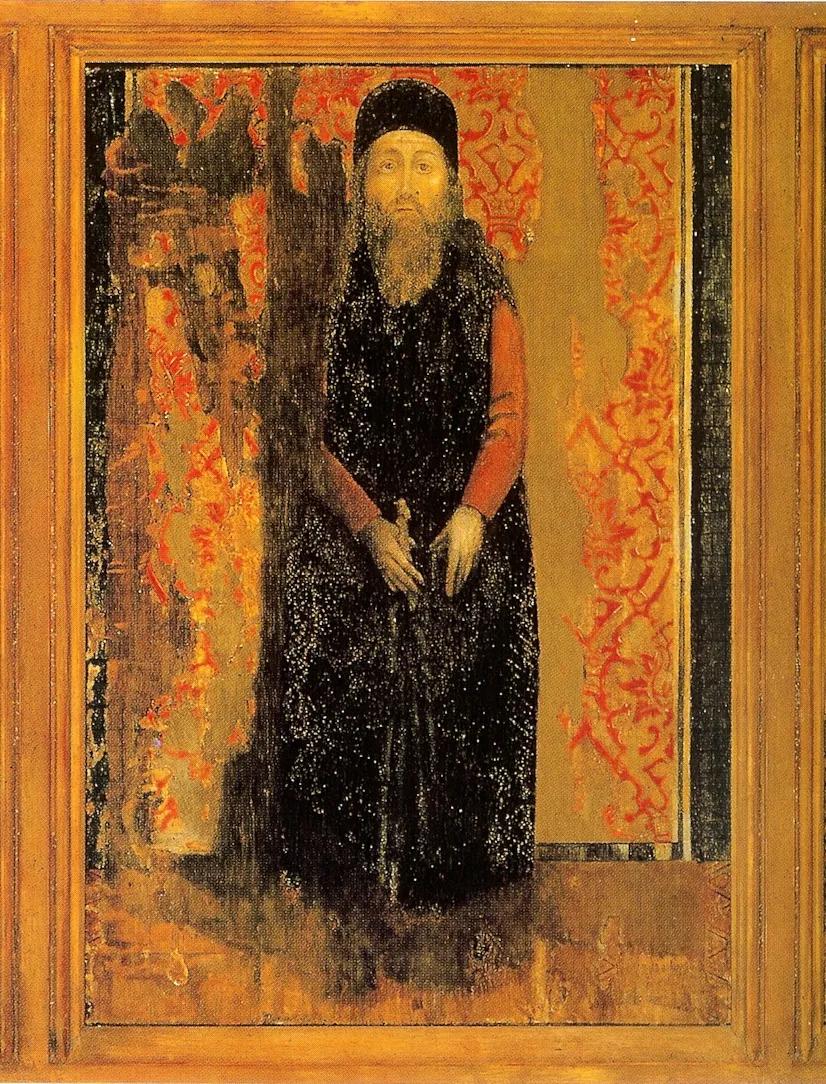
The art historian Maria Emília Vaz Pacheco suggests that Henrique, whom Duarte's speech at Leiria had implicitly blamed for the disaster, commissioned the triptych for his own altar at Batalha in homage to his brother, between 1451 and 1460. Its side panels show the body on a mat in the cell, a vision of the Virgin and Moorish horsemen.
From Camões to Calderón
In Os Lusíadas (1572) Luís de Camões gave the story its decisive turn. His Fernando gives himself up to save the besieged army and stays a slave so that Ceuta will not be handed over, and the poet sets him beside Regulus, the Roman captive who advised Rome against his own exchange. Maria Idalina Rodrigues finds no trace of a prince who chose captivity in Pina or Álvares, and thinks Camões may have been the first to make him a willing martyr, though she does not insist on it.
“For love of his country alone he is spending his life, once a lord's, now made a slave's, so that strong Ceuta shall not be given for him. He puts the public good before his own.”
Spanish writers took it further. In Luis del Mármol Carvajal's description of Africa (1573) the prince himself refuses, preferring to die a captive; in Diego de Torres's account (1585) he “never consented”. After 1580, when Philip II of Spain became king of Portugal, Fernando suited audiences on both sides of the border, and a play from Lope de Vega's circle put him on stage around 1595.
Calderón wrote El príncipe constante in his late twenties, around 1629; it was printed in Madrid in 1636, in the first volume of his comedies, and the manuscript title called the hero a slave for his country. He invented freely. A Moorish general, Muley, owes Fernando his life; Henrique comes back to Fez after Duarte's death to trade Ceuta for his brother, and Fernando forbids it. In the last act his ghost, carrying a torch, leads Afonso V to the walls of Fez to recover his body.
“King: If you confess yourself a captive, if you confess me your master, why do you not give me Ceuta? Fernando: Because it is God's, and not mine.”
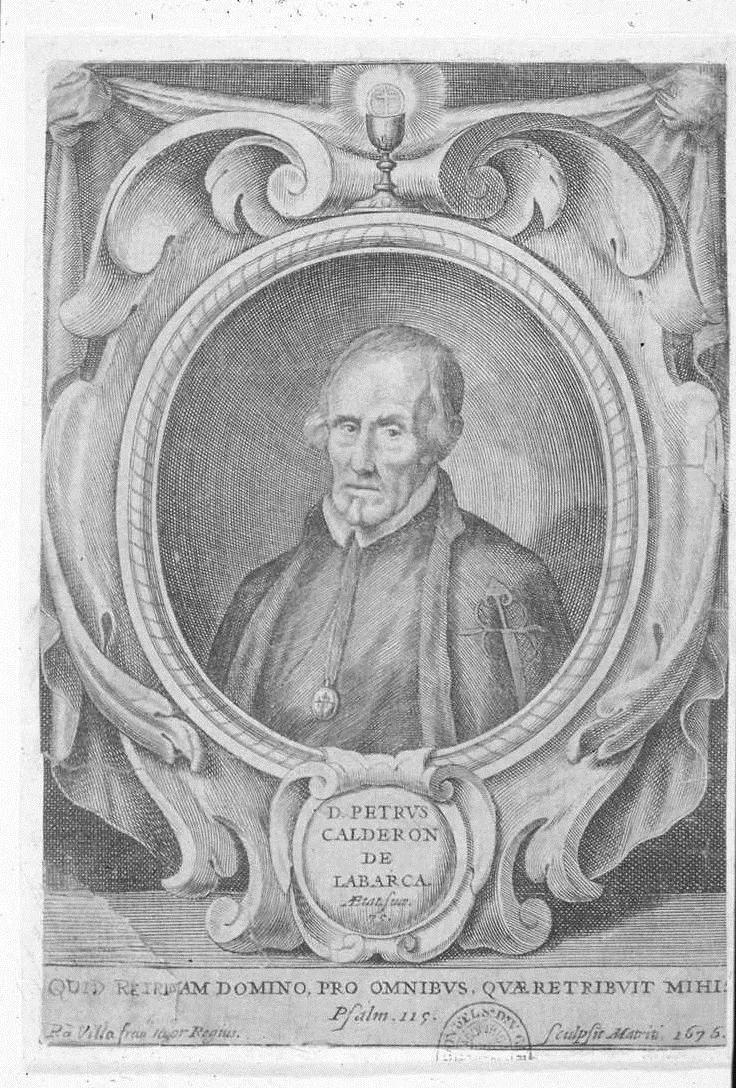
The play travelled further than the history. Schlegel translated it into German in 1803, and in January 1804 Goethe wrote to Schiller that if poetry were lost from the world it could be rebuilt from this play; he later staged it at Weimar. In 1966 Jerzy Grotowski's Polish production, built on Juliusz Słowacki's version of 1844, played at the Théâtre des Nations in Paris.
Why it still matters
The legend and the record point different ways. The man in Pina's chronicle and in his own letters wanted to go home and said Ceuta should be given for him. The city was kept by others: by Duarte's delay, by the lords and clergy at Leiria and by a governor in Fez who did not want the deal. A Genoese ship off Cape St Vincent, which killed the man sent to hand Ceuta over, also played its part.
Historians have argued since over who was to blame, Duarte, Henrique or Pedro. Pacheco ends her study by quoting David Lopes, writing in 1931: “the abandonment of the infante was a crime.” The Encyclopaedia of Portuguese Expansion calls the 1437 expedition one of the most disastrous military campaigns in Portugal's history.
Ceuta, the city he was held against, stayed Portuguese for two more centuries. In 1640 it refused to accept the new Braganza king, and the Treaty of Lisbon of 1668 recognised it as Spanish.
Under the Estado Novo, Salazar's dictatorship, school textbooks held Fernando up as a model of humility, faith and patriotism. Fernando Pessoa gave him a poem in Mensagem, in which the prince says: “Full of God, I do not fear what is to come.”
FAQs
Why is Infante Fernando called the Constant Prince?
The name comes from Pedro Calderón de la Barca's play El príncipe constante, printed in 1636, whose hero patiently refuses to let Ceuta be traded for his freedom. In Portugal he is usually called the Infante Santo, the holy prince.
Did Fernando refuse to be exchanged for Ceuta?
Not according to the earliest sources. Rui de Pina records a memorandum he sent from Arzila to the Cortes of Leiria in 1438 arguing that Ceuta should be given for him, and his letter of 12 June 1441 begged the regent Pedro to hurry his release. The decision to keep Ceuta was taken by others, through delay and a deal that collapsed. The heroic version took shape with Camões in 1572 and grew in Spanish writing up to Calderón.
How long was Fernando a prisoner?
From 16 October 1437, when he was handed over outside Tangier, to his death in Fez on 5 June 1443: five years, seven months and 20 days. He was held first at Arzila and from 1438 in Fez.
Was Infante Fernando made a saint?
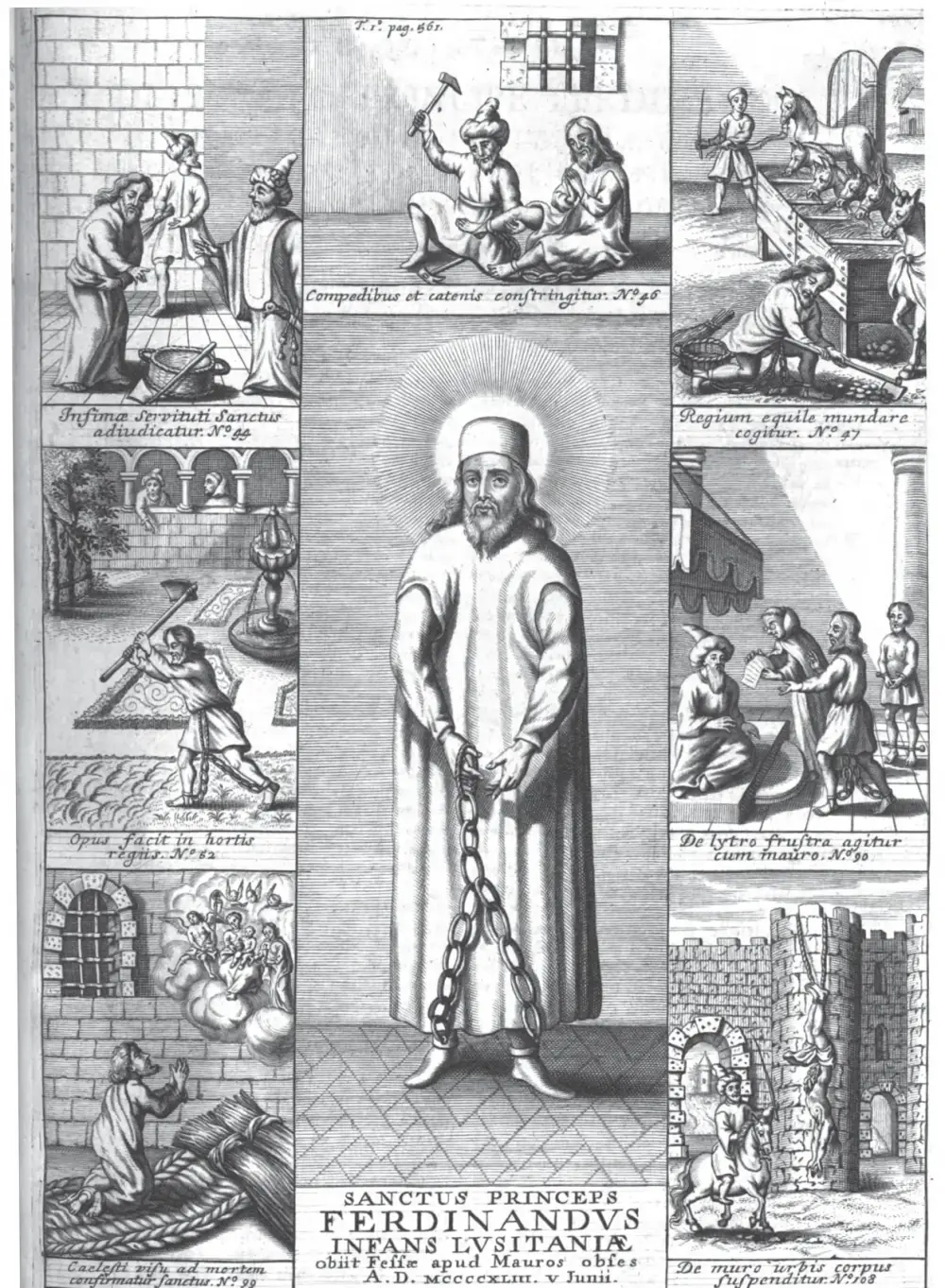
No. A popular cult grew at Batalha and in Lisbon in the fifteenth century, and the Bollandists printed his life with a halo in 1695, but the Church never beatified or canonised him.
Where is the Infante Santo buried?
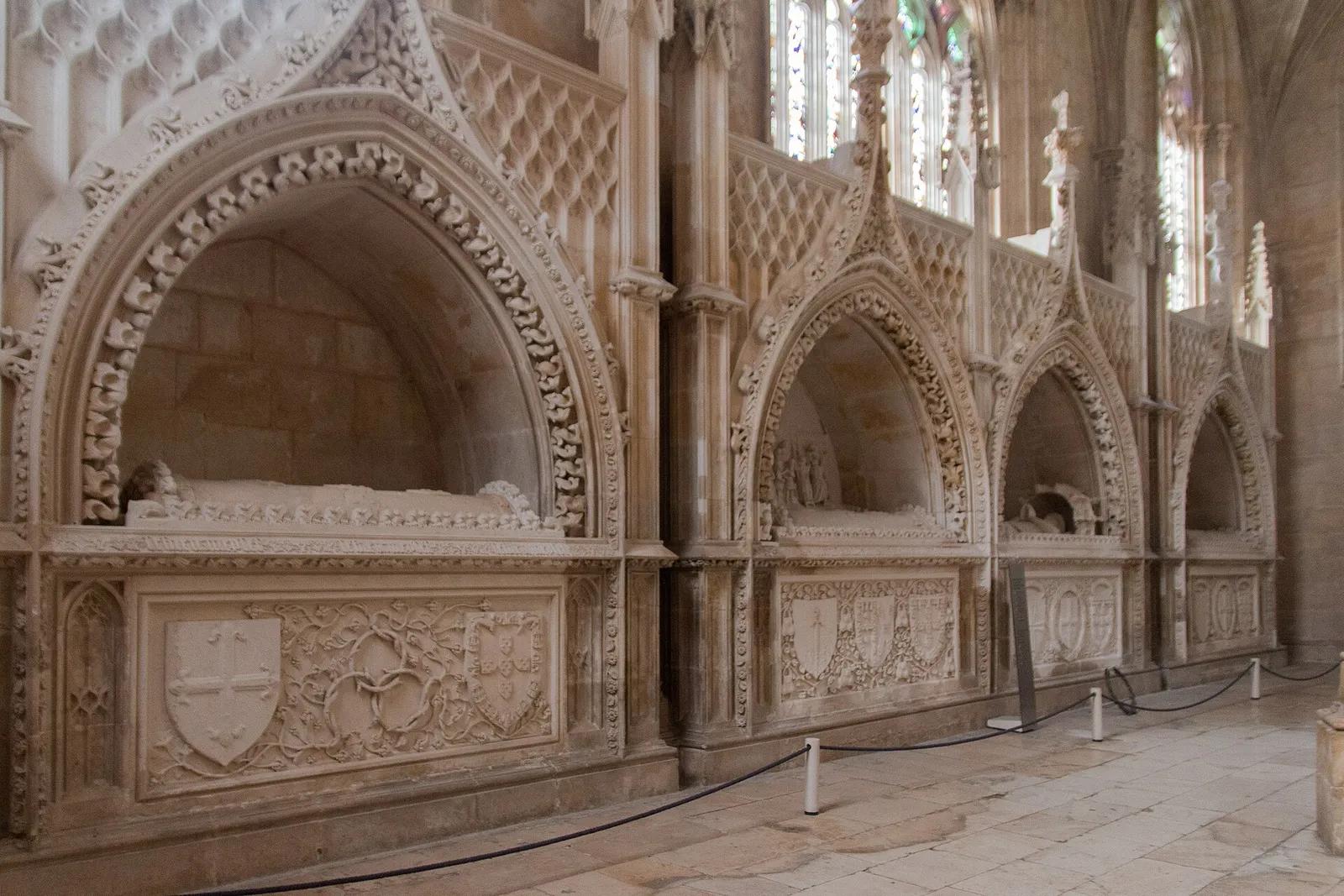
In the Founder's Chapel of the Monastery of Batalha, on the south wall with his brothers. His entrails arrived there in 1451; his bones came back from Fez in the early 1470s, exchanged for captives taken at Arzila.
On the timeline
Open the timelineNearby moments from the age of discoveries (1415–1580).
In Bruges, Philip the Good, Duke of Burgundy, founds the Order of the Golden Fleece during the celebrations of his marriage to Isabel of Portugal, daughter of King João I and Philippa of Lancaster, who would become a leading figure of Burgundian diplomacy.
The future King Afonso V is born in Sintra, son of Duarte, then heir to the throne. Left king at the age of six, he would earn the nickname 'o Africano' for his conquests in Morocco.
King Duarte I, known as 'the Eloquent' for his philosophical writings, dies at Tomar (the chronicler Rui de Pina's date; others give the 13th). His six-year-old son Afonso V succeeds him, with Queen Leonor named regent under his will.
Death of the Constant Prince
Death in captivity in Fez of Infante Fernando, 'the Constant Prince'. Left at Tangier in October 1437 as surety that Portugal would return Ceuta, he was never redeemed: the Cortes split, King Duarte delayed and a later deal collapsed. His letters begged for release, but after more than five and a half years a prisoner he was remembered as a martyr who chose chains over Ceuta's surrender, as in Calderón's play 'El príncipe constante'.
At Lagos in the Algarve, 235 captives seized on the coast of present-day Mauritania by six caravels licensed by Prince Henry the Navigator are divided into five lots, some to be sold on: the first large landing of African captives recorded in Portugal.
Pope Nicholas V issues the bull 'Romanus Pontifex', granting the Portuguese crown exclusive rights to conquest, trade and navigation along the African coast south of Cape Bojador and sanctioning the enslavement of non-Christians — a papal charter for Portugal's overseas expansion.
Birth of King João II ('The Perfect Prince') in Lisbon. He would become one of Portugal's most important monarchs, sponsoring Bartolomeu Dias's voyage around the Cape of Good Hope and negotiating the Treaty of Tordesillas.
Coming up in history
All long reads 7 June 1594Roderigo Lopes: Elizabeth I's Portuguese doctor, hanged at Tyburn in 1594
 8 June 2022Paula Rego, the Lisbon-born painter of hard stories, dies at 87
 9 June 1815Olivença and Article 105: Portugal at the Congress of Vienna, 1815
 10 June 1580Camões dies in Lisbon: the poet whose death became Portugal's day
13 sources
Archives, scholarship and reporting this article was checked against.
- 1
Chronica d'el-rei D. Duarte (Rui de Pina)Bibliotheca de Classicos Portuguezes, vol. XXVIII, Escriptorio, Lisbon, 1901 (Internet Archive, University of Toronto copy)
- 2
Chronica de El-Rei D. Affonso V, vol. I (Rui de Pina, ed. Gabriel Pereira, 1901)Project Gutenberg
- 3
- 4
- 5
Do muito vertuoso Senhor Ifante Dom Fernando a El Príncipe Constante (Maria Idalina Rodrigues)Via Spiritus 10 (2003), pp. 39-80, Faculdade de Letras da Universidade do Porto
- 6
O retrato do Infante D. Fernando nas Janelas Verdes (M.N.A.A.) (Maria Emília Vaz Pacheco)ARTIS ON, no. 3 (2016), ARTIS – Instituto de História da Arte, Faculdade de Letras da Universidade de Lisboa
- 7
- 8
Morte do Infante D. Fernando, o “Infante Santo”RTP Ensina
- 9
Ceuta (Maria Dávila)Encyclopaedia of Portuguese Expansion (EVE), CHAM, NOVA FCSH
- 10
- 11
- 12
- 13
História do Mosteiro da BatalhaMosteiro da Batalha (Museus e Monumentos de Portugal)
Image credits
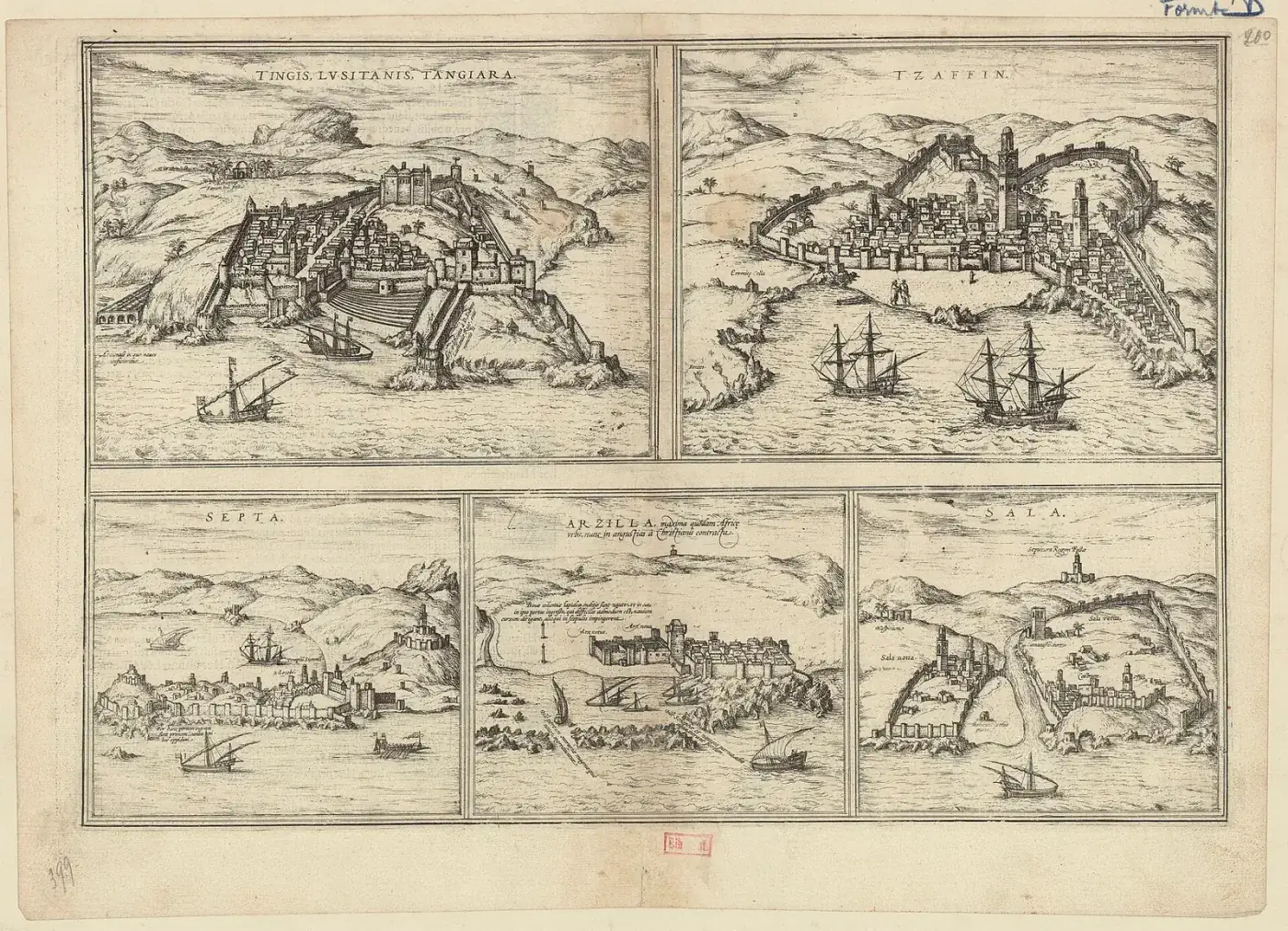
- Tangier (top left), Ceuta (Septa, bottom left) and Arzila (bottom centre), with Safi and Salé, in Braun and Hogenberg's town atlas of 1572. Ceuta had been Portuguese since 1415 and Tangier since 1471; in 1437 Fernando was taken from the beach outside Tangier to Arzila and then to Fez. Georg Braun and Frans Hogenberg, Public domain, via Wikimedia Commons.
- Fernando as a saint in the Acta Sanctorum, the Bollandist collection of saints' lives, in its first volume for June (Antwerp, 1695). The inscription says he died at Fez among the Moors as a hostage on 5 June 1443; the side scenes show his servitude and chains, the royal stable, the garden, a ransom talk that came to nothing, his vision and his body hung from the city wall. Daniel van Papebroch (Acta Sanctorum), Public domain, via Wikimedia Commons.
- The tombs of four of João I's sons along the south wall of the Founder's Chapel at Batalha, photographed in 2014. Fernando's is one of them; the others belong to João, Henrique and Pedro. Daniel Villafruela, CC BY-SA 3.0, via Wikimedia Commons.
- Fernando in chains, the central panel of a triptych from the Founder's Chapel at Batalha, painted some time after his death, probably in the 1450s. It left Batalha for the Museu Nacional de Arte Antiga in Lisbon in 1948. Unknown Portuguese painter, Public domain, via Wikimedia Commons.
- Pedro Calderón de la Barca in old age, engraved by Pedro de Villafranca in Madrid in 1676. He wrote El príncipe constante almost half a century earlier. Pedro de Villafranca, Public domain, via Wikimedia Commons.