

Camilo Castelo Branco’s last afternoon at Seide, 1 June 1890
An eye doctor had just told one of Portugal’s most prolific novelists that nothing could be done. As the visit ended, Camilo Castelo Branco shot himself in the house where he had written for a living for a quarter of a century.
At a glance
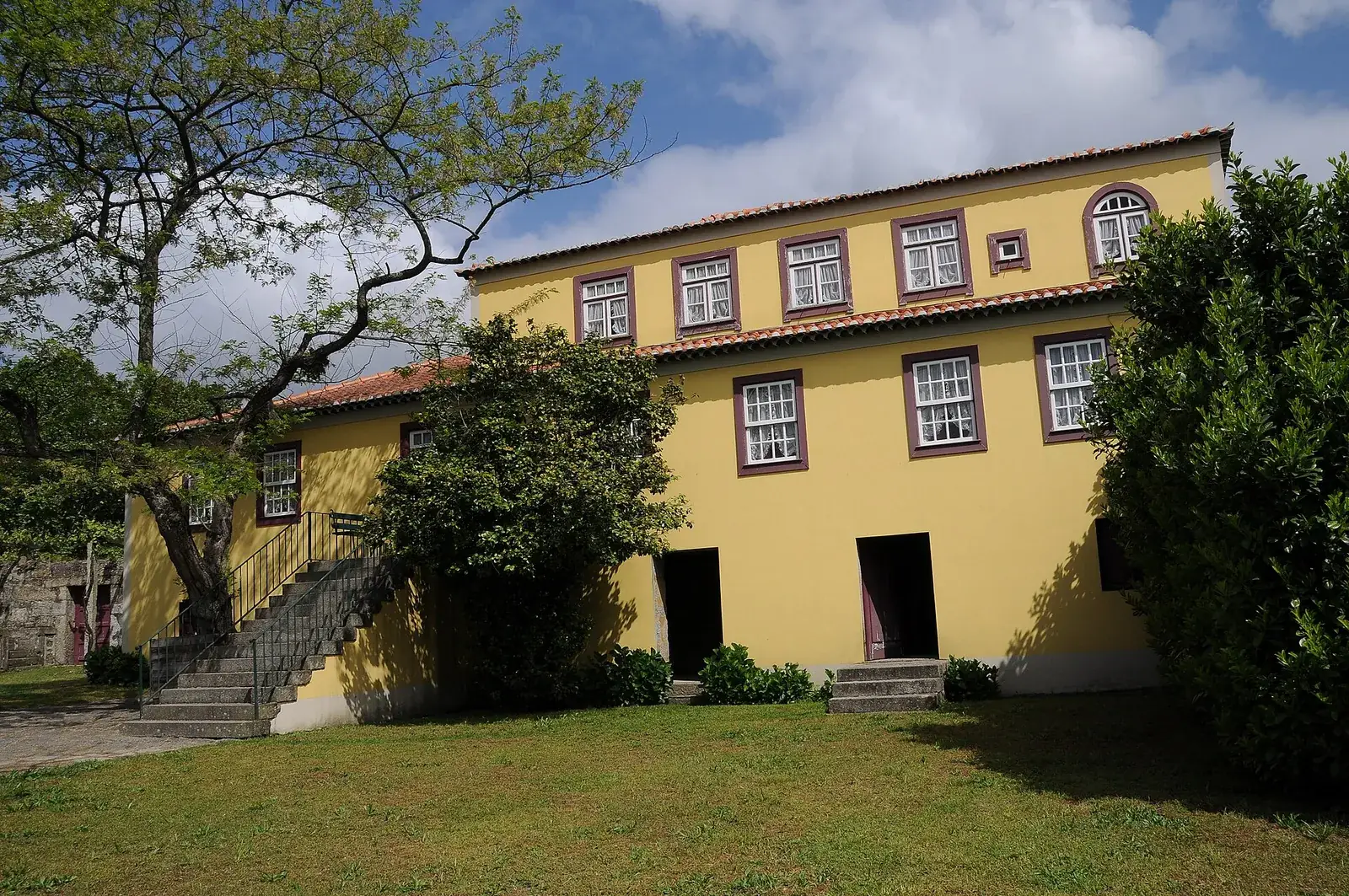
- Camilo Castelo Branco shot himself in the head at his house in São Miguel de Seide, near Vila Nova de Famalicão, at about 3.15 pm on Sunday 1 June 1890, and died at about 5 pm. He was 65.
- He did it at the end of a visit from the ophthalmologist Edmundo Machado, who confirmed that his blindness could not be cured. He had been losing his sight for years.
- In 1860 and 1861 he and his lover Ana Plácido, a married woman, were held in Porto’s Relação prison on a charge of adultery brought by her husband. They were acquitted in October 1861.
- In the prison he wrote Amor de Perdição in what he called fifteen days, the most tormented of his life. Based on the story of his uncle Simão Botelho, it became his best-known novel.
- Counts of his works range from about two hundred novels and novellas to more than 260 works. His house at Seide has been a museum since 1922.
A Sunday afternoon at Seide
On Sunday 1 June 1890 an eye doctor called at a country house in São Miguel de Seide, a rural parish near Vila Nova de Famalicão in the Minho, the north-west of Portugal. The patient was Camilo Castelo Branco, one of the best-known novelists in the country, and he could no longer see. Edmundo Machado examined him and confirmed what Camilo feared: the blindness was beyond cure.
As the visit ended, Camilo shot himself in the head with a revolver. The newspaper Correio da Manhã reported that it happened at a quarter past three in the afternoon. He never woke, and he died at about five. A doctor named Ferreira, from nearby Santo Tirso, said the bullet had gone almost to the far side of the skull.
“The great writer fired a shot into his head at a quarter past three in the afternoon. He fell at once into a coma, and at five o’clock he died.”
He was 65, though his death certificate said 64: all his life Camilo gave his birth year as 1826, a year late. He left Ana Plácido, the woman for whom he had gone to prison thirty years earlier and whom he had married only two years before, and two sons. One was a gambler and the other was mentally ill.
- Date
- Sunday 1 June 1890, about 3.15 pm; death about 5 pm
- Place
- His house at São Miguel de Seide, municipality of Vila Nova de Famalicão
- Age
- 65 (born Lisbon, 16 March 1825); the death certificate gives 64
- Cause
- Gunshot to the head, self-inflicted
- Burial
- Lapa cemetery, Porto, in the family tomb of his friend João António de Freitas Fortuna, where his remains still lie
An orphan who lived by his pen
Camilo was born in Lisbon, in the Rua da Rosa, on 16 March 1825, the illegitimate son of Manuel Joaquim Botelho Castelo Branco, a man from a minor family of Trás-os-Montes in the far north-east. His mother died when he was two and his father in December 1835. A family council sent the boy and his sister Carolina to Vila Real, to an aunt, Rita Emília, who showed the orphans little affection.
In the village of Vilarinho da Samardã, where his sister married, a priest taught him Latin, French and the classics. At 16 he married Joaquina Pereira, a peasant girl of 14, and soon left her; she and their daughter were dead by 1848. He enrolled at Porto’s medical school in 1843, never finished, tried Coimbra, and in 1850 even entered the seminary in Porto. The vocation faded within months.
What lasted was writing. From the mid-1840s he wrote for Porto newspapers, often under pseudonyms, and in May 1850 his first novel, Anátema, began to appear in the Lisbon periodical A Semana. It broke off before the end; the complete book came out in Porto in 1851. He described his profession as “public writer”. Most of his novels first came out in instalments in the papers, a common practice at the time, and for the rest of his life writing was his only income.
Ana Plácido and the Relação prison
Ana Augusta Plácido, born in Porto in 1831, was 19 when her father married her to Manuel Pinheiro Alves, a 43-year-old merchant who had made his fortune in Brazil. She had met Camilo at a ball in Porto some years before; the scholar Conceição Flores writes that she had loved him since she was 15, while the writer Jaime Nogueira Pinto dates their first meeting to 1848. Her son Manuel Plácido was born in August 1858; the Seide museum’s biography says he was in all likelihood Camilo’s.
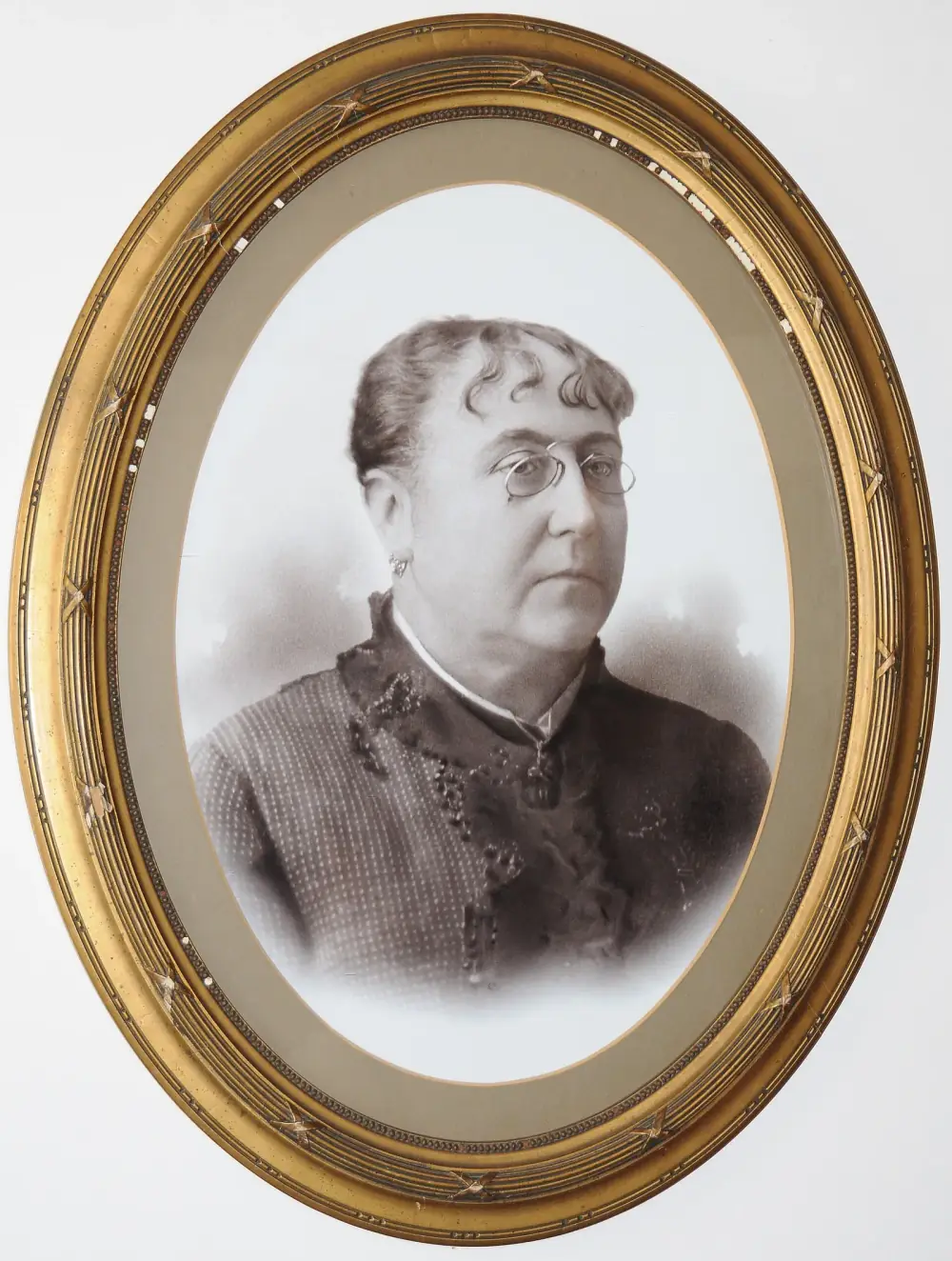
In 1859 she left her husband and went with Camilo to Lisbon. Pinheiro Alves brought a criminal complaint of adultery. Ana was confined in a convent in Braga in July 1859 and escaped after little more than a month; in 1860 she was arrested and taken to the Cadeia da Relação, the jail of Porto’s appeal court. Camilo spent months on the run in the Minho and Trás-os-Montes, then gave himself up at the same prison in October 1860.
Ana took her small son, a maid and, by one account, about 500 books. She wrote too: some of her prison writing came out in 1863 in Luz Coada por Ferros, light strained through bars. Camilo received visitors, wrote for the papers and translated French novels. From April 1861 the Minister of Justice allowed him out every day on grounds of ill health, and respectable Porto was scandalised to see him lunching in fashionable restaurants.
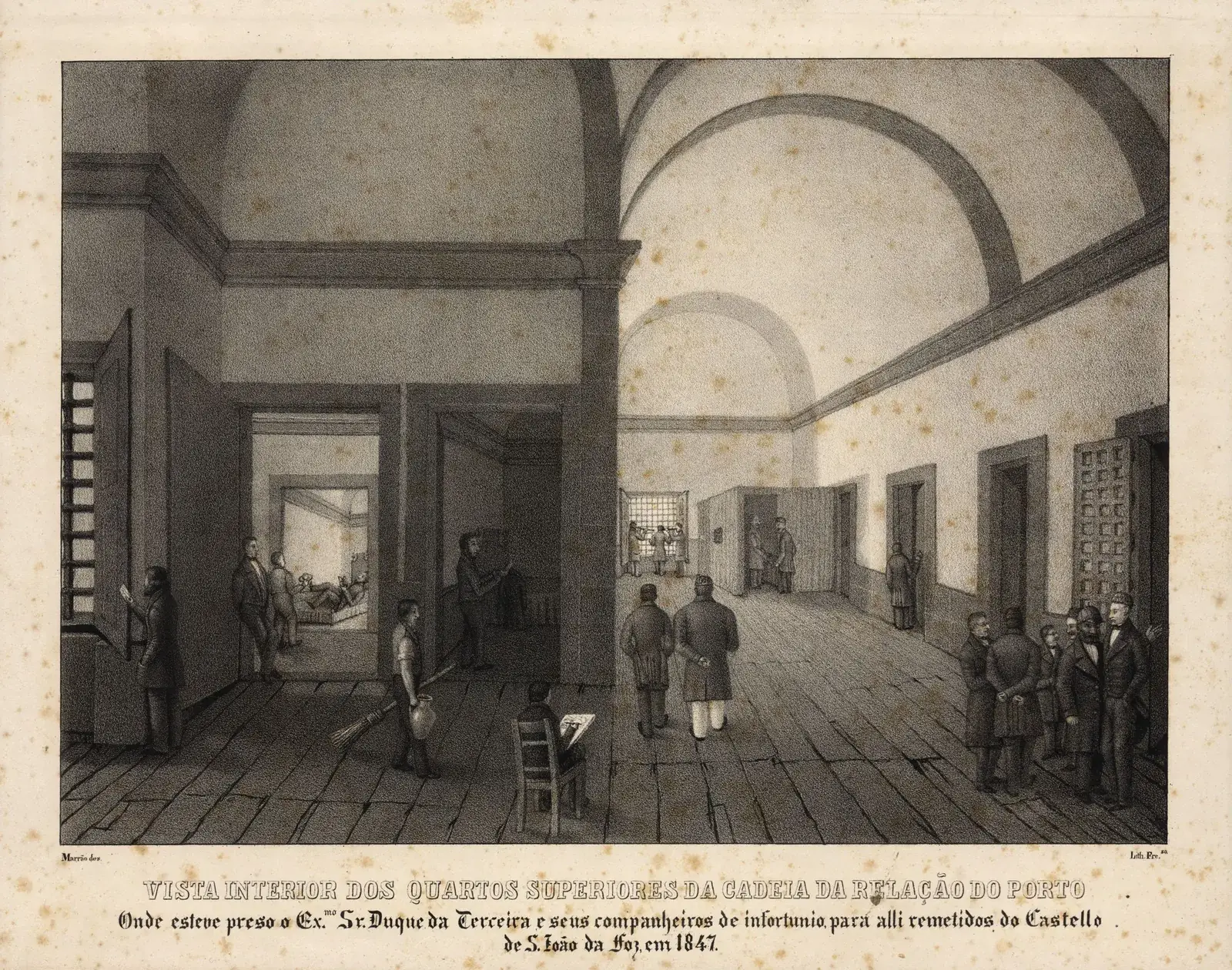
King Pedro V visited the prison during the couple’s detention and took an interest in Camilo’s case. Leaving the building, by Camilo’s account in his Memórias do Cárcere, the king said: “This needs to be completely razed.” Rumour had it that the king had given Camilo money; Camilo denied it in the press.
Opinion was shifting. A friend, José Cardoso Vieira de Castro, published a biography of Camilo weeks before the trial, blaming Ana’s father for selling his daughter into marriage, and it was a best-seller. A jury heard the case in October 1861 and acquitted both. Conceição Flores dates their release to 16 October.
Fifteen days: Amor de Perdição
In his cell Camilo thought of an uncle he had never met. As a boy he had heard the story of his father’s brother, Simão António Botelho, from his aunt, Simão’s sister, who was always ready to tell it again. Remembering that his uncle must have passed through the Relação, he searched the prison’s old registers of arrivals and of departures into exile, and found him.
“Simão Antonio Botelho, who said that was his name, unmarried, a student at the University of Coimbra, a native of the city of Lisbon, living at the time of his arrest in the city of Viseu, aged eighteen … [In the left margin:] Went to India on 17 March 1807.”
From that entry, family papers and the memories of people who had known Simão, Camilo built a tragedy. Simão, a student from Viseu, loves Teresa de Albuquerque, daughter of his father’s enemy. He kills her cousin and suitor, Baltasar Coutinho, and is sentenced to hang; the sentence is commuted to ten years’ exile in India. Teresa wastes away in a Porto convent. Simão dies on the ship, and Mariana, the farrier’s daughter who loved him without hope, throws herself into the sea after his body.
“I wrote the novel in fifteen days, the most tormented of my life.”
The dedication is signed “in the Relação prison of Porto, 24 September 1861”. The book appeared, probably late in 1861, with 1862 on its title page, subtitled Memories of a Family. Camilo had expected it to fail, and admitted that it was better received than any of his earlier books.
Camilo was harder on it. In the preface to the fifth edition, written at Seide in 1879, he set it beside O Crime do Padre Amaro and O Primo Basílio, the realist novels of Eça de Queirós, and called it “a romantic novel, declamatory, with plenty of lyrical deformities”. The public, he wrote, now laughed at the pages it had once wept over, and that was exactly why the book was being reprinted.
Writing for a living at Seide
After the acquittal the couple lived in Lisbon, where their son Jorge was born on 28 June 1863. Pinheiro Alves died on 15 July that year. His house at São Miguel de Seide, built around 1830 with money he had made in Brazil, passed to Ana’s son Manuel Plácido, and the family moved in: in the winter of 1863, says the museum, or in 1864, says the Imprensa Nacional chronology. A second son, Nuno, was born in 1864. Seide was Camilo’s home for the rest of his life.
With a family and no income but his pen, he wrote constantly: historical novels, satires, stories of the Minho, plays, polemics, verse, translations and reviews. The museum calls it a feverish need to write in order to live. In the 1870s, with Novelas do Minho, he moved towards the realism that younger writers were championing, and then mocked their methods in Eusébio Macário.
| Source | Count | What it covers |
|---|---|---|
| RTP (Lusa), 2025 | More than 260 works | Novels, stories, plays, essays, chronicles, criticism and letters |
| Imprensa Nacional chronology | About 200 novels or novellas | Fiction only; it adds countless articles, chronicles, prefaces, letters and a good number of translations |
| Jaime Nogueira Pinto, Observador, 2025 | More than 200 titles | Novels, novellas, history, theatre, polemics and poetry |
The totals partly differ in what counts as a work: the Imprensa Nacional figure covers fiction only, while RTP’s takes in plays, essays, criticism and letters. None of the three gives a full list.
| Year | Title | Kind |
|---|---|---|
| 1850–51 | Anátema | First novel: begun in a Lisbon periodical in 1850, published complete in Porto in 1851 |
| 1853–54 | Mistérios de Lisboa | Serial novel, a Portuguese answer to Eugène Sue’s Mysteries of Paris |
| 1856 | Onde Está a Felicidade? | Novel praised by Alexandre Herculano |
| 1862 | Amor de Perdição | Tragic novel, written in prison in 1861 |
| 1862 | Memórias do Cárcere | Prison memoirs, mostly of his fellow inmates |
| 1866 | A Queda de Um Anjo | Political and social satire |
| 1866 | O Judeu | Historical novel |
| 1875–77 | Novelas do Minho | Stories of the rural north, in monthly parts |
| 1879 | Eusébio Macário | Comic novel parodying the realists |
| 1882 | A Brasileira de Prazins | Novel |
| 1886 | Vulcões de Lama | His last novel |
| 1890 | Nas Trevas | Sonnets composed in blindness; his last book published in his lifetime |
Home brought little peace. Manuel Plácido failed in business in Angola, fell into a bohemian life and died on 17 September 1877, aged 19. Nuno gambled. Jorge showed signs of mental illness young. In 1870 Camilo's request for the title of viscount was turned down because he lived with a woman he had not married; in 1885 King Luís made him Viscount of Correia Botelho. On 9 March 1888 he and Ana finally married.
16 March 1825
Born in Lisbon
Baptised at the church of the Mártires on 14 April.
1835
Orphaned
Sent with his sister to an aunt in Vila Real.
1841
First marriage, aged 16
1850
First novel
Anátema begins in a Lisbon periodical; the complete book follows in Porto in 1851.
1859
Flight with Ana Plácido
Her husband brings a charge of adultery.
October 1860
Surrenders at the Relação prison
Ana had been arrested earlier that year.
October 1861
Tried and acquitted
Amor de Perdição appears, probably late that year, dated 1862.
1863–64
Moves to São Miguel de Seide
1885
Made Viscount of Correia Botelho
9 March 1888
Marries Ana Plácido
1 June 1890
Dies by suicide at Seide
The darkness
By the second half of the 1870s his health, and above all his eyesight, was getting steadily worse. In 1888 he was seeing doctors in Porto and Lisbon more and more often. That May he wrote to Freitas Fortuna: “I am dying. The night was atrocious,” although, as the literary historian Maria Antónia Oliveira notes, he had announced his end in letters many times before. The museum’s biography describes a man threatened by blindness and convinced he was heading for the madness that family tradition held to be the fate of many of his relatives.
He kept writing by dictation. In 1890 he published Nas Trevas, “In the Darkness”, a book of sonnets dedicated to the memory of the Count of São Salvador de Matosinhos as “these last heartbeats of his literary life”. Its opening note reprints light verses he had sent to his friend the former minister Tomás Ribeiro, which joke that blind poets keep good company: Homer, Milton, the poet Castilho, and Camões with his one eye.
“The thing is, since I went blind, I no longer know how to speak in prose.”
Some time before his death he wrote to Edmundo Machado, an eye specialist, asking him to come and examine him. The doctor’s visit on 1 June was the one that ended in the shot.
“I am the corpse that represents a name which had some glorious reputation in this country during forty years of work. My name is Camilo Castelo Branco and I am blind.”
A borrowed tomb in Porto
The body was laid out in a large room stripped of its hangings and mirrors, in the dark suit Camilo had been wearing when he fired, with Ana keeping watch alone at its feet. On 3 June it reached Porto on the 6 pm train from the Minho. Correio da Manhã counted “at most a hundred people” at the station and complained that apart from Alves Mendes not a single writer or artist came. A tail of eighteen carriages, carrying what Vila-Moura later called a plague of reporters, followed the coffin to the Lapa.
He was buried in the Lapa cemetery in Porto, in the family tomb of his friend João António de Freitas Fortuna. He had asked for it in writing. On 10 June Ana Plácido and Camilo’s son Nuno signed a deed giving his remains to Freitas Fortuna, who accepted them with the duty to keep them there for ever. Freitas Fortuna later left some of Camilo’s belongings to the Irmandade da Lapa, the brotherhood that runs the cemetery, among them the revolver.
“I wish to be buried there, and that no force or consideration should move you from keeping my ashes for ever in your chapel.”
That letter decided a later quarrel. Porto’s council and the Renascença Portuguesa literary society dropped a plan to move his remains once the family showed them a copy. Then a group of deputies wanted to take Camilo to the pantheon in Belém, in Lisbon. When the writer Visconde de Vila-Moura printed the letter in O Século on 4 July 1914, they dropped the idea and put the money towards a monument instead. The idea came back in 1917, and Vila-Moura answered it with a book of the documents.
Ana Plácido stayed at Seide and died there in 1895. In 1915 fire gutted the house. It was rebuilt, and in 1922 it opened as a museum to Camilo, although the parish primary school installed on the ground floor changed it so much that only works in the 1950s brought back its old layout and nineteenth-century rooms.
Why Camilo still matters
Amor de Perdição is still the book most readers know him by, a tragedy taken from a prison register and written in a cell of the same jail. On the strength of it, the Imprensa Nacional chronology notes, the Spanish writer Miguel de Unamuno later ranked Camilo the greatest Romantic novelist of its kind in the Iberian Peninsula.
The rest of the work is a record of the nineteenth-century north: the Minho and Trás-os-Montes, provincial families and clergy, and the new bourgeoisie of Porto, torn between money and feeling. With Novelas do Minho in the 1870s he moved towards realism. RTP, the public broadcaster, calls him the leading figure of Portuguese Romanticism and a writer who also anticipated realism.
The Imprensa Nacional now publishes critical editions of his novels, some of them free online, among them Amor de Perdição from the fifth edition he revised in 1879. For the bicentenary of his birth in 2025, RTP made a 15-part documentary series, 1000 x Camilo.
FAQs
How did Camilo Castelo Branco die?
He shot himself in the head with a revolver at his house in São Miguel de Seide on 1 June 1890, at about 3.15 pm, at the end of a visit from an eye specialist who had confirmed that his blindness could not be cured. He fell into a coma and died at about 5 pm, aged 65. He is buried in the Lapa cemetery in Porto.
Why were Camilo and Ana Plácido sent to prison?
Ana Plácido was married to the merchant Manuel Pinheiro Alves, and when she left him for Camilo in 1859 he accused them of adultery, then a crime. Both were held in Porto’s Relação prison, she from 1860 and he from October 1860, until a jury acquitted them in October 1861.
Is Amor de Perdição a true story?
It is based on one. Camilo said it told the story of his paternal uncle, Simão António Botelho, who was jailed in the Relação as a student of 18 and sent to India in 1807. Camilo found his record in the prison registers and drew on family papers and the memories of people who had known Simão, but the book is a novel, not a history.
How many books did Camilo Castelo Branco write?
Counts vary with what is included. The Imprensa Nacional speaks of about two hundred novels or novellas plus a mass of journalism and translations, Observador of more than two hundred titles, and RTP of more than 260 works.
Can you visit Camilo’s house?
Yes. The Casa de Camilo in São Miguel de Seide, in the municipality of Vila Nova de Famalicão, has been a museum since 1922. It was rebuilt after a fire in 1915, and visits are guided.
On the timeline
Open the timelineNearby moments from regeneration and the last kings (1851–1910).
Death of Eduardo Coelho, the Coimbra-born typesetter turned journalist who in December 1864 co-founded the 'Diário de Notícias' with the printer Tomás Quintino Antunes. He ran it until his death; still published today, the 'DN' is regarded as Portugal's newspaper of record.
King Luís I dies at the Citadel of Cascais at the age of 50. A translator of Shakespeare, he had reigned for almost 28 years and was succeeded by his son Carlos I.
Lord Salisbury's government delivers the British Ultimatum, demanding that Portugal pull its forces out of the Shire valley and Mashonaland, lands it claimed in the 'Pink Map' linking Angola and Mozambique. Lisbon's swift capitulation is felt as a national humiliation and fuels the republican movement that would topple the monarchy twenty years later.
Death of Camilo Castelo Branco
Death of Camilo Castelo Branco at his home in São Miguel de Seide, near Vila Nova de Famalicão. Going blind (a biographer later blamed syphilis) and worn down by years of family misfortune, the prolific Romantic novelist shoots himself with a revolver after an eye specialist confirms there is no cure. His output of more than 200 titles, including 'Amor de Perdição', makes him one of the founders of the modern Portuguese novel.
The Coliseu dos Recreios, Lisbon's great iron-domed performance hall on the Rua das Portas de Santo Antão, is inaugurated with a performance of Franz von Suppé's operetta 'Boccaccio'.
In the aftermath of the British Ultimatum, Portugal and Britain sign the Treaty of London defining the frontiers of Angola and Mozambique; public outrage prevents its ratification in Lisbon, brings down the government, and forces its replacement by a new treaty in 1891.
In the first attempt to found a republic in Portugal, soldiers led mostly by sergeants rise in Porto, angered by the monarchy's surrender to the British Ultimatum. They proclaim the republic from the windows of the town hall before the Municipal Guard crushes the revolt; the street where the fighting raged is now Rua 31 de Janeiro.
Coming up in history
All long reads 3 June 2019Agustina Bessa-Luís, novelist of the North, dies in Porto: 3 June 2019
 4 June 1927Presença, the Coimbra magazine that printed Pessoa: 4 June 1927
 5 June 1443The Constant Prince: Infante Fernando dies a hostage in Fez, 5 June 1443
 6 June 1801The Treaty of Badajoz, 1801: how Portugal lost Olivença
16 sources
Archives, scholarship and reporting this article was checked against.
- 1
Camilo Castelo Branco: nota biobibliográficaImprensa Nacional-Casa da Moeda (Maria Fernanda de Abreu, from Jacinto do Prado Coelho and José Viale Moutinho)
- 2
Camilo: síntese biográficaCasa de Camilo – Museu e Centro de Estudos, Vila Nova de Famalicão
- 3
- 4
As Cinzas de Camillo: notas e documentos (Visconde de Vila-Moura, 1917)Renascença Portuguesa, Porto; Project Gutenberg edition
- 5
- 6
Ana Plácido: uma mulher à frente do seu tempo (Conceição Flores)Revista Ártemis, vol. 19, no. 1, 2015
- 7
- 8
Camilo Castelo BrancoIrmandade da Lapa, Porto
- 9
- 10
Camilo Castelo Branco: ser romancista em um pequeno reino à esquina do planeta (Paulo Motta Oliveira)Revista do CESP 45, n.º 73 (2025), pp. 209-223, Universidade Federal de Minas Gerais
- 11Camilo nos 200 anos de um escritor genial (Jaime Nogueira Pinto)Observador, 22 March 2025
- 12
Centro Português de Fotografia: do passado de cadeia e tribunal a espaço abandonado e ao desígnio de um espaço de cultura (Bernardino Guedes de Castro)Faculdade de Letras da Universidade do Porto, proceedings of the Portuguese Prison Photo Project conference
- 13Série sobre Camilo Castelo Branco estreia-se na RTP no bicentenário do escritorRTP Notícias (Lusa), 2025
- 14
- 15
- 16
Image credits
- The Casa de Camilo at São Miguel de Seide in 2010. Camilo lived and wrote here from late 1863 or 1864 (sources differ) and shot himself here on 1 June 1890. The house burned in 1915 and was rebuilt as a museum, opened in 1922. Joseolgon, CC BY-SA 3.0, via Wikimedia Commons.
- Ana Plácido in later life: a framed nineteenth-century portrait photograph on display at the Casa de Camilo in Seide, photographed there in 2010. Joseolgon, CC BY-SA 3.0, via Wikimedia Commons.
- The upper rooms of the Cadeia da Relação in Porto, in a lithograph by Lucas de Almeida Marrão of around 1850. The caption says it shows where the Duke of Terceira and his companions were held in 1847, thirteen years before Camilo. Lucas de Almeida Marrão, Public domain, via Wikimedia Commons.
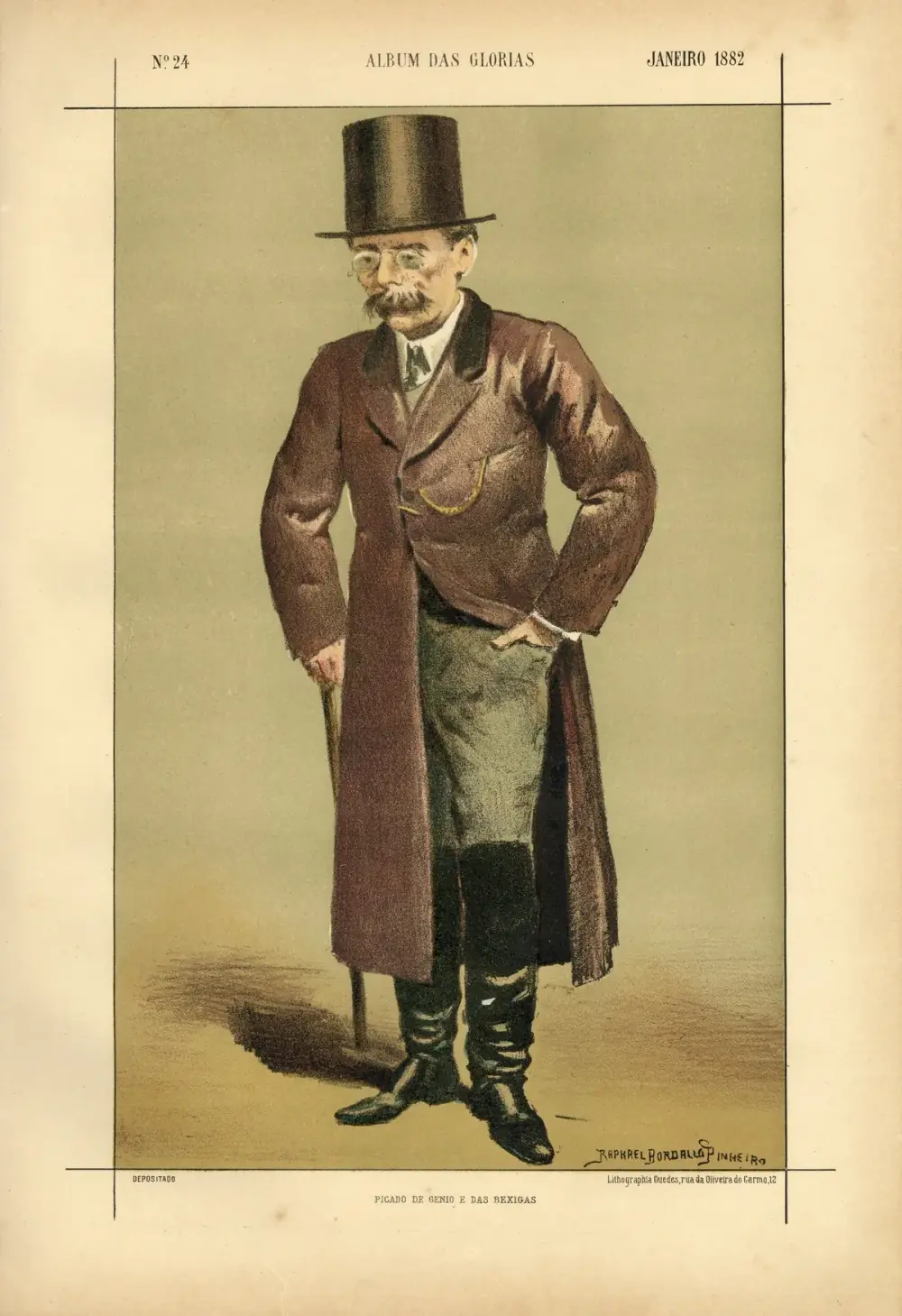
- Camilo by Rafael Bordalo Pinheiro in the Álbum das Glórias, no. 24, January 1882. The caption, “Picado de génio e das bexigas”, is a pun: pitted by genius and by smallpox. Rafael Bordalo Pinheiro, Public domain, via Wikimedia Commons.
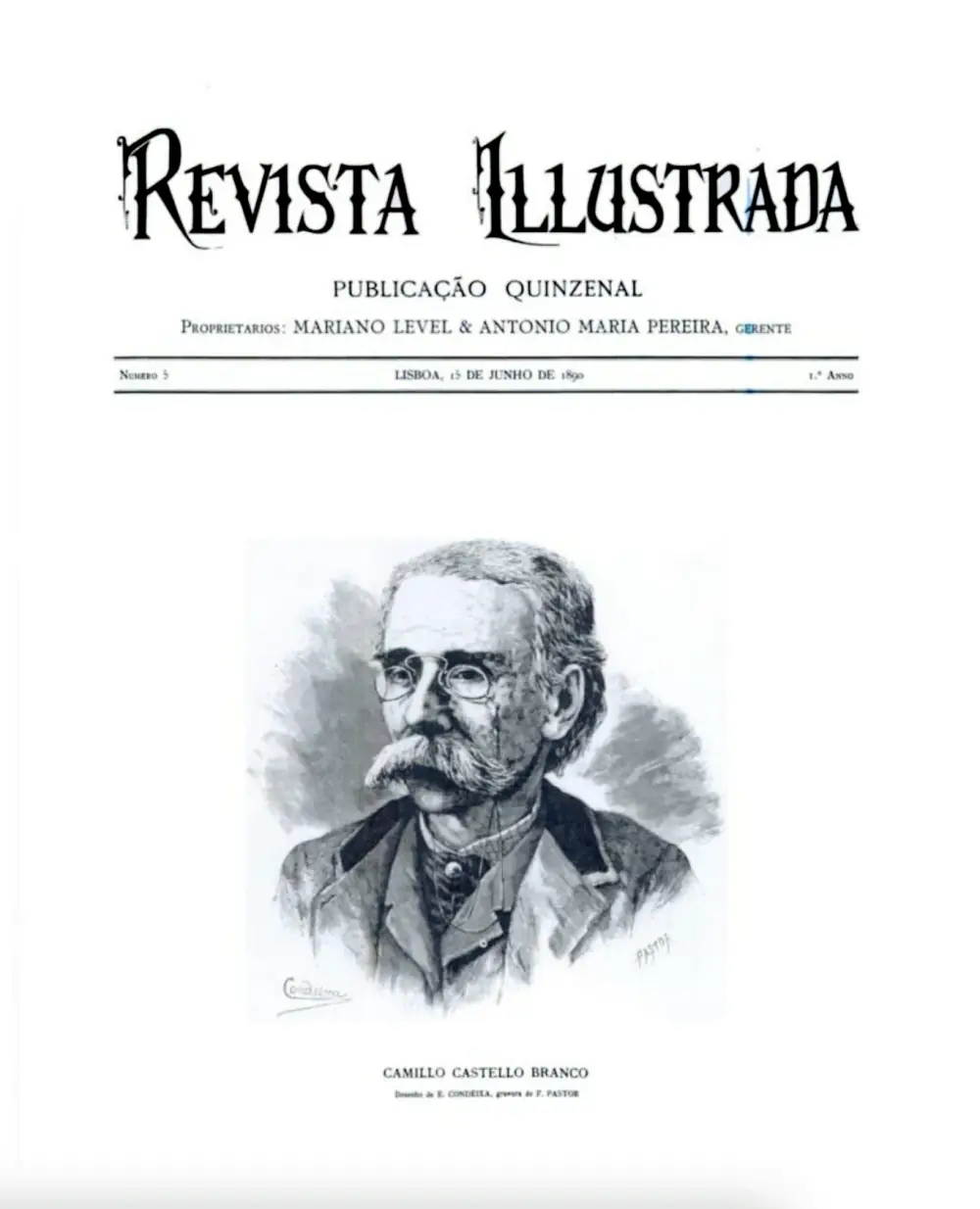
- Two weeks after his death, Lisbon’s Revista Illustrada put Camilo on the front page of its issue of 15 June 1890: a drawing by Ernesto Condeixa engraved by Francisco Pastor. Francisco Pastor Muntó / Ernesto Ferreira Condeixa, Public domain, via Wikimedia Commons.
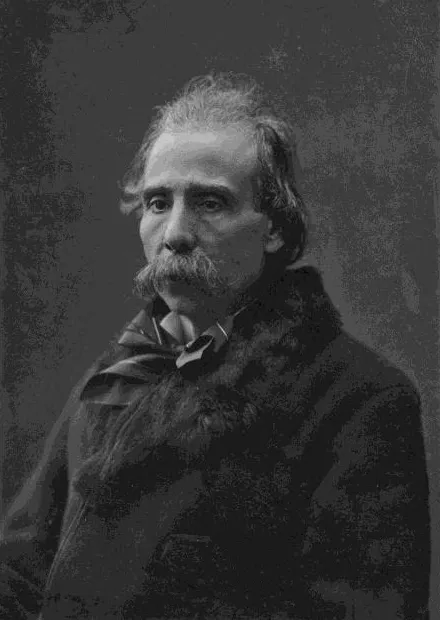
- Camilo photographed in Porto by the União studio, photographers to the royal household. An inscription on the back dates it 7 March 1882. União – Photographia da Casa Real-Porto, Public domain, via Wikimedia Commons.