16 March 2026 – 22 March 2026
Social Unrest and Political Shifts Sweep Portugal Amid Rising Costs
Portugal faced a turbulent week marked by nationwide housing protests, looming teacher strikes, and warnings of financial collapse from firefighters. Meanwhile, expats should prepare for sharp fuel price hikes and navigate significant political shifts, including the reversal of gender identity laws and controversial justice bills.
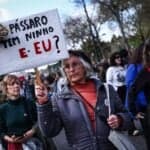
Thousands march across Portugal demanding right to housing
Protesters gathered in 16 cities, including Lisbon and Porto, to demonstrate against rising property prices and recent government measures. The platform Home to Live In (Casa para Viver) organized the marches, calling for rent caps and an end to fast-track evictions. Residents should note that further actions are planned as the housing crisis continues to affect both locals and foreign residents.
Casa Para Viver is a Portuguese housing campaign platform that organises protests and actions about housing affordability; it announced a national protest for March 21 in Lisbon against current government housing policies. Residents and renters should note its events because they highlight public pressure on rent and price controls and can influence local policy debate.
Portugal’s house prices have risen faster than the EU average since 2020, and recent reports list Portugal among the countries with the largest price increases over that period. That stronger price growth has worsened affordability in Lisbon and Porto in particular, so prospective buyers and renters should check local indices and mortgage costs before deciding.
US military presence at Lajes Base reaches record levels
The Lajes Air Base (Base das Lajes) on Terceira Island has recorded its highest number of American aircraft since the start of the conflict in Iran. Currently, 32 US Air Force and Navy planes are stationed there, including 15 refueling tankers and electronic warfare aircraft used for missions in the Middle East. Prime Minister Luís Montenegro stated that the increased activity complies with existing bilateral agreements between Portugal and the United States.

Parliament approves reversal of gender identity self-determination laws
The Social Democratic Party (Partido Social Democrata or PSD), Chega, and the CDS-PP have agreed to change rules regarding gender identity in the civil registry (registo civil). The new measures require medical validation for adults to change their legal name or gender and ban hormonal therapies for minors. The proposals now move to the committee stage for further discussion.

Chega ("Enough") is a Portuguese far-right populist party founded in 2019 by André Ventura. It positions itself as an anti-establishment movement against what it calls a "rotten and corrupt system" of PS-PSD dominance. The party surged from 1.3% in 2019 to 22.8% in May 2025, becoming parliament's second-largest force with 60 seats. Chega's core platform emphasizes strict immigration control—ending automatic CPLP residency, deporting non-independent immigrants, implementing job-market quotas, and requiring five-year social security contributions before benefit access. It advocates radical constitutional reform, including reducing parliament to 100 members, abolishing the prime minister position for a presidential system, and dismantling public healthcare. Law-and-order policies include life imprisonment and chemical castration proposals.
The party is defined by inflammatory anti-Romani rhetoric, with Ventura convicted multiple times for discrimination. Chega maintains international alignments with European far-right figures including Marine Le Pen, Santiago Abascal, and Matteo Salvini. Mainstream Portuguese parties, including Prime Minister Luís Montenegro's government, have imposed a cordon sanitaire, refusing coalition with Chega despite its parliamentary strength.
The CDS–PP is the Democratic and Social Centre – People's Party (Centro Democrático e Social – Partido Popular), a small centre-right, Christian-democratic party founded in 1974. It often partners with the larger PSD in parliament; in February 2026 it voted with the PSD and IL to approve a housing package, so its parliamentary support can influence housing and other policy outcomes.

Teachers schedule May protest and threaten third-term strikes
The National Federation of Teachers (Federação Nacional dos Professores or Fenprof) has announced a national demonstration for May 16 to protest the government's revision of the teaching career statute (Estatuto da Carreira Docente). The union also warned of potential strikes during the upcoming third school term if negotiations regarding working hours and job security do not improve. Parents and students should note that Fenprof will also join a general protest organized by the General Confederation of Portuguese Workers (Confederação Geral dos Trabalhadores Portugueses or CGTP) in April.
Fenprof is the National Federation of Teachers (Federação Nacional dos Professores), the main public‑school teachers' union in Portugal that represents teachers in pay, working conditions and education reforms. Its criticism matters because Fenprof can organize strikes and mobilise teachers, which directly affects school operations and the implementation of government changes — something families and expat educators should monitor.
The CGTP study is a report published by the General Confederation of Portuguese Workers (Confederação Geral dos Trabalhadores Portugueses), Portugal's largest trade-union centre. Such studies typically analyse pay, working conditions and public-sector cuts and are used by unions to justify strike actions and policy demands.

Firefighters warn of financial collapse and seek urgent aid
The Portuguese Firefighters League (Liga dos Bombeiros Portugueses or LBP) has requested emergency meetings with President Marcelo Rebelo de Sousa and Prime Minister Luís Montenegro. The group warns that rising fuel costs and inadequate state payments for patient transport are compromising their ability to respond to emergencies. Those relying on emergency services should be aware that the LBP is seeking an immediate renegotiation of contracts with the National Institute of Medical Emergency (Instituto Nacional de Emergência Médica or INEM).

- Former President of Portugal (2016–2026)
- Party: Independent (formerly Social Democratic Party, PSD)
Electoral Mandate and Democratic Consensus:
Marcelo Rebelo de Sousa was elected President of Portugal on January 24, 2016, winning 52.0% of the vote in the first round—a decisive victory in a fragmented field. He campaigned as an independent, positioning himself as a unifying figure after years of austerity from Portugal's 2011–14 bailout, promising to repair political divisions and restore national confidence. His campaign emphasized moderation and cross-party consensus, a departure from his decades-long association with the center-right Social Democratic Party (PSD). Upon taking office on March 9, 2016, he suspended his party membership for the duration of his presidency.
His 2021 re-election proved extraordinary: Rebelo de Sousa secured 60.7% of the vote—the third-highest margin in Portuguese presidential electoral history since the 1974 Carnation Revolution. Historically, he became the first candidate ever to win in all 308 municipalities and the vast majority of parishes, ranging from 51.3% in Beja District to 72.16% in Madeira. This unprecedented sweep reflected his broad appeal across social, geographic, and ideological divides.
Constitutional Role and Crisis Leadership:
Portugal operates as a semi-presidential system where the president, while largely ceremonial, exercises meaningful influence over national security, foreign policy, and military affairs as Supreme Commander of the Armed Forces. Rebelo de Sousa leveraged this authority during Portugal's response to the COVID-19 pandemic. In March 2020, he requested parliamentary authorization for a state of emergency—the first nationwide declaration in 46 years of democratic history—to contain the crisis. He voluntarily quarantined after potential COVID-19 exposure in March 2020, and later tested positive in January 2021 while remaining asymptomatic. His measured handling of the pandemic, balancing public health with institutional continuity, contributed to his landslide 2021 re-election.
Diplomatic Engagement and International Presence:
Rebelo de Sousa has conducted extensive state visits representing Portugal's interests across diverse regions: the Vatican, Spain, Mozambique, Morocco, Brazil, Switzerland, Cuba, the United Kingdom, Greece, the United States, and Angola. A notable diplomatic highlight occurred in 2019 when he joined President Emmanuel Macron at the Bastille Day military parade in Paris, representing European military cooperation and the European Intervention Initiative. These engagements positioned Portugal as an active participant in global affairs, particularly regarding colonial history and Atlantic security partnerships.
Colonial Legacy and Historical Accountability:
During his presidency, Rebelo de Sousa has publicly supported making restitution and acknowledging abuses committed during Portugal's colonial history and the country's role in the Atlantic slave trade. This position marked a significant policy shift, as Portugal historically avoided confronting its imperial past compared to other European powers. His stance reflected evolving attitudes within Portuguese society toward historical accountability.
Controversies and Public Criticism:
Rebelo de Sousa's presidency has not been without controversy. In 2023, allegations emerged that he had intervened to expedite treatment for Brazilian twins with Zolgensma, an expensive rare disease medication, raising questions about presidential influence and potential corruption. These claims implicated his son and generated criticism across Portuguese political and media sectors. Additionally, in April 2024, Rebelo de Sousa made controversial remarks comparing the speed of Prime Ministers António Costa and Luís Montenegro using orientalist language that drew public rebuke. In August 2025, he called U.S. President Donald Trump a "Russian asset" at a PSD event, demonstrating his willingness to make provocative foreign policy statements.
Constitutional Constraints and Legacy:
Under Portugal's constitution, Rebelo de Sousa is barred from running for a third consecutive term, meaning his presidency concludes with elections scheduled for January 18, 2026. His decade-long tenure has established him as one of Portugal's most popular recent heads of state, characterized by broad consensus-building and institutional stability. Whether future presidents can replicate his cross-party appeal remains an open question for Portuguese democracy as it enters a new era.

- Prime Minister, Portugal: 2024 - Present
- Party: Social Democratic Party (PSD)
Luís Filipe Montenegro Cardoso de Morais Esteves (born February 16, 1973, in Porto) is a Portuguese lawyer and center‑right politician who has served as Prime Minister of Portugal since April 2, 2024. A long‑time member of the Social Democratic Party (PSD), he is the leading figure of the post‑Troika generation of Portuguese conservatives. Montenegro was elected to the Assembly of the Republic in 2002 for the Aveiro district and remained an MP for 16 years, becoming PSD parliamentary leader from 2011 to 2017 during the bailout and austerity period under Prime Minister Pedro Passos Coelho. He was a prominent defender of strict austerity measures, arguing in 2014 that “the life of the people is no better, but the life of the country is a lot better,” a phrase that has followed his public image since. After an unsuccessful leadership bid against Rui Rio in 2020, Montenegro won the PSD leadership in 2022. He then forged the centre‑right Democratic Alliance (PSD–CDS‑PP and allies), which won a plurality of seats in the 2024 legislative election. Refusing to partner with the far‑right Chega, which he has called “often xenophobic, racist, populist and excessively demagogic,” he formed a minority government as head of the XXIV Constitutional Government on April 2, 2024. His first government fell in March 2025 after a no‑confidence vote linked to a conflict‑of‑interest affair, but fresh elections saw the Democratic Alliance increase its seat share, allowing Montenegro to return as prime minister leading the XXV Constitutional Government. His importance to Portugal lies in attempting to re‑center the traditional centre‑right after the crisis years, defending liberal‑conservative economics and EU alignment while drawing a sharp line against formal cooperation with the radical right, thus shaping how Portuguese democracy manages its new multi‑party era.
The Portuguese Firefighters' League (Liga dos Bombeiros Portugueses) is a national, non-governmental association that represents and coordinates many of Portugal’s fire brigades—particularly volunteer corps—and advocates for training, equipment and fire-safety policy. It frequently engages with government and the media on emergency-response standards and resource needs, so expats should know it can influence local fire services, public safety campaigns and how mutual aid is organised in their municipality.
Tornado causes significant damage on Porto Santo island
An extreme weather event, confirmed by the Portuguese Institute of the Sea and Atmosphere (Instituto Português do Mar e da Atmosfera or IPMA) as a tornado, struck Porto Santo on Friday evening, causing widespread property damage but no injuries. The storm resulted in dozens of incidents including fallen trees, power outages, and flooded buildings. Residents in the Madeira archipelago should remain cautious as yellow weather warnings (aviso amarelo) remain in place through Sunday.

IPMA is the Portuguese Institute of the Sea and Atmosphere (Instituto Português do Mar e da Atmosfera), the national agency for weather, marine forecasts and climate monitoring. Residents should watch its forecasts and warnings during storms, heatwaves or cold snaps because IPMA issues official advisories used by services, transport operators and local authorities.

Fuel prices to jump sharply on Monday amid Iran conflict
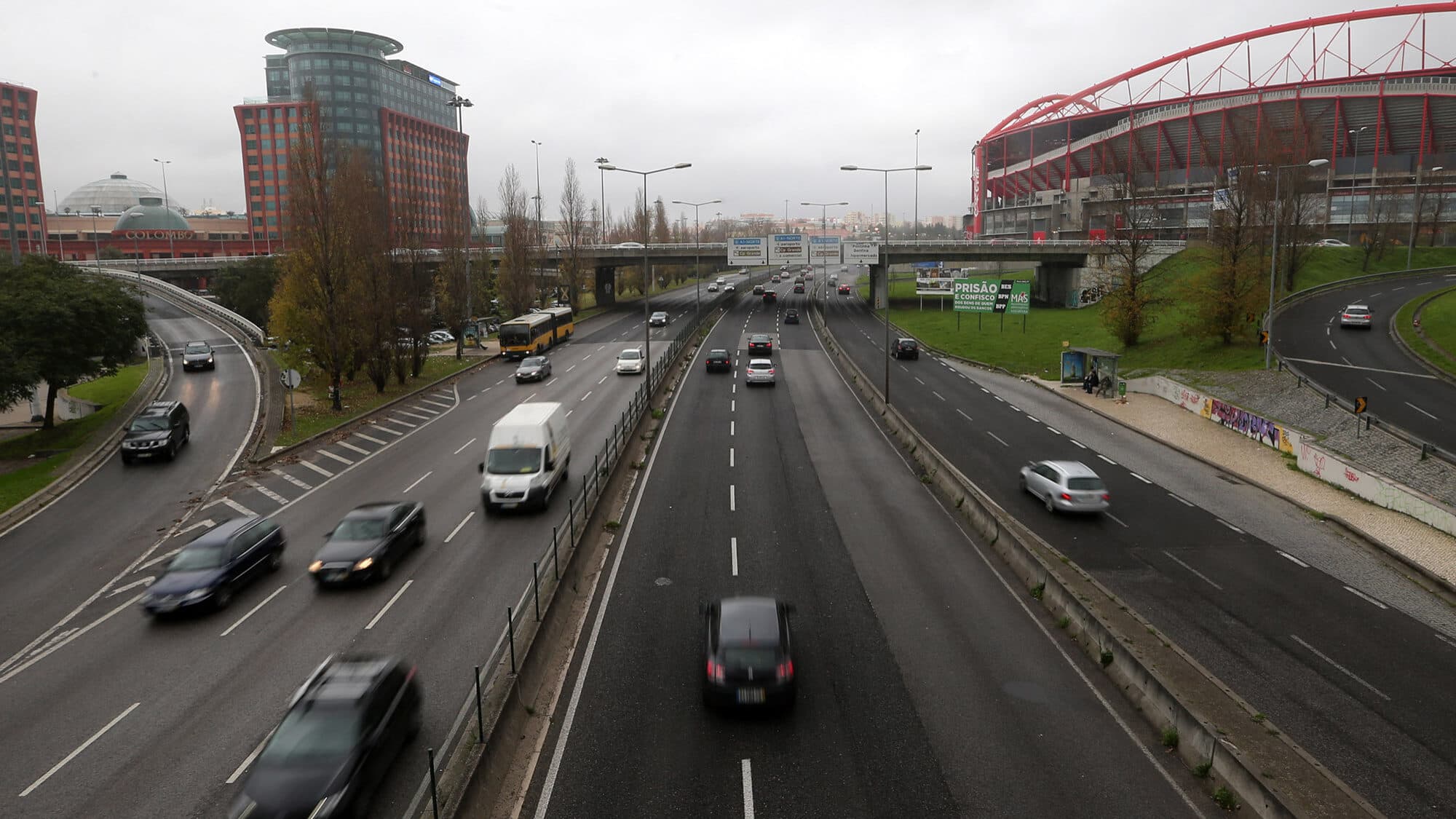
Drivers in Portugal will face a significant increase at the pumps this Monday, with diesel prices expected to rise by 12 cents per liter and petrol by seven cents. The Automobile Club of Portugal (Automóvel Clube de Portugal or ACP) has criticized the government's tax relief measures as insufficient to offset the global price surge. Travelers should note that the state continues to collect substantial revenue through the fuel tax (Imposto sobre os Produtos Petrolíferos or ISP) despite the current crisis.
ACP is the Automóvel Club de Portugal (Automobile Club of Portugal). It is a Portuguese motoring association that publishes fuel-price data and weekly forecasts used by motorists, media and retailers to anticipate petrol and diesel price changes when budgeting for trips or refuelling.
The ISP is Portugal's excise tax on fuels — the Tax on Petroleum and Energy Products (Imposto sobre Produtos Petrolíferos e Energéticos) — charged as a unit rate per litre on petrol, diesel and other fuels. The government sets and can temporarily cut those unit rates; a recent decision to reduce the rate for road diesel on the mainland aims to lower pump prices and reduce transport costs for drivers and businesses, though it also lowers tax revenue.
New tax filing rules announced for Youth IRS scheme
The Tax and Customs Authority has introduced changes to the personal income tax (Imposto sobre o Rendimento de Pessoas Singulares or IRS) return forms for young workers. Starting April 1, those eligible for the Youth IRS (IRS Jovem) must use a new field in Annex A (Anexo A) to opt into the updated tax regime. Young tax-paying residents should ensure they use the correct codes to benefit from the significant tax exemptions available under the new rules.

Parliament Speaker admits Chega bill to increase maximum prison sentences
The Speaker of Parliament (Presidente da Assembleia da República), José Pedro Aguiar-Branco, has admitted a bill from the Chega party that proposes raising the maximum prison sentence from 25 to 40 years. While allowing the bill to proceed, José Pedro Aguiar-Branco noted potential constitutional problems that require strict scrutiny by parliamentary committees. Separately, a report concluded that Socialist deputy Eva Cruzeiro breached her duties by calling Chega members racists during a session, though no legal sanction is possible.
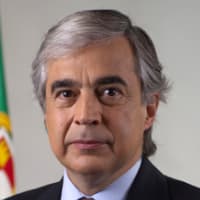
José Pedro Aguiar‑Branco is the President of the Assembly of the Republic, who in this story requested that the Committee on Constitutional Affairs examine the constitutional conformity of government measures in a proposed bill. He is using his parliamentary role to trigger a formal review of changes affecting confession rules and the rights of the defence.
Bank of Portugal defends Mário Centeno’s €2.2 million retirement deal
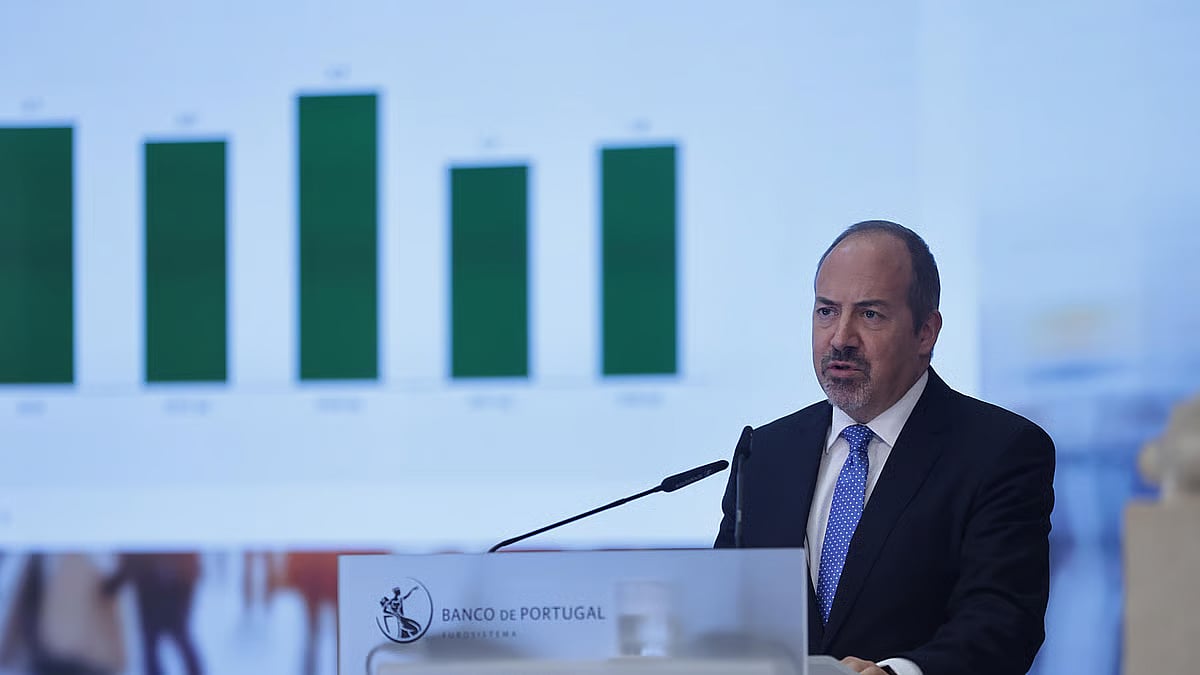
Bank of Portugal (Banco de Portugal) Governor Álvaro Santos Pereira stated that a retirement agreement with his predecessor, Mário Centeno, will save the institution €2.2 million in future salary and social security costs. The Governor emphasized that the pension will be paid by the bank's own pension fund and will not cost taxpayers anything. Tax-paying residents should note that the agreement settles the former Governor's status as he transitions out of his remaining consultant role.
Mário Centeno is a Portuguese economist and politician who served as Finance Minister from 2015 to 2020 and as President of the Eurogroup from 2018 to 2020, and later became Governor of the Bank of Portugal (Banco de Portugal). His nomination for vice‑president of the European Central Bank matters because a senior Portuguese official at the ECB could influence euro‑area monetary policy decisions that affect interest rates and the economy in Portugal.
Álvaro Santos Pereira is a Portuguese economist who served as Minister of Economy from 2011 to 2013. He is a frequent public commentator on economic and public-policy issues and has used X and LinkedIn to call for radical changes to Portugal’s disaster preparedness after recent storms, so residents and policymakers often pay attention to his proposals.
Nothing new: changes to the Labour Code remain stalled
We wanted to know how Manuel Carvalho da Silva analyses the Government's proposal, the negotiation process, and also how we can place what is at stake within the timeline of the country's recent history.

Government meets today with UGT and employers to resume labour law negotiations
The Minister of Labour meets again today with the UGT and the four business confederations regarding changes to labour law, following the appeal made by the President of the Republic after the 'rupture' announced by the employers.
"We do not identify in the slightest with what is happening in the council": Chega…
The controversy arises days after it was revealed that the girlfriend of the Chega councillor in Lisbon, Mafalda Livermore, was renting out clandestine housing to immigrants in precarious conditions.