Latest news and stories about in Lisbon, Lisbon, Portugal for expats and residents.
António José Seguro is the candidate with the most votes.

The presidential candidate reacted to the projections at his campaign headquarters in Campo de Ourique.

Henrique Gouveia e Melo has arrived at the campaign headquarters at the Corinthia Hotel in Lisbon. The candidate said he was “happy” with projections showing a fall in abstention. “Democracy always wins when turnout is high,” he told journalists.

At a panel in the Portuguese capital, MIMO’s founder Lu Araújo explained how festivals can generate cultural and tourism impact without charging entrance fees.

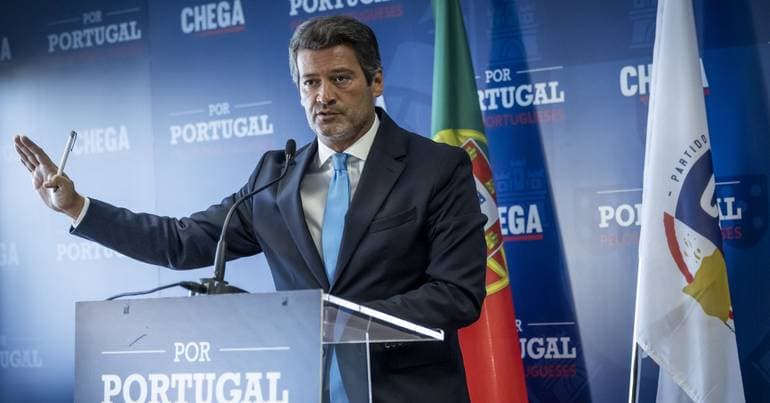
The leader of Chega and candidate in the 2026 presidential election will attend Mass this Sunday at 19:00.

The Mayor of Lisbon urged people to vote on Sunday after casting his own ballot in Lisbon.

The Mayor of Lisbon urged people to vote on Sunday after he himself cast his vote in Lisbon.

Henrique Gouveia e Melo cast his vote this morning in Lisbon. After a campaign he described as “very intense”, the presidential candidate expressed a positive and confident mood. Focusing on the importance of civic participation, Gouveia e Melo issued a direct appeal against abstention, emphasising that voting is the essential tool for the Portuguese to take control of their own destiny.

Presidential candidate backed by Chega exercised his right to vote at the Parque das Nações Primary School. 'There is a historic mobilisation at consulates and embassies around the world,' he added.

A gang made up of five men and one woman was stopped in the Quinta do Loureiro neighbourhood of Lisbon.

The G3 battle rifle was recovered.

The Public Prosecutor's indictment is 122 pages long and describes the assaults in detail.

The production by the Estrutura company will run in Lisbon until 23 January.

Marques Mendes again urged supporters to believe in advancing to the second round. The candidate finishes his campaign with a rally and a youth event in Lisbon.

Hospital de São José in Lisbon mistakenly handed a family's coffin the wrong body; the error was discovered moments before a planned wake and the hospital has opened an internal inquiry. Reports identify the deceased and note an identification bracelet mismatch; the case has drawn extra attention because the family is related to public figure Manuel Luís Goucha. Those arranging funerals or dealing with hospital paperwork should expect the inquiry and any procedural follow‑up from the hospital.
Hospital de São José is a major public hospital in central Lisbon, part of the Centro Hospitalar Universitário de Lisboa Central (CHULC), that provides emergency, inpatient and specialist care to the capital region. Because it is one of Lisbon’s principal hospitals, incidents such as the reported mistaken release of the wrong body draw national scrutiny and can raise concerns about procedures for patient and post‑mortem identification; patients and families using Lisbon hospitals should be aware of their rights and complaint channels.

EasyJet Portugal’s director‑general warned that Lisbon’s Humberto Delgado Airport (Aeroporto Humberto Delgado) is operating at or near capacity and needs operational improvements before flight numbers increase, describing current performance as among the worst in Europe for delays. The remarks stress the risk that adding flights without fixing delays and resilience could worsen passenger disruption. Travellers should allow extra connection time, monitor flight status and expect capacity debates to shape summer schedules and fares.
Humberto Delgado Airport is Lisbon's main airport (the Aeroporto Humberto Delgado), serving as Portugal's busiest international gateway and handling roughly 30 million passengers in the pre-pandemic period. For travellers and residents it matters because capacity and operational issues there directly affect flight delays, connections and the availability of routes.
Portela is the common local name for Humberto Delgado Airport (Aeroporto Humberto Delgado), so media references to Portela point to Lisbon's main airport and its operational limits. When reports cite Portela's delays or capacity problems, that means impacts on flight punctuality and route availability for people travelling to or from the capital.

easyJet views the planned privatisation of TAP as a strategic opening to expand its presence in Lisbon and across Portugal. With the airline operating 96 routes to and from Portuguese airports in 2025, easyJet could deepen low-cost connectivity, increase frequencies on key city-pairs and compete more directly with a newly structured national carrier. The shift promises greater competition, potential downward pressure on fares and improved network connectivity, but also raises questions about airport slot availability, regulatory oversight and how market dynamics will affect legacy and low-cost carriers alike.
Update: New coverage quotes easyJet’s Portugal management saying that TAP’s reprivatisation could free up slots at Lisbon airport and that the airline aims to take up those slots; RTP and Portugal Resident report easyJet sees the change as a concrete growth opportunity in the capital.
TAP Air Portugal is Portugal’s flag-carrier airline, founded in 1945 and based at Lisbon’s Humberto Delgado Airport, operating domestic, European and intercontinental routes. For expats it matters because TAP runs many of the main connections to Portugal (including transatlantic routes), so its schedules, fares and operational decisions directly affect relocation, visits and shipping of household goods.
Airport slots are time-limited permissions to take off or land at congested airports during specific time windows, managed under national and international rules so capacity is used efficiently. At busy airports where slots are scarce, releases or trades of slots (for example after an airline reduces operations) let other carriers expand routes, which is why easyJet would want slots freed at Lisbon.

RTP (Rádio e Televisão de Portugal) is Portugal's state-owned public service broadcaster, operating since 1935 (radio) and 1957 (television). It runs 8 television channels (including RTP1, RTP2, RTP3) and 7 radio stations (Antena 1, 2, 3), plus international services reaching Portuguese diaspora worldwide. Funded by a broadcasting tax on electricity bills and advertising revenue, RTP serves as Portugal's cultural reference, providing quality news, education, and entertainment. Its archive represents "irreplaceable heritage in Portuguese collective memory", and it pioneered online streaming with RTP Play in 2011. RTP connects "Portugal and the Portuguese to themselves, to each other, and to the world"

NOVA IMS (NOVA School of Information Management) is the information management and data science faculty of NOVA University Lisbon. It specialises in data science, information management and business analytics through taught programmes, applied research and industry partnerships. The school emphasises quantitative methods, practical analytics skills and interdisciplinary approaches to prepare graduates for roles in data-driven organisations and to support research and consulting activity across public and private sectors.

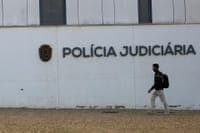
Reports say two Polícia de Segurança Pública officers, aged 23 and 26, have been accused by the Public Prosecutor’s Office of dozens of crimes including torture and sexual violence allegedly committed in police stations; several others are named as co‑perpetrators. The PSP says it regrets the events and has carried out an internal investigation as the criminal case proceeds. The allegations have raised questions about police conduct and oversight; anyone with concerns about detention or police practice should follow official case developments and rights‑advice channels.
Update: The Public Prosecutor’s Office now says its inquiry suspects more than ten officers were involved in violent assaults at two Lisbon police stations and that the circulation of torture images implicates upwards of 70 officers; two people have been formally named as suspects in connection with the images and assaults.

The PSP (Polícia de Segurança Pública) is Portugal's national civilian police force, founded in 1867. Responsible for defending Republican democracy and safeguarding internal security and citizens' rights, the PSP polices major cities—Lisbon, Porto, Faro—and large urban areas, covering only 4% of Portugal's territory but roughly half the population. Led by a National Director under the Ministry of Internal Affairs, its approximately 21,500 officers handle preventive policing, crime investigation, public order, airport security, diplomatic protection, private security regulation, firearms licensing, and border control (since 2023).
PSP vs. GNR: The PSP is civilian with police-focused training and urban jurisdiction, while the GNR (Guarda Nacional Republicana) is military (gendarmerie) with military training, covering 96% of Portugal's rural and suburban territory. Both share core public safety missions but differ fundamentally in nature, training, and geographic responsibility.
The Public Prosecutor’s Office (Ministério Público) is Portugal’s state prosecution service responsible for investigating crimes, bringing criminal charges and representing the state in court; it is institutionally independent from the police and is led by the Procurador‑Geral da República (Attorney General). In the story it is the body accusing two officers, so residents and those interacting with law enforcement should know that criminal allegations are pursued and prosecuted by this office.

Bloco de Esquerda has asked for an urgent hearing with the Interior Ministry after reports of alleged police violence at the Rato police station; parties are seeking ministerial answers and potential oversight measures. Media coverage highlights political pressure on the Ministério da Administração Interna (MAI) to explain events and any disciplinary steps. Those concerned about policing and civil‑liberties oversight should follow parliamentary developments and local reporting.
The Left Bloc (Left Bloc (Bloco de Esquerda)) is a Portuguese left-wing party founded in 1999 that campaigns for progressive policies such as stronger social welfare, workers’ rights and more public services. Expats who follow Portuguese politics should note the Bloco often influences coalition talks and debates over healthcare, housing and labour regulations.

The Left Bloc achieved its worst result in history in 2025, dropping from 5 seats to just 1. Mariana Mortágua, who led the party from May 2023, resigned in October 2025 after failing to reverse the party's electoral decline. Founded in 1999 as a coalition of far-left parties, BE was once the third-largest force in Portuguese politics and a key partner in the 2015-2019 Geringonça government.

A police union (ASPP/PSP) has scheduled a protest rally at Lisbon Airport on 29 January, warning the day could be disruptive for travellers. The announcement flags the risk of delays or congestion on a date several outlets identify as likely to affect passenger journeys. Those travelling through the capital on or around 29 January should check airline and airport notices and consider alternate dates or extra time for transfers.

The PSP (Polícia de Segurança Pública) is Portugal's national civilian police force, founded in 1867. Responsible for defending Republican democracy and safeguarding internal security and citizens' rights, the PSP polices major cities—Lisbon, Porto, Faro—and large urban areas, covering only 4% of Portugal's territory but roughly half the population. Led by a National Director under the Ministry of Internal Affairs, its approximately 21,500 officers handle preventive policing, crime investigation, public order, airport security, diplomatic protection, private security regulation, firearms licensing, and border control (since 2023).
PSP vs. GNR: The PSP is civilian with police-focused training and urban jurisdiction, while the GNR (Guarda Nacional Republicana) is military (gendarmerie) with military training, covering 96% of Portugal's rural and suburban territory. Both share core public safety missions but differ fundamentally in nature, training, and geographic responsibility.

A market report highlights Lisbon — especially historic centre parishes such as Santa Maria Maior, Santo António and Misericórdia — consolidating as a European option for North American buyers, with foreign demand concentrated in central neighbourhoods. Consultants say the trend reflects both lifestyle demand and investor interest, which can push prices and reduce rental stock in prime areas. Those seeking housing in Lisbon should note increased competition in central districts and check neighbourhood supply if relocating or investing.

Portuguese outlets report the Public Security Police (PSP) screened more than 11 million passengers at Lisbon airport in 2025, refusing entry to 1,867 people and detaining 263; separate reporting says PSP identifies an average of about 70 suspicious international passengers a day. Coverage combines national totals with daily operational figures and highlights intensified checks on arrivals. Travelers should note increased security controls may mean longer queues and documentary checks at Lisbon airport — carry ID and travel papers and allow extra time for arrivals and departures.

The PSP (Polícia de Segurança Pública) is Portugal's national civilian police force, founded in 1867. Responsible for defending Republican democracy and safeguarding internal security and citizens' rights, the PSP polices major cities—Lisbon, Porto, Faro—and large urban areas, covering only 4% of Portugal's territory but roughly half the population. Led by a National Director under the Ministry of Internal Affairs, its approximately 21,500 officers handle preventive policing, crime investigation, public order, airport security, diplomatic protection, private security regulation, firearms licensing, and border control (since 2023).
PSP vs. GNR: The PSP is civilian with police-focused training and urban jurisdiction, while the GNR (Guarda Nacional Republicana) is military (gendarmerie) with military training, covering 96% of Portugal's rural and suburban territory. Both share core public safety missions but differ fundamentally in nature, training, and geographic responsibility.

The Socialist Party (Partido Socialista or PS) in Lisbon is advancing proposals to require private urban-development projects to transfer land to the municipality so it can be used for public housing. Reporting indicates the measure is aimed at increasing the stock of affordable homes in the capital by leveraging development schemes. Those seeking housing in Lisbon should follow council debates — prospective buyers, tenants and developers could be affected if the rule changes land-use obligations.
The Socialist Party (Partido Socialista or PS) is Portugal's main centre‑left, social‑democratic party that has been one of the country’s largest parties and has led national governments since 2015 under António Costa. Its decisions shape taxation, housing, health and immigration policies that directly affect residents and expats living in Portugal.
Public housing (in Portuguese, habitação pública) is housing provided or subsidised by the state or municipalities to make rent or ownership affordable for low‑ and middle‑income households. Requiring developers to transfer land to municipalities frees space for new public housing projects, which can increase supply and ease rental pressure in cities — something those seeking long‑term housing should watch.

Socialist Party (PS)
Portugal's other traditional major party suffered a historic collapse in the 2025 election, dropping from 78 to 58 seats and falling to third place for the first time in democratic history. The party was led by Pedro Nuno Santos from January 2024 until his resignation following the May 2025 defeat. José Luís Carneiro, a 53-year-old former Minister of Internal Administration known for his moderate positioning within the party, was elected unopposed as the new Secretary-General with 95% of votes in June 2025. The Socialist Party governed Portugal from 2015 to 2024, including an absolute majority from 2022 to 2024 under António Costa, who resigned in November 2023 amid a corruption investigation. The PS previously led the innovative "Geringonça" (contraption) coalition government from 2015-2019, a minority government supported by the Left Bloc and Portuguese Communist Party that reversed austerity measures and presided over economic recovery.

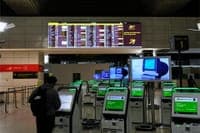
Portuguese outlets report the European border control system for non‑EU travellers (the Entry/Exit System, EES) has been reactivated for testing at Lisbon Airport (Aeroporto de Lisboa) after a temporary suspension; police sources told Lusa there will be an afternoon test to assess recent fixes. Separate reporting said the system could be re‑activated then suspended again while improvements are confirmed, and earlier problems were linked to long queues. For expats and travellers: expect possible delays at passport control for non‑EU nationals, check your flight and airline notices before travel, allow extra time at the airport and carry passport and supporting documents for faster processing.
The Entry-Exit System (Sistema de Entrada e Saída) is an EU border-register that records biometric data (fingerprints and a facial image) and travel details for short-stay non‑EU travellers, replacing passport stamping and creating a searchable entry/exit record. According to recent reporting, the new rules now require over a third of non‑EU nationals entering Schengen to provide this extra data at the border; the aim is to improve security and migration tracking, but travellers should be prepared to submit biometrics at kiosks or border control and ensure their travel documents are valid. For expats and visitors this usually means slightly longer checks on arrival/departure and more robust digital records of your travel history.
The border-control system is the set of checks and databases used to process non-EU travellers at entry points — passport and visa checks, biometric data capture and automated database searches such as the Schengen Information System (SIS) and the Entry/Exit System (EES). A temporary suspension of automated checks at Lisbon Airport means those arrivals may be processed differently (more manual checks or national procedures), which can change wait times, administrative workload and how security checks are carried out for non‑EU citizens.

The CGTP trade-union confederation expects a large demonstration in Lisbon on Tuesday, starting at Praça Luís de Camões and heading to the Prime Minister's Office (São Bento), where it plans to deliver a petition with tens of thousands of signatures demanding withdrawal of the government's labour package. The protest happens on the eve of a requested meeting at São Bento with the Prime Minister and the Labour Minister, underlining continued union pressure after last December’s strike. For expats who work in affected areas, expect central-Lisbon disruption around 14:30 and possible concentrated media attention on any government response that could influence labour-policy timing.
Update: Multiple outlets reported that presidential candidates Catarina Martins and António Filipe attended the CGTP demonstration in Lisbon, joining the rally against the government's labour package and increasing political visibility at the event.
CGTP is the General Confederation of the Portuguese Workers (Confederação Geral dos Trabalhadores Portugueses – Intersindical Nacional), Portugal’s largest trade-union federation that organises strikes and national demonstrations. For expats, CGTP actions (like the Lisbon protest) can disrupt public transport, public services and workplaces and may involve petitions with tens of thousands of signatures.
São Bento refers to São Bento Palace (Palácio de São Bento), the historic building in Lisbon that houses the Assembly of the Republic (Portugal’s parliament) and is often used in the media as a shorthand for the national government. For expats, protests directed at São Bento signal demonstrations at the seat of political power and can cause road closures and increased police presence in central Lisbon.

Luís Filipe Montenegro Cardoso de Morais Esteves (born February 16, 1973, in Porto) is a Portuguese lawyer and center‑right politician who has served as Prime Minister of Portugal since April 2, 2024. A long‑time member of the Social Democratic Party (PSD), he is the leading figure of the post‑Troika generation of Portuguese conservatives. Montenegro was elected to the Assembly of the Republic in 2002 for the Aveiro district and remained an MP for 16 years, becoming PSD parliamentary leader from 2011 to 2017 during the bailout and austerity period under Prime Minister Pedro Passos Coelho. He was a prominent defender of strict austerity measures, arguing in 2014 that “the life of the people is no better, but the life of the country is a lot better,” a phrase that has followed his public image since. After an unsuccessful leadership bid against Rui Rio in 2020, Montenegro won the PSD leadership in 2022. He then forged the centre‑right Democratic Alliance (PSD–CDS‑PP and allies), which won a plurality of seats in the 2024 legislative election. Refusing to partner with the far‑right Chega, which he has called “often xenophobic, racist, populist and excessively demagogic,” he formed a minority government as head of the XXIV Constitutional Government on April 2, 2024. His first government fell in March 2025 after a no‑confidence vote linked to a conflict‑of‑interest affair, but fresh elections saw the Democratic Alliance increase its seat share, allowing Montenegro to return as prime minister leading the XXV Constitutional Government. His importance to Portugal lies in attempting to re‑center the traditional centre‑right after the crisis years, defending liberal‑conservative economics and EU alignment while drawing a sharp line against formal cooperation with the radical right, thus shaping how Portuguese democracy manages its new multi‑party era.
Rosário Palma Ramalho is Portugal’s Minister of Labour, responsible for labour policy, workplace regulation and negotiations with trade unions. Her statements today about the CGTP withdrawing from labour reform talks matter because they affect negotiation dynamics and can influence strikes or demonstrations that may disrupt public services and workplaces.

Catarina Soares Martins (born September 7, 1973, in Porto) is a former actress and theatre co-founder who became Portugal's most prominent left-wing leader. First elected to parliament in 2009 representing the Left Bloc (BE), she rose to party coordinator in 2012 and sole national coordinator in 2014, holding the position for 11 years—the longest tenure in BE history. Under her leadership, BE achieved its best-ever result in 2015 with 19 MPs and 10% of votes, becoming critical parliamentary support for Prime Minister António Costa's Socialist government, shifting policy leftward on labour rights, pensions, and public services. After BE's collapse to 5 MPs in 2022, Martins stepped down as leader in May 2023 and left parliament.
Current role:
In 2024, she was elected to the European Parliament, where she advocates for social justice, climate action, and human rights. Her significance lies in consolidating BE as a stable parliamentary force and normalizing leftist government cooperation in Portugal.

CNN Portugal spent time inside CODU, INEM’s medical call centre in Lisbon and found a centre under sustained pressure where high call volumes demand rapid, accurate triage and careful deployment of ambulances and other rescue resources. The report examines how operators prioritise calls, the protocols guiding decision-making, and the operational strain of matching limited resources to urgent needs.

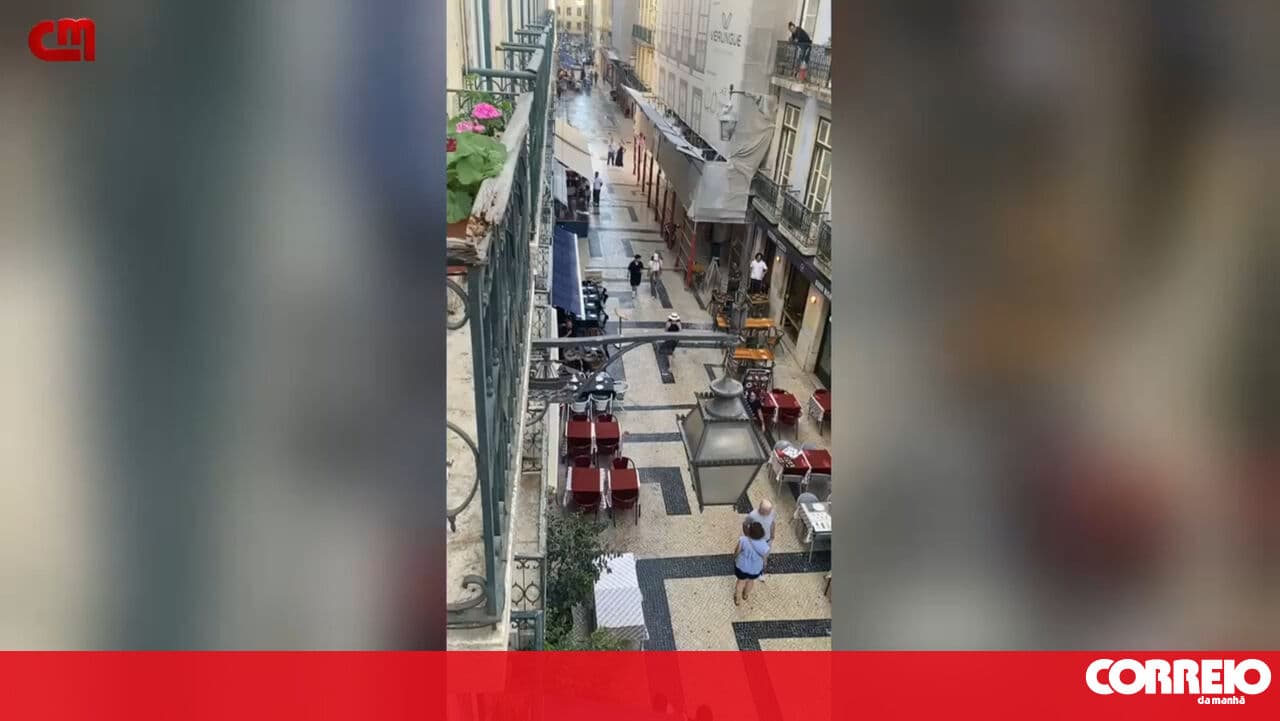
Lisbon's municipal authority has proposed banning alcohol consumption in public streets from 11pm, with proposed fines of up to €3,000 that could also be applied to establishments. Framed as a measure to reduce nuisance and improve public safety, the proposal raises questions about enforceability, proportionality and the potential economic impact on nightlife and hospitality. Separately, Le Monde reports Emmanuel Macron accusing Donald Trump of 'breaking with international rules', underscoring a parallel debate about norms and accountability on the international stage.

A man has been remanded in custody after a 9-year-old boy died and a 14-year-old was injured when a shotgun allegedly discharged accidentally in the Bela Vista neighbourhood. Authorities say the weapon belonged to a family member; investigators remain on the scene and the case is being examined for possible criminal negligence and safety lapses, prompting questions about firearm storage and emergency response protocols.

Benfica members approved the “Benfica District” project at an extraordinary General Assembly, with 59.24% voting in favour. The development — a campaign pledge of re-elected president Rui Costa — aims to transform the area around the Estádio da Luz, increase stadium capacity and will have material implications for the club's revenue streams, the local property market and urban infrastructure planning.

The PSP (Public Security Police) have identified around 30 people after shots were fired with prohibited weapons in Lisbon. A targeted operation — involving Rapid Intervention Teams and Traffic Division units — ran from 22:00 Friday to 02:00 Saturday; no incidents were recorded and no arrests were made. Enquiries and investigations remain ongoing as police follow up on those linked to the discharges.

At 18:00, the Chega party lodged a formal complaint reporting incidents of shots fired using prohibited weapons in Lisbon.

An IPMA yellow warning is in force this Friday for eight districts — Guarda, Castelo Branco, Coimbra, Leiria, Lisbon, Setúbal, Beja and Faro — calling for increased public caution due to adverse conditions that could affect travel, outdoor activities and local services. At the same time eight presidential candidates will convene in Lisbon for a radio debate, an event whose logistics and audience turnout may be influenced by the weather alert; organisers and the public are advised to monitor forecasts and prioritise safety while ensuring the debate proceeds with contingency plans for any disruptions. The overlap of a national weather warning and a key campaign event underscores the practical intersection of public safety and electoral logistics.

Reports indicate 24 National Republican Guard (GNR) personnel were assigned to reinforce border checks at Lisbon’s Humberto Delgado Airport to help reduce queues and bolster security. The GNR later clarified the 24 officers will be deployed as reinforcements from next Tuesday; the airport had previously been reinforced by 25 GNR personnel at 19:00 and around 80 PSP officers over the Christmas period.


Portugal Resident •