This Monday is marked by fuel prices, which are rising again. Sá Carneiro Airport celebrates its 80th anniversary at a time when the Government is set to begin work on studying its expansion. Also within the country, the deadline for submitting applications for external parliamentary bodies comes to an end. Labour legislation...
In an increasingly volatile world where maritime routes have become arenas of ruthless geopolitical competition, the new European Port Strategy emerges as a beacon of vision. Recently announced by the European Commission, this strategy positions ports as pillars of EU autonomy, proposing an ambitious repositioning that promotes competitiveness, decarbonisation, and sovereignty in logistics and energy flows. For a country like Portugal, with an exposed Atlantic coast and ports such as Sines, Leixões, and Lisbon, this approach is fundamental. As global trade reorganises and logistics chains become instruments of geopolitical power, controlling critical infrastructure has become as important as defending borders. The most transformative element of this strategy is the approach to security, which has been absent from European port policy for decades. It is recognised that ports are no longer merely commercial hubs, but have become battlefronts against hybrid threats, including organised crime and terrorism, especially considering that most drug trafficking entering Europe via Portugal originates in Latin America. In 2024, Portugal recorded a record 23 tonnes of cocaine seized, mainly in its ports, consolidating the Brazil-Portugal route as a structural corridor for drug trafficking. Europol reports highlight evasive tactics, such as high-seas transfers using mother ships and daughter boats, which bypass customs controls and increase the risk of armed violence in coastal areas. This maritime security challenge, however, is part of a broader and more volatile geopolitical context. The war in Ukraine, the intensification of competition between major powers, and the melting of the Arctic—which opens new maritime routes potentially dominated by Russia and China—underscore the urgency for a Europe capable of controlling its own 'entry points'. Chinese state-owned companies like Cosco and China Merchants hold significant stakes in strategic terminals such as Piraeus, Hamburg, or Valencia, as part of the Belt and Road Initiative. Foreign capital, under fair and transparent rules, is part of the solution, but excessive dependence on external actors in critical infrastructure constitutes a risk in times of global uncertainty. At the same time, technological dependence raises new concerns. The Chinese company ZPMC dominates between 70% and 80% of the global market for port cranes, many of which are installed in European ports. In a context where logistics data is equivalent to economic and military intelligence, these dependencies bring risks. There is another dimension often forgotten: ports are central nodes of the European energy transition. Liquefied natural gas terminals, green hydrogen, submarine cables, and offshore energy infrastructure increasingly pass through port zones. This means that port security has also become a matter of energy security. The real question, therefore, is not whether Europe needs a port strategy, but whether it will have the political capacity to implement it with the urgency that the moment demands. In a sea of geopolitical uncertainties, whoever controls the ports controls much more than trade: they control the vital arteries of European economic and strategic power.
The Ministry of Infrastructure states that there are still 34 road situations to be resolved. Furthermore, UEFA will cancel the match between the European and South American champions.
According to the ministry, “a total of over 4,200 incidents were recorded across the national road and rail networks,” reaching “an average of about 200 daily interventions.”
The webpage provides recent news updates related to Portugal, highlighting infrastructure improvements such as Infraestruturas de Portugal resolving over 90% of road closures, and the opening of a regional emergency department at Hospital de Loures. It also covers economic topics like fuel price adjustments despite discounts, and political developments including José Luís Carneiro's re-election as the most voted leader in the Portuguese Parliament. Additionally, there are reports on local weather support initiatives and ongoing international issues involving Portugal, such as the Middle East conflicts.
The article highlights that Infraestruturas de Portugal has successfully resolved over 90% of road closures across the country. Additionally, a new regional emergency department is set to open at the Hospital de Loures on Monday, improving healthcare access in the area. The report also mentions ongoing infrastructure and transportation improvements, reflecting efforts to enhance mobility and public services in Portugal.
The webpage provides various news updates related to Portugal, including infrastructure developments, healthcare improvements, economic insights, and political events. Notably, the Infrastructure of Portugal has resolved over 90% of road closures, and a new regional emergency department is opening at Loures Hospital. Politically, José Luís Carneiro has been re-elected as the leader of the Socialist Party with strong support. The site also features other national topics such as economic concerns over fuel pricing, local incidents like a motorcycle fatality in Setúbal, and a humorous note about a fisherman who deceived the IPMA for financial gain. Overall, the content highlights ongoing developments and issues within Portugal across multiple sectors.
The article provides updates on various recent developments in Portugal. It reports that the government, through Infraestruturas de Portugal, has resolved over 90% of road closures, improving infrastructure. Additionally, a new regional emergency department is set to open at the Loures Hospital on Monday, enhancing healthcare services. The piece also highlights political news, noting that José Luís Carneiro was re-elected as leader of the Socialist Party with the highest number of votes in the Assembly of the Republic. Overall, the article covers infrastructure improvements, healthcare advancements, and political updates within Portugal.
The Cascais municipality fears being penalised for having planned works before the storms. The additional 5 million in damage to the seawall may not be accounted for in the APA's 111 million plan.
Lisbon airport failed to meet 12% of summer slot requests, with officials warning that infrastructure constraints are negatively impacting the national tourism sector.
Nine districts in the Centre and South of mainland Portugal are under a yellow warning for rain tonight due to the passage of storm Regina, as reported by the Portuguese Institute of the Sea and the Atmosphere (IPMA). The affected districts include Viseu, Évora, Setúbal, Santarém, Leiria, Castelo Branco, Aveiro, Coimbra, and Portalegre.
Update: Additional Context on the Warning
The yellow warning remains in effect as authorities urge residents to stay informed about weather updates and take necessary precautions to ensure public safety during the storm's passage.
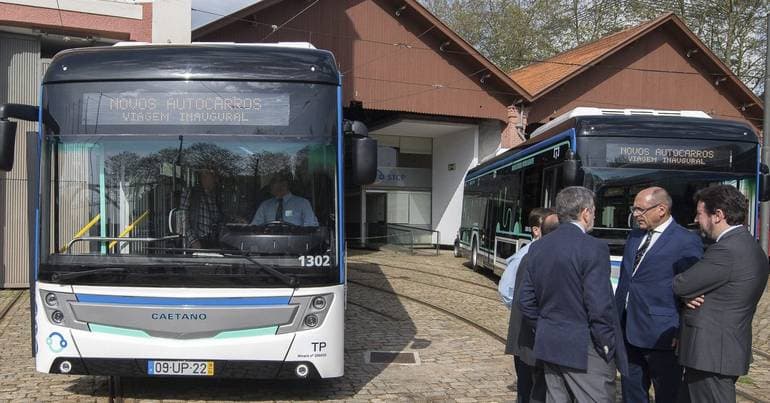
The inaugural day of hydrogen bus operations in Porto saw a significant turnout of curious spectators, highlighting public interest in sustainable transport solutions. Despite the official launch, the transport channel remains utilized for various other purposes, raising questions about compliance with regulations.
The Porto Brandão river station, located in the municipality of Almada, which had been closed since February 11 due to road access being blocked by a landslide, resumed operations today, announced Transtejo.
Brisa has reported that the landslide on the A5 motorway was caused by an abnormal volume of water due to recent storms, leading to soil instability and debris on the road. A technical analysis to determine a solution is expected to be completed next week. The president of Brisa announced that the company will not seek compensation from the Portuguese state for the landslide on the A1 near Coimbra, despite estimated losses exceeding three million euros. The storms have caused significant damage across the country, including fatalities and destruction of infrastructure.
Infraestruturas de Portugal has announced that 273 kilometers of railway lines remain closed due to severe weather conditions, with only 20 kilometers expected to reopen next week. The agency has not provided a timeline for when train services will resume on the Oeste and Douro lines, nor has it set a date for the commencement of necessary repair works.
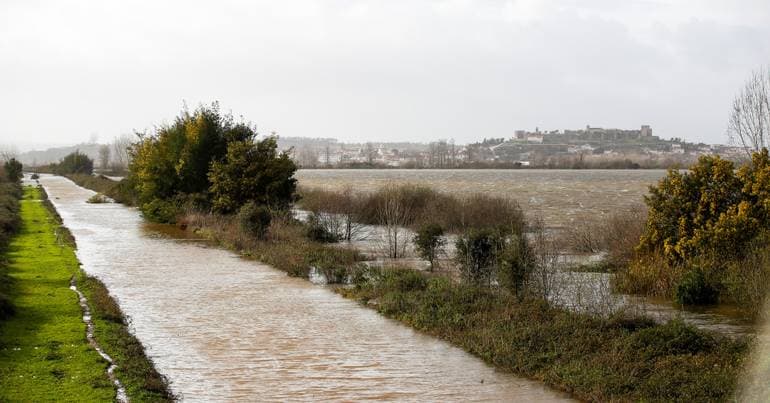
Former Secretary of State for the Environment Joaquim Poças Martins warns that a distinctive dike system in Portugal — described as unique nationwide — was designed for a different climatic baseline and may not cope with the growing intensity and frequency of extreme events such as droughts and floods. He argues the infrastructure and current management practices are not prepared for today’s severe weather patterns, raising questions about public safety, long-term resilience and whether such a project would be approved under modern standards. The assessment points to the need for policy review, risk reassessment and investment in adaptive measures.
The Portuguese tourism sector is facing significant challenges due to a recent storm, which has led to infrastructure damage, booking cancellations, and a loss of business during Carnival. Industry leaders are calling for targeted support to mitigate the economic impact and are hopeful that the upcoming Easter period can still be salvaged for hotels and tourism businesses.
The Lisbon Metro has announced preventive measures in response to forecasted bad weather, which may lead to delays in the opening of the Blue and Green lines on Saturday. These measures include the installation of protective barriers at critical access points and the temporary closure of access to six stations.
Miguel Miranda emphasizes the importance of proactive climate risk management, arguing that it requires significant investment in infrastructure changes, such as burying electrical networks and restricting construction in flood-prone areas. He advocates for Portugal to reassess its priorities and make tough decisions to prevent reactive measures after disasters occur.
A series of storms has wreaked havoc across Portugal, leading to extensive damage to infrastructure and impacting local communities. The severe weather has prompted emergency services to respond to the crisis, highlighting concerns over public safety and the resilience of affected areas.
Months after the significant Iberian Blackout that left Portugal and Spain without electricity for up to 12 hours, a working group has expressed skepticism about the government's initial solutions to prevent future incidents. The discussions highlight the complexities of infrastructure and emergency services in ensuring public safety and sustainability.
Lisbon’s Marquês de Pombal metro station will undergo around four months of maintenance works aimed at improving user conditions and overall upkeep; authorities stress the station will remain open and train services will be uninterrupted. The intervention is presented as routine maintenance with minimal impact on commuters, with operations and timetables maintained throughout the works.
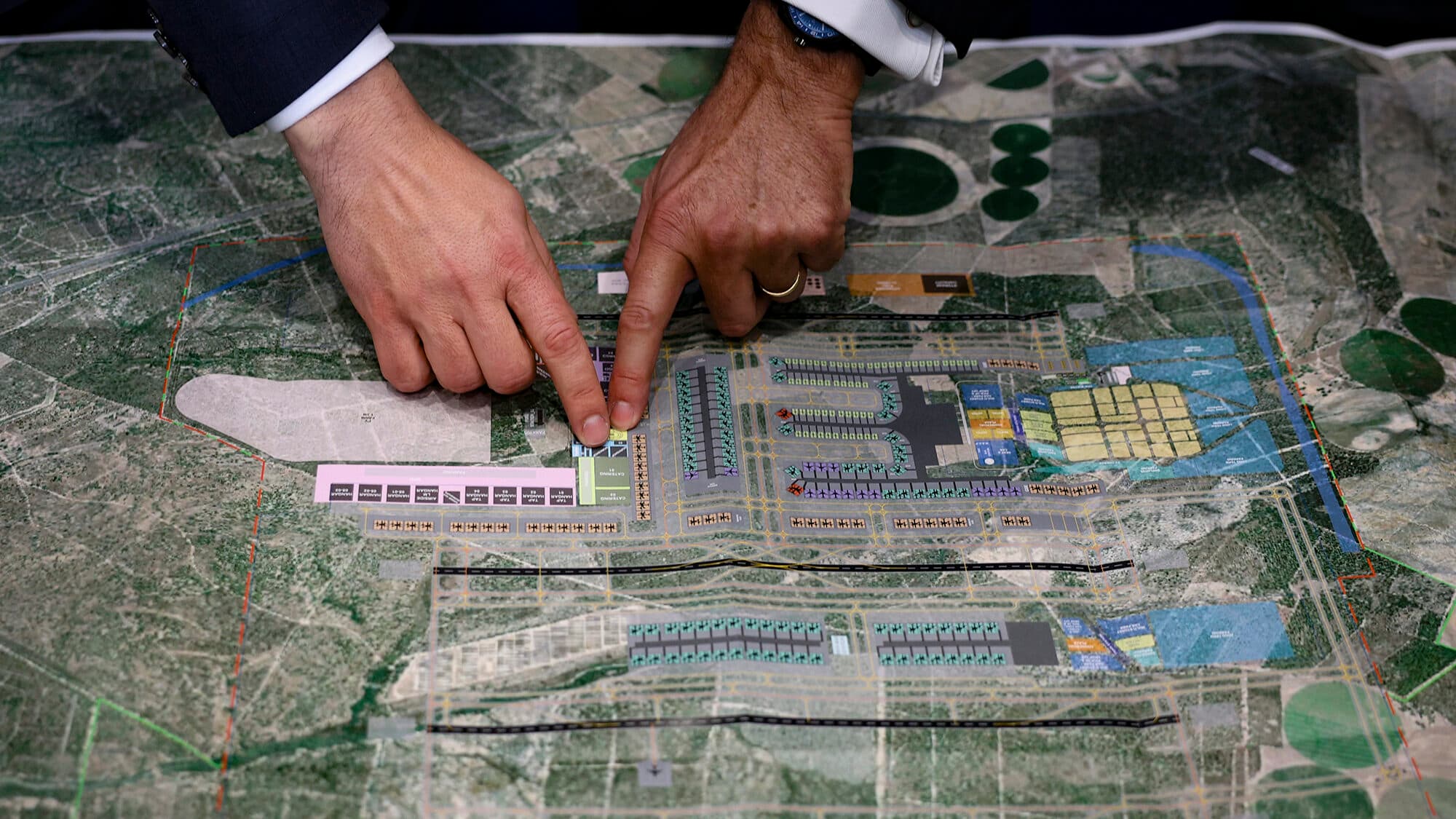
The Government has received the first environmental report for the proposed new Lisbon airport, submitted by ANA – Airports of Portugal. The Ministry of Infrastructure said the next step is delivery of a technical report by 16 July, which will detail the project’s principal environmental impacts and justify the choice of location within the Campo de Tiro de Alcochete perimeter. The final environmental impact study is expected to be submitted to the Portuguese Environment Agency in the third quarter, marking a new phase in the planning and regulatory review of the airport project.