Latest news and stories about labour law in government in Portugal for expats and residents.
The Galp workers' committee (CCT) has publicly criticised the minister and warned that a proposed merger with Moeve would lead to a reduction in Galp's size and influence, raising concerns about potential job losses and a weakened company position.
The meeting is expected to be attended by Fnam's new president, André Gomes. Doctors' pay and working conditions will be topics for discussion.

The meeting is expected to include André Gomes, the new president of FNAM.

ECO outlines a government proposal to change the rules governing dismissals and layoffs, presenting seven key points about who would be affected, the timeline and legal implications. The reforms aim to clarify employer obligations, make some dismissals harder or more costly and adjust procedures for collective measures; trade unions, employers and HR departments can expect negotiations and possible legal challenges. Workers and employers should watch for the formal bill and guidance on collective dismissal (despedimento coletivo) procedures before changes come into force.
Dismissal is the termination of an employment contract initiated by the employer, which can be for individual reasons (disciplinary or performance) or for economic/structural reasons. Proposed reforms to dismissal rules can change notice periods, severance entitlements and legal protections, so employees and employers should follow the timetable and check how any changes would affect rights and procedures.
A collective dismissal is when an employer terminates the contracts of multiple workers within a short period for economic, structural or operational reasons, and it typically triggers special procedures like consultation with workers or unions and notification to authorities. In practice this means affected employees gain extra protections and negotiation rights, so workers, unions and businesses should watch proposed rule changes that could alter thresholds or consultation requirements.

The case dates back to 2017. The driver of a tracked vehicle died after the vehicle he was operating rolled over while combating a forest fire that had broken out near Cardal.

Workers complain of 'pay inequalities and a lack of career progression'.


“I appeal to those who know that democracy is strong when we are together, when we look one another in the eye, when we do not invent false divisions and, by contrast, create solutions for the country,” the Bloco member urged at the closing dinner.

Contacted by Lusa, an INEM source denied that the monthly supplement payment of about €140 to the military personnel concerned is overdue, stating that the transfers “were made on 19 December”.

The admiral believes he can win the presidential election because he says he has no party ties. Also in this newspaper, Catarina Martins accuses the Minister of Labour of being a problem for the country rather than a solution.

Catarina Martins accuses the Labour Minister of being 'a problem for the country', criticising her performance and policies.

The case dates back to 2017. The operator of a tracked vehicle died after the vehicle he was operating overturned while fighting a wildfire that had broken out near Cardal.

Portugal's government plans to revise regulations governing platform-based work (delivery, ride-hailing and other gig-economy jobs). Potential changes include clarifying worker status (employee vs contractor), strengthening social protections and labour rights, introducing minimum standards and transparency obligations for platforms, and tougher enforcement — measures that would affect platforms, workers and consumers.

The Order of Nurses (Ordem dos Enfermeiros) has publicly rejected proposed limits on nurse recruitment, warning that restricting hiring would damage service quality and patient safety and exacerbate staffing pressures. Observador and Correio da Manhã report the body said workforce shortages and an ageing staff profile already strain care delivery. For expats who rely on public healthcare: staffing pressures could mean slower non‑urgent services and longer waits in some units; consider registering with a local family doctor and check private options if continuity of care is essential.
The Ordem dos Enfermeiros (Order of Nurses) is Portugal’s statutory professional body that registers and regulates nurses, sets professional standards, and handles discipline and professional conduct. Its warning about hiring limits matters because the Ordem represents the nursing workforce—restrictions on recruitment can worsen staff shortages and affect patient care, so expat nurses must be registered with the Ordem to practise and may be directly affected by any new hiring rules.

The PSP union has written to the Inspectorate-General of Internal Administration (Inspeção-Geral da Administração Interna or IGAI), copying the Ministry of Internal Administration and the PSP National Directorate, warning of staff shortages and an ageing, exhausted, demotivated police force and requesting an urgent meeting. The union framed the problem as deteriorating human-resources management that risks operational capacity. Expats should be aware staffing pressures could affect routine police responsiveness in some areas and may prompt recruitment or deployment changes in coming weeks.

The PSP (Polícia de Segurança Pública) is Portugal's national civilian police force, founded in 1867. Responsible for defending Republican democracy and safeguarding internal security and citizens' rights, the PSP polices major cities—Lisbon, Porto, Faro—and large urban areas, covering only 4% of Portugal's territory but roughly half the population. Led by a National Director under the Ministry of Internal Affairs, its approximately 21,500 officers handle preventive policing, crime investigation, public order, airport security, diplomatic protection, private security regulation, firearms licensing, and border control (since 2023).
PSP vs. GNR: The PSP is civilian with police-focused training and urban jurisdiction, while the GNR (Guarda Nacional Republicana) is military (gendarmerie) with military training, covering 96% of Portugal's rural and suburban territory. Both share core public safety missions but differ fundamentally in nature, training, and geographic responsibility.

IGAI stands for the Inspectorate‑General of Internal Administration (Inspeção‑Geral da Administração Interna), an independent oversight body that inspects police forces, civil protection and local administration for legality and performance. For expats dealing with police staffing or conduct issues, IGAI is the body unions and officials may ask to review problems and recommend changes.

The CGTP trade-union confederation expects a large demonstration in Lisbon on Tuesday, starting at Praça Luís de Camões and heading to the Prime Minister's Office (São Bento), where it plans to deliver a petition with tens of thousands of signatures demanding withdrawal of the government's labour package. The protest happens on the eve of a requested meeting at São Bento with the Prime Minister and the Labour Minister, underlining continued union pressure after last December’s strike. For expats who work in affected areas, expect central-Lisbon disruption around 14:30 and possible concentrated media attention on any government response that could influence labour-policy timing.
Update: Multiple outlets reported that presidential candidates Catarina Martins and António Filipe attended the CGTP demonstration in Lisbon, joining the rally against the government's labour package and increasing political visibility at the event.
CGTP is the General Confederation of the Portuguese Workers (Confederação Geral dos Trabalhadores Portugueses – Intersindical Nacional), Portugal’s largest trade-union federation that organises strikes and national demonstrations. For expats, CGTP actions (like the Lisbon protest) can disrupt public transport, public services and workplaces and may involve petitions with tens of thousands of signatures.
São Bento refers to São Bento Palace (Palácio de São Bento), the historic building in Lisbon that houses the Assembly of the Republic (Portugal’s parliament) and is often used in the media as a shorthand for the national government. For expats, protests directed at São Bento signal demonstrations at the seat of political power and can cause road closures and increased police presence in central Lisbon.

Luís Filipe Montenegro Cardoso de Morais Esteves (born February 16, 1973, in Porto) is a Portuguese lawyer and center‑right politician who has served as Prime Minister of Portugal since April 2, 2024. A long‑time member of the Social Democratic Party (PSD), he is the leading figure of the post‑Troika generation of Portuguese conservatives. Montenegro was elected to the Assembly of the Republic in 2002 for the Aveiro district and remained an MP for 16 years, becoming PSD parliamentary leader from 2011 to 2017 during the bailout and austerity period under Prime Minister Pedro Passos Coelho. He was a prominent defender of strict austerity measures, arguing in 2014 that “the life of the people is no better, but the life of the country is a lot better,” a phrase that has followed his public image since. After an unsuccessful leadership bid against Rui Rio in 2020, Montenegro won the PSD leadership in 2022. He then forged the centre‑right Democratic Alliance (PSD–CDS‑PP and allies), which won a plurality of seats in the 2024 legislative election. Refusing to partner with the far‑right Chega, which he has called “often xenophobic, racist, populist and excessively demagogic,” he formed a minority government as head of the XXIV Constitutional Government on April 2, 2024. His first government fell in March 2025 after a no‑confidence vote linked to a conflict‑of‑interest affair, but fresh elections saw the Democratic Alliance increase its seat share, allowing Montenegro to return as prime minister leading the XXV Constitutional Government. His importance to Portugal lies in attempting to re‑center the traditional centre‑right after the crisis years, defending liberal‑conservative economics and EU alignment while drawing a sharp line against formal cooperation with the radical right, thus shaping how Portuguese democracy manages its new multi‑party era.
Rosário Palma Ramalho is Portugal’s Minister of Labour, responsible for labour policy, workplace regulation and negotiations with trade unions. Her statements today about the CGTP withdrawing from labour reform talks matter because they affect negotiation dynamics and can influence strikes or demonstrations that may disrupt public services and workplaces.

Catarina Soares Martins (born September 7, 1973, in Porto) is a former actress and theatre co-founder who became Portugal's most prominent left-wing leader. First elected to parliament in 2009 representing the Left Bloc (BE), she rose to party coordinator in 2012 and sole national coordinator in 2014, holding the position for 11 years—the longest tenure in BE history. Under her leadership, BE achieved its best-ever result in 2015 with 19 MPs and 10% of votes, becoming critical parliamentary support for Prime Minister António Costa's Socialist government, shifting policy leftward on labour rights, pensions, and public services. After BE's collapse to 5 MPs in 2022, Martins stepped down as leader in May 2023 and left parliament.
Current role:
In 2024, she was elected to the European Parliament, where she advocates for social justice, climate action, and human rights. Her significance lies in consolidating BE as a stable parliamentary force and normalizing leftist government cooperation in Portugal.

The government has signed a formal negotiation agreement with the National Federation of Doctors (FNAM) and said it will continue seeking consensus with health professionals. The move opens structured talks aimed at resolving labour and service delivery issues in the medical sector, signalling a willingness to engage on healthcare policy and doctors’ demands rather than imposing unilateral measures.

The coordinator of INEM’s Workers’ Committee acknowledged failings in how minimum-service requirements were communicated during the late‑2024 strike, saying the institution’s president had conveyed that minimum services were not required during overtime hours. The admission raises operational and public‑safety concerns, highlights potential legal and labour‑relations implications, and underscores the need for clearer protocols, stronger internal communication and contingency planning to protect emergency healthcare delivery during industrial action.

The latest episode of the weekly podcast 'Ao trabalho!' examines lingering uncertainty over tuition fee refunds and the implications for pay awards that recognise qualifications. Finance Minister Joaquim Miranda Sarmento’s response on the pay-award question is discussed alongside fast-moving items on labour policy, employment law and the state budget, with analysis of what these developments mean for workers and expats. The short, under-five-minute episode aims to distil key takeaways and policy consequences for those following workplace rights and public spending.

The Union of Workers of Large Supermarkets, Warehouses and Services of Portugal (STGSSP) has accused Revolut of pressuring and 'exploiting' around 1,200 employees in Portugal by imposing 'unrealistic' productivity metrics, after receiving multiple complaints about the digital bank’s labour practices. Revolut rejects the allegations, saying it complies with Portuguese labour law. The dispute highlights tensions between fintech productivity models and workplace rights, and could prompt closer scrutiny from unions and regulators.

Data from the Ministry of Labour, provided to ECO, shows companies have withdrawn more than €120 million from the Labour Compensation Fund (FCT), with the bulk of disbursements used to finance worker training. Employers can still claim roughly €517 million from the fund before the deadline at the end of the year, signalling significant ongoing demand and potential pressure on FCT resources. The pattern of withdrawals highlights how firms are reallocating statutory employer liabilities towards upskilling and may have implications for labour policy and fund sustainability.

Maria de Fátima Carioca argues that Portugal needs a substantial overhaul of its labour legislation, saying flexibilisation of labour relations is unavoidable but must not undermine social protections. She warns the proposed new law is not a magic wand for boosting wages — structural reform is required alongside measures to safeguard workers. Her remarks come as the Government prepares a wide-ranging review of labour rules and the social safety net.

A rise in the guaranteed national minimum wage to €920 gross per month, together with higher employer Social Security contributions, will raise labour costs by about €866 a year for each worker on the minimum wage. The increase reflects both direct pay and associated employer charges and will squeeze firm margins — particularly in low-margin sectors — with potential knock‑on effects on prices, hiring decisions and informal employment. Policymakers and businesses will need to weigh targeted support, phased implementation or productivity measures to offset the impact on competitiveness and employment.

This analytical piece urges readers to adopt an optimistic stance for the new year and to move past complaints about the recent increase in the retirement age. It explains that demographic shifts and the strain on social security systems underpin the policy change, outlines labour and legal implications for workers — including expatriates — and argues that better communication, phased implementation, retraining and age-friendly workplace measures would protect wellbeing while ensuring fiscal sustainability.

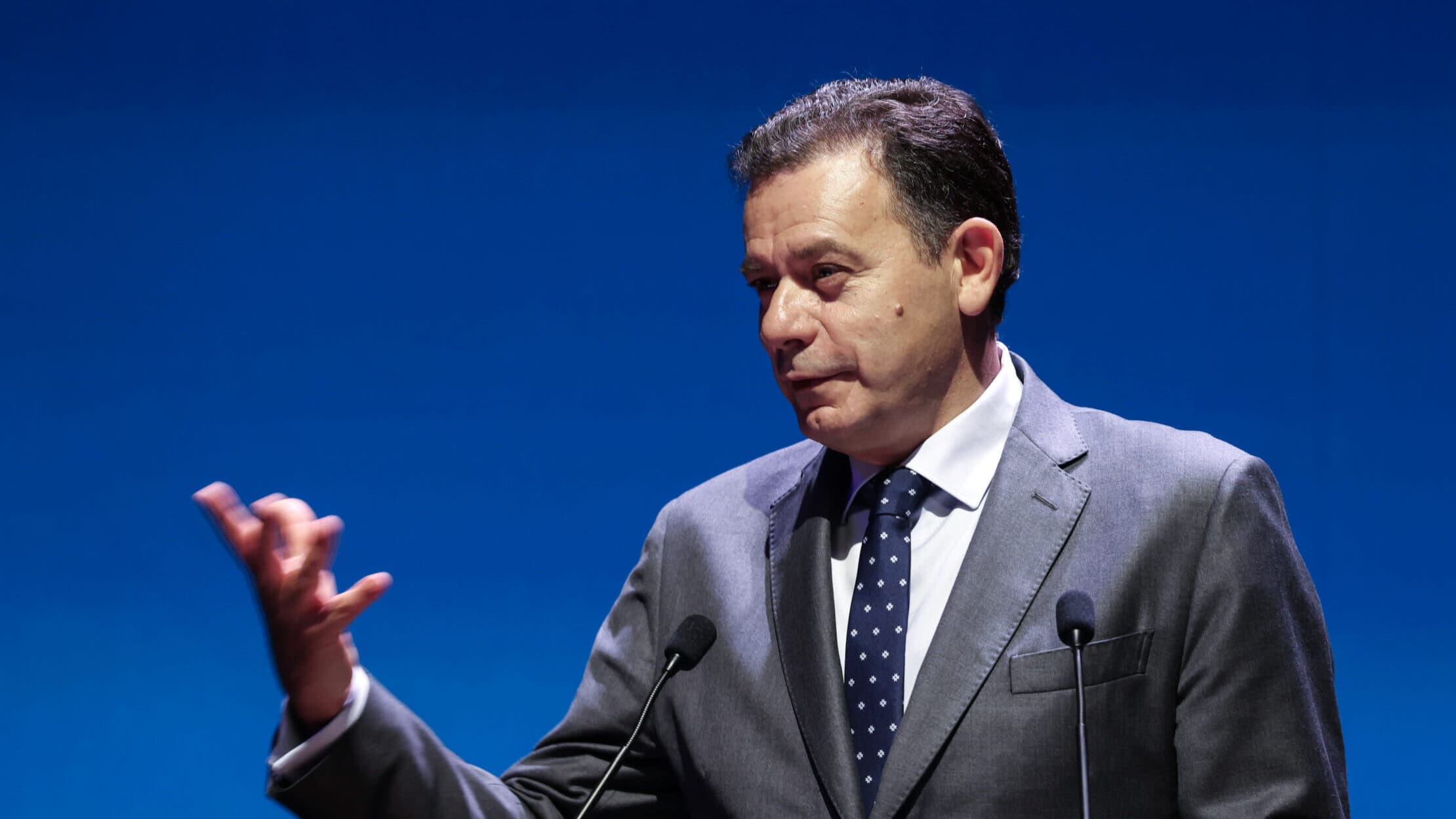
Prime Minister Luís Montenegro uses his customary 1 January Jornal de Notícias article to renew a call for labour reform, urging a ‘winning mentality’ and changes to employment law and regulation. Framed as necessary for competitiveness and job creation, the piece signals his policy priorities and aims to steer public and political debate toward deregulation and legal adjustments. It functions both as a policy pitch and as political positioning ahead of upcoming labour‑market discussions.

Zohran Mamdani was sworn in as New York City council president moments after midnight at the symbolic Old City Hall subway station. The unconventional timing and venue underscore a populist, reformist image and signal a break with ritualised civic spaces. Meanwhile in Portugal, opposition leader Luís Montenegro publicly defended a proposed labour reform as necessary to secure ‘decent wages’, framing it as a balance between worker protections and market flexibility. The two developments illustrate how political actors use symbolism and policy narratives to shape public perceptions: Mamdani’s inauguration emphasises accessibility and grassroots politics, while Montenegro’s defence seeks to pre-empt concerns about economic impact and social equity.
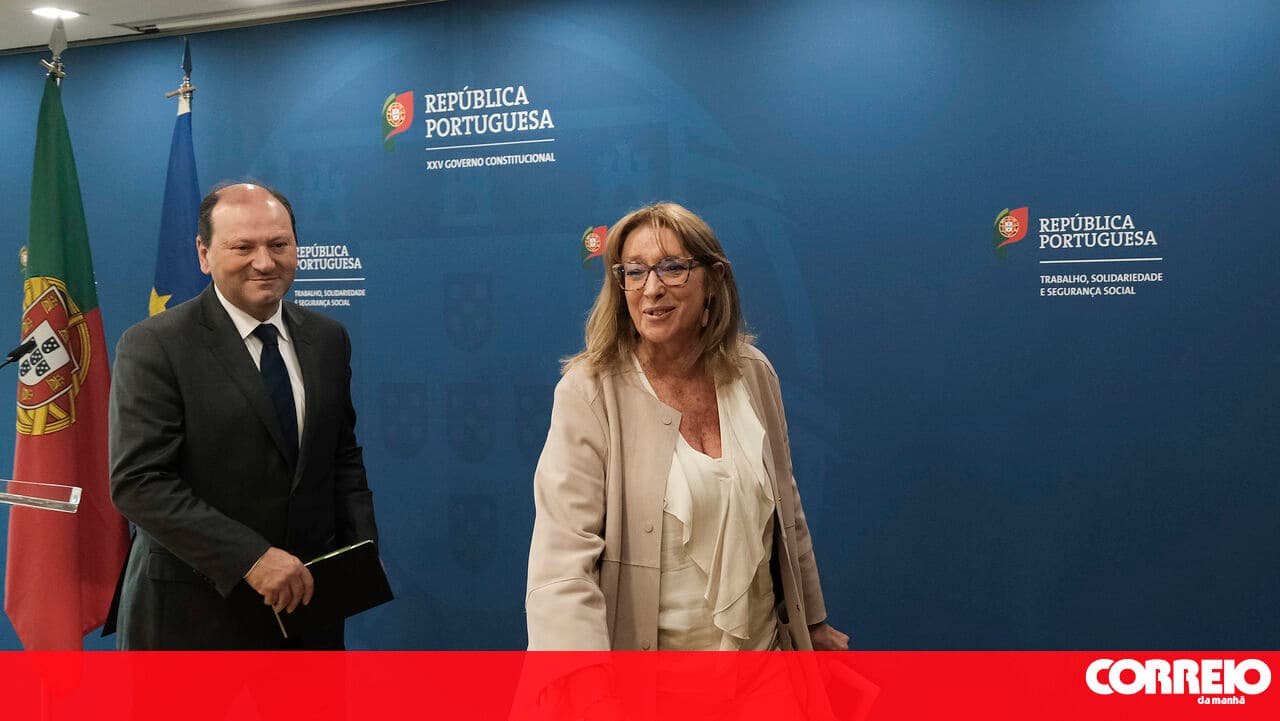
The Prime Minister has defended a government labour reform aimed at guaranteeing ‘decent wages’ by promoting better jobs and stronger pay protections, framing the measure as central to improving employment quality. Separately, António José Seguro urged an urgent restoration of social cohesion in Portugal, stressing that community rebuilding is necessary alongside policy reforms to address economic and social challenges.