
Latest news and stories about public safety in government in Portugal for expats and residents.
At the end of 2025 there were 13,124 active records of absconding. Driving without a licence is the offence most frequently cited in statements issued by the courts.

The candidate backed by the Socialist Party (PS) received 31.1% of the vote, ahead of André Ventura with 23.5%. The two will face each other in the second round. Also, a collision between two trains in Spain has left dozens dead.

At 17:00, former President Ramalho Eanes urged citizens to act with social responsibility.

A 42-year-old police officer is under house arrest. He will face trial and may be expelled from the PSP (Public Security Police).

Prison guards caught the woman. She had hashish hidden inside a cake and synthetic drugs.

A police officer previously implicated in torture had access to unauthorised ammunition from batches not assigned to the PSP; these rounds were untraceable to the force and could facilitate serious firearms offences. The case exposes weaknesses in ammunition control, record-keeping and oversight within the PSP, increasing public safety risks and underscoring the need for stricter inventory procedures, forensic tracing and accountability measures.

Reports say two Polícia de Segurança Pública officers, aged 23 and 26, have been accused by the Public Prosecutor’s Office of dozens of crimes including torture and sexual violence allegedly committed in police stations; several others are named as co‑perpetrators. The PSP says it regrets the events and has carried out an internal investigation as the criminal case proceeds. The allegations have raised questions about police conduct and oversight; anyone with concerns about detention or police practice should follow official case developments and rights‑advice channels.
Update: The Public Prosecutor’s Office now says its inquiry suspects more than ten officers were involved in violent assaults at two Lisbon police stations and that the circulation of torture images implicates upwards of 70 officers; two people have been formally named as suspects in connection with the images and assaults.

The PSP (Polícia de Segurança Pública) is Portugal's national civilian police force, founded in 1867. Responsible for defending Republican democracy and safeguarding internal security and citizens' rights, the PSP polices major cities—Lisbon, Porto, Faro—and large urban areas, covering only 4% of Portugal's territory but roughly half the population. Led by a National Director under the Ministry of Internal Affairs, its approximately 21,500 officers handle preventive policing, crime investigation, public order, airport security, diplomatic protection, private security regulation, firearms licensing, and border control (since 2023).
PSP vs. GNR: The PSP is civilian with police-focused training and urban jurisdiction, while the GNR (Guarda Nacional Republicana) is military (gendarmerie) with military training, covering 96% of Portugal's rural and suburban territory. Both share core public safety missions but differ fundamentally in nature, training, and geographic responsibility.
The Public Prosecutor’s Office (Ministério Público) is Portugal’s state prosecution service responsible for investigating crimes, bringing criminal charges and representing the state in court; it is institutionally independent from the police and is led by the Procurador‑Geral da República (Attorney General). In the story it is the body accusing two officers, so residents and those interacting with law enforcement should know that criminal allegations are pursued and prosecuted by this office.

Bloco de Esquerda has asked for an urgent hearing with the Interior Ministry after reports of alleged police violence at the Rato police station; parties are seeking ministerial answers and potential oversight measures. Media coverage highlights political pressure on the Ministério da Administração Interna (MAI) to explain events and any disciplinary steps. Those concerned about policing and civil‑liberties oversight should follow parliamentary developments and local reporting.
The Left Bloc (Left Bloc (Bloco de Esquerda)) is a Portuguese left-wing party founded in 1999 that campaigns for progressive policies such as stronger social welfare, workers’ rights and more public services. Expats who follow Portuguese politics should note the Bloco often influences coalition talks and debates over healthcare, housing and labour regulations.

The Left Bloc achieved its worst result in history in 2025, dropping from 5 seats to just 1. Mariana Mortágua, who led the party from May 2023, resigned in October 2025 after failing to reverse the party's electoral decline. Founded in 1999 as a coalition of far-left parties, BE was once the third-largest force in Portuguese politics and a key partner in the 2015-2019 Geringonça government.

A police union (ASPP/PSP) has scheduled a protest rally at Lisbon Airport on 29 January, warning the day could be disruptive for travellers. The announcement flags the risk of delays or congestion on a date several outlets identify as likely to affect passenger journeys. Those travelling through the capital on or around 29 January should check airline and airport notices and consider alternate dates or extra time for transfers.

The PSP (Polícia de Segurança Pública) is Portugal's national civilian police force, founded in 1867. Responsible for defending Republican democracy and safeguarding internal security and citizens' rights, the PSP polices major cities—Lisbon, Porto, Faro—and large urban areas, covering only 4% of Portugal's territory but roughly half the population. Led by a National Director under the Ministry of Internal Affairs, its approximately 21,500 officers handle preventive policing, crime investigation, public order, airport security, diplomatic protection, private security regulation, firearms licensing, and border control (since 2023).
PSP vs. GNR: The PSP is civilian with police-focused training and urban jurisdiction, while the GNR (Guarda Nacional Republicana) is military (gendarmerie) with military training, covering 96% of Portugal's rural and suburban territory. Both share core public safety missions but differ fundamentally in nature, training, and geographic responsibility.

Portuguese outlets report the Public Security Police (PSP) screened more than 11 million passengers at Lisbon airport in 2025, refusing entry to 1,867 people and detaining 263; separate reporting says PSP identifies an average of about 70 suspicious international passengers a day. Coverage combines national totals with daily operational figures and highlights intensified checks on arrivals. Travelers should note increased security controls may mean longer queues and documentary checks at Lisbon airport — carry ID and travel papers and allow extra time for arrivals and departures.

The PSP (Polícia de Segurança Pública) is Portugal's national civilian police force, founded in 1867. Responsible for defending Republican democracy and safeguarding internal security and citizens' rights, the PSP polices major cities—Lisbon, Porto, Faro—and large urban areas, covering only 4% of Portugal's territory but roughly half the population. Led by a National Director under the Ministry of Internal Affairs, its approximately 21,500 officers handle preventive policing, crime investigation, public order, airport security, diplomatic protection, private security regulation, firearms licensing, and border control (since 2023).
PSP vs. GNR: The PSP is civilian with police-focused training and urban jurisdiction, while the GNR (Guarda Nacional Republicana) is military (gendarmerie) with military training, covering 96% of Portugal's rural and suburban territory. Both share core public safety missions but differ fundamentally in nature, training, and geographic responsibility.

The Energy Minister said the government has allocated €25 million to reinforce critical infrastructure and prepare for a potential future blackout, while Brussels has approved an 'anti-blackout' plan to strengthen resilience. Coverage says the funding aims at bolstering grids and critical sites and follows talks with major energy firms. Businesses and residents concerned about power reliability should track planned works and local notices that may cause temporary outages.

Maria da Graça Carvalho, the Energy Minister, is a Portuguese engineer and politician affiliated with the Social Democratic Party (PSD) who has served as a Member of the European Parliament and held government roles connected to science and higher education policy. Her work on research and EU policy can affect funding and regulation that matter to professionals and students living in Portugal.
The anti‑blackout plan (Portuguese: plano antiapagões) is a government contingency strategy to reduce the risk of widespread power outages by coordinating grid operators, protecting critical services, managing reserves and, if needed, implementing targeted measures. For households and businesses it means the government and utilities aim to avoid uncontrolled outages, but you should still follow supplier notices and emergency guidance during peak demand or extreme weather periods.

Three representative firefighters' associations have requested an urgent audience with the Prime Minister and parliamentary groups to present proposals for the sector, rejecting responsibility for current pre-hospital emergency problems and urging structural changes. Associations call for a single command structure and say the Framework Law on Civil Protection (Lei-Quadro da Proteção Civil) should be approved before the Framework Law on Health. Those relying on emergency response should note the sector is pressing for legal and organisational changes that could affect response arrangements and local coordination.
The Framework Law on Civil Protection (Portuguese: Lei‑Quadro da Proteção Civil) is a proposed law that sets the national structure, roles and command arrangements for disaster prevention, response and recovery across state, municipal and volunteer bodies. Associations want it approved quickly because it defines coordination and command during crises, so passing it would clarify responsibilities for frontline responders and potentially speed emergency action for residents.

Reportage says the new Civil Protection law has been finalised and is expected to enter into force this year, marking a legislative update to how disasters and civil emergencies are managed. Outlets note the law's timing is politically sensitive given calls from firefighters for prioritisation and structural changes in emergency command. Residents in areas prone to wildfires or floods should watch for new local procedures and official guidance once the law is published.
Emergency associations argue that a single command structure in the Civil Protection law would centralise decision‑making during major incidents, reducing confusion between municipal, regional and national responders and improving the speed and efficiency of operations. They say this clearer hierarchy would help volunteers and professional services coordinate on the front line, which is why they want that change included before the health framework law is finalised.
Police summary reporting shows the Polícia de Segurança Pública (PSP) identified 56 illegally occupied accommodation units in the Porto metropolitan area during 2025, housing around 900 foreign nationals; the enforcement campaign included hundreds of operations, resulted in dozens of detentions (reports cite 63) and several administrative offences. Coverage highlights poor conditions in many premises (overcrowding, hygiene and safety problems). Those renting or looking for accommodation in Porto should check leases and report suspected illegal or unsafe housing to local authorities.

The PSP (Polícia de Segurança Pública) is Portugal's national civilian police force, founded in 1867. Responsible for defending Republican democracy and safeguarding internal security and citizens' rights, the PSP polices major cities—Lisbon, Porto, Faro—and large urban areas, covering only 4% of Portugal's territory but roughly half the population. Led by a National Director under the Ministry of Internal Affairs, its approximately 21,500 officers handle preventive policing, crime investigation, public order, airport security, diplomatic protection, private security regulation, firearms licensing, and border control (since 2023).
PSP vs. GNR: The PSP is civilian with police-focused training and urban jurisdiction, while the GNR (Guarda Nacional Republicana) is military (gendarmerie) with military training, covering 96% of Portugal's rural and suburban territory. Both share core public safety missions but differ fundamentally in nature, training, and geographic responsibility.
An alojamento ilegal (illegal accommodation) refers to lodging or housing that operates without the required licences, safety approvals or registration—this can mean unlicensed short‑term rentals, overcrowded units or informal lodgings. For expats, using or renting such places risks eviction or fines for owners, reduced consumer protections and potential health or safety issues, and authorities may inspect and close premises suspected of operating illegally.

Researchers report Portugal's first identified cases of Candida auris, a drug‑resistant fungal pathogen of concern in healthcare settings; outlets say the finding underscores the need for strengthened surveillance and infection‑control measures. Those receiving care in hospitals and long‑term facilities should expect heightened attention to hygiene protocols and, where relevant, screening or isolation procedures.
Candida auris is an emerging, often multidrug‑resistant yeast that can cause serious bloodstream and invasive infections, especially in hospitalized or immunocompromised patients. It spreads in healthcare settings, can persist on surfaces, is hard to treat with standard antifungals, and the first identified cases in Portugal are significant for hospital infection‑control measures rather than indicating widespread community risk.

Civil Protection director José Manuel Moura has ruled out any illegality in the ad-hoc reinforcement of eight ambulances organised by the Portuguese Firefighters' League over the weekend. After meetings with INEM and the Firefighters' League, Moura attributed the dispute to a communication failure by the League and said the situation created a misunderstanding that must not recur. He insisted that ANEPC (Civil Protection) should be formally involved in future emergency operations to ensure coordination and public safety.

Civil Protection says the premises are being evacuated.

The PSP union has written to the Inspectorate-General of Internal Administration (Inspeção-Geral da Administração Interna or IGAI), copying the Ministry of Internal Administration and the PSP National Directorate, warning of staff shortages and an ageing, exhausted, demotivated police force and requesting an urgent meeting. The union framed the problem as deteriorating human-resources management that risks operational capacity. Expats should be aware staffing pressures could affect routine police responsiveness in some areas and may prompt recruitment or deployment changes in coming weeks.

The PSP (Polícia de Segurança Pública) is Portugal's national civilian police force, founded in 1867. Responsible for defending Republican democracy and safeguarding internal security and citizens' rights, the PSP polices major cities—Lisbon, Porto, Faro—and large urban areas, covering only 4% of Portugal's territory but roughly half the population. Led by a National Director under the Ministry of Internal Affairs, its approximately 21,500 officers handle preventive policing, crime investigation, public order, airport security, diplomatic protection, private security regulation, firearms licensing, and border control (since 2023).
PSP vs. GNR: The PSP is civilian with police-focused training and urban jurisdiction, while the GNR (Guarda Nacional Republicana) is military (gendarmerie) with military training, covering 96% of Portugal's rural and suburban territory. Both share core public safety missions but differ fundamentally in nature, training, and geographic responsibility.
IGAI stands for the Inspectorate‑General of Internal Administration (Inspeção‑Geral da Administração Interna), an independent oversight body that inspects police forces, civil protection and local administration for legality and performance. For expats dealing with police staffing or conduct issues, IGAI is the body unions and officials may ask to review problems and recommend changes.

Press reviews report the Portuguese state has paid about €1.5 million in compensation to prisoners since 2016, while roughly 854 compensation claims remain pending, with individual awards noted in reports between about €12,000 and €144,000. The figures underline ongoing legal and human-rights concerns over prison conditions and backlog in resolving claims. Expats working in social services, law or advocacy should watch for potential reforms and budgetary consequences as the justice system responds to mounting claims.

Portugal’s Judicial Police (PJ) has launched a first-of-its-kind campaign to tackle online radicalisation among young people, aiming to alert schools and families to warning signs, raise awareness, prevent recruitment and disrupt extremist influence across digital platforms. The initiative is framed as a preventive, educational and investigative effort combining outreach to educators and parents with targeted policing online. Separately, The Guardian reports heightened international tensions as former US President Trump is reported to be considering military options against Iran following a violent crackdown, underscoring how domestic efforts to shield youth from radicalisation sit alongside broader geopolitical risks.

The GNR intervened to halt a recent spate of violent robberies affecting Albufeira and Monte Gordo. In Albufeira a youth gang targeted people in busy nightlife areas, while in Monte Gordo a young man carried out particularly aggressive attacks using an axe and a makeshift bludgeon. The incidents highlight growing concerns about public safety in tourist-oriented night-time districts and underline the need for targeted policing, prevention measures and community awareness to protect residents and visitors.

The Portuguese Firefighters' League (LBP) has established a weekend task force of four additional ambulances to bolster pre-hospital emergency response and ease pressure on hospitals. The emergency vehicles — drawn from the Ajuda, Cabo Ruivo, Camarate and Cascais brigades — will be based at the LBP headquarters, while a commander will be on permanent duty at CAASO (Centre for Operational Monitoring and Support) to coordinate operations. The deployment is a targeted, short-term capacity boost intended to improve response times during busy periods and provide centralised operational oversight.

Liberal Initiative MP Joana Cordeiro criticises both the PSD and PS administrations for offering identical, short-term responses — announcing purchases of ambulances and hospital beds — after three deaths were linked to delays in emergency response. She argues the measures are reactive and cosmetic rather than addressing systemic failures in emergency services, resource allocation and management, and calls for structural reforms, improved oversight and accountability to restore patient safety and public confidence.

Lisbon's municipal authority has proposed banning alcohol consumption in public streets from 11pm, with proposed fines of up to €3,000 that could also be applied to establishments. Framed as a measure to reduce nuisance and improve public safety, the proposal raises questions about enforceability, proportionality and the potential economic impact on nightlife and hospitality. Separately, Le Monde reports Emmanuel Macron accusing Donald Trump of 'breaking with international rules', underscoring a parallel debate about norms and accountability on the international stage.

The prime minister announced what was described as “the largest investment in ambulances in over a decade” — 275 new vehicles — less than 36 hours after three citizens were reported to have died while waiting for care. Critics have called the timing “strange” and labelled the move demagoguery, arguing it risks masking systemic negligence in emergency services rather than addressing deeper policy and resourcing failures in healthcare and public safety. The episode has intensified calls for transparent planning, independent oversight and comprehensive reforms to emergency medical services rather than one-off equipment purchases.

Carlos Enes of CNN Portugal examines recurring, serious failings in Portugal’s emergency response system, arguing that political and union attacks on INEM distract from patient safety. He urges giving INEM operational authority, requiring ULS hospitals to free trolleys and beds, and restoring clinical judgement as the primary guide for urgent care, while calling for systemic changes to protect public health.

The coordinator of INEM’s Workers’ Committee acknowledged failings in how minimum-service requirements were communicated during the late‑2024 strike, saying the institution’s president had conveyed that minimum services were not required during overtime hours. The admission raises operational and public‑safety concerns, highlights potential legal and labour‑relations implications, and underscores the need for clearer protocols, stronger internal communication and contingency planning to protect emergency healthcare delivery during industrial action.

From 2026, new cars will be fitted with additional safety equipment mandated by regulators to reduce road accidents. The measures should lower collisions and casualties and could bring long‑term savings in insurance and healthcare, but they will increase manufacturers’ costs and are likely to push up new‑car prices. Policymakers will need to balance public‑safety benefits against affordability, using tools such as subsidies, tax incentives, phased implementation or targeted support to lessen the impact on lower‑income buyers.

The PSP (Public Security Police) have identified around 30 people after shots were fired with prohibited weapons in Lisbon. A targeted operation — involving Rapid Intervention Teams and Traffic Division units — ran from 22:00 Friday to 02:00 Saturday; no incidents were recorded and no arrests were made. Enquiries and investigations remain ongoing as police follow up on those linked to the discharges.

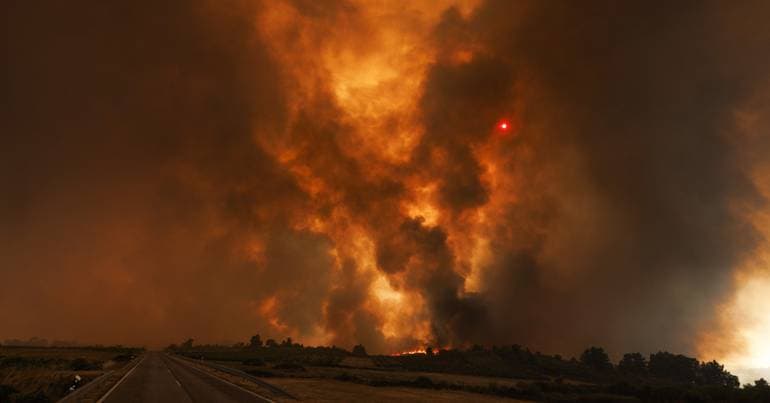
A chronicle of a forest turned upside down, caught between carbon and calamity. Opinion by Pedro Portugal

At 18:00, the Chega party lodged a formal complaint reporting incidents of shots fired using prohibited weapons in Lisbon.

An IPMA yellow warning is in force this Friday for eight districts — Guarda, Castelo Branco, Coimbra, Leiria, Lisbon, Setúbal, Beja and Faro — calling for increased public caution due to adverse conditions that could affect travel, outdoor activities and local services. At the same time eight presidential candidates will convene in Lisbon for a radio debate, an event whose logistics and audience turnout may be influenced by the weather alert; organisers and the public are advised to monitor forecasts and prioritise safety while ensuring the debate proceeds with contingency plans for any disruptions. The overlap of a national weather warning and a key campaign event underscores the practical intersection of public safety and electoral logistics.

Jornal de Notícias reports that at least 108 people were intentionally murdered in 2025, marking the highest number of homicides since 2018. Separately, the President of the Republic returned three decree-laws to the Government that sought to implement reforms in the health sector, a move with legal and political implications for emergency services, public safety and ongoing healthcare policy changes. These developments highlight rising concerns about violent crime alongside contested attempts to reshape healthcare governance.

Reports indicate 24 National Republican Guard (GNR) personnel were assigned to reinforce border checks at Lisbon’s Humberto Delgado Airport to help reduce queues and bolster security. The GNR later clarified the 24 officers will be deployed as reinforcements from next Tuesday; the airport had previously been reinforced by 25 GNR personnel at 19:00 and around 80 PSP officers over the Christmas period.


Portugal Resident •