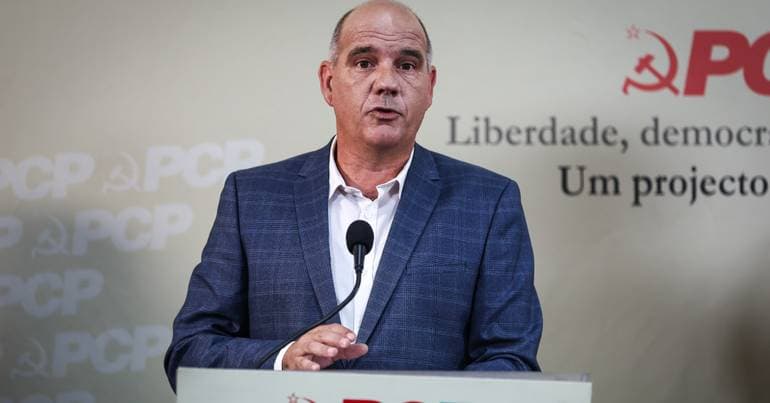
“I have also been mugged”: President of the Santo António parish council confesses to having been a victim of crime in Lisbon
Third part of the 'Investigação CM' from this Tuesday, March 17, 2026.

Latest news and stories about public safety in government in Lisboa, Portugal for expats and residents.
Third part of the 'Investigação CM' from this Tuesday, March 17, 2026.

The signal jammers are part of a pilot project launched following the escape of five inmates from Vale de Judeus prison in September 2024, with the goal of blocking mobile phone and drone signals within the prison.

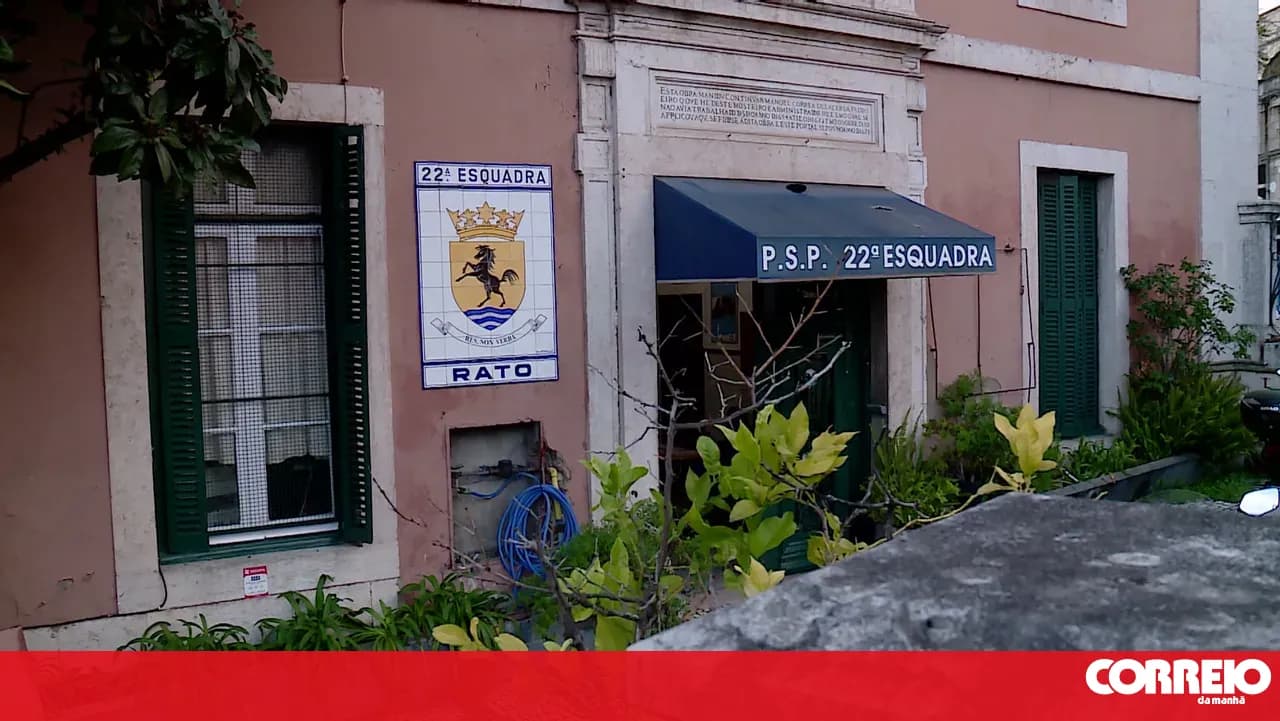
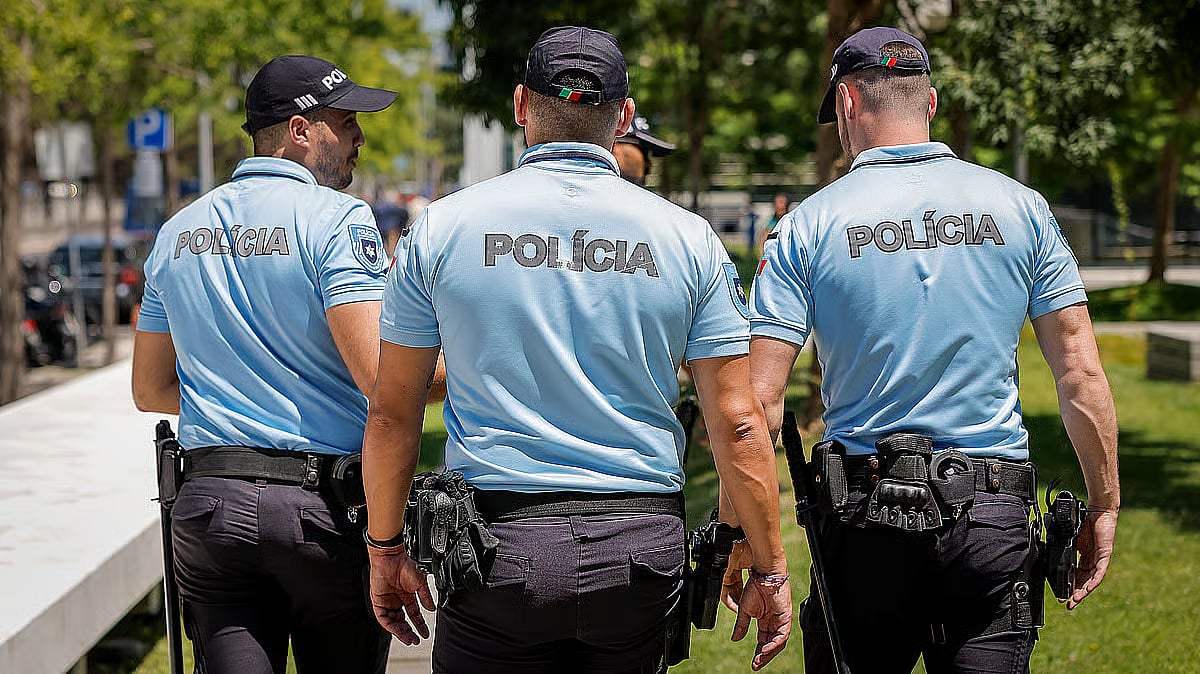
The National Director of the PSP, Luís Carrilho, does not disclose whether the Public Security Police officers currently under investigation for alleged torture at the Rato station are still on duty or have been suspended.
The national director of the corporation denied that the changes in training are related to the cases of torture practiced by police officers from the Rato station in Lisbon.

The schedule indicated that the tests were to take place by the end of the current month of March.

The caravan used as a home was removed by the Municipal Police after successive notifications of illegality.

A 44-year-old man was arrested in flagrante delicto on Monday, March 16, on charges of child sexual abuse and child pornography involving a 13-year-old child. The arrest was carried out by the Judiciary Police (PJ) in Lisbon after the child's school reported the discovery of pornographic content on her mobile phone. Investigations revealed the suspect was a family acquaintance who had been in a relationship with the victim for about a year, with abuse occurring during a holiday in the Algarve in 2024. The suspect will now face judicial authorities for questioning and the application of coercive measures.

António José Seguro receives Luís Montenegro this afternoon at the Belém Palace. Furthermore, the absence of a successor to Luís Neves at the head of the PJ is causing concern and perplexity among inspectors.

The lack of a successor for Luís Neves as Director-General of the Judiciary Police (PJ) is the main topic in the online edition of Expresso this Tuesday, March 17. It was announced on February 21 that he would replace Maria Lúcia Amaral at the Ministry of Internal Administration, and no one has been appointed to his former position yet, which the newspaper reports is causing 'perplexity' and 'concern' within the PJ. Público reports that the PJ has opened nearly 1,400 investigations into sextortion over the last two years, with the majority of victims being men. Jornal de Notícias writes that home auctions have halved in the last seven years, a decline driven by banks due to a reduction in non-performing loans. Correio da Manhã highlights that five ministers—Labour, Economy, Parliamentary Affairs, Justice, and Defence—are required to disclose their client lists to the Transparency Entity, a consequence of the Constitutional Court rejecting the Prime Minister's appeal regarding Spinumviva. CNN Portugal reports that violent WhatsApp conversations have left the school community in Oeiras concerned, involving threats such as 'You were supposed to bring the guns' and 'I'll bring the knives,' along with photos of teachers taken from Teams shared among dozens of students at Quinta do Marquês Secondary School. Diário de Notícias focuses on public transport prices in Lisbon, which are among the highest relative to income, and notes that the Western Lisbon Local Health Unit (ULS) is requiring Portuguese nationality for recruitment competitions, a practice lawyers claim is illegal. Negócios reports that REN anticipates rising energy bills due to fuel costs, with CEO Rodrigo Costa stating that while Portugal is better prepared for energy shocks than in 2022, the market escalation will likely impact gas and electricity prices.
The José Sócrates case keeps moving back and forth, but in reality, it has been nothing more than a test that the justice system has failed. Also, is Lisbon becoming more insecure?

A military flight carrying 39 passengers, including 24 Portuguese nationals, has successfully arrived in Lisbon as part of efforts to evacuate citizens amid the ongoing conflict in Iran. In response to the situation, Portugal is contemplating a new repatriation flight from Saudi Arabia to ensure the safety of its citizens abroad.

Five mayors from municipalities served by the Vila Franca de Xira Hospital are taking action against the closure of emergency services. They plan to submit a petition and send a letter to the Minister of Health to express their outrage over the decision, highlighting concerns about public safety and healthcare access.
Update: Mayors to Address Parliament In addition to a petition, the five mayors will also take their concerns to Parliament, seeking to raise awareness and garner support against the closure of emergency services at the Vila Franca de Xira Hospital.

Lisbon introduces a night-time ban on the sale of alcoholic beverages for street consumption effective tonight. Vendors face fines of €150–€1,000 for individuals and €350–€3,000 for businesses; the measure is presented as a regulatory step to curb night-time public disorder and enhance public safety.

Lisbon’s city-wide ban on the sale of alcoholic beverages for consumption outside commercial premises takes effect on Saturday 14 February, aiming to reduce noise and protect residents’ right to rest. The measure — approved by Lisbon City Council and implemented 30 days after its publication on 15 January — bars outdoor alcohol sales from 23:00 Sunday–Thursday (midnight on Fridays, Saturdays and eves of holidays) until 08:00 the following day, while allowing consumption inside premises, on licensed outdoor seating and via home delivery. Enforcement by the Lisbon Municipal Police and security forces includes fines of €150–€1,000 for individuals and €350–€3,000 for businesses.

Around 1,200 individuals have been displaced in mainland Portugal due to severe flooding, particularly in the Central region. The evacuations were carried out as a preventive measure, affecting areas such as Beira Baixa, Coimbra, Leiria, and the Lisbon area.

Train services on the North Line between Castanheira do Ribatejo and Alverca have been suspended since 6am due to flooding on the railway. The local council is also restricting access to the Tagus River at Terreiro do Paço as a safety measure.

The Brazilian Consulate in Lisbon has initiated a campaign aimed at raising awareness and providing guidance on women's rights and combating gender-based violence. This initiative involves posting videos on social media twice a week, focusing on outreach and public safety for women.

A corpse discovered at Lisbon's DIAP (Department of Investigation and Criminal Action) has prompted scrutiny not only of the investigation but of the role and rhetoric of journalists who present themselves as frontline combatants against crime. The incident raises questions about media ethics, the potential for sensationalism, the impact on public trust in criminal justice institutions, and whether self-styled ‘crime-fighter’ reporting helps or hinders serious investigative work and public safety. Analysts should examine how coverage frames the dead body and the institution, how it influences public perception, and what safeguards are needed to ensure responsible reporting and transparency in ongoing inquiries.
The Public Prosecutor's Office alleges that more than ten officers assaulted detainees at two Lisbon police stations and that images of alleged torture were shared among over 70 police officers. Two people have been formally identified as suspects in the alleged torture inquiry, and the prosecution's file describes ten particularly violent assaults. The allegations raise serious criminal and human-rights concerns and the investigation is ongoing.

Lisbon's municipal authority has proposed banning alcohol consumption in public streets from 11pm, with proposed fines of up to €3,000 that could also be applied to establishments. Framed as a measure to reduce nuisance and improve public safety, the proposal raises questions about enforceability, proportionality and the potential economic impact on nightlife and hospitality. Separately, Le Monde reports Emmanuel Macron accusing Donald Trump of 'breaking with international rules', underscoring a parallel debate about norms and accountability on the international stage.

The PSP (Public Security Police) have identified around 30 people after shots were fired with prohibited weapons in Lisbon. A targeted operation — involving Rapid Intervention Teams and Traffic Division units — ran from 22:00 Friday to 02:00 Saturday; no incidents were recorded and no arrests were made. Enquiries and investigations remain ongoing as police follow up on those linked to the discharges.

At 18:00, the Chega party lodged a formal complaint reporting incidents of shots fired using prohibited weapons in Lisbon.

An IPMA yellow warning is in force this Friday for eight districts — Guarda, Castelo Branco, Coimbra, Leiria, Lisbon, Setúbal, Beja and Faro — calling for increased public caution due to adverse conditions that could affect travel, outdoor activities and local services. At the same time eight presidential candidates will convene in Lisbon for a radio debate, an event whose logistics and audience turnout may be influenced by the weather alert; organisers and the public are advised to monitor forecasts and prioritise safety while ensuring the debate proceeds with contingency plans for any disruptions. The overlap of a national weather warning and a key campaign event underscores the practical intersection of public safety and electoral logistics.

Reports indicate 24 National Republican Guard (GNR) personnel were assigned to reinforce border checks at Lisbon’s Humberto Delgado Airport to help reduce queues and bolster security. The GNR later clarified the 24 officers will be deployed as reinforcements from next Tuesday; the airport had previously been reinforced by 25 GNR personnel at 19:00 and around 80 PSP officers over the Christmas period.