Minister admits she cannot resolve everything before the strike
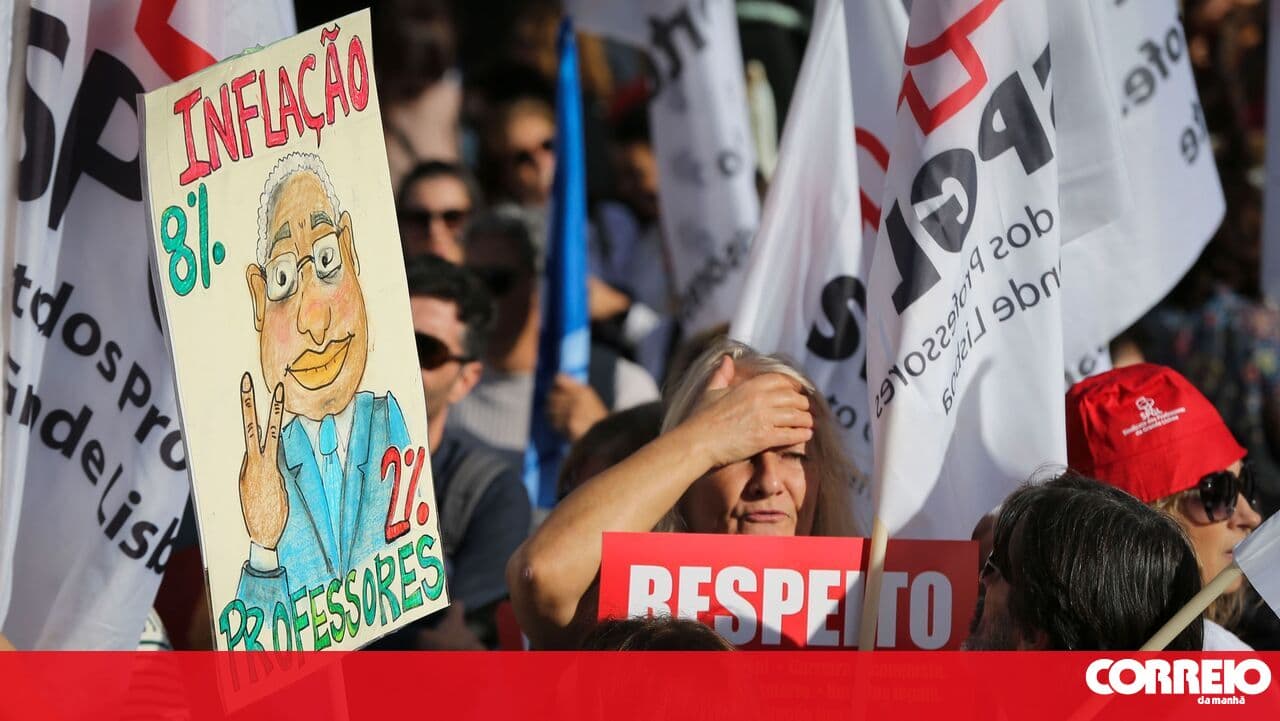
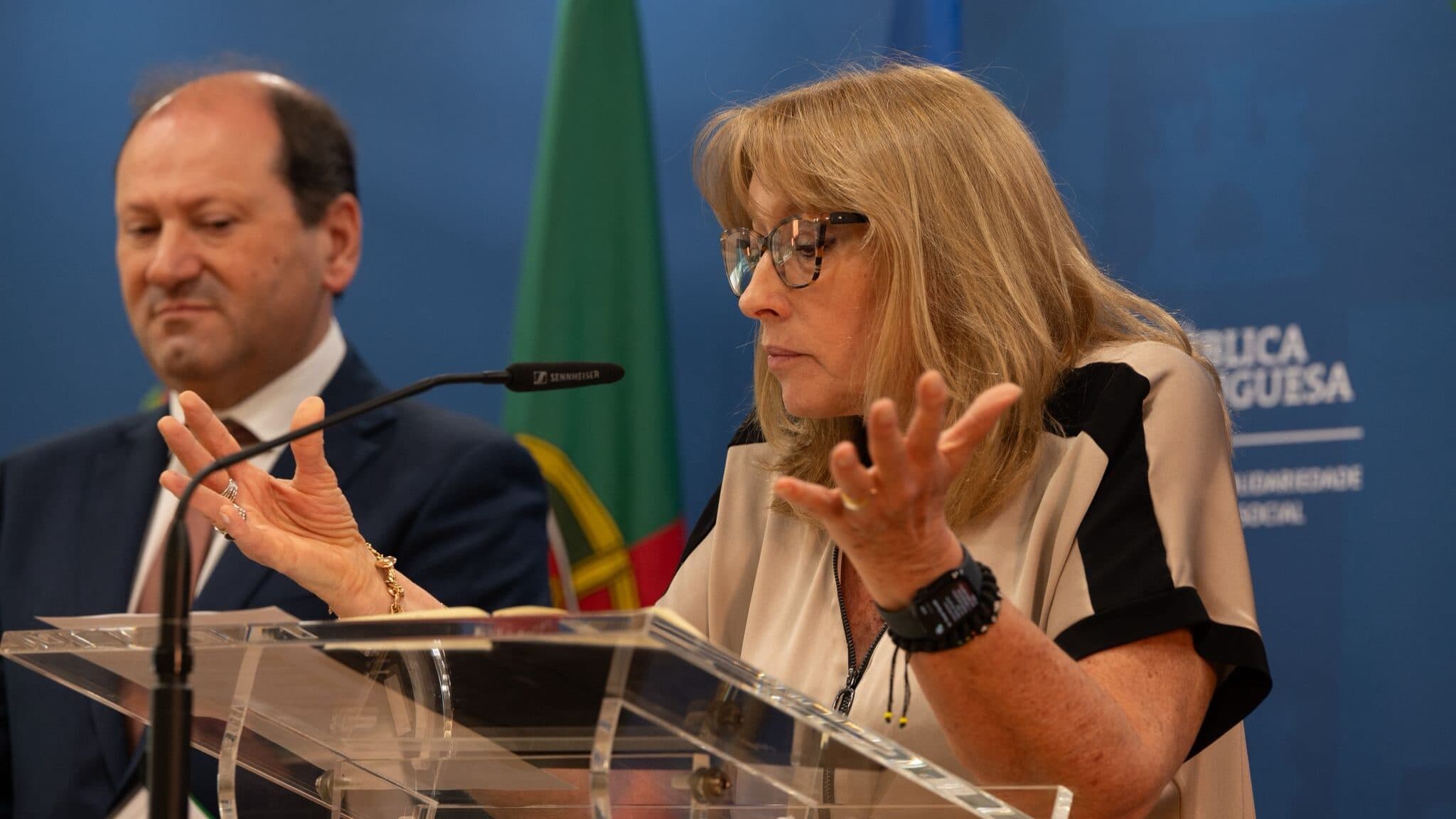
The work stoppage is scheduled for Friday. Ana Paula Martins acknowledges progress on some of the SEP's demands, but warns that the solutions “require time”.

Latest news and stories about general strike in government in Portugal for expats and residents.
The work stoppage is scheduled for Friday. Ana Paula Martins acknowledges progress on some of the SEP's demands, but warns that the solutions “require time”.

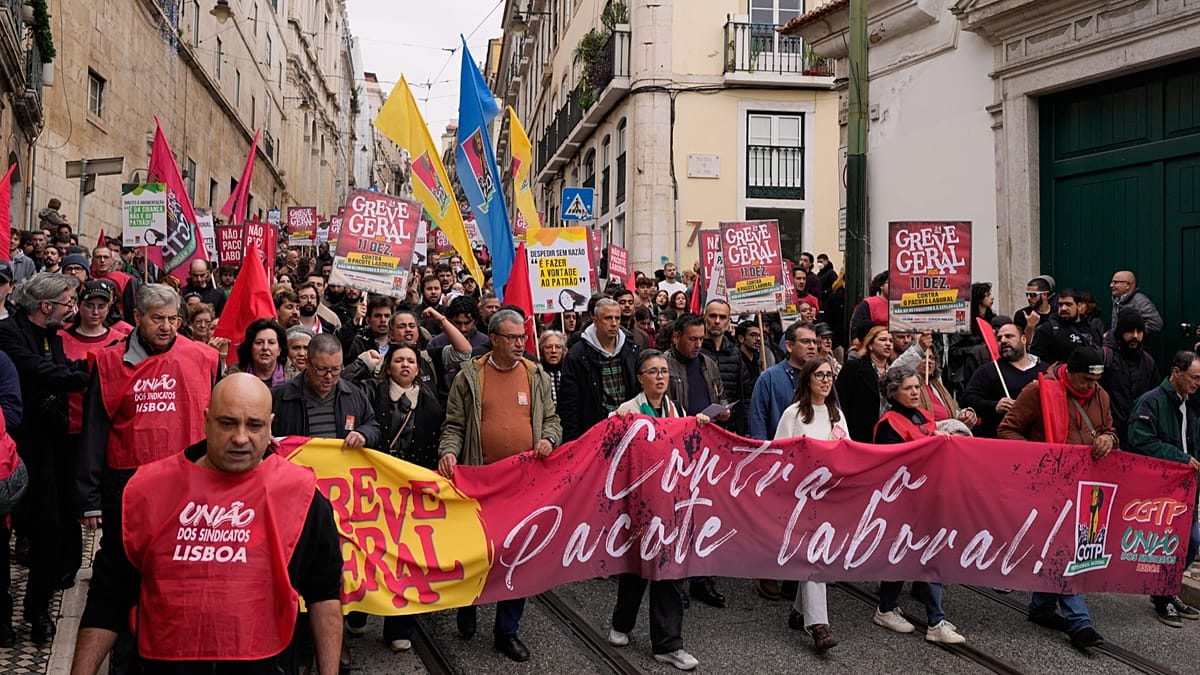
The PCP parliamentary leader sees no other alternatives for the labour package presented by the Government and says that António José Seguro should 'remember' the general strike when making decisions on this matter.

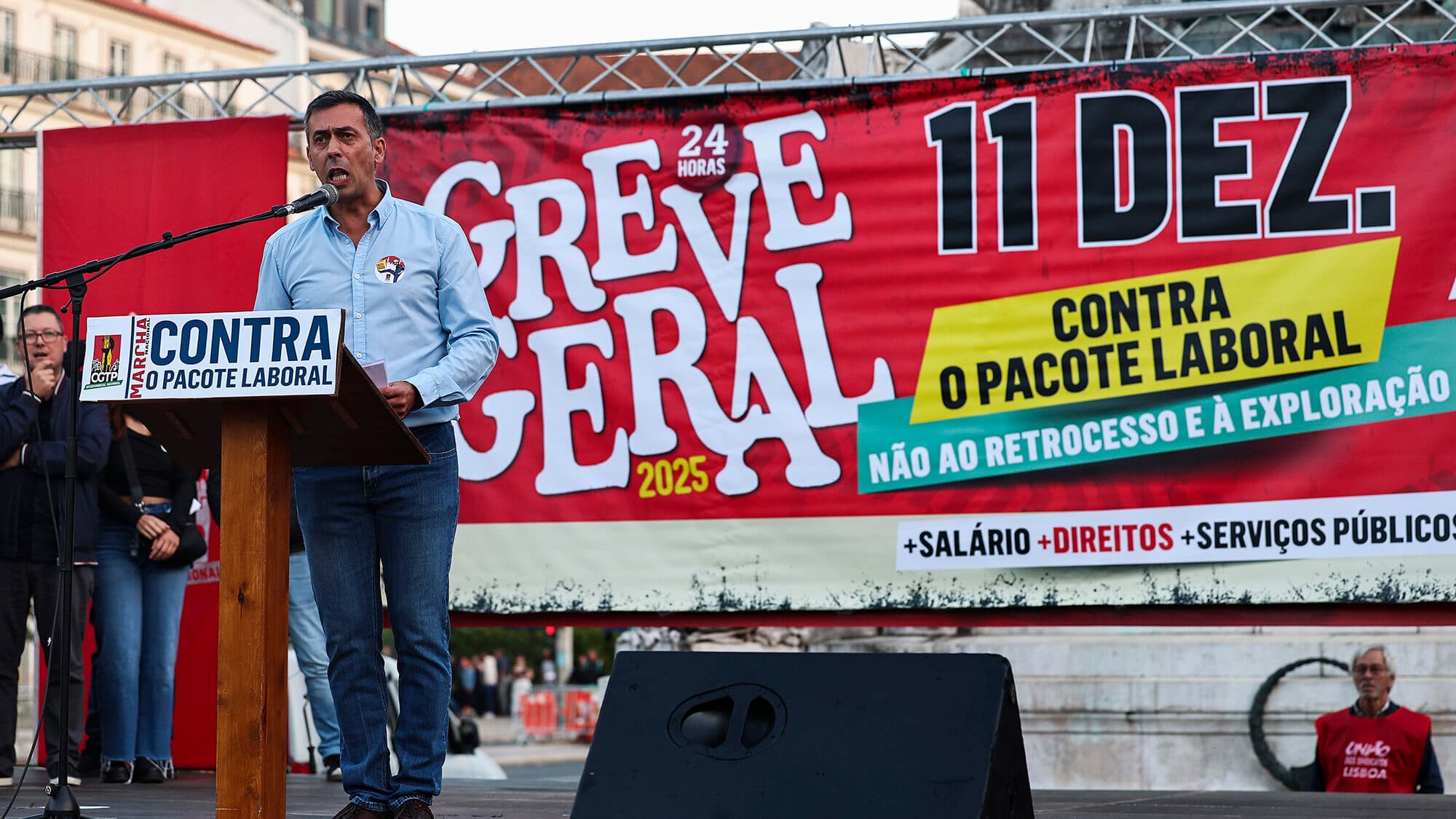
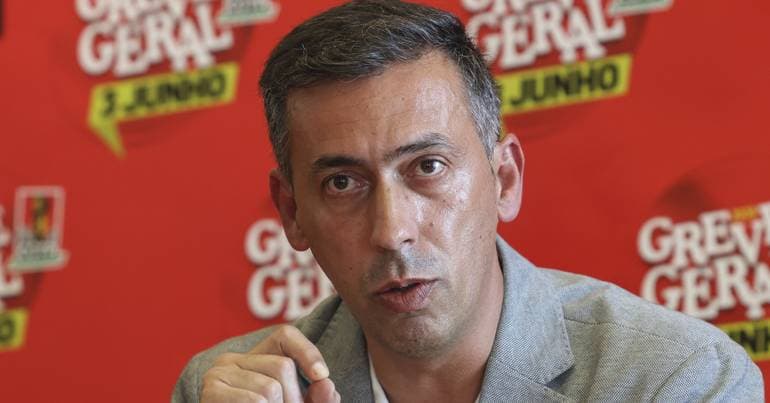
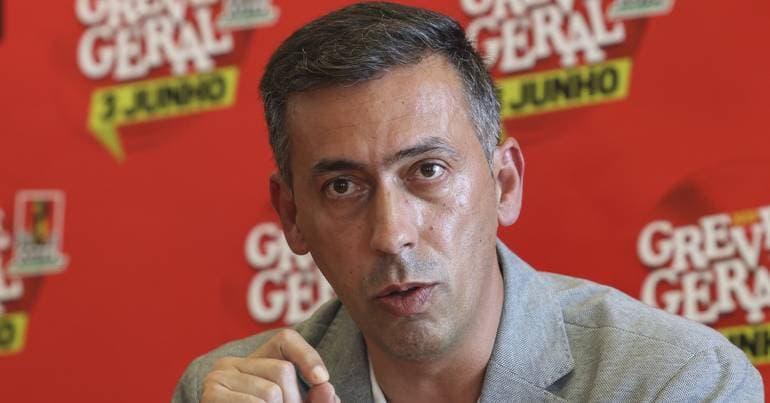
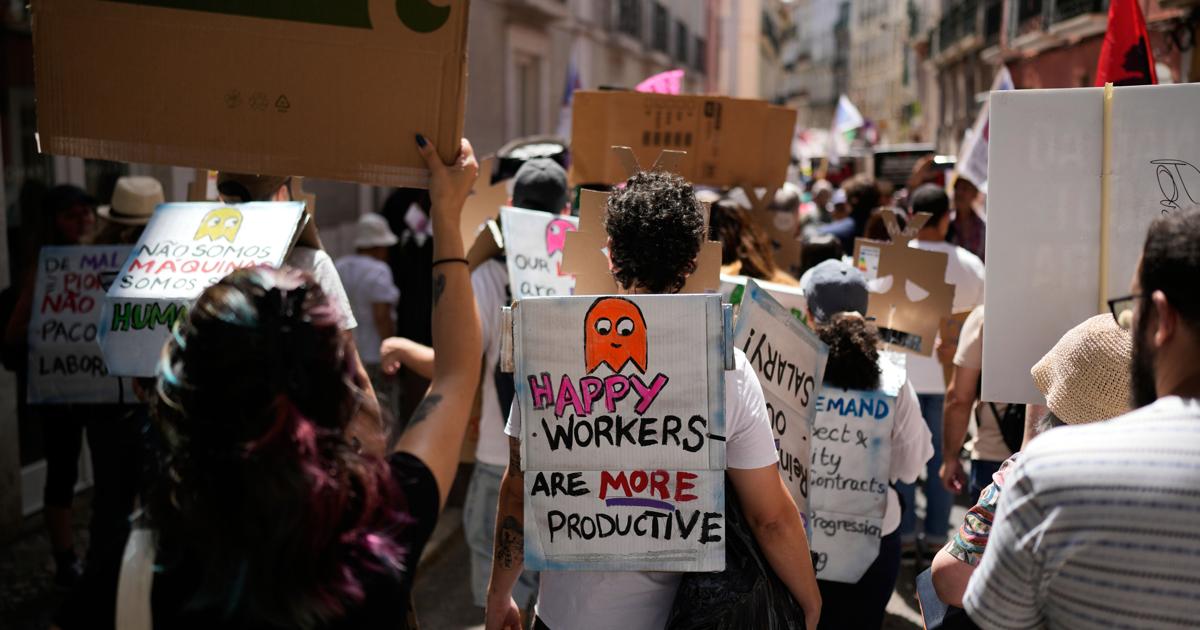
The secretary-general of the CGTP trade union federation accused the Government of a “democratic attack” for excluding the union from discussions on labour law reforms. Tiago Oliveira stated the process is “riddled with disrespect” and vowed that the struggle will continue. While dozens of protesters gathered outside the Ministry of Labour, the Government indicated it would be available for a separate meeting with the CGTP later. The union leader also announced plans to request an urgent meeting with the President of the Republic, António José Seguro, and noted that the union's National Council will meet on Wednesday to discuss further forms of protest.

Rui Lázaro, president of STEPH, has toughened his stance and is demanding clarification from the ministry regarding who is in charge of INEM. In statements to CNN Portugal, the union leader justifies the move towards a strike due to the institute's management failing to honour agreements and accuses the INEM president of 'stripping powers' from technicians over the last five months.

A CGTP delegation will head to the Ministry of Labour on Monday, at the scheduled time of the meeting between the Government, UGT, and the four business confederations.

A CGTP delegation will travel to the Ministry of Labour on Monday, at the scheduled time of the meeting between the Government, UGT, and the four business confederations.

JN reports that the current government has faced more social unrest than its predecessors, with 785 strike notices during Montenegro's tenure compared to Costa and Passos Coelho. Meanwhile, Público highlights Portugal's role in a major Brazilian pension fraud scandal involving businessman António Carlos Camilo Antunes, with political implications reaching the families of Lula da Silva and Jair Bolsonaro. Additionally, Correio da Manhã reports that Prime Minister Montenegro must disclose his client list following a Constitutional Court ruling, and warns of significant fuel price hikes next week due to Middle East tensions.
Tiago Oliveira wants to include the country's “largest trade union centre” in the meeting regarding the labour package this Monday. He advocates for a discussion on “the proposals of those who work” rather than “those of the people who order others to work”.

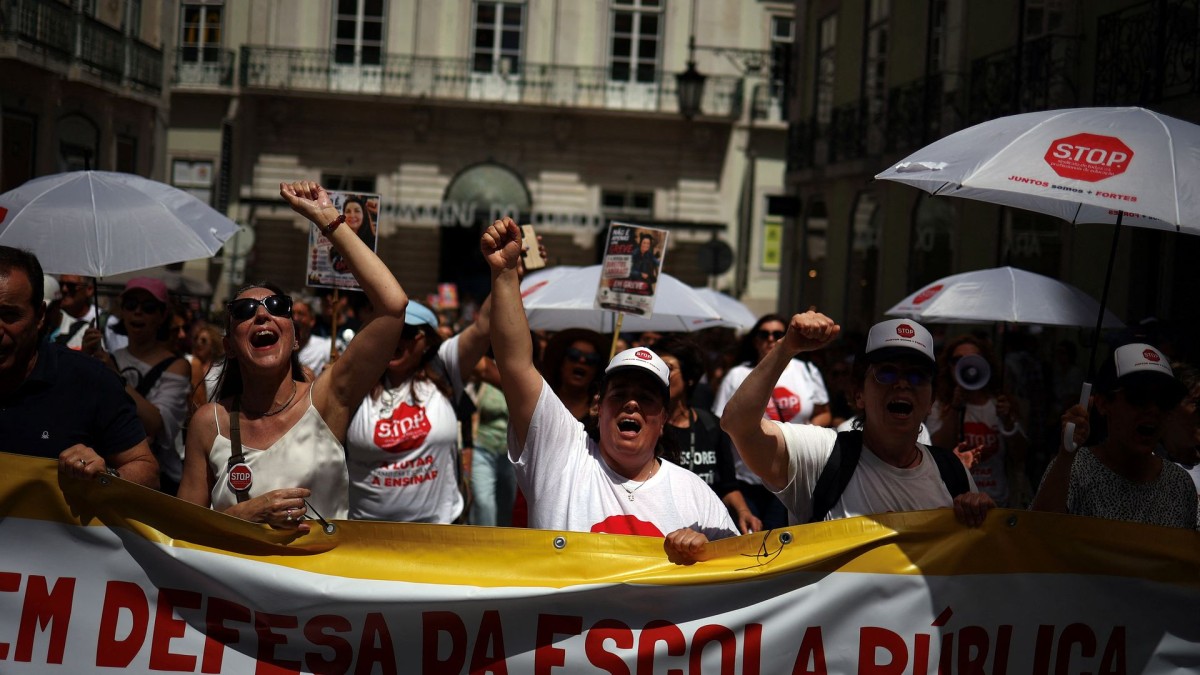
The demonstration called by the Frente Comum gathered around 500 people in Lisbon this Friday.
Workers at the news agency held a partial strike this Thursday in protest against the new statutes, which they claim endanger the independence of Lusa.

The Lusa agency has stopped. There were four hours of protest in front of the Government headquarters.
As a protest against changes decided unilaterally by the Government, a partial strike is scheduled for this Thursday, along with worker demonstrations in Lisbon and Porto.

Workers at the Portuguese news agency Lusa are striking from 10 a.m. to 2 p.m. to protest against recent restructuring and a new governance model approved by the government. The unions criticize the process as lacking transparency and argue that the new statutes threaten journalistic independence, potentially conflicting with the Portuguese Constitution and European media regulations. Concerns include plans for layoffs without clear strategies for strengthening teams and doubts about the independence of the agency if its headquarters move to the RTP building. The strike follows weeks of internal protests, including resolutions and demonstrations, with unions emphasizing the importance of maintaining editorial independence amid these changes. The government defends the reforms.

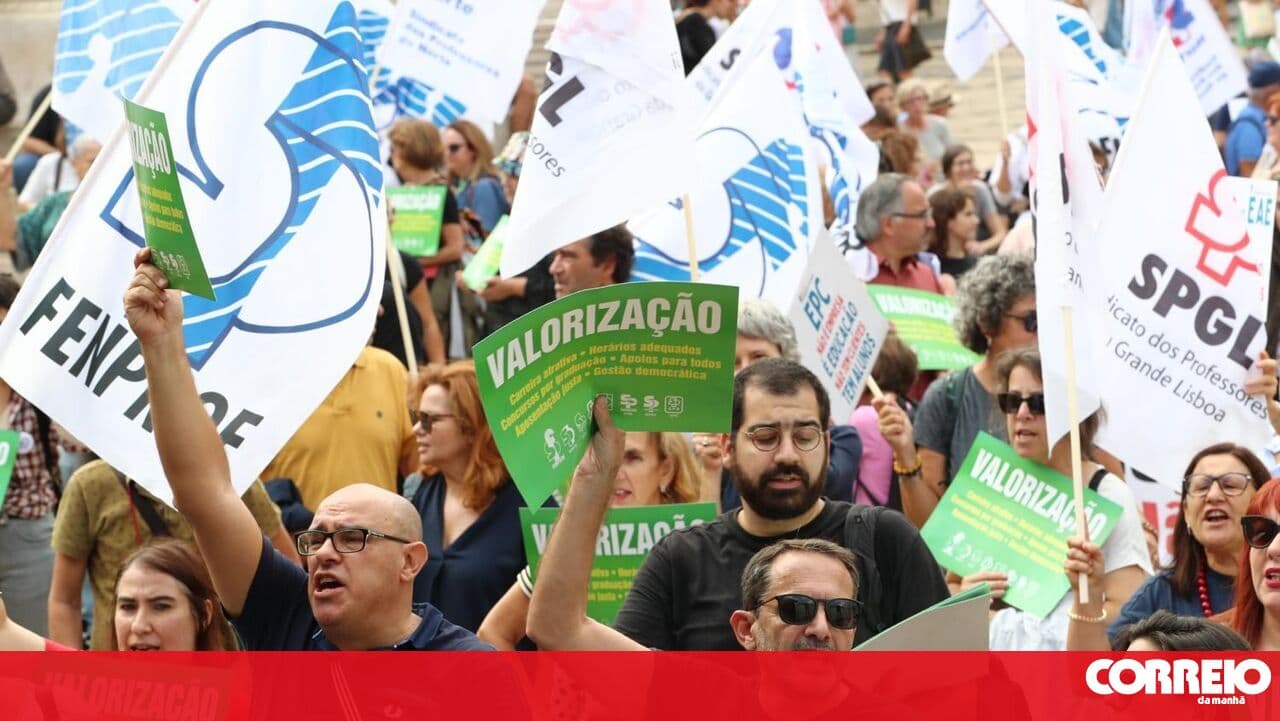
Negotiations on the Teaching Career Statute are at a stalemate. Fenprof rejects the ministry's latest proposal and does not rule out moving forward with new forms of protest.

The Government knows that without an agreement in the social concertation, everything will be more difficult: passing the law in Parliament, getting the approval of President António José Seguro, and avoiding a new general strike. Editorial by Marta Moitinho Oliveira.

The strike is due to the lack of security at the prison from which five inmates escaped. Since then, various security measures have been discussed, but the union says the promises have not yet been fulfilled.

Strike called by the prison guards' union continues until April 30th.

The prison guard strike will be extended until April 30th and will be total; inmates will have no activities, their yard time will be reduced, and they will be confined to their cells for 22 hours a day.

This Tuesday, the PCP will host the Left Bloc (BE) at its headquarters for a working meeting. PCP Secretary-General Paulo Raimundo accepted the request from José Manuel Pureza, the Left Bloc coordinator since November. The Bloc intends to meet with various parties, including the PCP, PAN, Livre, and the PS, seeking common ground. The two parties agreed on the proposal for 100% lay-off pay for those affected by the bad weather in Portugal and, as the DN understands, are aligned on several national issues, such as the impact of the cost of living and inflation, public housing policies, and, naturally, with increased attention to the Labour Law that the Government intends to change. The Bloc has already met with trade unions, namely the UGT and CGTP. The PCP has met with the CGTP and sectoral unions, such as those in education and agriculture, and has joined the collective political struggle to halt the labour package, reinforcing that the general strike had a significant impact on public opinion and should force the Government to backtrack on its intentions. Internationally, despite acknowledged differences, both parties warn against the interventionist vision of the United States of America in various countries and call for an active voice from the Portuguese Government in criticising Donald Trump's stance, sharing the position of emphasising the need to guarantee Portuguese sovereignty without the country's direct or indirect participation in wars.
The union admitted it might call off the protest at the end of February, as it considered that security at the Vale de Judeus prison was being reinforced.

Labour Minister Maria do Rosário Palma Ramalho has explained the exclusion of the CGTP from recent discussions on new labour legislation, claiming they chose not to negotiate. The CGTP refutes this, asserting they have proposed measures to address workers' rights and precarious employment. They criticize the government's approach, suggesting it favors employers and undermines social dialogue. Key proposals from the CGTP include reducing the workweek, increasing vacation days, and improving job security for vulnerable workers.

The CGTP trade union centre has called for the withdrawal of the proposed labour package, citing widespread dissatisfaction among workers as demonstrated by a recent general strike. Despite the pushback, Seguro has indicated that he will not implement the changes in their current form.

Following a meeting with Prime Minister Montenegro, CGTP general secretary Tiago Oliveira said the Government will not withdraw proposed amendments to the labour law and announced the trade union centre will convene its national council on Thursday to discuss new forms of industrial action. The CGTP insists it will only be satisfied by a complete withdrawal of the labour package and has not ruled out strikes, saying “the struggle will continue” as it considers coordinated responses to what it calls an attack on workers’ rights.

The coordinator of INEM’s Workers’ Committee acknowledged failings in how minimum-service requirements were communicated during the late‑2024 strike, saying the institution’s president had conveyed that minimum services were not required during overtime hours. The admission raises operational and public‑safety concerns, highlights potential legal and labour‑relations implications, and underscores the need for clearer protocols, stronger internal communication and contingency planning to protect emergency healthcare delivery during industrial action.