Latest news and stories about economic indicator in government in Portugal for expats and residents.

Tensions over Greenland and Trump’s threat to impose new customs duties on European goods have rekindled fears of a new trade war between Europe and the United States.

Election results show Seguro prevailing in areas with greater purchasing power, while Ventura performs better in the poorest municipalities.
Resounding victory for the Socialist in the municipality where, on average, salaried workers earn €2,479.10 per month.

In a municipality with a social-democratic tradition, but where the Socialist Party (PS) has managed to win, it is the leader of Chega who is ahead in this presidential election.

U.S. President Donald Trump announced tariffs on eight European countries tied to a dispute over Greenland, prompting President of the European Council, António Costa, and EU ambassadors to meet urgently on Sunday and leaders to promise a coordinated response. Brussels and several national leaders warned the measures threaten transatlantic relations; the European Parliament has signalled it will not advance a pending EU–US trade deal while tensions escalate. The political uncertainty could stall trade policy and affect exporters and markets; business owners and exporters should monitor developments closely.
Update: Multiple outlets (RTP, POLITICO Europe, ECO) report French President Emmanuel Macron pressed EU leaders to activate the bloc’s anti‑coercion instrument if Washington imposes the threatened surtaxes; the tool would require a qualified majority of member states to be deployed and is meant as a legal-political deterrent. Markets, exporters and import‑dependent businesses should monitor diplomatic developments and any concrete EU measures that could affect trade flows.

António Luís Santos da Costa (born July 17, 1961, in Lisbon) is a Portuguese lawyer and Socialist politician who served as Prime Minister of Portugal from 2015-2024 and currently serves as President of the European Council since December 1, 2024. After leading the Lisbon Municipal Assembly and practicing law, he was elected MEP (2004-2005) and entered parliament in 2002. He led the Socialist Party from 2014-2024, building unprecedented parliamentary coalitions with the Communist Party and Left Bloc (2015-2019) before winning an absolute majority in 2022. He resigned as PM in November 2023 following a corruption investigation, though subsequently cleared. The 27 EU member states elected him Council President in June 2024, making him the fourth full-time President and the first southern European socialist in that role.
Political Philosophy:
Costa represents moderate European social democracy, combining orthodox fiscal responsibility with progressive social investment. He prioritizes European integration, consensus-building, and pragmatic compromise over ideological confrontation. As Council President, he champions mediation between member states, improved EU inter-institutional relations, shorter decision-making processes, and regular visits to every EU capital to reconnect citizens with European institutions. His approach emphasizes "creative bridges" reconciling divergent interests while maintaining firmness on European values, particularly regarding Ukraine.
The term refers broadly to negotiations or arrangements between the European Union and the United States to manage tariffs, market access and trade disputes; there is no single comprehensive EU–US free-trade agreement, so relations are handled through sectoral deals, WTO rules and ad‑hoc talks. Tariffs or threats of tariffs (the recent row that prompted Brussels to warn about damage to transatlantic ties) can raise prices, disrupt supply chains and prompt coordinated EU responses or reciprocal measures, which is why EU capitals are sensitive to any escalation.
The EU anti‑coercion instrument is a tool the European Union agreed in 2021 that lets the bloc adopt targeted countermeasures (such as tariffs, trade restrictions or other trade-related measures) in response to economic pressure from third countries. Activating it in response to threats of U.S. tariff surcharges would allow the EU to coordinate a collective reaction that could affect trade flows, prices and businesses across member states.
Emmanuel Macron is the President of France, first elected in 2017 and re‑elected in 2022, and is associated with the centrist Renaissance movement. He is engaging European counterparts about using EU tools like the anti‑coercion instrument to respond to international trade threats.
In the EU Council context, a qualified majority means approval by at least 55% of member states representing at least 65% of the EU population (the standard since the Lisbon Treaty). It’s a higher threshold than a simple majority but lower than unanimity; decisions taken by qualified majority can authorise actions such as activating the EU’s anti‑coercion instrument, so businesses and travellers should watch Council votes when trade measures are at stake.

The European Council (Conselho Europeu) brings together EU heads of state or government to set the bloc’s overall political direction and priorities; it does not adopt ordinary legislation. Its president, Charles Michel, has chaired meetings since December 2019, and the Council’s political endorsement is important for major trade and investment deals, so those following EU policy should note its stance on agreements like the EU–Mercosur deal.

Meeting with Lula precedes signing in Asunción. The trade agreement will eliminate tariffs on 91% of European exports and 92% of South American exports, benefiting the automotive and agri-food sectors.

DBRS has kept Portugal's sovereign debt rating unchanged but removed any prospect of an upgrade, signalling it does not expect improvement in the near term.
The Canadian rating agency DBRS left Portugal's credit rating unchanged at its recent review and kept the outlook stable, citing continued fiscal progress and a path to a budget surplus in 2025. Outlets note this follows DBRS's upgrade to 'A (high)' last year and is consistent with other recent assessments of Portuguese public finances. Borrowers, investors and anyone monitoring mortgage or bond markets should see this as a sign of continued credit stability.
DBRS Morningstar is a Canadian credit-rating agency that assesses sovereign and corporate creditworthiness; its ratings influence investor confidence and borrowing costs. In January 2025 DBRS upgraded Portugal to A (high) with a stable outlook, kept that rating in a July 2025 review, and most recently chose not to change it — a signal that creditors see Portugal’s finances as relatively solid.

One thing is to express opinions and make comments. Another is to place money on potential winners. See and compare the two.

The late-payment interest that the State and public bodies will pay to companies will not change, remaining at 10.15% in the first half of 2026, according to a notice published this Friday in the Diário da República by the new Treasury and Finance Entity, which absorbed the former Directorate-General for the Treasury and Finance. It reflects ...

Credit-rating agency DBRS is reviewing Portugal's sovereign rating today. The outlook could be upgraded if economic indicators and fiscal metrics continue to improve, say analysts.

This Friday will be marked by DBRS's review of Portugal's credit rating; the visits of the Presidents of the European Council and the European Commission to Brazil; President Marcelo Rebelo de Sousa's meeting with the President of Estonia, Alar Karis; and the release by Statistics Portugal (INE) of key figures for December 2025, ...

With the Eurogroup set to choose the ECB vice-president on Monday, former Portuguese central bank governor Mário Centeno—one of two front-runners—says there remains a lack of alignment among major EU countries. Speaking to PÚBLICO, Centeno urges reaffirmation of the reasons for his candidacy and signals that political negotiations, policy priorities and regulatory direction will be decisive in the appointment. The comments frame the contest as both a balance-of-power and policy-choice moment for the ECB’s future leadership.

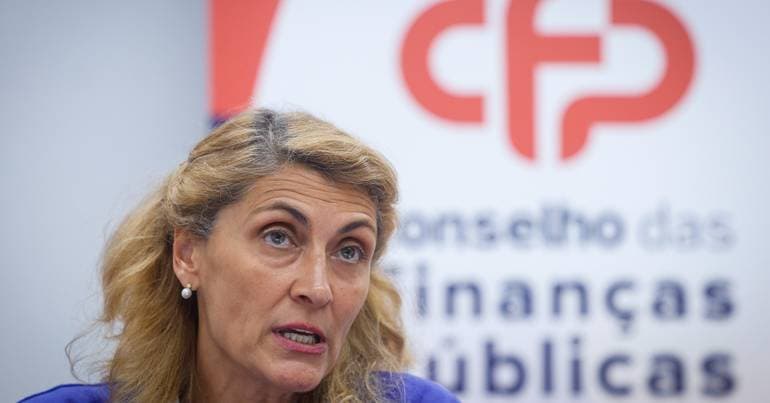
The Azores ended 2024 in a less favourable economic position than the previous year, and the main reason is the inclusion of SATA Air Açores and Sata Aerodrome Management within the budgetary perimeter, the Public Finance Council (CFP) says in a report presented on Thursday. The debt stock of the Autonomous Region of the Azores ...

EU data indicate that Portugal and Ireland have the lowest levels of state aid relative to GDP among member states — government support represents a smaller proportion of their economies than in other EU countries.

Portugal, allocating 0.4% of its Gross Domestic Product (GDP), was, together with Ireland, the EU member state that spent the least on state aid in 2024, according to an assessment panel published this Thursday by the European Commission. Hungary (1.37% of GDP) and Romania (1.22% of GDP) were the countries that spent the most on ...

Analysts expect the credit rating agency DBRS to keep Portugal's current credit rating, although the agency could revise the outlook to a more positive level.

New data from Portugal's Survey on Living Conditions and Income show one region has the country's highest incidence of monetary poverty, with 17.9% of residents living below the poverty threshold. Analysts and local actors attribute the rise to a combination of state neglect, insufficient social-protection measures, the growth of precarious immigration and unstable work, and wider cost-of-living pressures — factors that together depress incomes and worsen social indicators. The figures point to a need for targeted regional policies on social security, employment quality and integration to reverse the trend.

JP Morgan analysts Aditya Chordia and Matteo Mamprin assign a roughly 50% probability that Moody’s will upgrade Portugal’s sovereign credit rating at its scheduled review in May, putting an upgrade within about four and a half months. The bank’s view reflects an assessment that Portugal’s improving economic fundamentals, fiscal position and lower borrowing costs have materially strengthened its credit profile, reducing downside risks. An upgrade as soon as May would tighten financing spreads, reinforce investor confidence and mark another step in Portugal’s long post‑crisis recovery; market participants should monitor sovereign metrics and rating signals in the run‑up to the review.

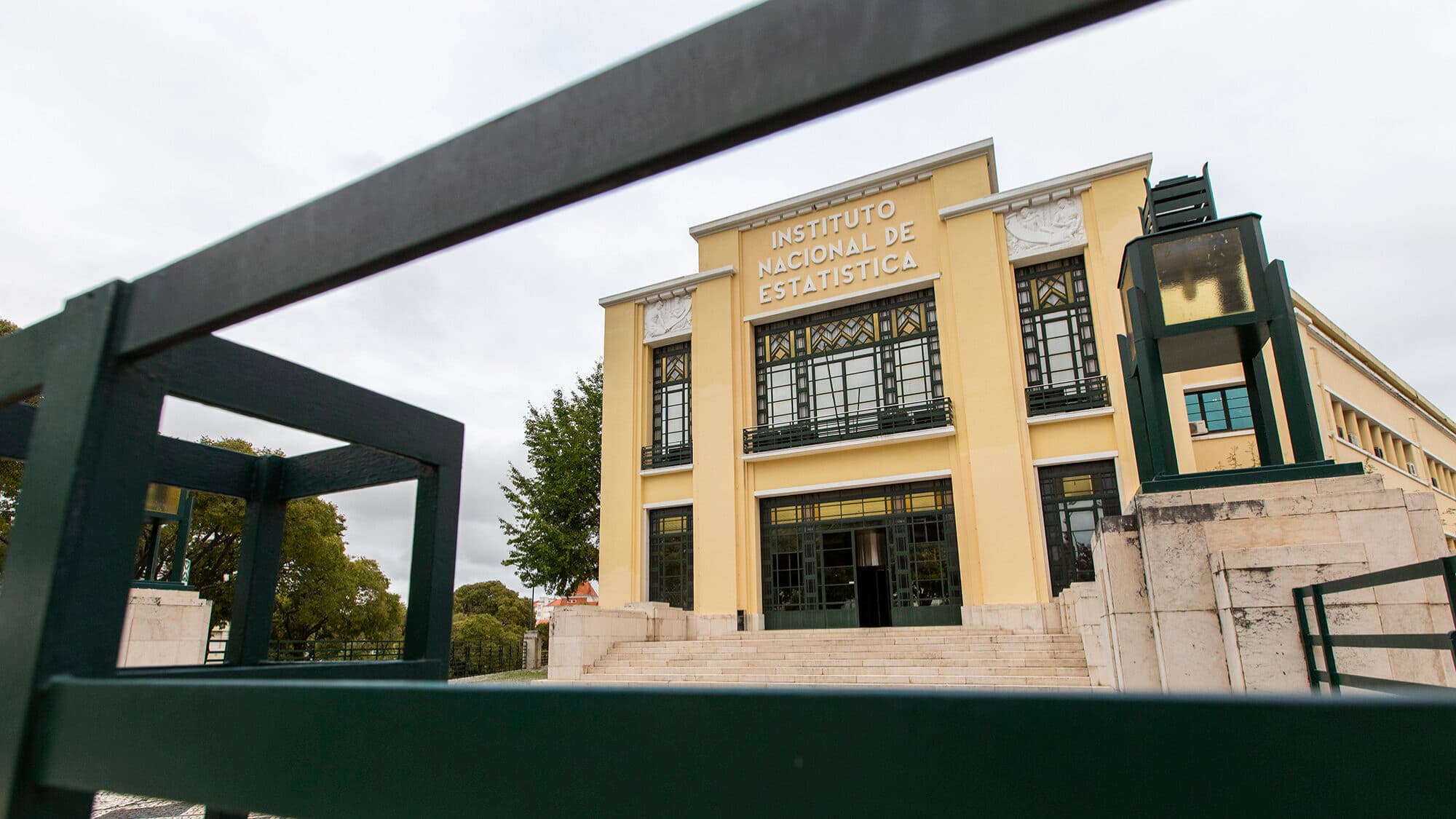
The National Institute of Statistics (INE) will reassess in March the classification of Novobanco's dividends, potentially allowing that income to be recognised in last year’s national accounts. If reclassified to count towards the previous budget balance, the adjustment could provide an extra boost to help the Portuguese Government meet or exceed its 0.3% surplus target for 2025. The move would alter headline fiscal metrics, affect timing of revenue recognition in national accounts, and carry implications for public finance reporting, investor perceptions and future treatment of similar banking transactions.

Real-time analytical coverage of financial markets and economic developments on 6 January, including market moves, key data releases and macro indicators. Commentary focuses on consumer confidence and cost pressures, investor sentiment and flows, implications for investors and expat households, and the significance of today’s indicators for policy and markets.