Minister predicts fuel price drop if Brent crude falls

Tuesday, 10 March 2026AI summary
Minister predicts fuel price drop if Brent crude falls
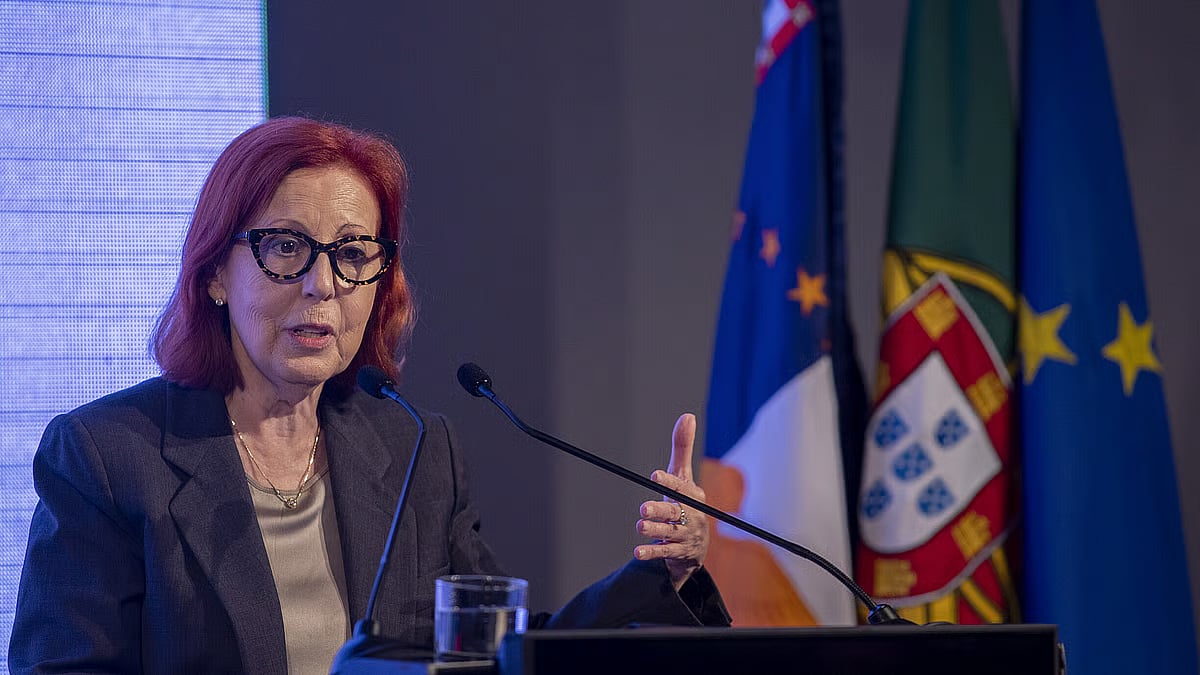
Photo: Diário de Notícias

Minister of Environment and Energy Maria da Graça Carvalho stated that fuel prices (preços dos combustíveis) could decrease next week if international Brent crude prices remain low through Friday. The government is monitoring the impact of the Middle East conflict on energy costs and is prepared to offer tax relief via the tax on petroleum products (Imposto sobre os Produtos Petrolíferos or ISP). Drivers should note that a discount applies if prices rise by more than 10 cents.

Update: Portugal to release 10% of strategic oil reserves

Prime Minister Luís Montenegro announced that Portugal will release two million barrels of oil—roughly 10% of its strategic reserves—to help stabilize fuel prices. This move follows an International Energy Agency agreement to release 400 million barrels globally due to supply risks in the Strait of Hormuz.
Context & Explainers

Who is Maria da Graça Carvalho?
  • 2026: Minister of Environment and Energy
  • Party: Social Democratic Party (PSD), Partido Social Democrata
  • Politician, mechanical engineer, academic

Maria da Graça Carvalho, the Energy Minister, is a Portuguese engineer and politician affiliated with the Social Democratic Party (PSD) who has served as a Member of the European Parliament and held government roles connected to science and higher education policy. Her work on research and EU policy can affect funding and regulation that matter to professionals and students living in Portugal.

The ISP is Portugal's excise tax on fuels — the Tax on Petroleum and Energy Products (Imposto sobre Produtos Petrolíferos e Energéticos) — charged as a unit rate per litre on petrol, diesel and other fuels. The government sets and can temporarily cut those unit rates; a recent decision to reduce the rate for road diesel on the mainland aims to lower pump prices and reduce transport costs for drivers and businesses, though it also lowers tax revenue.

Luís Montenegro
  • Prime Minister, Portugal: 2024 - Present
  • Party: Social Democratic Party (PSD)

Luís Filipe Montenegro Cardoso de Morais Esteves (born February 16, 1973, in Porto) is a Portuguese lawyer and center‑right politician who has served as Prime Minister of Portugal since April 2, 2024. A long‑time member of the Social Democratic Party (PSD), he is the leading figure of the post‑Troika generation of Portuguese conservatives. ​ Montenegro was elected to the Assembly of the Republic in 2002 for the Aveiro district and remained an MP for 16 years, becoming PSD parliamentary leader from 2011 to 2017 during the bailout and austerity period under Prime Minister Pedro Passos Coelho. He was a prominent defender of strict austerity measures, arguing in 2014 that “the life of the people is no better, but the life of the country is a lot better,” a phrase that has followed his public image since. ​ After an unsuccessful leadership bid against Rui Rio in 2020, Montenegro won the PSD leadership in 2022. He then forged the centre‑right Democratic Alliance (PSD–CDS‑PP and allies), which won a plurality of seats in the 2024 legislative election. Refusing to partner with the far‑right Chega, which he has called “often xenophobic, racist, populist and excessively demagogic,” he formed a minority government as head of the XXIV Constitutional Government on April 2, 2024. ​ His first government fell in March 2025 after a no‑confidence vote linked to a conflict‑of‑interest affair, but fresh elections saw the Democratic Alliance increase its seat share, allowing Montenegro to return as prime minister leading the XXV Constitutional Government. His importance to Portugal lies in attempting to re‑center the traditional centre‑right after the crisis years, defending liberal‑conservative economics and EU alignment while drawing a sharp line against formal cooperation with the radical right, thus shaping how Portuguese democracy manages its new multi‑party era.

Sources (9)

Continue reading