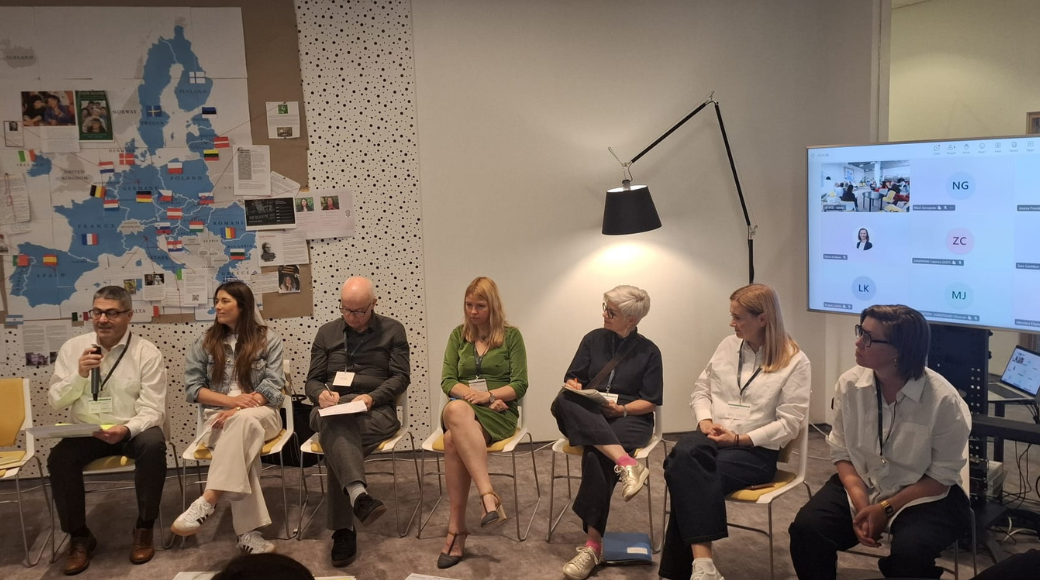
EU takes step toward proxy voting for pregnant MEPs
"By modernizing our rules, we are standing up for fairness, equality and a Parliament that truly reflects the people it serves,” says Parliament President Roberta Metsola.
Latest news and stories about gender equality in Portugal for expats and residents.
This page has only 1 story and is not indexed by search engines.
"By modernizing our rules, we are standing up for fairness, equality and a Parliament that truly reflects the people it serves,” says Parliament President Roberta Metsola.
The paradigm is curious: right-wing women are gullible, fragile, and manipulable. Left-wing women are strong, 'empowered', and autonomous.

Home News Portuguese municipality to create gender equality body Portuguese municipality to create gender equality body The Funchal City Council has established the Municipal Council for Gender Equality and Non-Discrimination, an advisory body to the municipality that aims to contribute to the de

More women are entering the technology sector, but diversity disappears as the weight of decision-making increases. The problem is not access, but how power and leadership opportunities are distributed.

For decades we were told that architecture was a man's world. The classrooms show a different reality. A column by Daniela Silva

In recent years, I have had the opportunity to write publicly about International Women's Day. This year is no exception, and I will not miss the chance to highlight the importance of marking this day, which is, first and foremost, a day to remember and celebrate the fight for freedom and equality. Women remain underrepresented in public life, politics, corporate leadership, and science—in short, in positions of power. Despite being more qualified—women currently account for 58% of university graduates in Portugal—they earn approximately 15% less than men for equal work and qualifications, meaning they effectively work two months 'for free' compared to their male counterparts. This is compounded by the invisible, unpaid, and exhausting burden of caregiving and domestic work. Domestic violence remains the most reported crime in Portugal, and femicide rates stay high. While progress has been made since the mid-20th century, we are now seeing a regression. Ideologies promoting the Nazi-era 'three Ks'—kinder, küche, kirche (children, kitchen, church)—are gaining ground, pushing for a return to traditional, submissive roles. This paternalistic misogyny, amplified by social media influencers, attacks independent women while disguising subjugation as protection. As Simone de Beauvoir said: 'Let nothing define us, let nothing subject us. May freedom be our own substance, since to live is to be free.'

Carla Eliana Tavares is a candidate for the leadership of the Women Socialists – Equality and Rights in Portugal, running in internal party elections scheduled for March 13-14. She emphasizes building a more ambitious and transformative agenda for gender equality, focusing on issues like wage disparity, poverty risk, and women's underrepresentation in decision-making roles. Tavares advocates for proactive political influence, legislative solutions, and continuous policy monitoring. Her candidacy aims to strengthen the influence and visibility of Women Socialists, with regional representatives from Porto, Santo Tirso, and Trofa. The elections also include the uncontested re-election of José Luís Carneiro as Secretary-General of the Socialist Party.

Under-representation of women in decision-making positions, the balance between work and family, or the tragedy of domestic violence are challenges that should concern us all, says Aguiar-Branco.

The President of the Assembly of the Republic stated today that formal and cultural obstacles persist, hindering women's participation in society, and stressed that these challenges call upon all citizens to defend gender equality.

The title of this text is intended to be encouraging and, hopefully, the conclusion will be too, but a few days after International Women's Day, it is worth remembering, without irony, that not everything is rosy in the luxury industry, a sector where women are the majority as workers and have high visibility as customers, but are largely absent from the top.

According to a statement from the European executive, the platform aims to remove obstacles that limit the potential of women in agriculture. Member states are encouraged to implement specific measures.

Persistent obstacles, such as unequal access to land, financing, and training, continue to limit their potential.

There are moments in history when it feels as though all the rights we lack are within our reach, but at other times, it feels like walking on shifting sands. Women's rights currently exist in this ambiguous territory: between achievements that still seem solid and threats of regression that insinuate themselves into daily life, alongside persistent problems that remain unresolved. From the questioning of sexual and reproductive health rights in various countries to the persistent shadow of domestic violence—now infiltrating digital spaces—the struggle continues. While there are more women in the workforce and leadership positions, pay inequality persists, and new challenges arise, such as algorithmic bias and underrepresentation in tech. Most concerning is the social culture that places the burden of caregiving primarily on women, an invisible and unpaid labour that hinders professional autonomy. Achieving true equality requires a slow cultural shift, starting with education that promotes shared responsibility. Despite rising opposition and the fragility of hard-won rights, the hope for effective equality remains deeply rooted.

Reflecting on the enduring challenges of gender inequality, the author discusses the wage gap, the lack of women in leadership roles, and the necessity of International Women's Day. The text also pays tribute to the late Lobo Antunes and Nuno Morais Sarmento, while critiquing societal structures and the internal competition among women that often hinders progress toward true equality.

The author reflects on the difficulty of discussing gender equality with men who are blind to systemic discrimination. Through personal anecdotes from a human rights mission and a Portuguese university, she illustrates how those who do not experience oppression often fail to recognise it. She draws a parallel with her own journey in understanding racism, concluding that to truly grasp the necessity of equality, we must listen to the experiences of those who are marginalised rather than those who have never faced such barriers.

International Women's Day is celebrated this Sunday, 8 March.

In the 1990s, women made up only about 25% of lawyers, but that figure now exceeds 50%. Of the 38,581 lawyers recorded in Portugal in 2024, approximately 57% are female (21,976 women lawyers), meaning they are the majority. However, is this the case when it comes to the position of partner? No, according to a ...

Almost half of the jobs in the Portuguese economy are now held by women, yet they still face significant challenges in the labour market. They earn 14.6% less than men, only 13.3% of CEO positions are held by women, and nearly three in ten are overqualified for their roles.

The country needs to align its labour framework with the demands for salary transparency, but it must also go beyond the minimum requirements.
Women make up more than half of the qualified talent in Portugal, but only 15.7% of these professionals hold leadership positions. These findings are part of a study conducted by Randstad, a company specialised in human resources.
The article highlights that women in Portugal are actively protesting today to demand greater equality, dignity, and fair wages. Despite women constituting the majority and strengthening leadership roles, persistent inequalities remain. The protests underscore ongoing gender disparities in the country, emphasizing the need for continued efforts toward gender equality.

The article highlights Portugal's progress and ongoing challenges regarding gender equality. Women in Portugal are increasingly leading in various sectors, yet disparities persist, especially in wages and leadership roles. The country has seen a rise in female representation, but inequalities remain entrenched, requiring continued efforts to achieve true gender parity.

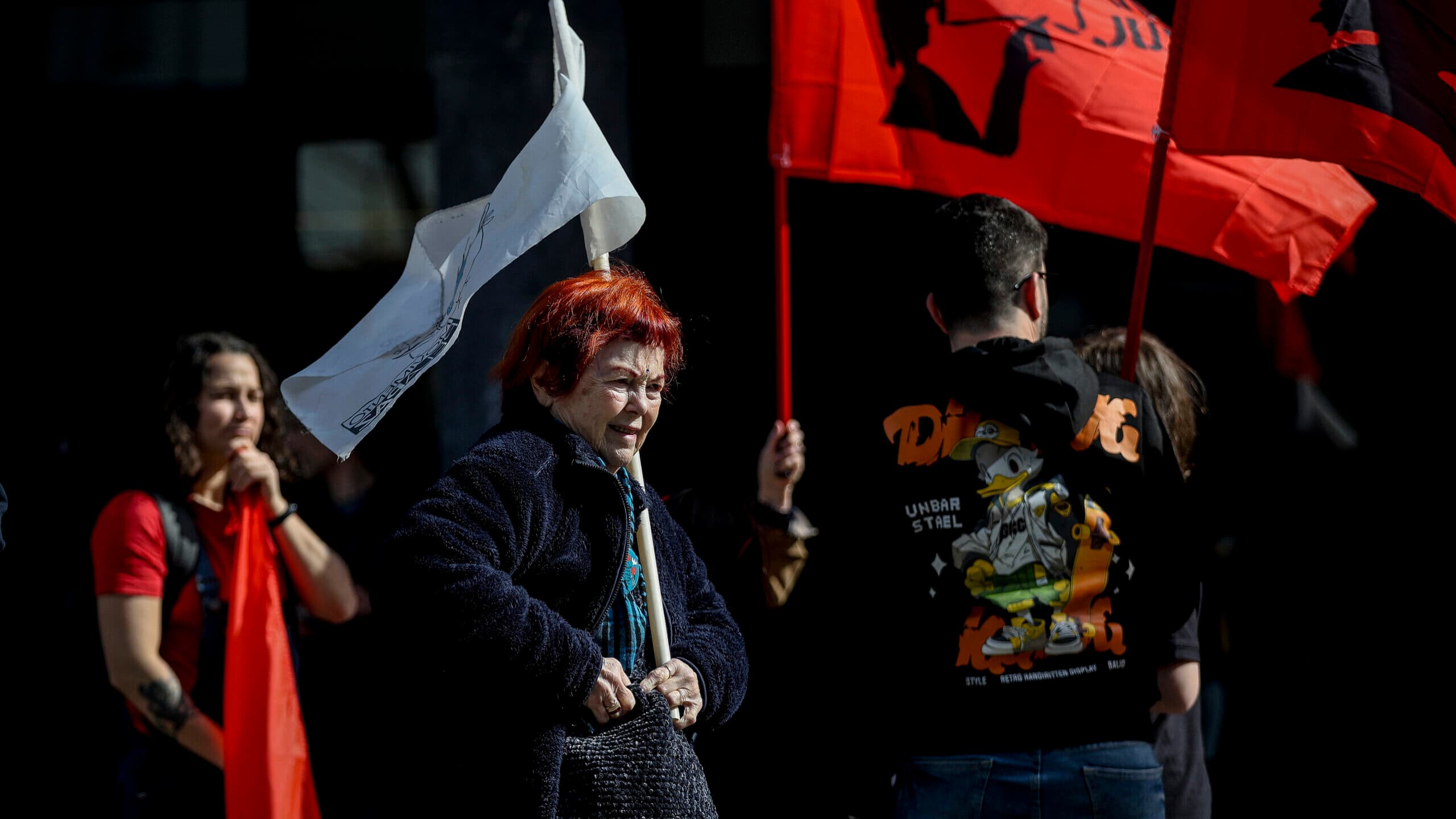
Referring to the advances in rights achieved since the 25th of April, over a hundred people marched towards parliament in favour of gender equality and against the labour package.

More than a hundred people demonstrated in downtown Lisbon, organized by CGTP, to demand gender equality and oppose a labor package perceived to worsen women's working conditions. The protest featured slogans advocating for equal pay and rights, with participants highlighting ongoing disparities in the workplace. CGTP leaders emphasized the need for legislative changes to uphold constitutional rights for women, especially in light of the upcoming International Women's Day.