Latest news and stories about labour law in finance in Portugal for expats and residents.
Yazaki Saltano has moved ahead with a collective redundancy affecting 163 employees at its Ovar plant, less than a year after an earlier round of job cuts that dismissed over 300 workers. The company says the measure is part of restructuring; unions and local stakeholders are monitoring the process. Workers and those in the Ovar labour market should follow union briefings and company communications for support and next steps.
A collective redundancy (despedimento coletivo) is a legally regulated mass‑layoff process in Portugal that requires employer notification and consultation with worker representatives and labour authorities, and often includes social measures or redeployment plans. For workers and local communities—such as the 163 employees affected at Yazaki’s Ovar factory—this process signals significant job losses that may trigger unemployment support and labour‑market measures, so employees should seek information from their union and the labour authority (ACT).

Some salary bonuses exempt from IRS, such as productivity and performance bonuses, will not cause the tax rate to increase, the Tax Authority clarified. However, there are exceptions.

Yazaki Saltano dismissed 163 people at the Ovar factory with immediate effect. The affected workers did not report for work this Friday. The automotive components plant says the job cuts aim to 'ensure the viability of operations in Portugal', given a demanding context the industry is facing...

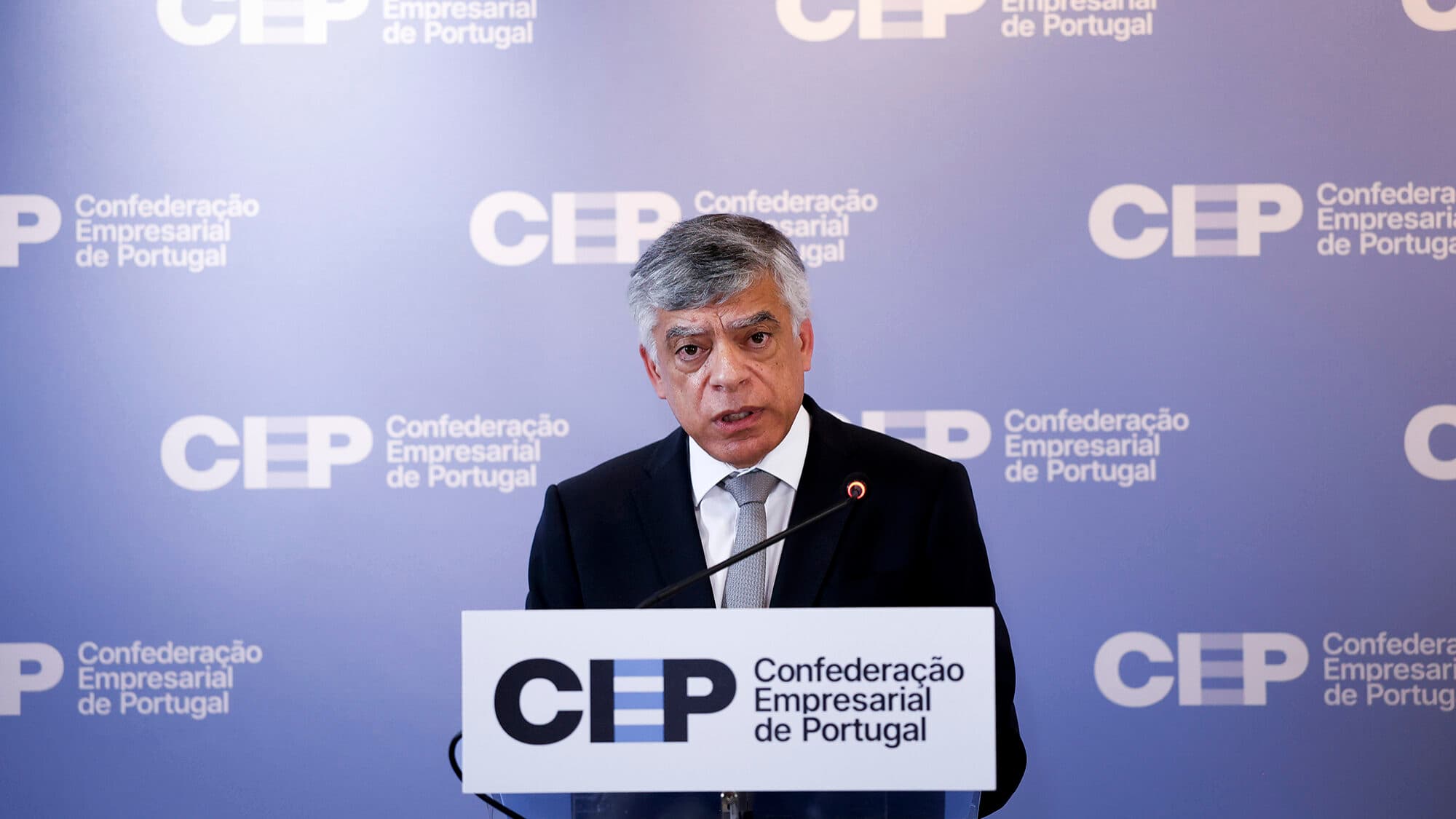
On the agenda is the extension of the multi‑year agreement to improve workers' pay. Also, Cotrim asks Montenegro for the PSD's support.

On the day the INE (National Statistics Institute) publishes data on how the construction sector has evolved, the Government will again meet with public service unions. The deadline for candidates to withdraw their presidential bids also expires. Brussels will approve Portugal's plan for defence loans and present the official proposal on the loan of ...

In this episode we discuss the slowdown in inflation, rising rents, proposed changes under consideration for the Green Rail Pass and the recovery in new car sales. Also featured: the solar project in Castelo Branco, the new data centre in Sines, the labour reform and international defence of the Federal Reserve's independence.

Unions say they insisted on arranging a meeting 'as soon as possible'.

Workers in the food retail and distribution sector will see their wages rise by an average of 5.1% this year compared with 2025. The increase is part of an agreement signed by the Association of Food Product Distributors (ADIPA) and the Union of Workers in the Services Sector (SITESE). "ADIPA and SITESE ...

This Tuesday, the day on which the evolution of prices for 2025 will be released, the CGTP will demonstrate in the streets against the labour package, European Commissioner Maria Luís Albuquerque will go to Parliament to speak about the European Commission’s work programme for 2026, and the Municipal Assembly of Lisbon will vote on the budget proposal. Meanwhile ...

With immediate effect, the programme aims to reach mutual termination agreements with up to 100 employees and early-retirement agreements with up to 20.

Spanish bank Abanca will launch a voluntary termination-by-mutual-agreement (RMA) and early retirement programme for central services employees who “freely wish to participate”, the SNQTB union announced today.

The Lisbon Administrative and Tax Court ruled in favour of the Bank of Portugal in a case brought by international funds that demanded compensation of €2.2 billion. Less than a week before the presidential elections, António José Seguro and João Cotrim Figueiredo lead voting intentions, closely followed by André Ventura...

According to the released data, the number of teachers covered by overtime payments “will shortly be revised upwards”, as will the funding allocated to these payments.

Of the 515 collective redundancies reported by companies in the first 11 months of last year, 174 involved micro‑enterprises, 207 involved small companies, 84 involved medium‑sized companies and 50 involved large companies.
Regionally, the Lisbon and Tagus Valley leads, with 254 collective redundancies notified through November 2025.

The latest episode of the weekly podcast 'Ao trabalho!' examines lingering uncertainty over tuition fee refunds and the implications for pay awards that recognise qualifications. Finance Minister Joaquim Miranda Sarmento’s response on the pay-award question is discussed alongside fast-moving items on labour policy, employment law and the state budget, with analysis of what these developments mean for workers and expats. The short, under-five-minute episode aims to distil key takeaways and policy consequences for those following workplace rights and public spending.

The Union of Workers of Large Supermarkets, Warehouses and Services of Portugal (STGSSP) has accused Revolut of pressuring and 'exploiting' around 1,200 employees in Portugal by imposing 'unrealistic' productivity metrics, after receiving multiple complaints about the digital bank’s labour practices. Revolut rejects the allegations, saying it complies with Portuguese labour law. The dispute highlights tensions between fintech productivity models and workplace rights, and could prompt closer scrutiny from unions and regulators.

Data from the Ministry of Labour, provided to ECO, shows companies have withdrawn more than €120 million from the Labour Compensation Fund (FCT), with the bulk of disbursements used to finance worker training. Employers can still claim roughly €517 million from the fund before the deadline at the end of the year, signalling significant ongoing demand and potential pressure on FCT resources. The pattern of withdrawals highlights how firms are reallocating statutory employer liabilities towards upskilling and may have implications for labour policy and fund sustainability.

Maria de Fátima Carioca argues that Portugal needs a substantial overhaul of its labour legislation, saying flexibilisation of labour relations is unavoidable but must not undermine social protections. She warns the proposed new law is not a magic wand for boosting wages — structural reform is required alongside measures to safeguard workers. Her remarks come as the Government prepares a wide-ranging review of labour rules and the social safety net.

A rise in the guaranteed national minimum wage to €920 gross per month, together with higher employer Social Security contributions, will raise labour costs by about €866 a year for each worker on the minimum wage. The increase reflects both direct pay and associated employer charges and will squeeze firm margins — particularly in low-margin sectors — with potential knock‑on effects on prices, hiring decisions and informal employment. Policymakers and businesses will need to weigh targeted support, phased implementation or productivity measures to offset the impact on competitiveness and employment.

This analytical piece urges readers to adopt an optimistic stance for the new year and to move past complaints about the recent increase in the retirement age. It explains that demographic shifts and the strain on social security systems underpin the policy change, outlines labour and legal implications for workers — including expatriates — and argues that better communication, phased implementation, retraining and age-friendly workplace measures would protect wellbeing while ensuring fiscal sustainability.

Prime Minister Luís Montenegro uses his customary 1 January Jornal de Notícias article to renew a call for labour reform, urging a ‘winning mentality’ and changes to employment law and regulation. Framed as necessary for competitiveness and job creation, the piece signals his policy priorities and aims to steer public and political debate toward deregulation and legal adjustments. It functions both as a policy pitch and as political positioning ahead of upcoming labour‑market discussions.

Zohran Mamdani was sworn in as New York City council president moments after midnight at the symbolic Old City Hall subway station. The unconventional timing and venue underscore a populist, reformist image and signal a break with ritualised civic spaces. Meanwhile in Portugal, opposition leader Luís Montenegro publicly defended a proposed labour reform as necessary to secure ‘decent wages’, framing it as a balance between worker protections and market flexibility. The two developments illustrate how political actors use symbolism and policy narratives to shape public perceptions: Mamdani’s inauguration emphasises accessibility and grassroots politics, while Montenegro’s defence seeks to pre-empt concerns about economic impact and social equity.

The Prime Minister has defended a government labour reform aimed at guaranteeing ‘decent wages’ by promoting better jobs and stronger pay protections, framing the measure as central to improving employment quality. Separately, António José Seguro urged an urgent restoration of social cohesion in Portugal, stressing that community rebuilding is necessary alongside policy reforms to address economic and social challenges.