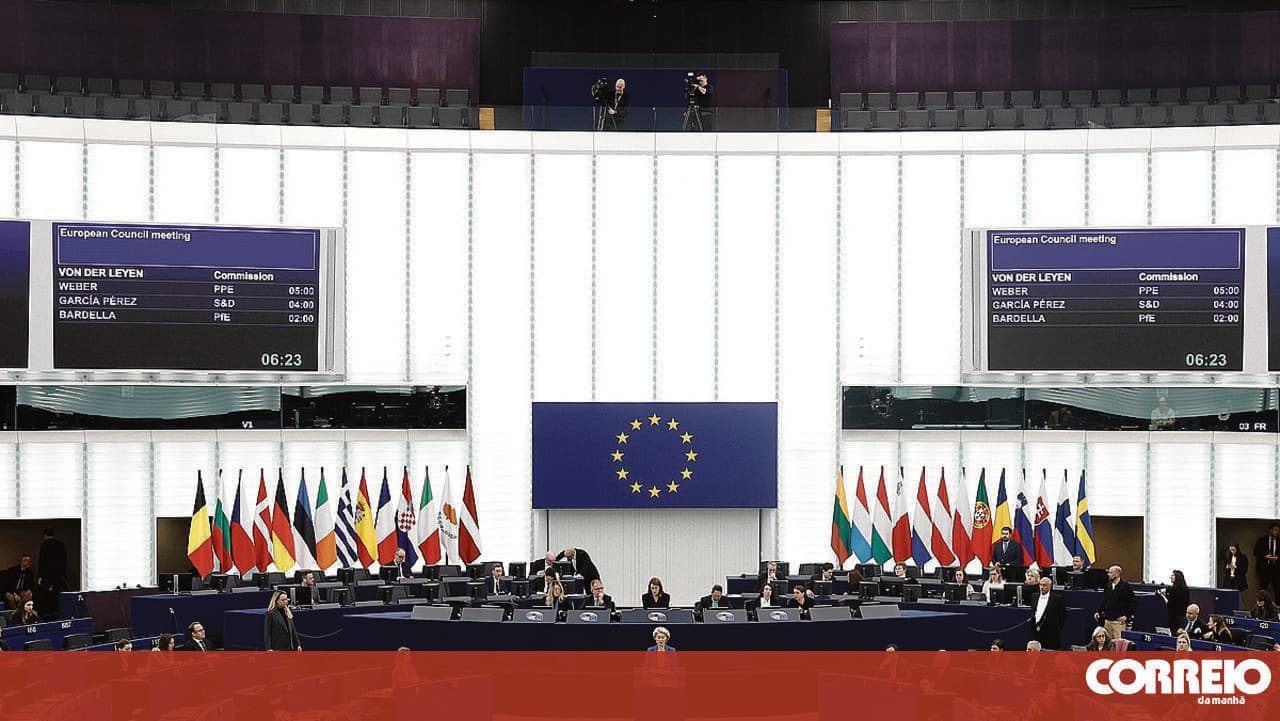
EU fears panic buying as gas reserves run low
Member countries warn of mass speculation as bloc gears up to bulk buy gas before winter.
Latest news and stories about eu policy in finance in Portugal for expats and residents.
This page has only 2 stories and is not indexed by search engines.
Member countries warn of mass speculation as bloc gears up to bulk buy gas before winter.
Trade expert Ignacio García Bercero advises the EU to pursue a conditional agreement with the US, citing ongoing uncertainty regarding the Trump administration's tariff policies as the European Parliament prepares to deliberate on the Turnberry deal.

Committee vote scheduled following major lobbying effort by U.S. officials and diplomats.
The European Commission has launched a public consultation on revising state aid rules for struggling banks in the EU, aiming to safeguard financial stability and minimise taxpayer exposure. The initiative seeks to modernise and simplify existing rules to reflect regulatory and economic developments, particularly those resulting from the recent reform of the Crisis Management and Deposit Insurance framework. The revision aims to ensure consistent treatment of all types of state aid measures in cases of bank failure prevention, resolution, or liquidation. Stakeholders can submit their contributions until 14 April 2026. The current rules, last updated in 2013, are considered outdated and not fully aligned with the current banking crisis management framework, which now prioritises resolution—where losses are borne by shareholders and creditors—over state bailouts.

The European leader's statements come at a time when energy prices (gas and electricity) are rising sharply within the European community.

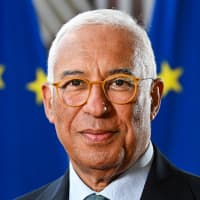
European Council President António Costa has expressed confidence that European Union leaders will approve new measures to combat rising energy costs during their upcoming summit. Describing the current crisis as a “dramatic and challenging moment,” the former Portuguese Prime Minister emphasized the need for unified support for member states. The measures aim to mitigate the economic impact of energy volatility caused by international conflicts. Consumers should watch for potential energy price relief following the summit.

António Luís Santos da Costa (born July 17, 1961, in Lisbon) is a Portuguese lawyer and Socialist politician who served as Prime Minister of Portugal from 2015-2024 and currently serves as President of the European Council since December 1, 2024. After leading the Lisbon Municipal Assembly and practicing law, he was elected MEP (2004-2005) and entered parliament in 2002. He led the Socialist Party from 2014-2024, building unprecedented parliamentary coalitions with the Communist Party and Left Bloc (2015-2019) before winning an absolute majority in 2022. He resigned as PM in November 2023 following a corruption investigation, though subsequently cleared. The 27 EU member states elected him Council President in June 2024, making him the fourth full-time President and the first southern European socialist in that role.
Political Philosophy:
Costa represents moderate European social democracy, combining orthodox fiscal responsibility with progressive social investment. He prioritizes European integration, consensus-building, and pragmatic compromise over ideological confrontation. As Council President, he champions mediation between member states, improved EU inter-institutional relations, shorter decision-making processes, and regular visits to every EU capital to reconnect citizens with European institutions. His approach emphasizes "creative bridges" reconciling divergent interests while maintaining firmness on European values, particularly regarding Ukraine.
The President of the European Council is confident that European Union (EU) leaders, meeting at the end of the week, will approve support measures in the face of high energy prices. “We must make decisions,” he reinforces.
Measures aim to soften the impact on Europeans of the U.S.-Israeli war on Iran.
With the Strait of Hormuz closed by Iran following an attack by the US and Israel, Von der Leyen warns that prolonging the conflict increases costs for Europe and proposes strategic reserves and naval escorts.

Measures to alleviate energy prices will be debated at the European Council meeting on Thursday and Friday.

President of the European Commission warns that, “if the conflict continues, the consequences may increase and the European response will have to be proportional to the severity of the threats.”

Budapest says farmers need cheaper fertilizer as prices rise, challenging an EU policy meant to curb funding for Russia's war in Ukraine.
Brussels has considered that the European Union is facing an “energy price crisis” due to the conflict in the Middle East, admitting “targeted and short-term” measures without altering the European energy system. The call from US President Donald Trump for a military mission in the Strait of Hormuz is dividing opinions among NATO member countries.
The European Commission stated on Monday, the 16th, that the European Union is facing an energy price crisis due to the conflict in the Middle East, while ruling out structural changes to the energy system. European Energy Commissioner Dan Jørgensen noted that while there is no supply crisis, the high prices require targeted, short-term interventions. The situation follows military escalation in the Middle East, including the death of Ayatollah Ali Khamenei and the closure of the Strait of Hormuz, which has triggered concerns about global energy market volatility and rising costs for European consumers.

The European Commission stated today that the European Union (EU) is facing an “energy price crisis” due to the conflict in the Middle East, admitting “targeted and short-term” measures without altering the European energy system.

Brussels discusses energy price crisis and considers short-term measures; Israel destroys Iranian aircraft; drone attack hits oil complex in UAE; Japan releases strategic oil reserves; EU seeks UN initiative for Strait of Hormuz.

Eight of Europe's leading electricity companies — Iberdrola, EDF, Engie, EDP, Orsted, Fortum, Statkraft, and Vattenfall — have sent a letter to European Commission President Ursula von der Leyen and European Council President António Costa, advocating for the preservation of the EU Emissions Trading System and the internal market.

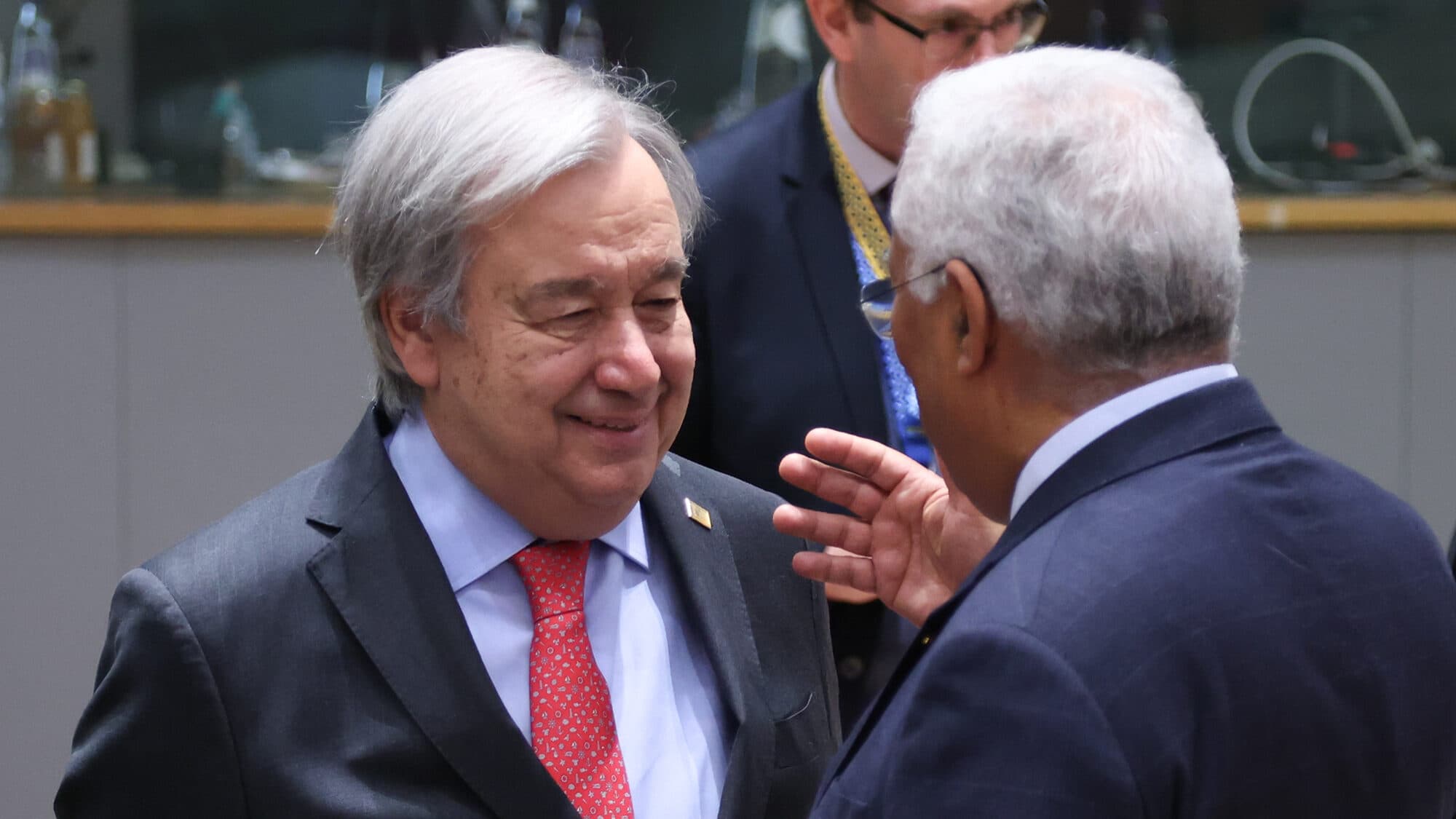
European Council President António Costa has invited UN Secretary-General António Guterres to an upcoming EU summit to address regional tensions in Iran and discuss strategies for enhancing European economic competitiveness.

The President of the European Commission acknowledged the possibility of imposing gas price caps to alleviate the burden on European taxpayers, noting that energy costs have risen significantly due to the conflict in the Middle East. However, she firmly rejected calls to increase fossil fuel imports from Russia, labeling such a move a strategic error that would increase dependency. She outlined a comprehensive approach to reducing energy bills, focusing on network costs, taxes, and the EU Emissions Trading System, while emphasizing the need to modernize infrastructure to better integrate renewable energy.

According to the President of the European Commission, the goal is to strengthen European industrial competitiveness and ensure affordable energy for the future.

A “double digit” number of EU leaders is expected to dial in for urgent talks after oil prices soared.
Anna-Kaisa Itkonen, spokesperson for the European Commission, stated this Monday that the European Union is not facing a shortage of oil or natural gas, as it imports oil from various suppliers and does not import energy from Iran.

According to the Hungarian leader, the EU should “review and suspend all sanctions on Russian energy, across Europe” to limit the impact of rising oil and gas prices.

EU member states want to avoid dependence on the United States for energy and are seeking alternatives, notably in North Africa. Imports from Russia are to be halted by 2027.