Energy prices in Portugal
Latest news and stories about energy prices in Portugal for expats and residents.
This page has only 1 story and is not indexed by search engines.
Latest news and stories about energy prices in Portugal for expats and residents.
This page has only 1 story and is not indexed by search engines.

Economist Luís Aguiar-Conraria admits he is not certain that a major recession is coming and guarantees that everything depends on the measures that will be adopted, in an analysis of the economic impacts of the war in the Middle East.
![If there is an impediment to oil transport [in the strait], it is almost as if 20% of global reserves disappeared](/_next/image?url=https%3A%2F%2Fimg.iol.pt%2Fimage%2Fid%2F69b73b3ed34edcee7c61e93d%2F200.jpg&w=3840&q=75)
The United States will also be affected despite being the world's largest producer of oil and gas today, thanks to shale oil and gas exploration. Analysis by Teresa de Sousa.

Former Infrastructure Minister João Galamba and NOVA SBE Economics professor Pedro Brinca were interviewed this Thursday on RTP Notícias, where they analysed the impact of the war in Iran on the economy.

CMTV commentator discusses the increases that will have a major impact on the country, especially the rise in gas prices.

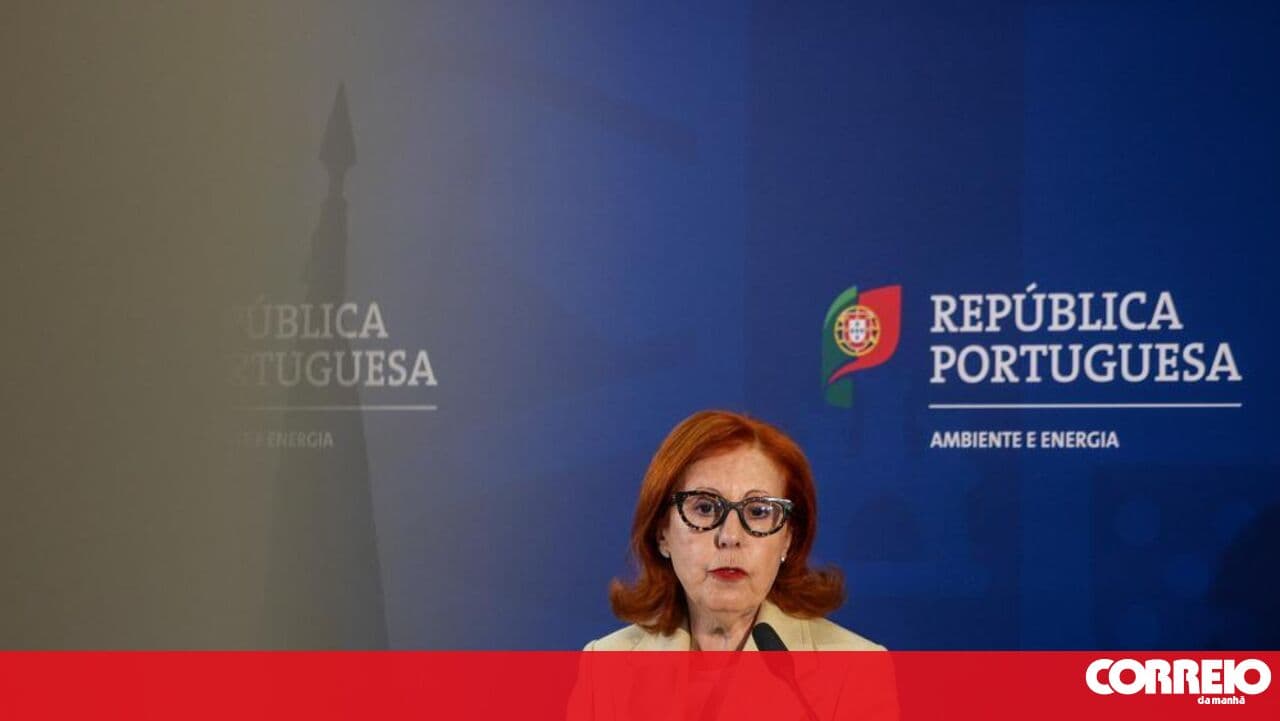
Portuguese minister for environment and energy, Maria da Graça Carvalho, has said today that there are various European mechanisms that could be triggered to help consumers and businesses if gas The post EU measures can be taken if gas prices rise 70% – minister appeared first on Portugal Resident.

The Minister of Environment and Energy, Maria da Graça Carvalho, stated that if gas prices increase by approximately 70%, European member states can act to support consumers and businesses without the need for new legislation. She highlighted that existing EU regulations for energy crises allow for intervention, particularly to mitigate the impact on energy-intensive industries like glass and ceramics. The minister also noted that such an emergency declaration could help limit the influence of gas prices on electricity costs, while reaffirming Portugal's commitment to renewable energy as the primary path to energy independence.
The Minister of Environment and Energy, Maria da Graça Carvalho, stated that European mechanisms are in place to support consumers and businesses should gas prices increase by approximately 70%, without the need for new legislation. She highlighted the importance of gas for industrial sectors like glass and ceramics, noted that energy emergency declarations could allow for price intervention, and reaffirmed Portugal's commitment to renewable energy over nuclear power.
The Minister of Environment and Energy stated this Friday in Marinha Grande that there are several European mechanisms that could be triggered if gas prices increase by around 70%, in order to help consumers and businesses. 'If we reach a gas price increase of around 70%, we won't even need a new...'

According to the Minister of Environment and Energy, there are “several instruments prepared to act.”

The Minister of Environment and Energy stated today in Marinha Grande that there are several European mechanisms that could be triggered if the price of gas increases by around 70%, in order to help consumers and businesses.

Pedro Silva, an energy expert at Deco Proteste, explains why the conflict in the Middle East led to the rise in oil prices and what the impacts of this increase are.

Tanker backlogs, damaged energy infrastructure and threats in the Strait of Hormuz could keep gasoline prices elevated.
The price of Brent crude for May delivery, the European benchmark, opened this Friday, the 13th, with a slight drop of 0.33%, remaining around 100 dollars per barrel. At 7:00 AM today (6:00 AM in mainland Portugal), the price of Brent crude fell to 100.13 dollars after the US Treasury Department announced it would temporarily authorize countries to purchase Russian oil in transit to curb the rise in crude oil prices caused by the war in Iran. Meanwhile, West Texas Intermediate (WTI) crude also fell 0.66% to 95.10 dollars in pre-market trading before the official opening of the US market. On Thursday, the barrel of Brent crude for May delivery rose more than 9% and closed above 100 dollars on the London futures market, following statements from Iran regarding the closure of the Strait of Hormuz. North Sea oil, the European benchmark, closed the day on the Intercontinental Exchange (ICE) in London at 100.46 dollars, its highest price since 2022. The new Iranian supreme leader, Mojtaba Khamenei, said on Thursday that the closure of the Strait of Hormuz, through which about 20% of maritime hydrocarbon trade passes, should be extended. Iran closed the Strait of Hormuz and launched retaliatory attacks against targets in Israel, US bases, and other infrastructure in countries in the region such as Saudi Arabia, Bahrain, the United Arab Emirates, Qatar, Kuwait, Lebanon, Jordan, Oman, and Iraq. The 32 member countries of the International Energy Agency (IEA) decided “unanimously” to release 400 million barrels of oil from strategic reserves into the markets. With the release of the 400 million barrels of oil, more than double the agency's previous record intervention at the start of the war in Ukraine, when it released 182 million barrels of crude oil, the aim is to compensate for the supply lost due to the effective closure of the Strait of Hormuz. Iran: IEA predicts oil supply will fall by eight million barrels per day.

The price of Brent crude oil for May delivery, the European benchmark, opened today with a slight fall of 0.33%, remaining around 100 dollars per barrel.
The price of Brent crude in euros has already risen 42% since the first US and Israeli attacks on Iran, and natural gas has soared by more than 60%. In response, Europe has reacted with fiscal measures more suddenly than it did four years ago, during the Russian invasion of Ukraine.


Conflict between Israel and Iran is impacting Portuguese households through rising energy and food costs. A 50-liter tank of fuel is now 11.75 euros more expensive than before the war, with further risks if the Strait of Hormuz (Estreito de Ormuz) closes. The International Energy Agency warns of a massive global supply drop this month. Residents should note that these pressures may also lead to interest rate hikes.

Beyond the death and destruction in Iran, the primary danger of the war launched by Donald Trump against the country is the perpetuation of the conflict. US Congress members are already admitting the possibility of deploying ground troops. This is how 'endless' wars always begin: first, precision and restraint are promised, then the geographical expansion, the multiplication of targets, and the dilution of any red lines are normalised. The next step toward the global precipice will be the multiplication of enemies, the formation of alliances, and the declaration of ruptures between countries, leading to the end—a world war with nuclear weapons at the ready. With insanity reigning, this is, unfortunately, a viable prediction. The second danger is the global economic shock, which is already here. The Strait of Hormuz, closed by Iran, is a vital artery through which about 20 million barrels per day transit, a quarter of the world's maritime oil trade. A significant portion of liquefied natural gas also passes through this corridor. With the war, Washington decided to release 172 million barrels from its strategic reserve, and the International Energy Agency moved toward a record coordinated release. For an energy-importing Europe preparing emergency reserves, for poor countries crushed by external bills, and for families already pressured by inflation, Trump's war has turned into a planetary tax on fuel, transport, and food. We have already begun paying this cost, which will push us into misery. The third danger is the end of International Law, which has saved so many lives in the past. When the world's greatest power normalises a preventive war with shifting motivations, it offers others a moral licence to do the same. With this war, the world is pushed into the jungle of 'might makes right'. The fourth danger is, ironically, the reinforcement of nuclear proliferation. Before the attacks, negotiations were underway between Washington and Tehran, mediated by Oman, and the IAEA itself was preparing additional technical discussions in Vienna regarding safeguards and verification of Iran's nuclear programme. The war destroyed the mechanisms that allowed us to know what the Iranians were doing. The signal many regimes take from this is simple: those without a nuclear weapon can be attacked; those who have one gain a life insurance policy. Few ideas are more dangerous for the 21st century than this. Meanwhile, the argument gains strength that to solve the energy problem, we must build more nuclear power plants—more potentially lethal 'Chernobyls' and 'Fukushimas'. The fifth danger is political and civilisational. The war provides fuel for all authoritarian currents that thrive on humiliation, resentment, bloc logic, xenophobia, and fanatical-religious conflict. In the Middle East, it multiplies radicalisation. In the West, it strengthens governments that demand more military spending and less democratic scrutiny. In the global economy, it creates conditions for energy-exporting states and rival powers to capitalise on the chaos. In the European Union, it gives space for the strong to command the weak and for the end of the unanimity rule among member states on central issues. In Portugal, the Government is positioning us as potential military targets for Trump's enemies. How do we stop this madness?

The article discusses the global oil market, emphasizing that the United States is beginning to acknowledge the obvious: without Russian oil, market stability cannot be maintained. Moscow asserts that the absence of Russian petroleum exports would destabilize global oil prices and markets, highlighting the critical role Russia plays in the energy sector. The piece underscores the interconnectedness of global energy supplies and suggests that efforts to exclude Russian oil could have significant repercussions on market stability, including potential increases in prices and supply disruptions.

Miguel Sousa Tavares analyses on CNN Prime Time Europe's response to the war in the Middle East and the subsequent rise in energy prices, as well as Spain's position regarding the conflict and the attitude of the USA.

The new Iranian supreme leader said that the closure of the Strait of Hormuz, through which about 20% of maritime hydrocarbon trade passes, should be extended.

This is the highest price since 2022 and is 9.22% higher than at the end of the previous session, when it closed at 91.98 dollars.

The President of the Eurogroup, Kyriakos Pierrakakis, warned that the eurozone must prepare for a prolonged period of economic instability due to the conflict in the Middle East. He noted that while the European economy is resilient, potential disruptions to maritime transport and energy supplies could threaten the 2% inflation target. Residents should be aware that these external shocks may lead to sustained pressure on energy prices and supply chains in the coming months.
The Eurogroup is a meeting of finance ministers from the 20 European Union countries that use the Euro currency. It coordinates economic policies and manages financial stability, including responses to energy price volatility caused by global conflicts. Residents should note that its decisions influence inflation and the broader economic environment across the Eurozone.

The military escalation in the Middle East, particularly the conflict in Iran, is exerting immediate pressure on global energy markets, leading to rising electricity prices in the Iberian Peninsula. Experts warn that the duration and severity of the conflict will significantly influence energy prices, with predictions of oil prices potentially reaching $90 to $100 if the situation persists. This escalation poses challenges for public finances in Portugal, as rising fuel and gas prices complicate economic stability.