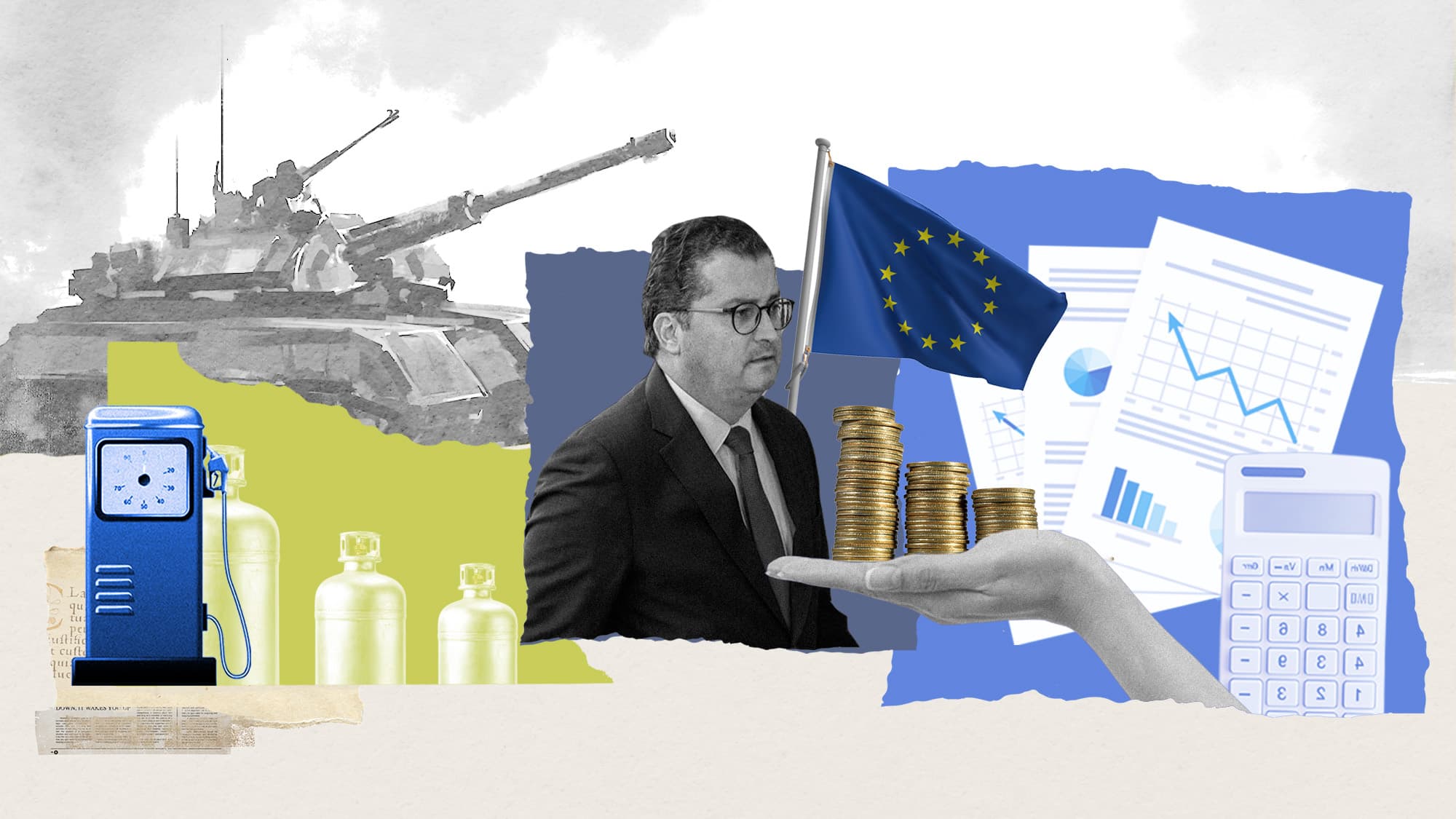
The implementation of windfall profit taxes on energy companies remains a contentious policy, with experts questioning its effectiveness in mitigating the real-world impacts of the ongoing energy crisis.
The closure of the Strait of Hormuz exposes Europe's new energy vulnerabilities, as its shift from Russian gas to global LNG imports has created a fragile dependence on volatile maritime routes, threatening industrial stability and energy security.
Electricity prices during daylight hours have plummeted to near-zero levels, yet this significant shift in energy economics remains largely overlooked by the public and media.
The 'Solidarity Gas Cylinder' programme, originally launched in 2022 to offset rising energy costs caused by the war in Ukraine, has been officially relaunched to provide continued financial support for families.
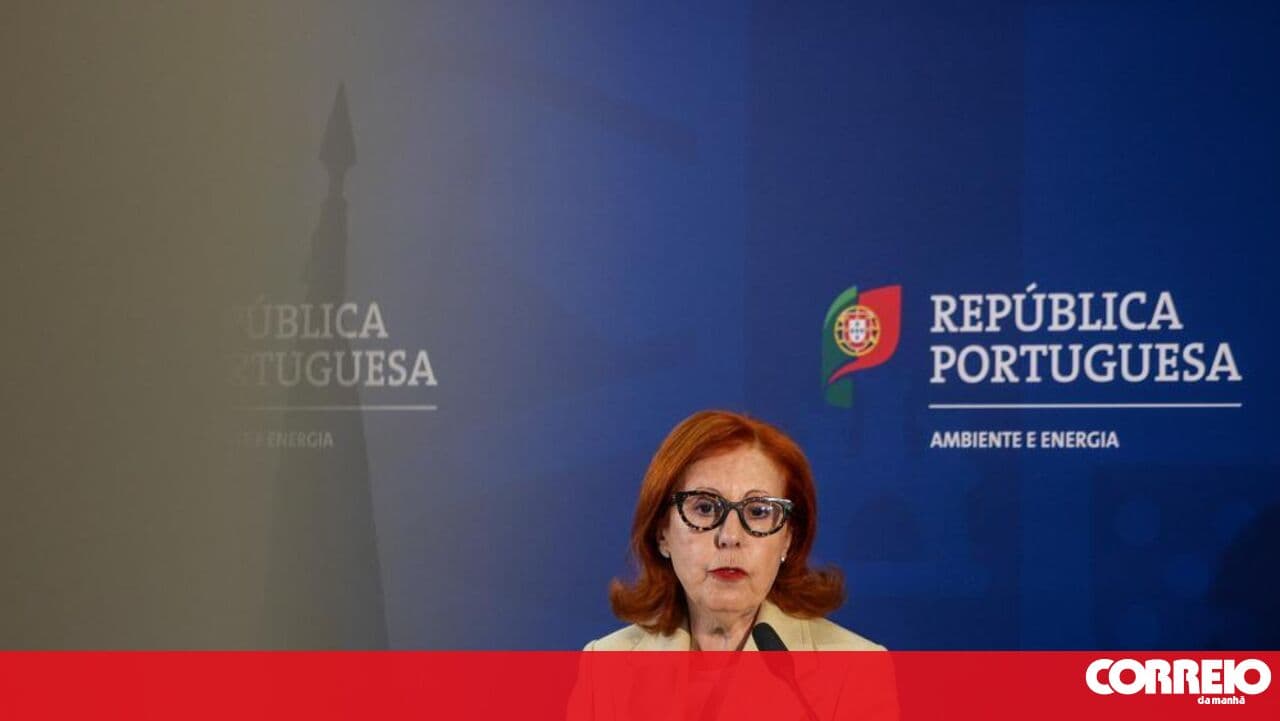
The Portuguese Ministry of Environment reports that while there is no immediate risk of supply failure, the country is nearing the criteria for declaring an energy crisis due to rising fuel costs.
Brent crude oil prices climbed 5% to exceed $113 per barrel following retaliatory infrastructure strikes between Israel and Iran, raising concerns over global energy security and the Strait of Hormuz.
The military escalation in the Middle East, particularly the conflict in Iran, is exerting immediate pressure on global energy markets, leading to rising electricity prices in the Iberian Peninsula. Experts warn that the duration and severity of the conflict will significantly influence energy prices, with predictions of oil prices potentially reaching $90 to $100 if the situation persists. This escalation poses challenges for public finances in Portugal, as rising fuel and gas prices complicate economic stability.
Repsol's profits soared 153.8% in the first quarter of the year, reaching 929 million euros, driven by capital gains that reflect the impact of rising prices for crude oil and refined products.
Repsol's profits surged 153.8% in the first quarter of the year, reaching 929 million euros, driven by capital gains reflecting the impact of rising crude oil and refined product prices. According to the company's results reported to Spain's National Securities Market Commission (CNMV), adjusted net income, which measures business performance, reached 873 million euros, a 56.7% increase compared to the first quarter of 2025, in a volatile global context, particularly following the start of the conflict in Iran. Repsol indicates that, with no assets in the Middle East, it is focusing its efforts on ensuring energy supply continuity, allocating 1.2 billion euros in the quarter to increase its stocks. Last year, the oil group saw its profit fall in the first quarter, mainly due to the impact of price volatility on its refining margins. 'In an increasingly complex and volatile geopolitical environment, which threatens to transform the energy paradigm, we remain focused on ensuring security of supply,' said Repsol CEO Josu Jon Imaz in a press release. News about the Madrid-based company, which operates in more than 20 countries, has focused in recent weeks on its position in Venezuela, where the group holds 50% of the Perla offshore natural gas field (one of the largest in Latin America) and is involved in several oil projects in partnership with the Venezuelan state giant PDVSA. On April 16, Repsol announced the signing of an agreement with the Venezuelan government that will allow it to resume operational control of its Petroquiriquire joint venture, created to operate oil fields in eastern Venezuela. Repsol holds 40% of Petroquiriquire, while the state-owned PDVSA controls the remaining 60%. The Spanish group indicated in recent weeks that it is ready to increase its crude oil production in Venezuela by 50% in one year, and even triple it in three years, if the 'necessary conditions' are met. Repsol's production in the country is currently around 45,000 barrels per day, according to company data. Repsol resumes 100% of oil exploration in Venezuela and forecasts a 50% increase in production within 12 months.
Oil prices rose sharply on Tuesday due to the ongoing stalemate in negotiations between the US and Iran. The closure of the Strait of Hormuz continues to hinder market supply. Brent crude, the European benchmark, rose 2.92% to $111.39 per barrel by 12:12 PM, its highest level in three weeks. Meanwhile, WTI, the US benchmark, climbed 3.74% to $100.93 per barrel. With blockades in the Strait of Hormuz restricting tanker traffic, supply is tightening, driving prices up. Economists fear this will escalate inflation in energy products and across global supply chains. The White House is currently reviewing Iran's latest peace proposal, while maintaining its 'red lines' regarding Iran's nuclear enrichment program. Additionally, BP reported a fivefold increase in profits to 3.3 billion in the first quarter.
On the day marking one year since the blackout, it is the armed conflict in Iran that has tested the country's energy resilience, as well as that of the entire European Union. Last week, Brussels made a series of recommendations to promote electrification, from consumers to businesses. In Portugal, regarding consumers, the...
Galp Energia once again leads the way this Monday, marking the start of the quarterly earnings season for companies listed on the PSI index. Following a 2025 of record profits on the Lisbon stock exchange, investors will be particularly attentive to see if the figures were affected by the conflict in the Middle East, which accelerated...
The war in the Middle East is driving up the cost of oil and fertilisers. Prices have already increased, and Portugal is more exposed due to its energy dependency.
The CEO of EDP argues that political measures to respond to the escalation of energy prices in Europe should be “focused, targeted, limited in time and very oriented towards solving the problem on the fossil fuel side”. At the same time, he rejects the need for measures for the electricity market. “I think that Portugal ...
The European Commission admits that the crisis in the Middle East, which has already caused a 24 billion euro increase in the energy bill, will have a “serious” and “long-lasting” impact and argued that measures taken by Member States to mitigate the impact of rising fuel prices must be “temporary”. Brussels guarantees that...
First it was Christine Lagarde, then Ursula von der Leyen, and finally Kristalina Georgieva. Three leaders, but the same warning: lessons were learned from the 2022 energy and inflation crisis, and it is now necessary not to repeat mistakes in the face of the energy price escalation being witnessed due to the war in Iran, which has already...
Gas prices have soared by 85% and oil by 51% in a matter of weeks. The European Commission has responded with a plan containing over fifty measures that can be implemented by Member States.
The European Commission will present a comprehensive package of measures this week titled 'Accelerating the EU Energy Union - Ensuring secure and affordable energy through accelerated actions'. It is an action plan based on five major key areas.
EDP increased its electricity production by 4% in the first quarter to 19 Terawatt-hours (TWh), driven by wind and solar generation. Renewables accounted for 91% of total output, according to the company. The increase in hydro and wind production, following successive storms since late January, contributed to a significant rise in renewable output and a 48% decrease in the average electricity price on the Iberian Peninsula. Reservoir levels reached 94% by the end of March, a 10-year record for this time of year, which the company expects will support flexible generation business performance in the coming quarters.
The European Commission is preparing a package of extraordinary measures to address rising fuel and fertiliser prices, among other products. To mitigate the consequences of the war in the Middle East, Brussels has sent a preliminary proposal to member states. It outlines support measures for companies operating primarily in the agriculture, fisheries, road transport, and maritime transport sectors. These are economic areas with high energy consumption. If approved, the proposal would allow states to cover part of the increase in fuel and fertiliser costs. Additional measures to increase support for electricity prices are also included. At the same time, the European Commission (EC) is opening the door to measures such as subsidies for the purchase of natural gas used to produce electricity, subject to case-by-case analysis. It is worth noting that during the 2022-2023 energy crisis, the EC warned the Eurogroup against measures it considered too broad and indiscriminate. Consequently, one of the focuses this time is to keep support measures short-term and cost-controlled for taxpayers. The EU is assessing the risk of supply disruption and rising oil prices via videoconference.
The reduction in energy dependence in Portugal has not been enough to shield the Portuguese economy from external shocks, and a new rise in oil prices this year could have an impact similar to the 2022 inflationary crisis. This is the conclusion of a study by Luís Folque, an economist at the Public Finance Council (CFP), who argues...
Oil prices surpassed the $100 mark again this Monday, April 13, due to escalating tensions between the US and Iran. Following the collapse of negotiations between the US delegation, including Vice President JD Vance, and Iranian officials, Donald Trump announced a blockade of Iranian ports. This move aims to cut off a major source of funding for the Iranian state, with the US Navy on high alert in the region. The situation has created significant market uncertainty, threatening global crude supply and driving up prices, while oil company stocks like Galp Energia continue to see gains.
The European Commission will propose a “robust coordination”, both through the promotion of joint gas purchases and the coordination of filling reservoirs for the next winter.
Following the announcement of the failure of negotiations between Iran and the United States regarding the conflict in the Middle East, prices that had fallen last week have risen again.
The price of natural gas for one-month delivery on the Dutch TTF market, the European benchmark, rose 8.60% today, reaching 47.66 euros per megawatt-hour (MWh).