Opposition councillors in Cascais have raised concerns over potential conflicts of interest regarding Minister Miguel Pinto Luz's changes to urban planning legislation. While critics argue the shortened deadlines to challenge urban plans could benefit decisions made during his tenure as municipal vice-president, the minister maintains the law was not tailored to his personal interests.
New urban planning regulations aimed at reducing bureaucracy have officially taken effect, prompting calls from the Order of Architects for a monitoring committee to oversee the transition as municipalities adjust to the changes.
Inhabiting a city is more than just having a house. It implies having access to employment, services, and quality public spaces, establishing close relationships, and participating in decisions about the city's future.
The municipality is planning a new bus terminal in the city to complement the one in Campanhã and is considering taking over the management of on-street parking throughout the city.
No sensible person denies the severity of the housing crisis in Porto and the rest of the country. Access to affordable housing is a legitimate and pressing concern, but the unregulated occupation of public space exceeds the limits of civic protest. The proliferation of tents negatively impacts mobility, urban hygiene, and local commerce. While the right to protest is fundamental, it cannot override the rights of all citizens to enjoy an organised, clean, and safe city. Solutions must come from effective public policy, not from bypassing municipal rules.
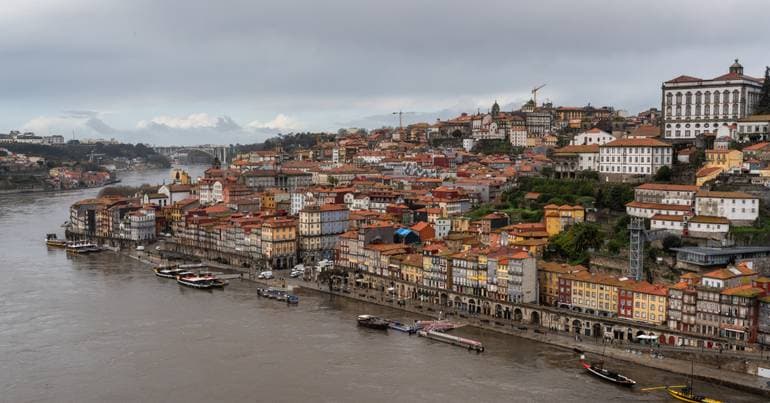
Over the years, I have heard many stories about the city of my birth: Porto. I remember the many times I heard of kind, hospitable, and empathetic people. Of a Ribeira filled with people with a humble, community-oriented spirit. Of a city that woke up and went to sleep proud to be from Porto. Nowadays, no one knows the whereabouts of this city; perhaps it has even been wiped off the map. Walking through its streets, one can only observe the loss of identity of a city that was once 'the undefeated'. Hotels on one side, short-term rentals on the other, locals almost non-existent as they have involuntarily had to leave their homes to make way for franchises. Where is the Porto I heard so much about? Perhaps lost somewhere in the mist that rises over the river in the morning and dissipates by noon, leaving only a memory for those who once knew it.
Although it had a significant impact, the first secretary of the AML, Costa, considers that “the problems have not ended because society is dynamic,” and new solutions are needed.
The petition was created in direct response to the competition, the programme of which aimed little more than to hinder illegal parking on pedestrian crossings, explains Tiago Castela, the group's spokesperson.
Almirante Reis Avenue has seen its shops, transport, and residents change over time, yet many have lived in the same homes for decades. For these residents, accessible pharmacies, safe pedestrian crossings, and the ability to be picked up at their door are essential for truly experiencing the city rather than just inhabiting it. As discussions about the future of the avenue focus on traffic, trees, parking, and cycling, it is crucial to remember that this street is also someone's home. With over 21% of Arroios' population aged 65 or older, urban planning must prioritize the needs of those with limited mobility, such as providing wide sidewalks, safe crossings, and benches. While municipal plans to remove parking spaces may look positive on paper, they may inadvertently decrease accessibility for the elderly. Similarly, while cycling infrastructure is important, policymakers must distinguish between through-traffic and local benefit to avoid neglecting the actual needs of long-term residents. Ultimately, the goal of urban development should be to improve quality of life for all generations, ensuring that future progress does not come at the cost of those who already call the neighborhood home.
“They are pushing us into unemployment”. Local artisans and traders must leave the market by December to make way for luxury hotels. A petition has already gathered more than 500 signatures.
A movement wants to reopen the debate on the redevelopment project for “cutting 295 trees” and “giving more space to cars”, and is even preparing a demonstration. However, the municipality will maintain the “general lines” of the intervention.
With redevelopment underway, a petition is calling for better conditions for pedestrians and more shade. Porto City Council says it has already modified the project to address some of these concerns.
A municipal inventory will have more than 4,600 'positions without living trees,' warns the Vizinhos em Lisboa association. However, the municipality claims the number is less than half and promises to fill them all by spring.
Anyone landing in Lisbon sees them from the plane window, everywhere: the vacant lots. Patches of grass between entire blocks, factory courtyards without roofs, blocks that were never completed. Then, walking around, you see the rest. I live between Amoreiras and Campo de Ourique, one of the most expensive neighbourhoods in the country, and, for...
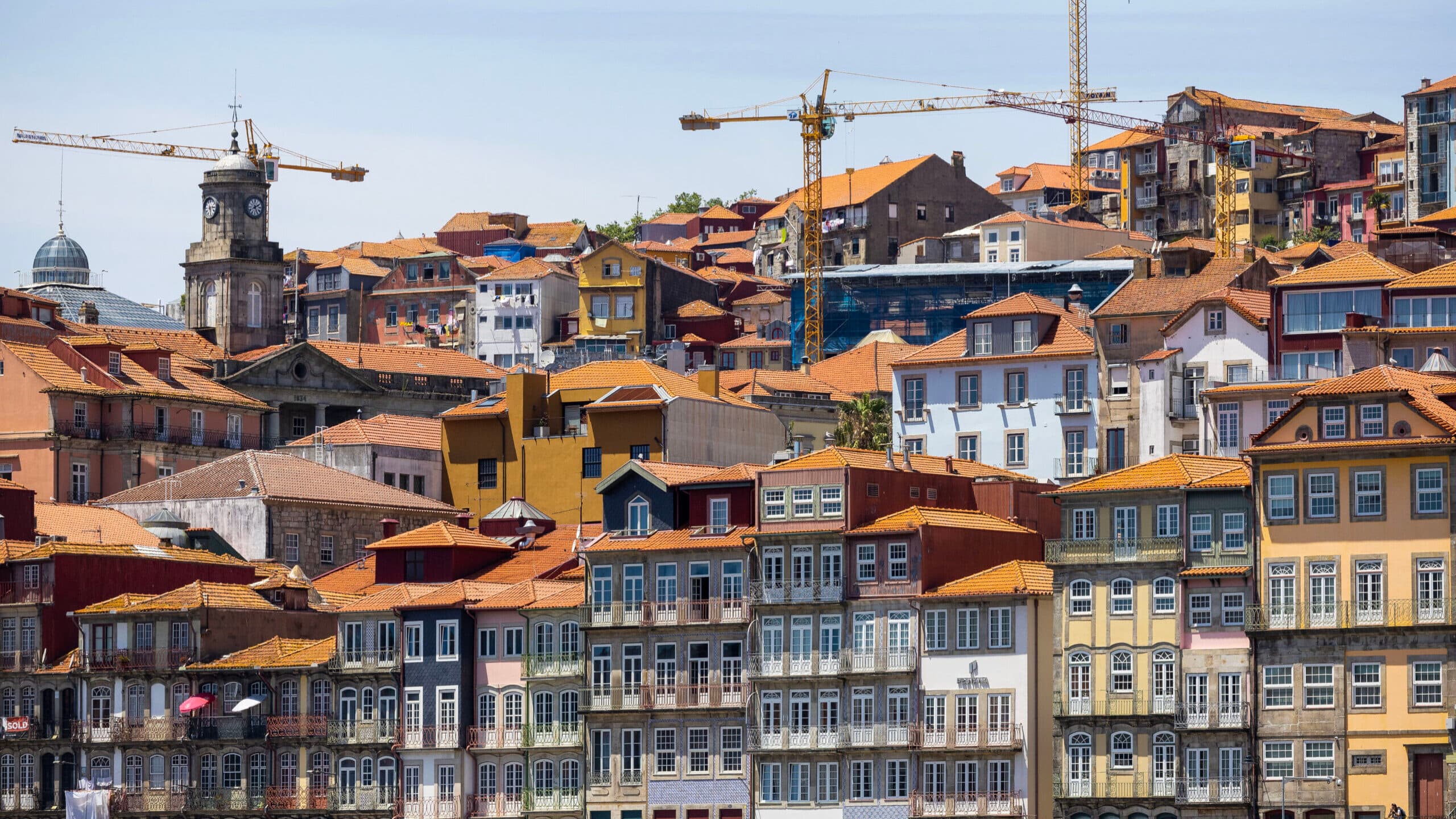
Porto does not have to choose between granite and trees, or cancel out the mineral city to become a green utopia. It can keep its granite and ask itself: how to grow a breathable city? Opinion by Inês Moreira
Housing, mobility, public space, climate, security, and participation. The CNN Portugal Summit 'i9 Cascais – Living the Future' brought together experts, policymakers, and public officials to think about the cities of the coming decades. Amidst different models and some disagreements, one idea ran through the debate: a city is only truly smart when it remains a place where people can live.
It is necessary to consider a condition that is already decisive for the use of the city: the ability to offer comfort and protection against the heat.
The municipal tactical urbanism project is not perfect, but it was a step forward. The MaCaCa association wants to help transform the area's public space: “The city can be experienced in a different way”.
The creation of a new urban axis between the Valença Intercultural Forum, the Municipal Market, and the Campo da Feira is one of the novelties of the plan, which aims to establish the complex as the new heart of the city.
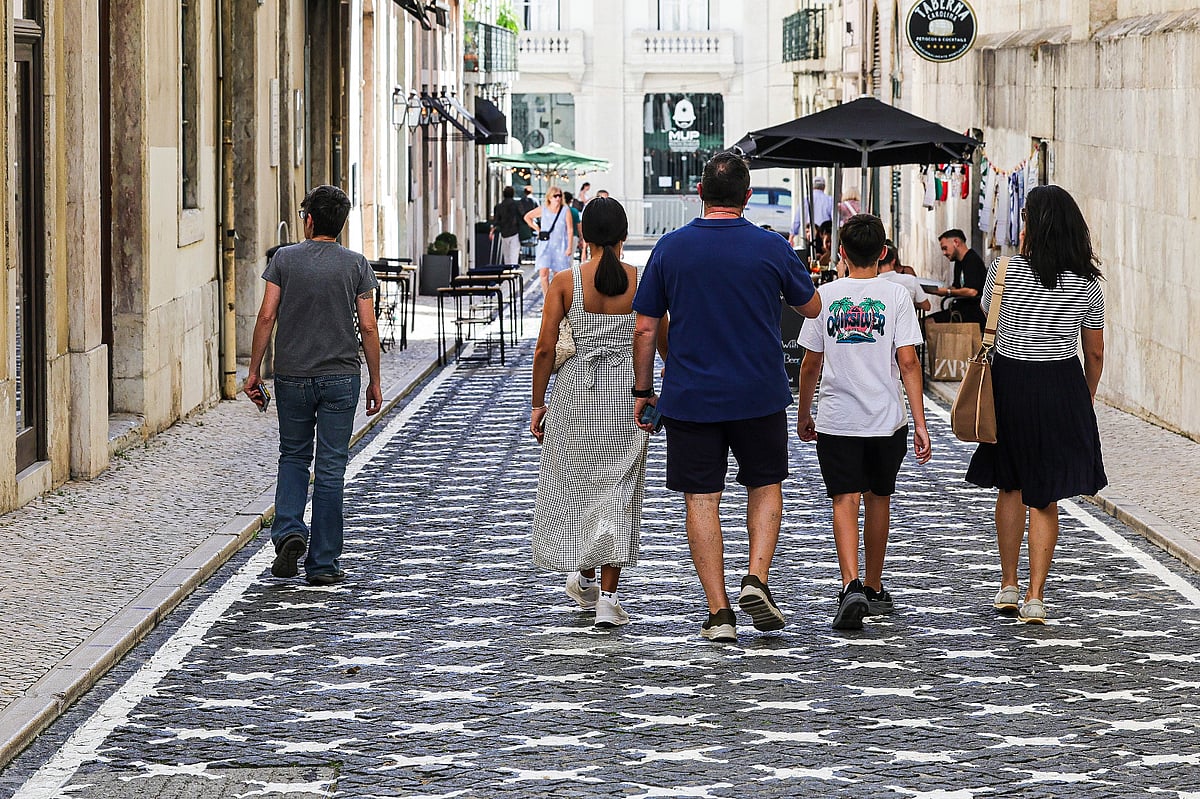
The Chiado area now has less parking and more space for pedestrians to walk freely. The pavement in the new pedestrian zones has been painted with a geometric pattern, giving a new look to the seven streets covered by the Lisbon City Council's 'Viva a Rua!' programme: Rua Garrett, Rua Nova do Almada, Rua do Carmo, Calçada do Sacramento, Rua Ivens, Rua Anchieta, and Rua Serpa Pinto. Parking has been reduced, and it is no longer possible to leave cars on Rua Garrett, Rua do Carmo, Rua Anchieta, and Calçada do Sacramento. In the other streets, 23 spaces have been reserved for residents, 13 for loading and unloading, and 12 for passenger drop-offs, hotels, taxis, and the theatre, according to the local authority. The programme also includes the installation of street furniture, specifically 93 individual benches and 39 planters. This month, according to the council, 30 benches and 15 planters will be installed. The 'Viva a Rua!' programme will be implemented gradually. During a visit to Chiado on 15 September, the Mayor, Carlos Moedas, revealed that the initiative will be expanded to other areas of the city. In this first phase, it includes three pilot zones: Chiado, Rua da Escola Politécnica, and Rua de Belém. Lisbon City Council to increase pedestrian spaces in Chiado; Rua da Galeria de Paris and Cândido dos Reis in downtown Porto to become pedestrianised.
At the moment, the increase in pedestrian areas is marked by the design of the pavement in part of the street where cars previously circulated or were parked.
Coimbra's new mobility model, centred on the Mondego Metrobus System (SMM), marks a paradigm shift from car-centric planning to a city that prioritises pedestrians, soft mobility, and high-capacity electric public transport. Key changes include the pedestrianisation of historic streets like Rua da Sofia, the restriction of private vehicle access in the city centre, and the expansion of Park & Ride facilities to encourage the use of public transport. This transformation, achieved through dialogue with residents and local businesses, aims to create a more sustainable, liveable city focused on collective well-being.
Urban microclimate studies in southern European cities record differences of five to eight degrees between a mineral surface exposed to the sun and an area shaded by a dense canopy next to running water. It is not a marginal difference in comfort.