Latest news and stories about healthcare in daily life in Portugal for expats and residents.
National surveillance shows fewer influenza cases and a drop in intensive‑care admissions, according to the public health institute Dr Ricardo Jorge (Instituto Nacional de Saúde Doutor Ricardo Jorge). However, authorities warn that overall 'excess mortality' remains above typical seasonal levels, indicating the picture is improving but still worrying in aggregate. Those relying on public healthcare should remain vigilant for local updates and follow NHS guidance if they become ill.
The National Institute of Health Ricardo Jorge (Instituto Nacional de Saúde Ricardo Jorge or INSA) is Portugal's public health institute responsible for epidemiological surveillance, reference laboratories, research and technical guidance for the health system. INSA plays a central role in testing, tracking infectious diseases and issuing scientific advice used by the government and the Serviço Nacional de Saúde, so its findings often shape public-health measures and travel or testing guidance.
Excess mortality is the number of deaths above what would be expected based on historical averages (commonly a multi‑year baseline), and it captures deaths directly and indirectly caused by events like epidemics, heatwaves or healthcare disruptions. Portugal’s public health institute INSA (Instituto Nacional de Saúde Doutor Ricardo Jorge) monitors excess mortality to see the broader impact of seasonal illnesses and other stresses on the health system, so a drop in flu cases does not automatically mean overall mortality has returned to normal. Those following public‑health trends should note excess‑mortality figures because they show the pandemic and other factors’ continuing effect on population health.

Reporting examines cases where the National Institute for Medical Emergency (Instituto Nacional de Emergência Médica) — INEM — failed to arrive in time, adding to concerns about pre-hospital response amid broader pressure on emergency services. The piece links ambulance and response delays to current strains across the system rather than isolated incidents. Those relying on urgent medical care should note potential delays and ensure they understand local emergency procedures and alternative routes to care.

The National Institute of Medical Emergency (Instituto Nacional de Emergência Médica), known as INEM, coordinates Portugal’s pre-hospital emergency care, ambulance dispatch and medical response to 112 calls. It matters to expats because INEM is responsible for ambulance response times and on-scene care — incidents like the reported three-hour wait in Seixal can trigger investigations, affect public confidence and influence how quickly you can expect help in an emergency.

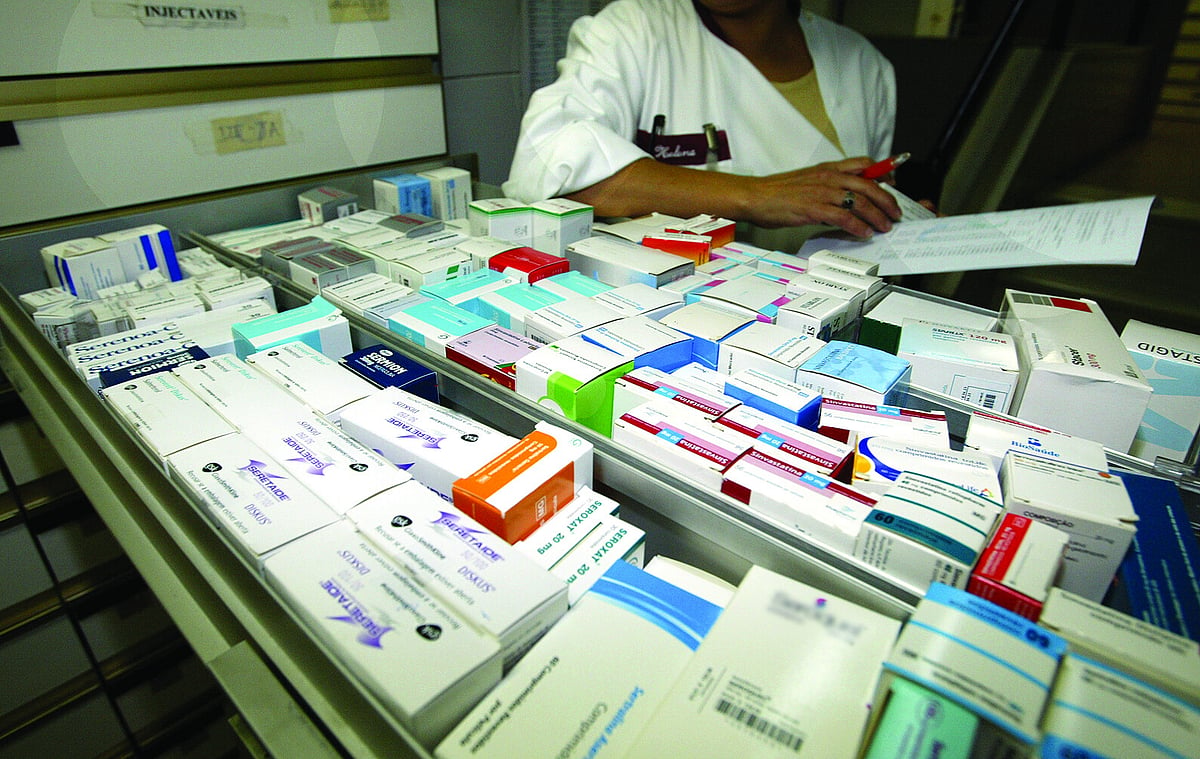
Rising costs of medicines are a primary barrier to healthcare for the most disadvantaged, forcing some patients to cancel appointments and tests for lack of funds. This creates widening inequalities in health outcomes and places additional strain on services; addressing the problem requires policy responses such as targeted subsidies, improved coverage, price regulation and better access to affordable medicines.

In 2025, 14.26% of people reported not seeking healthcare when needed, reflecting significant access barriers in Portugal. More than half of the poorest households cannot afford all prescribed medication, while over 50% of initial consultations in the National Health Service (SNS) occur outside the appropriate timeframe. These findings point to intersecting problems of affordability and timeliness that disproportionately affect low-income groups and signal the need for targeted policy responses to improve medication coverage, reduce waiting times and strengthen primary-care access.

Survey-based reporting finds an increasing share of people no longer rely solely on the National Health Service and are turning to private healthcare providers; analysts say access difficulties in the SNS are a key driver and that wealthier patients who switch rarely return to public care. Residents who depend on the SNS should plan for longer waits for some services and weigh private options if timely access is critical.
Nova SBE (Nova School of Business and Economics) is the business school of Universidade Nova de Lisboa, based in Carcavelos; it has a modern campus opened in 2018 and is one of Portugal’s leading business schools. Its surveys and research—like the healthcare access study cited in the news—are often used in public policy debates, so expats will see Nova SBE data quoted in media and policy discussions.
Portugal recently revised its return legislation to replace the phrase 'voluntary abandonment' with a formal 'duty to abandon', aligning national rules with EU return standards and making an obligation to leave explicit for third‑country nationals subject to removal decisions. For migrants this clarifies legal responsibilities and can affect the timing and procedures of removals, including when assisted or enforced return measures may be used.

A Nova SBE survey shows the share of people using a private GP climbed from 11.8% in 2023 to 15.5% in 2025, while the share saying they rely exclusively on the National Health Service (Serviço Nacional de Saúde or SNS) fell from 90% to 82% over three years. Observers say rising private demand reflects pressure on public services and waiting times, and could mean more residents choose private clinics for continuity of care. Patients considering private options should compare costs, contracts and whether their insurance covers consultations.

Difficulties accessing the National Health Service (SNS) are driving patients away from exclusive reliance on public care and toward private healthcare. More than half of people report self-medicating and the majority do not inform their doctor, while those who can afford private care rarely revert to the SNS once they switch. The trend suggests growing segmentation in access and a potential long-term shift of wealthier patients out of the public system.

A new report finds episodes of illness rising particularly among younger people in Portugal, contributing to an overall increase in the number of people falling ill while persistent barriers to accessing the SNS (Serviço Nacional de Saúde) remain high. The data suggest growing pressure on primary and urgent care, uneven access driven by geographic, capacity and administrative constraints, and possible underlying drivers such as changing infection patterns, mental‑health needs and disruptions to routine care. The report calls for targeted policy responses to expand capacity, improve outreach to younger cohorts and reduce practical barriers to care, and for more granular analysis to identify regional and demographic causes.

A fire at the Torre Sénior care home in Santo Tirso forced the evacuation of about 40 residents overnight; firefighters extinguished the blaze and authorities reported no injuries. Residents were triaged by teams from the Portuguese National Institute of Medical Emergency (Instituto Nacional de Emergência Médica or INEM) and temporarily housed in a municipal pavilion while the cause is investigated. Those with relatives in care homes should contact the facility for status updates and next steps; local councils handle temporary placements for evacuated residents.

The National Institute of Medical Emergency (Instituto Nacional de Emergência Médica), known as INEM, coordinates Portugal’s pre-hospital emergency care, ambulance dispatch and medical response to 112 calls. It matters to expats because INEM is responsible for ambulance response times and on-scene care — incidents like the reported three-hour wait in Seixal can trigger investigations, affect public confidence and influence how quickly you can expect help in an emergency.

Civil Protection says the premises are being evacuated.

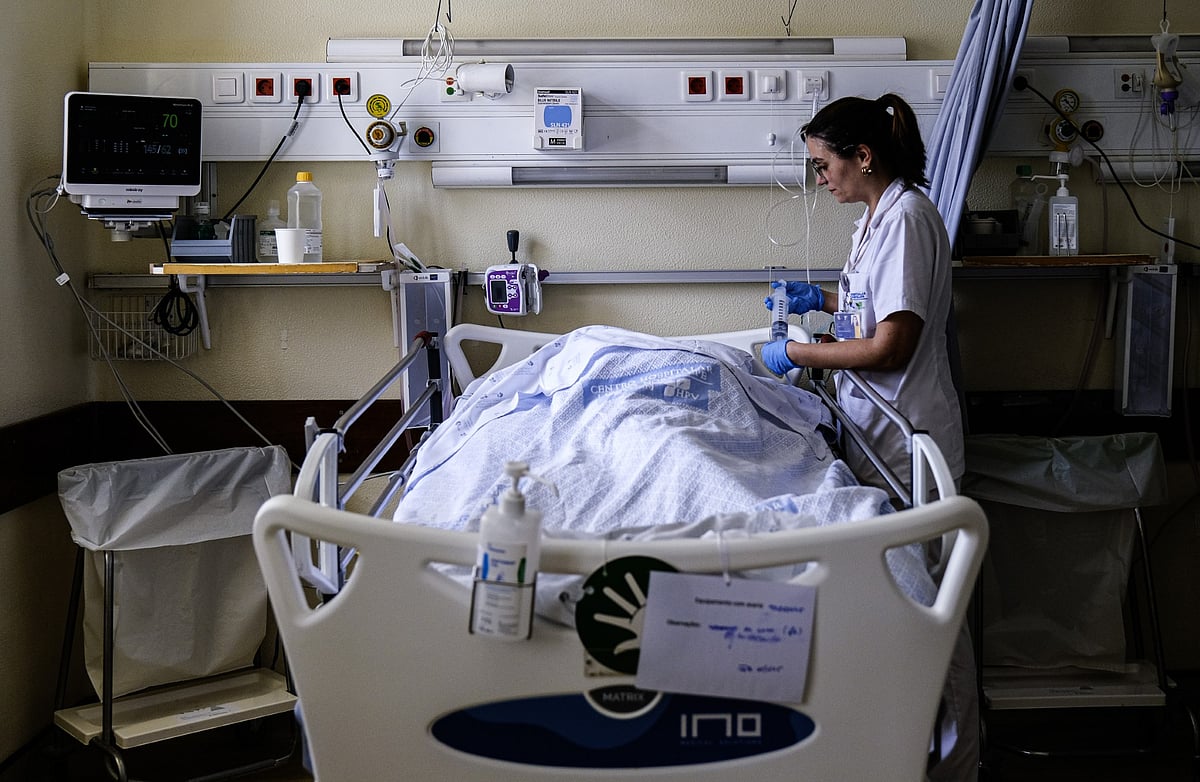
Emergency departments and hospitals are experiencing significant difficulty admitting patients presenting with respiratory problems, creating bottlenecks in patient flow and raising concerns about care delays and safety. The situation appears driven by high demand for acute respiratory care combined with constrained inpatient capacity, staffing pressures and infection-control requirements that limit bed availability. This strain on emergency and hospital services risks longer waits, compromised care coordination and wider impacts on public health and system resilience unless capacity or operational responses are implemented.

Regional reports say all medical emergency ambulances in the Algarve were halted again due to staffing shortages, leaving pre-hospital response reduced across the region. Local outlets highlight the stoppage stems from a lack of human resources rather than equipment, raising concerns for timely ambulance response, particularly during a winter health surge. Expats and visitors in the Algarve should be aware of possible delays and consider local health centre (centro de saúde) contacts for non-life-threatening problems and private transport plans for urgent care.
Update: National coverage confirms the stoppage recurred this weekend, with regional services attributing the pause to workforce shortages rather than technical faults. Sources advise residents and visitors to use their local health centre contacts for triage and to plan alternatives for urgent transport; the situation underlines a regional variation in emergency response capacity that may affect travel and weekend plans in the Algarve.
Rising influenza activity is increasing admissions to intensive care and placing growing pressure on emergency departments. Health authorities warn the epidemic has not yet peaked, and the country is experiencing higher-than-expected mortality for the season, raising concerns about healthcare capacity and the potential need for surge planning and resource prioritisation.

The Socialist Party (PS) will submit a bill titled “Coming Home” to Parliament proposing the creation of transitional residences aimed at reducing social institutionalisation. The policy seeks to shift care from large institutions to local, secure accommodation that supports reintegration, bridging healthcare and housing needs. Analytically, the measure could advance deinstitutionalisation and community-based care, but its success will depend on funding, local delivery capacity, regulatory safeguards and clear pathways to permanent housing.

Beja Hospital’s obstetrics and gynaecology emergency service will be closed overnight due to a shortage of doctors, operating from 20:00 on Saturday until 08:00 on Sunday and again from 20:00 on Sunday until 08:00 on Monday. The closures are attributed to an inability to complete the rota, raising concerns about patient access to urgent maternity and gynaecological care and potential pressure on neighbouring services. An accompanying opinion notes systemic failings in emergency logistics — exemplified by ambulances held up by missing stretchers — as symptomatic of wider incompetence in healthcare operations.
PSD MP Miguel Guimarães welcomed the announcement to purchase 245 ambulances, saying it will allow INEM to increase its response capacity across multiple locations, notably Greater Lisbon and Setúbal. Analytically, the investment should improve coverage and potentially reduce response times in high-demand areas, but its effectiveness will depend on deployment strategy, crew availability and integration with existing emergency services. Close monitoring of allocation and operational metrics will be required to ensure the intended gains in emergency healthcare delivery are realised.

The prime minister announced what was described as “the largest investment in ambulances in over a decade” — 275 new vehicles — less than 36 hours after three citizens were reported to have died while waiting for care. Critics have called the timing “strange” and labelled the move demagoguery, arguing it risks masking systemic negligence in emergency services rather than addressing deeper policy and resourcing failures in healthcare and public safety. The episode has intensified calls for transparent planning, independent oversight and comprehensive reforms to emergency medical services rather than one-off equipment purchases.

Carlos Enes of CNN Portugal examines recurring, serious failings in Portugal’s emergency response system, arguing that political and union attacks on INEM distract from patient safety. He urges giving INEM operational authority, requiring ULS hospitals to free trolleys and beds, and restoring clinical judgement as the primary guide for urgent care, while calling for systemic changes to protect public health.

In response to an ERS warning about diagnostic delays, the association of private hospitals says it has the capacity to meet the SNS’s demand but is urging the Government to guarantee the resources, contracts and regulatory clarity needed to mobilise that capacity. The claim highlights a policy tension over using private provision to reduce diagnostic backlogs while ensuring adequate public funding and oversight.

Almost a year after the minister warned of unacceptable A&E waiting times, there has been no meaningful improvement. Persistent delays point to systemic strain on emergency services, heighten risks to patient safety and wellbeing, and indicate a need for urgent policy and resource interventions rather than repeated warnings.

Road fatalities and related casualties cost an estimated €1.5 billion in 2025, while overall road casualty levels have effectively returned to 2016 figures. The year saw more collisions and a rise in injuries, maintaining pressure on emergency services and the healthcare system and undermining public safety. Economically, the persistent casualty rate represents a significant indirect and direct cost that acts as a negative indicator for public finances and productivity. The pattern suggests a need for renewed, targeted prevention measures, enhanced enforcement and investment in safer infrastructure to reverse the trend and reduce both human and fiscal costs.

Marques Mendes urged the President and the Government not to stall a bill establishing regional obstetric emergency departments, saying he hopes they decide before he assumes the Presidency on 9 March to avoid it becoming one of his first decisions in office.

Ten years ago, Garcia de Orta Hospital in Almada opened the first hospital-at-home unit. Today there are already 50 Local Health Units offering this service — a way of delivering healthcare to 400 patients receiving inpatient care outside the hospital.

CTT said the suspension of the reimbursement service for the Mobility Allowance for residents in the Azores and Madeira is due to 'reasons beyond the company's control'.
On Saturday the obstetrics and gynaecology emergency departments at the hospitals in Abrantes, Setúbal and Portimão, and the obstetrics emergency department in Vila Franca de Xira, will be closed. The Setúbal emergency department reopens on Sunday.

Jornal de Notícias reports that at least 108 people were intentionally murdered in 2025, marking the highest number of homicides since 2018. Separately, the President of the Republic returned three decree-laws to the Government that sought to implement reforms in the health sector, a move with legal and political implications for emergency services, public safety and ongoing healthcare policy changes. These developments highlight rising concerns about violent crime alongside contested attempts to reshape healthcare governance.

Presidential candidate António José Seguro says Portugal urgently needs to restore a sense of community and expects a “peaceful change” in 2026. His remarks frame the election as a moment for social cohesion rather than confrontation. At the same time, opposition figure Luís Montenegro is pitching a concrete programme of reforms focused on health, education and housing — signalling a policy-driven contest in which property and public services will be central issues.

In 2025 SNS24 handled over 5.7 million calls and scheduled more than one million primary healthcare appointments — about 2,800 per day — frequently referring patients to same‑day or next‑day in‑person primary care. The data highlights SNS24’s expanding role in triage and in facilitating timely access to primary care through a telehealth appointment‑scheduling function.
Four gynaecology and obstetrics emergency departments have been closed. In Amadora‑Sintra only the gynaecology emergency department is shut; meanwhile the general emergency at Hospital Fernando Fonseca (Amadora‑Sintra) reported a three‑hour wait for patients classed as very urgent as of 20:00, according to the SNS Portal. Santa Maria recorded a two‑and‑a‑half‑hour wait for very urgent cases, and Hospital de Loures topped the waiting‑time list with around three‑hour waits for urgent patients.