Latest news and stories about government policy in technology in Portugal for expats and residents.
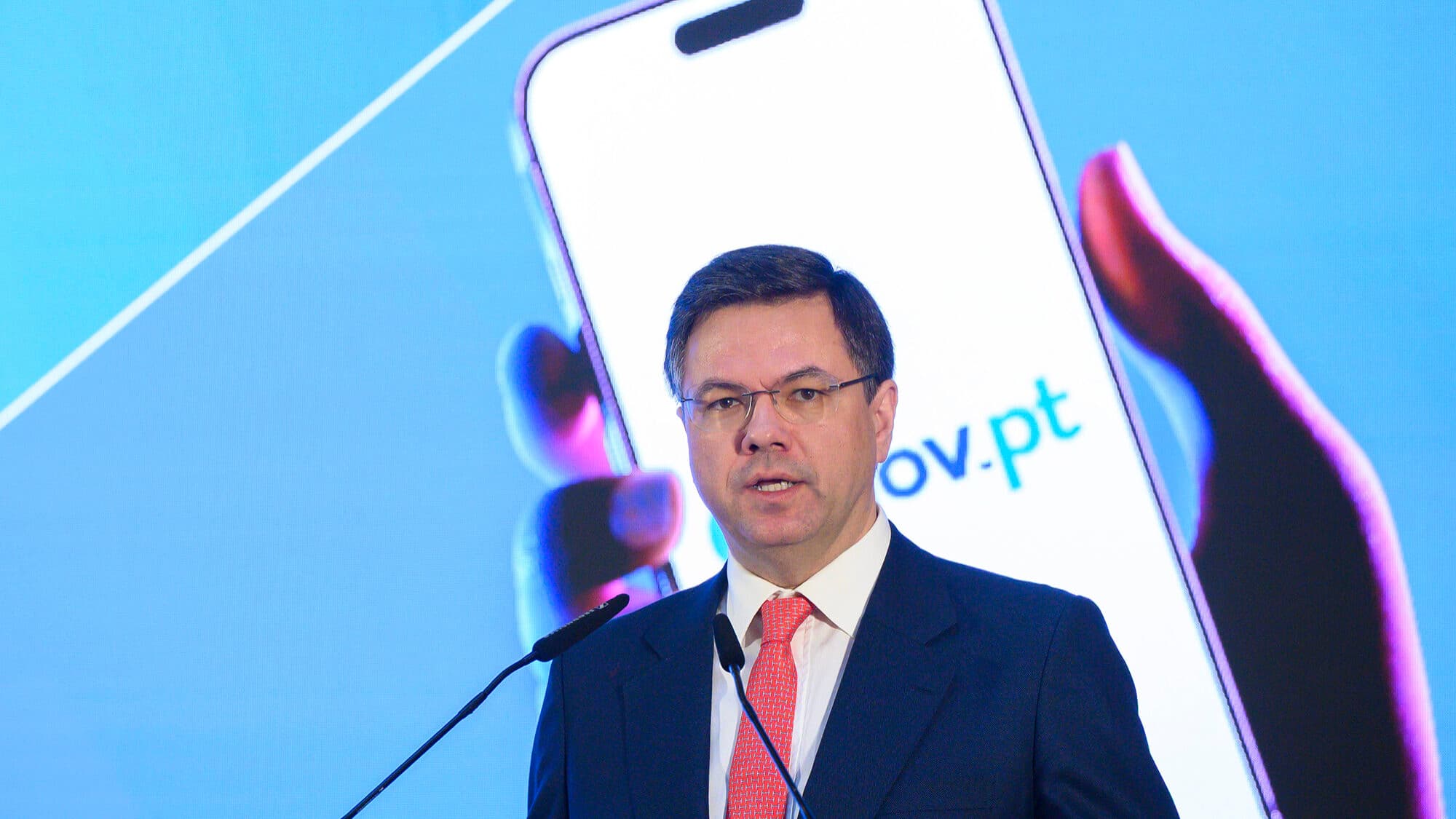
The gov.pt app has added two more features, making it now possible to request duplicate copies of documents and to access the documents of children or dependents, according to an announcement on Friday. In a statement, ARTE — Agency for the Technological Reform of the State — indicates that, in cases of loss, theft, robbery, damage or alteration ...

Chinese platform TikTok launches an automated system using artificial intelligence to detect users in Europe who are under 16 years old.
It seems the minister has embraced the new trend of academic capitalism which, according to some authors, combines the scientific pursuit of truth with the economic maximisation of profits. Opinion piece by Alberto Amaral

I'll vote for the AI President. A candidate able to foresee needs before they become crises, to ask why wages stagnate while GDP grows, and to prevent four‑hour queues in public services.

Grok users can still generate sexualized images despite fresh promises from X.
The overall state of Portuguese science should concern us all, at a time when the future funding and organisation of national science is being debated. Opinion by João Ramalho-Santos

Admiral Gouveia e Melo has urged a change in health leadership, saying the Government should resign if it cannot resolve systemic problems in the healthcare system. He accuses the State of failing across the board, criticises missed deadlines for delivering results and calls for accountability and urgent action to protect patients and medical services. The remarks frame the crisis as a leadership and policy failure with direct implications for care delivery and public confidence.

Nuno Mateus-Coelho, a cybersecurity specialist, analyses how social networks contribute to the rise of radicalisation at increasingly younger ages.

2026 will be a decisive year for the Defence sector. Geopolitical instability, the accelerated technological transition and the growing integration between economy and security mean that Defence is no longer just a strategic issue: it is increasingly a pillar of industrial sovereignty and national competitiveness. The main European allies ...

European Commissioner for Defence and Space Andrius Kubilius conducted his first official visit to Portugal, meeting Defence Minister Nuno Melo and Education Minister Fernando Alexandre to discuss defence and space policy. He signalled that SAFE funds could reach the Portuguese government in the coming weeks or months, prompting analytical questions about budget timing, allocation between defence and civil space programmes, and coordination between national ministries and EU institutions. The visit underlined the need for clear planning to integrate incoming EU funding with Portugal’s defence and space policy priorities.

A deepfake tool has sparked investigations and now furious criticism from the head of the European Commission.
The current electoral law contains few references to the use of social media and to the evolution of algorithms, which are changing the political space, amplifying populism and radicalising discourse, according to experts interviewed by Lusa. “The way the algorithm is itself becoming an institutional space with the capacity to influence, ...”

CNN Innovation coverage of IAPMEI's Start-up Voucher programme.

The president of the European Commission warned on Sunday US businessman Elon Musk, owner of the social network X and the AI feature Grok, that “if he does not act, the European Union will.”
Examines how algorithms that determine which voices are amplified or ignored—in areas such as social media moderation, electoral targeting and allocation of public services—can distort representation and weaken democratic institutions, raising concerns about accountability, transparency and concentration of power.

António José Seguro urged supporters to temper their euphoria, stressing that “nothing is won” until all votes are counted and the race is decided. His caution came amid a heated campaign atmosphere, with rival candidate Gouveia e Melo publicly lambasting Seguro as “shameless” after receiving explicit backing from Rui Rio — a development that underlines sharp interpersonal tensions and the high stakes of a closely contested presidential vote. The intervention is aimed at preserving discipline among backers and managing expectations as results approach.

Portugal will host, between September and October, the Operational Experimentation (OPEX) exercise of the European Defence Agency (EDA), during which armaments developed by European and domestic companies will be tested.

Days after presenting an update to the national digital strategy and a skills pact to train almost three million Portuguese people, the Government filed the National Artificial Intelligence (AI) Agenda in the Official Gazette (Diário da República). The programme, which is the main public policy plan for this area, will represent an investment of more than 400 ...

In a troubled world, Security and Defence are taking a leading role and Portugal seeks to gain ground. These two areas account for 13% of total expenditure on research and development (R&D), according to the 'National Innovation Report 2024' from the Agency for Research and Innovation (ANI). Between 2020 and 2023, total R&D expenditure increased ...

Economist Vera Gouveia Barros argues that the most effective element of the Construir Portugal programme is tax relief on rentals, citing an ‘almost mechanical effect’ from a proposed 10% autonomous IRS rate for rents up to €2,300. She suggests this tax cut will directly influence rent levels and landlord behaviour, with likely quick transmission into the market. However, the package omits a dedicated room‑rental option — a gap that could limit lower‑cost housing supply and options for students, workers and expats. Barros’ analysis implies policymakers should pair fiscal incentives with targeted measures for small‑unit and shared accommodation and monitor market adjustments to avoid unintended rent inflation or supply imbalances.

With funding of over €400 million for artificial intelligence through 2030, the Government expects between €18 and €22 billion to be added to Portuguese GDP.

The article analyses a surge in national defence innovation driven by a €5.8 billion SAFE loan—the largest single investment in the Armed Forces—positioning defence as a strategic area for both European and national investors. Key growth areas include drones, satellites and aircraft, with emphasis on R&D, dual‑use technologies and strengthened aerospace supply chains that can create jobs and boost exports. The piece examines how procurement reform, public‑private partnerships and targeted skills development are needed to translate investment into sustained industrial capacity and economic impact. It concludes that coherent policy and sustained funding will be essential to maximise technological and economic returns.

The 11-candidate presidential debate, held in two instalments across three topics, was overshadowed by a sustained personal clash between PSD’s Marques Mendes and independent candidate Henrique Gouveia e Melo. Mendes publicly rejected allegations of impropriety — insisting “I am not a facilitator of business deals” — and branded parts of the admiral’s conduct as “vulgarity,” a dispute that punctuated exchanges throughout the evening. Amid this confrontation, Jorge Pinto’s near withdrawal and his declaration that he would not stand in the way of a potential Seguro victory illustrated how interpersonal attacks and tactical moves risked eclipsing substantive policy debate.

Luís Marques Mendes has the most expensive campaign and António José Seguro is the most optimistic in estimating the subsidy to be received. Gouveia e Melo expects to receive €700,000 and Ventura €400,000.