

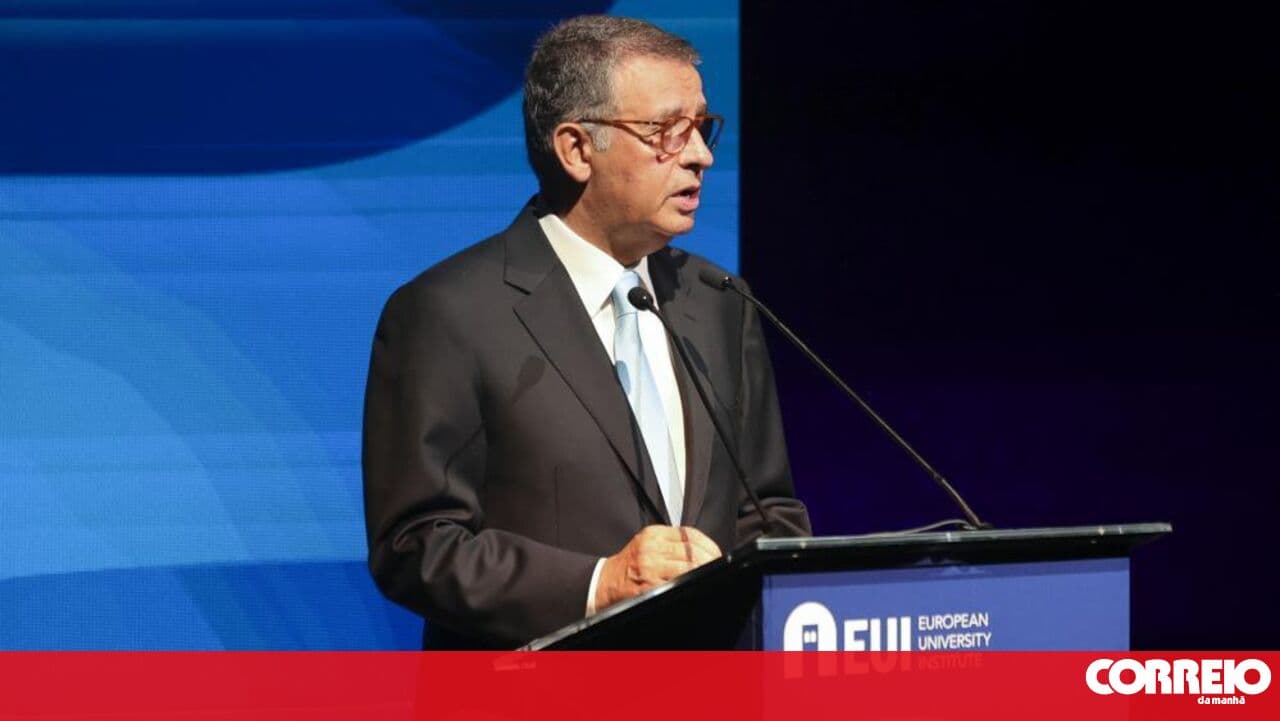
Seguro warns that Portugal and the EU cannot be passive regarding technology and artificial intelligence
Seguro highlights the need for proactive engagement from Portugal and the European Union in the fields of technology and AI.

Latest news and stories about economic activity in technology in Portugal for expats and residents.
Seguro highlights the need for proactive engagement from Portugal and the European Union in the fields of technology and AI.
The Canadian IT consultancy CGI announced the opening of its first Artificial Intelligence Centre of Excellence in Portugal. The new facility will focus on generative AI and agent-based technologies, with the company planning to hire 100 people annually to support digital transformation projects.

The Portuguese aerospace and defence sectors, represented by the AED Cluster, exported 92% of their production last year and expect growth exceeding 10% in 2025. The sector, which generated 2.1 billion euros in 2024, is increasingly targeting the United States and the Middle East as strategic markets.

A new satellite production facility, the Alverca Space Hub, is being built at the Air Force (Força Aérea) installations in Alverca and is expected to be completed by mid-2024. The 1.5 million euro factory will initially produce eight radar satellites for the Atlantic Constellation (Constelação do Atlântico). The project aims to establish Portugal's capacity to build and operate satellites for both domestic and European use.\n\nUpdate: Portugal launches six satellites including first national radar equipment\n\nPortugal successfully launched six new satellites into space on Monday aboard a SpaceX rocket from California. The launch included the country's first radar satellite for Earth observation and four satellites named after famous Portuguese authors, which form the Lusíada constellation (Constelação Lusíada). These new assets will allow for real-time image capture regardless of weather conditions or light levels.
The Portuguese Air Force (Força Aérea) is Portugal’s military branch for defending national airspace and conducting aerial operations. Created in 1952, it also carries out search-and-rescue, aerial reconnaissance and disaster support such as photographing floods or moving emergency teams. Residents in affected regions may see its planes and helicopters used during storms and relief missions.
The Atlantic Constellation (Constelação do Atlântico) is a collaborative space initiative between Portugal and Spain involving a network of small satellites for Earth observation. These satellites provide real-time data on maritime safety, climate change, and biodiversity across the Atlantic region. The project is linked to the Alverca Space Hub, a satellite factory in Portugal expected to finish construction in mid-2024.
The Lusíada constellation (Constelação Lusíada) is a group of four Portuguese satellites launched to monitor Earth and maritime activities. Named after literary figures like Luís de Camões and Fernando Pessoa, these satellites are part of Portugal's space strategy.

President Marcelo Rebelo de Sousa has formally congratulated Finance Minister Joaquim Miranda Sarmento on his appointment as Vice-President of the Board of Governors of the European Bank for Reconstruction and Development, highlighting the significance of Portugal's influence within the institution.
António José Seguro clarifies that his public warnings regarding Portugal's demographic and political challenges are intended as constructive calls to attention rather than partisan criticism.
The European Commission is reviewing a joint request from Portugal, Germany, Spain, Italy, and Austria to implement a windfall tax on energy company profits, acknowledging the proposal while distinguishing current market conditions from the 2022 energy crisis.
IAG has withdrawn its interest in acquiring TAP, leaving Air France-KLM and Lufthansa as the remaining contenders for the Portuguese airline's privatisation.
Economist Luís Aguiar-Conraria analyzes the potential economic fallout of the Middle East conflict, emphasizing that global recession risks depend heavily on policy responses and the stability of oil transport routes.
![If there is an impediment to oil transport [in the strait], it is almost as if 20% of global reserves disappeared](/_next/image?url=https%3A%2F%2Fimg.iol.pt%2Fimage%2Fid%2F69b73b3ed34edcee7c61e93d%2F200.jpg&w=3840&q=75)
Tourism is a vital part of the Portuguese economy, but it must adapt to new challenges such as increasing value, diversifying markets, and managing visitor flows effectively. Lídia Monteiro from Turismo de Portugal emphasizes the need for strategic growth in a competitive global landscape.

Portugal aspires to be a leader in innovation and technology, focusing on integrating AI in education and attracting foreign investment. However, the reality of its public services is starkly contrasting, with inefficiencies so severe that even basic tasks like paying taxes require prior appointments, highlighting a systemic failure that undermines its ambitions.

Portugal is seeking to enhance its appeal to Middle Eastern investors, particularly from Qatar, by shifting its marketing strategy beyond just its favorable climate. In Doha, representatives from Startup Portugal are engaging with local entrepreneurs to promote investment opportunities in the country.

This article provides an analytical comparison of the digital landscapes in Spain and Portugal, emphasizing that Portugal offers a more favorable environment for digital growth and investment.

The EU–India trade agreement creates a “rare opportunity” to expand Portuguese agri‑food exports, with olive oil singled out as the main beneficiary. The Federation of Portuguese Agri‑food Industries said there are “absolutely favourable conditions for olive oil exports” and described the pact as an unprecedented chance for the sector. To convert the opportunity into sustained growth, industry representatives stress the need for investment in production capacity, market development and compliance with buyer standards, while monitoring regulatory and logistical challenges that could affect competitiveness.

Guimarães has been chosen as the site for the presentation of Portugal’s national space strategy, a symbolic starting point for mayor Ricardo Araújo’s plan to turn the municipality — home to the Guimarães Space Hub — into an Iberian leader in the aerospace sector. Local authorities are pursuing rehabilitation of facilities, investment and economic activation to attract industry, create jobs and build a skills pipeline. Realising that ambition will require sustained funding, coordination with national and international partners, and targeted policies to translate strategy into industrial growth rather than a one‑off showcase.

The article analyses a surge in national defence innovation driven by a €5.8 billion SAFE loan—the largest single investment in the Armed Forces—positioning defence as a strategic area for both European and national investors. Key growth areas include drones, satellites and aircraft, with emphasis on R&D, dual‑use technologies and strengthened aerospace supply chains that can create jobs and boost exports. The piece examines how procurement reform, public‑private partnerships and targeted skills development are needed to translate investment into sustained industrial capacity and economic impact. It concludes that coherent policy and sustained funding will be essential to maximise technological and economic returns.
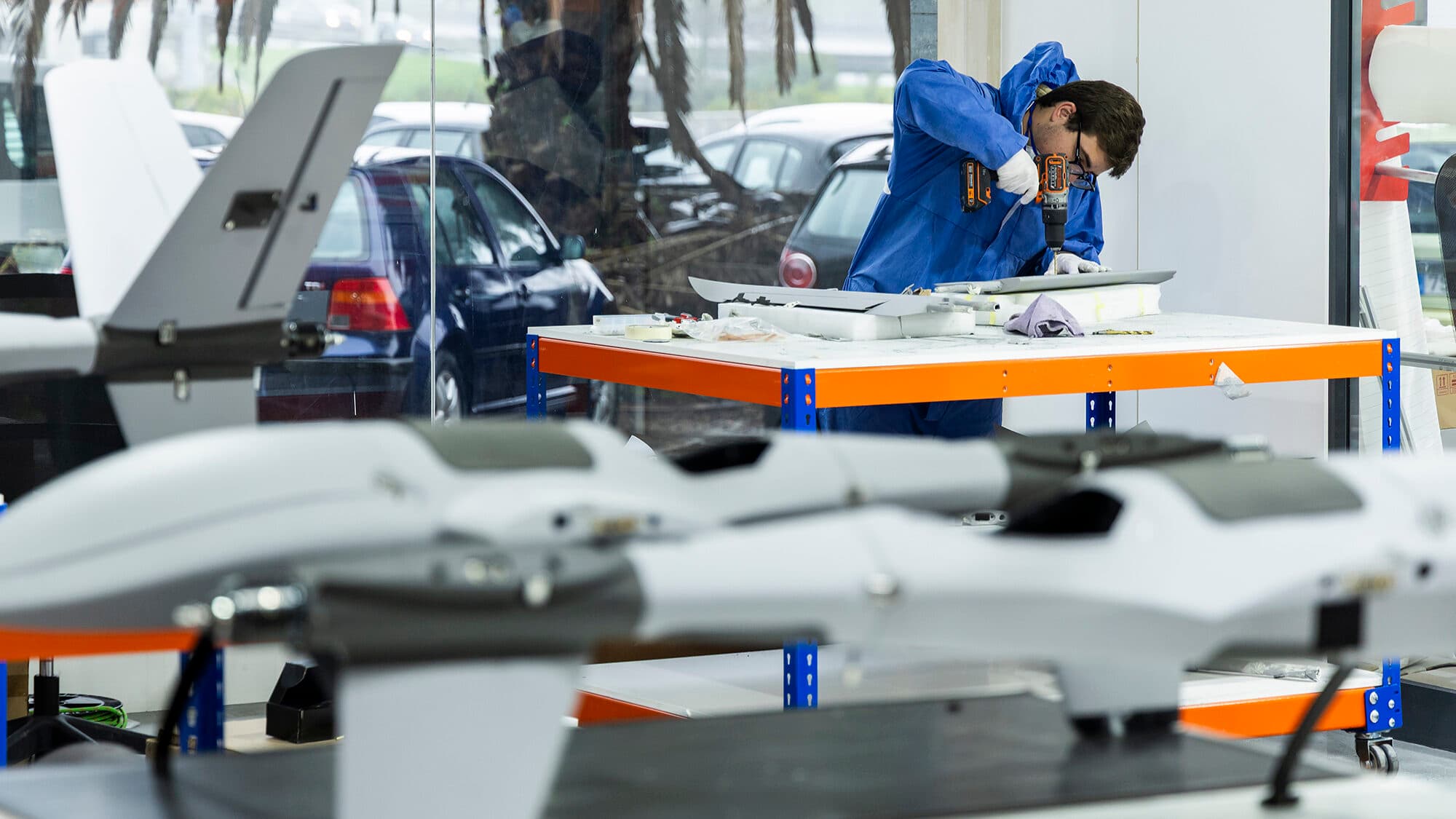
After Portugal’s Tekever became a unicorn, 2026 looks set to remain a liquid year for investors despite geopolitical uncertainties that are reshaping financial markets. Venture capital will continue to favour AI startups, but a growing emphasis on dual‑use and defence‑adjacent technologies means investors will weigh strong commercial upside against ethical, regulatory and geopolitical risks. The year will therefore be defined by opportunities for tech and defence crossover, active deal‑making, and increased scrutiny from policymakers and funds alike.

Portuguese technology company Tekever has secured a new contract in Canada that will see its autonomous drone systems deployed to help detect and monitor wildfires in Alberta. The development is The post Portuguese drone company Tekever wins Canada wildfire contract appeared first on Portugal Resident.
Portuguese and American officials discuss the strategic development and future of the Microelectronics Agenda.
Portugal is establishing a network of Blue Hubs to foster innovation and research within the maritime sector.

At the Diário de Notícias annual conference, the President of the Republic warned that countries that do not integrate new technologies will remain as “mere consumers”.

The President of the Republic stressed that “countries that know how to integrate these technologies into their companies and society will emerge stronger,” while “the others will be left waiting in the supermarket queue.”
Fujifilm Portugal reports a significant increase in revenue, reaching 60 million euros and outperforming the parent company's international growth rates.

Unicre has extended its collaboration with the Startup World Cup Portugal, pledging one million euros in funding for the winning startups.

The Semapa group has over one billion euros (1.2 billion dollars) available to invest and is exploring acquisition opportunities in Europe. The holding company controlled by the Queiroz Pereira family is considering purchases between 250 and 500 million euros (or even more, should the right opportunity arise), ...

Fujifilm Portugal reports an 8% increase in turnover, reaching 60 million euros for the year 2025.

Fujifilm Portugal's turnover increased by 8%, reaching 60 million euros in the 2025 fiscal year.
The event highlights the growing collaboration and technological partnership between the two nations.
Europe's digital geography is undergoing a profound structural shift. Historically dependent on the FLAP axis (Frankfurt, London, Amsterdam, and Paris), global data traffic is rapidly migrating south. According to DE-CIX, the European interconnection infrastructure giant, Southern Europe has transitioned from a peripheral zone to the continent's primary digital gateway. The Iberian Peninsula, in particular, is being hailed as the world's first 'distributed digital capital,' a decentralized network model supported by a highly complementary infrastructure triangle between Madrid, Barcelona, and Lisbon. This ecosystem now features over 100 data centres and 35 submarine cable systems, with Lisbon serving as a strategic entry point for transatlantic connections, including the EllaLink cable that links South America directly to Portugal, bypassing the need for data routing through the United States.

An analysis of Portugal's role and the contribution of the Minho region to the European Union's strategic plan for the semiconductor industry.

