Cybercrime: the new battlefront of criminal law
The 2025 Annual Internal Security Report highlights a 13.4% rise in cybercrime, noting that attacks are becoming more sophisticated and difficult for authorities to combat as technology evolves.

Latest news and stories about cybercrime in technology in Portugal for expats and residents.
The 2025 Annual Internal Security Report highlights a 13.4% rise in cybercrime, noting that attacks are becoming more sophisticated and difficult for authorities to combat as technology evolves.

A report from the Public Prosecutor's Office indicates that 81% of cybercrime investigations between 2023 and 2025 were archived, marking the lowest indictment rate among priority crimes.

Attacks carried out to verify the security of company and agency systems will now be pardoned. The Public Prosecutor's Office has released a guide for magistrates.

The organizations Nerlei-CCI and Startup Leiria are collaborating to address and mitigate cybercrime activities across Portugal and Spain.

Thousands of people are paying for tutorials that explain how to transform ordinary photographs into explicit images. Online, they are sold for little, or used to blackmail victims.

The excitement surrounding GTA VI is being exploited by cybercrime networks. There are fake Portuguese-language pages stealing data and money ahead of the release scheduled for November.

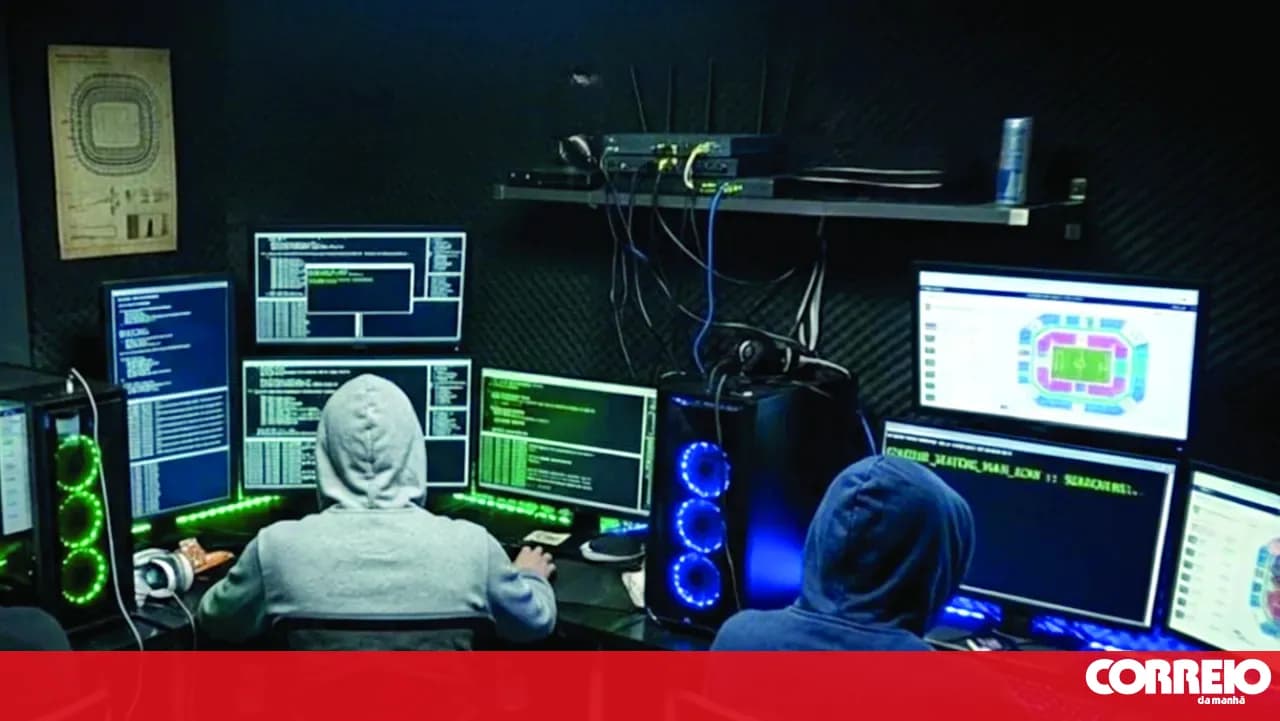
The World Cup does not just mobilise millions of fans and 48 national teams. It also sparks the interest of cybercriminals, who take advantage of the competition's media coverage to create fraudulent schemes.

A recorded message in English warns of a fake purchase and asks the user to press a key. The next step may grant remote access to the victim's computer.

Operation 'Saffron' involved the participation of 16 other European countries. Communication tool neutralised.

At issue is the “First VPN” service which, for “years on end”, was “a fundamental piece in almost all major cybercrime investigations supported by Europol”.

Portuguese authorities have participated in an international operation to take down a major cybercrime network.

Investigators know that there are means to control the situation.

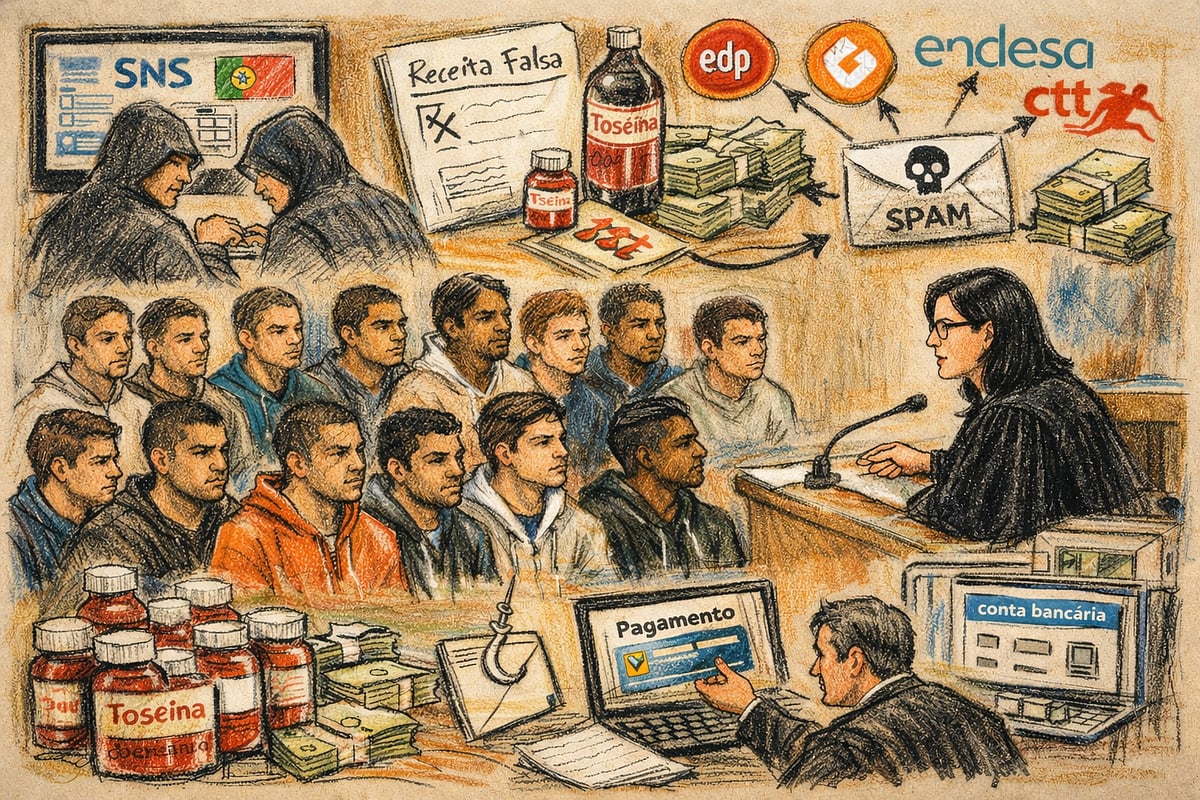
Eighteen defendants are on trial in Leiria for a complex cybercrime and fraud scheme involving the theft of personal data from the Social Security and National Health Service. The group, which included minors at the time, used platforms like Discord and Telegram to impersonate utility companies and pharmacies, issuing fraudulent medical prescriptions for controlled substances. During the first hearing, one of the defendants in preventive detention expressed remorse, citing his struggle with social isolation and his desire to move past the events that led to his arrest.

Hackers stole and leaked personal data from the European Commission's cloud.

Computer fraud was the crime that rose the most (29.1%), followed by unauthorised or illegitimate access (8.4%).

The Judiciary Police (PJ), through the National Unit for Combating Cybercrime and Technological Crime, arrested 18 individuals on Wednesday, March 25, strongly suspected of counterfeiting and using payment cards, computer fraud, and money laundering. The suspects, aged between 23 and 51, were detained during Operation 'Swipe and Cash' across the Greater Lisbon area, Almada, Setúbal, Torres Vedras, Aveiro, and Porto. The investigation began in November 2025 following a report from SIBS regarding suspicious transactions involving cards issued primarily in Southeast Asia. While the total attempted fraud reached nearly 1.9 million euros, the suspects successfully laundered over 500,000 euros. Authorities seized vehicles, cash, ammunition, ballistic vests, narcotics, and various card-skimming equipment.

Currently, it is the most reported type of crime in Portugal and one of the most difficult to detect.

International operation focused on combating cyber fraud, computer viruses, and ransomware, with Interpol currently investigating 110 more individuals.

The growing sophistication of these crimes, which include fraudulent calls, deceptive payment schemes, and fake platforms, is causing considerable economic losses and affecting confidence in the Portuguese digital economy.
INTERVIEW || After Europol warned of an increase in digital terrorism, and the SIS warned this Tuesday that an attack is underway to steal information from politicians and military personnel on WhatsApp or Signal, CNN Portugal spoke with Nuno Mateus-Coelho, an expert in cybersecurity and cyberterrorism, who explains the dangers for Portugal, especially for national SMEs.