Political deadlock breaks for Constitutional Court judge appointments
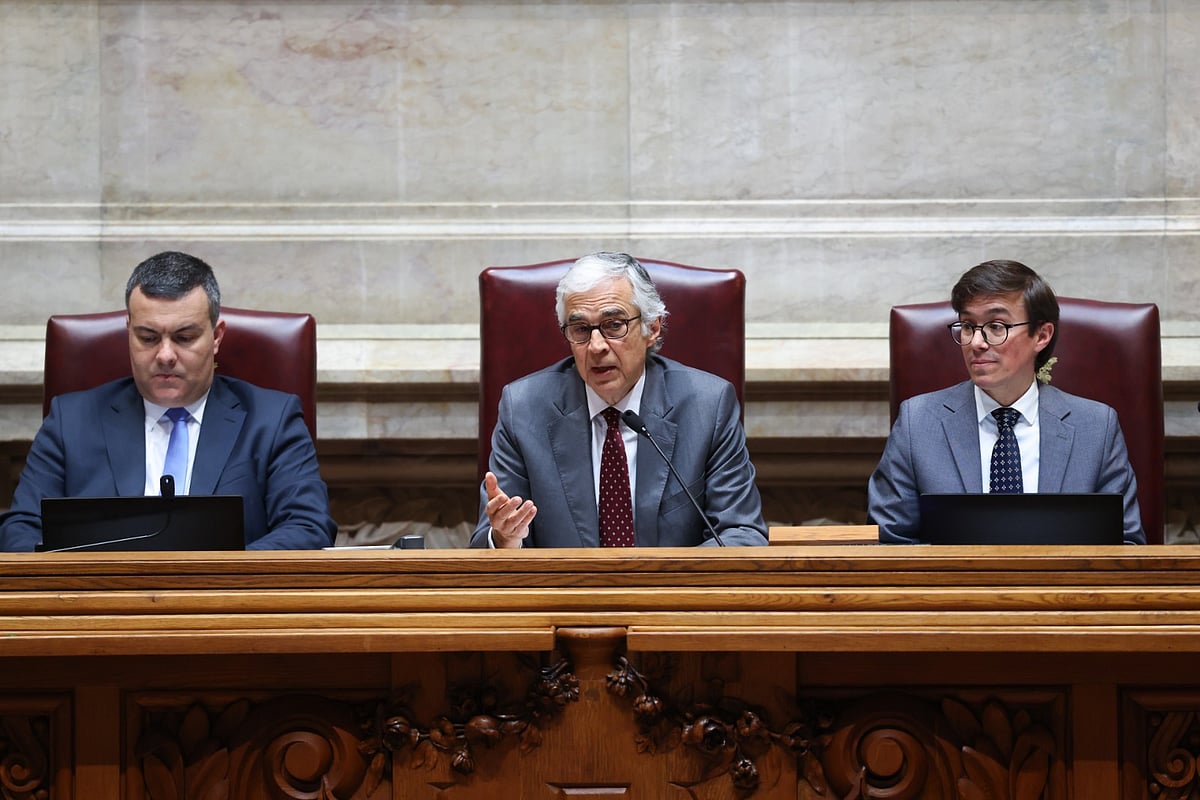
A deal between the Social Democratic Party (Partido Social Democrata or PSD) and Chega, with potential support from the Liberal Initiative (Iniciativa Liberal or IL), appears to have broken the deadlock over appointing Constitutional Court (Tribunal Constitucional) judges. The breakthrough follows pressure from the President's office to ensure the Council of State (Conselho de Estado) can meet with a full membership on April 17. Socialist Party (Partido Socialista or PS) members, including Ana Catarina Mendes, have criticized the arrangement, arguing that Chega should not have a seat on a body dedicated to upholding the Constitution.
Update: PSD and Chega form joint list for Council of State
Chega leader André Ventura announced a formal agreement with the PSD to present a joint list of candidates for the Council of State, effectively reducing the Socialist Party's representation on the advisory body. The deal also covers appointments for the High Council of the Magistracy (Conselho Superior da Magistratura) and includes progress on a new Nationality Law (Lei da Nacionalidade) to address recent court objections. Residents should note that this cooperation signals a significant shift in parliamentary dynamics between the center-right and the far-right.
The Constitutional Court (Tribunal Constitucional) is Portugal's highest court for constitutional review. Its primary role is to assess whether laws, decrees, and government actions comply with the Portuguese Constitution, and it has the power to strike down or suspend unconstitutional measures.
The court consists of 13 judges — 10 appointed by the Assembly of the Republic and 3 co-opted by the other judges. It also oversees the legality of political parties and their finances, verifies election results, and rules on the constitutionality of referendums.
The Constitutional Court is frequently in the news when opposition parties, the President, or the Ombudsman refer controversial legislation for review — such as labor reforms, housing laws, or immigration policy changes. Its rulings are final and binding.
The Council of State (Conselho de Estado) is the President's primary advisory body, composed of senior political figures including the Prime Minister and former presidents. It provides non-binding opinions on major issues such as dissolving parliament or declaring a state of emergency. Residents should note that the council acts as a stabilizing force during periods of political deadlock or institutional tension.
Ana Catarina Mendes is a Member of the European Parliament and a senior figure in the Socialist Party (Partido Socialista). She previously served as the Minister in the Presidency from 2022 to 2024, where she managed government coordination and parliamentary relations. Those following national politics should note her role in mediating high-level agreements between the country's major political parties.

André Ventura, born January 15, 1983, is a lawyer, academic, and Portugal's most prominent far-right leader. He founded Chega ("Enough") in 2019 after his PSD mayoral campaign attacked the Romani community. Chega surged from 1.3% in 2019 to 22.8% in May 2025, becoming parliament's second-largest party and making Ventura Leader of the Opposition.
His platform emphasizes immigration restrictions, law-and-order policies, constitutional reform, and contains inflammatory anti-Romani rhetoric that has triggered multiple discrimination convictions and investigations. Politically classified as far-right by international media, Ventura cultivates alliances with European far-right figures including Marine Le Pen and Santiago Abascal.
The Council of State (Conselho de Estado) is a constitutionally established advisory body that the President consults on major acts, such as dissolving parliament or declaring exceptional states. Five of its members are elected by the Assembly of the Republic, so a delay in those Assembly votes postpones the council’s full composition and can affect which voices formally advise the President.