Portugal is facing criticism for denying entry visas to at least 20 midwives from Africa and Asia who were scheduled to attend an International Confederation of Midwives congress in Lisbon. Organisers argue the decision prevents experts from regions with high maternal mortality rates from participating, while the Ministry of Foreign Affairs maintains that the visa process is rigorous and compliant with the Schengen Visa Code.
Residents in Lisbon are facing a total backlog for renewing their citizen card (Cartão de Cidadão), with no appointments currently available until 2027. The situation has created significant bureaucratic delays for those needing to update their primary identification document.
The Cartão de Cidadão (Citizen Card) is Portugal’s national identity card, introduced in 2007, used for in‑person ID and many online public services; it contains your civil identity data and supports digital authentication and signatures. It is issued to Portuguese citizens—foreign residents use a residence permit for ID—so non‑citizen expats should keep their passport and residence card for official matters.
Cultural mediators from the Agency for Integration, Migration and Asylum (AIMA) are striking at the Government headquarters in Lisbon to demand permanent employment status and salary equality, protesting the ministry's reliance on precarious labor.
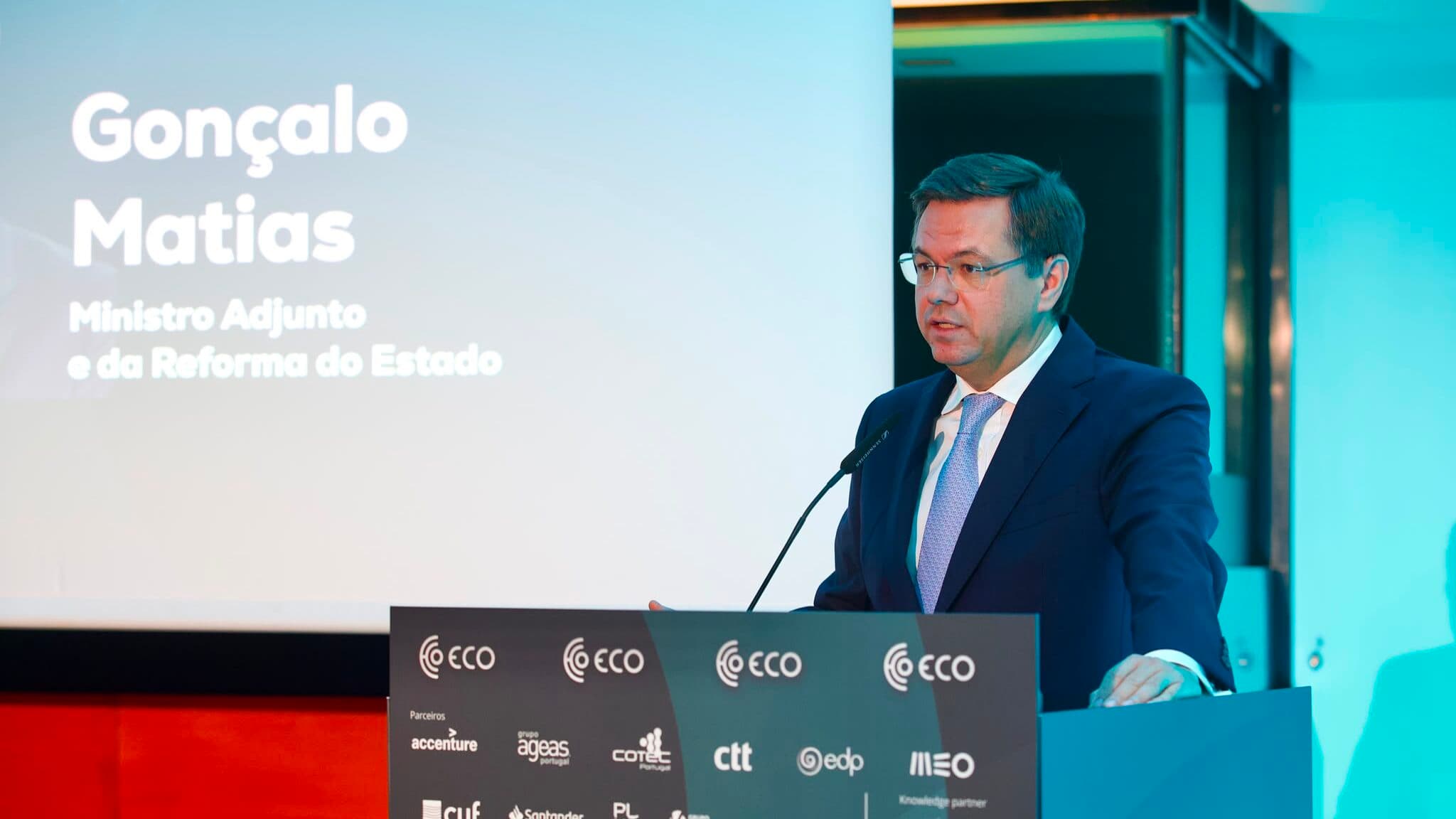
The Minister Assistant and for State Reform once again criticised the bureaucracy that characterises the Public Administration. At the .IA Conference, held by ECO this Tuesday at the Belém Cultural Centre (CCB), Gonçalo Matias complained about the delay in a simple kiosk purchase process, stating he hopes that the gradual introduction of artificial intelligence (AI) in...
A working group identified several problems in the application of the status, namely excessive bureaucracy, lack of communication, and the need for 'institutional coordination'.
The Lisbon Regional Council has requested an urgent audience with the President of the Republic to ask him to request that the Constitutional Court review the standards approved in the Code of Criminal Procedure on June 12.
Skip to main content Skip to navigation ! Woman walk down down a sunny street with one holding a sign saying 'midwives save lives'. People attend a Midwives March in Lisbon on 13 June, the day before the opening of 34th International Confederation of Midwives congress.
The economy remains low in productivity, argues Miranda Sarmento, while simultaneously highlighting its attractiveness to investors, namely the French.
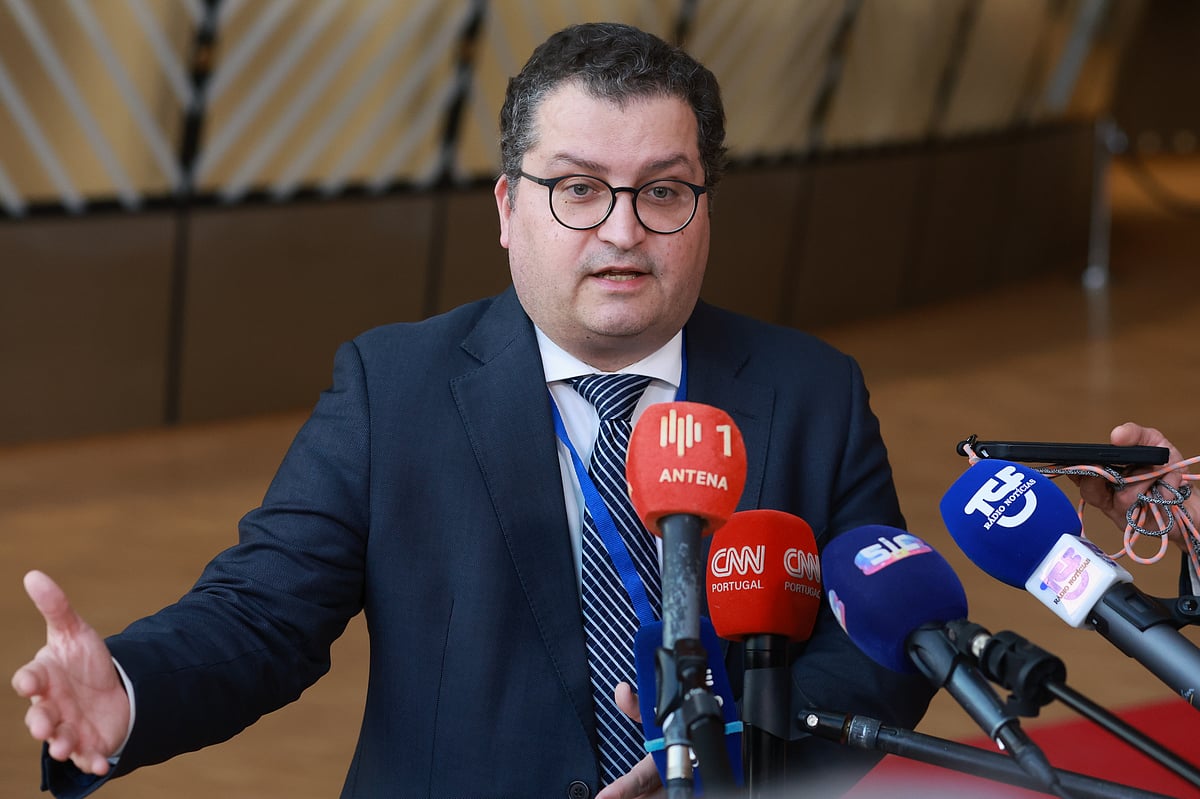
The Minister of Finance stated this Friday, June 19, that the Government will “move forward shortly” with the reform of tax justice, specifically with a review of tax rates. During a speech at the Franco-Portuguese Economic Conference in Lisbon, Joaquim Miranda Sarmento highlighted necessary measures to address the country's main constraints, namely in human capital, bureaucracy, and the labour market. Regarding fiscal simplification, he indicated that the reform of tax justice and tax litigation will proceed shortly, including a review of rates. Furthermore, he highlighted the reform of the State to “extinguish and reduce the number of entities, but above all to combat bureaucracy, and in those entities where” there is “perfect awareness that they are a bureaucratic problem, such as the APA [Portuguese Environment Agency], ICNF [Institute for Nature Conservation and Forests], IRN [Institute of Registries and Notaries], and CCDR [Commission for Coordination and Regional Development].” The minister also signalled the need to continue reducing marginal IRS (personal income tax) and IRC (corporate income tax) rates, noting that even though they are no longer the highest in the OECD, they are “still quite high.” For this year, Miranda Sarmento emphasized that, “despite all the difficulties,” it will be possible to achieve “growth of around 2% of GDP, well above the Eurozone average,” a balanced budget, and continued reduction of public debt. At this conference, focused on relations between Portugal and France, the minister listed examples of investments in Portugal, such as BNP Paribas and Natixis, projects which, as a whole, “are critical to the Portuguese economy.” The banking sector is “another success story,” he added, pointing out that “15 years ago the banks were in a very difficult situation; today they are resilient, well-capitalised, profitable, and proof of this was the purchase of Novo Banco by BPCE.” Miranda Sarmento: tax revenue shows that Portugal is doing better than people say. IRS and IRC reductions “are to be implemented,” guarantees the Secretary of State for the Budget.
The Portuguese government has denied entry visas to a group of midwives who were scheduled to participate in an international conference held in Lisbon.
Portugal has denied visas to at least 20 midwives from Africa and Asia who were travelling to attend an international conference in Lisbon aimed at saving millions of babies worldwide, organisers and guests reported today.
There is an emotional toll that does not appear in the statistics. Immigration sells the idea of a future, but often delivers a bureaucratic and lonely reality.
The Minister of Economy stated that the reprogramming carried out by the Executive was essential to make use of European funds, otherwise Portugal would have lost many millions of euros.
With the return law under discussion in committee and the nationality law about to be regulated, the Presidency decided to hear from various immigrant associations to learn about the bureaucracy at AIMA and the real problems on the ground.
The presidency has started a series of meetings to better understand the immigration landscape in Portugal. On Wednesday, May 20, representatives from Casa do Brasil, including president Ana Paula Costa and vice-president Cyntia de Paula, met at the Belém Palace. They presented a document to the President, António José Seguro, highlighting issues such as bureaucratic delays at AIMA, the risk of irregular status due to administrative failures, and concerns regarding xenophobia and the recognition of professional qualifications.
At issue is the fact that, since last year, the annual rotation includes positions that allow Public Prosecution magistrates to perform duties in several departments simultaneously.
AIMA aims to accelerate immigrant regularisation processes, which currently average between two and three thousand per day, totalling around 70,000 per month. Pedro Portugal Gaspar, president of the agency, announced plans to expand services nationwide to address delays, which he acknowledged as a form of 'violence' against migrants. While promising better local response capacity, he maintained that current queues are not comparable to those of the past. He also noted that rising immigration levels present integration challenges that require public understanding to maintain social cohesion. Complaints against AIMA rose by 37% in the first quarter.
At the DCIAP, management is worse than at the local grocery store. With prehistoric computers and shared folders, it takes three years to open an email. Apparently, justice is not blind, it is just really slow.
At the end of 2024, the DCIAP still lacked regulations and was not using the Citius system to process cases. The delays are sometimes absurd: evidence that took five months to travel from Madeira to Lisbon, three years to digitise documents, and two years to obtain laboratory results.
The Public Prosecution Service (MP) is operating in a state of “structural breakdown,” with a shortage of 160 prosecutors across the country, mostly in the first instance courts, thousands of cases assigned to each magistrate, and stalled proceedings, according to a union survey released today.
An inspection report on the Central Department of Investigation and Penal Action at the end of 2024 concluded that the Public Prosecution Service's largest investigation unit lacks internal regulations and is the only department not using the Citius system to process cases, contributing to systematic management failures. The scenario described is one of lack of control, with missed deadlines occurring regularly.
The leadership of the Casa do Brasil de Lisboa (CBL) attended a meeting between the presidents of Brazil and Portugal on Tuesday, April 21. Lula was received by António José Seguro at the Belém Palace. During the meeting, the CBL president addressed the contributions of the Brazilian community in Portugal and raised urgent issues, such as persistent difficulties with immigration service appointments. Contrary to community expectations, Lula did not publicly address recent changes to Portuguese immigration and nationality laws, focusing instead on the EU-Mercosur trade agreement and multilateral peace agendas. The CBL also expressed concern over the rise in racism and xenophobia.