16:00 — A complaint has been filed with the CNE by a citizen over statements made by the president of the regional government of Madeira
At 16:00, a citizen lodged a complaint with the National Election Commission (CNE) concerning remarks by the president of Madeira's regional government.

3pm — The CNE received a complaint about statements made by Miguel Albuquerque
At 3pm the National Election Commission (CNE) received a complaint concerning remarks made by Miguel Albuquerque.
Day of reflection: "It is abusive and obsolete"
It is a legacy of 25 April and of a democracy that was taking its first steps, but the day of reflection has become a restriction on freedom of expression. And Sócrates continues trying to halt the trial.

Reflection Day for a Vote Cremated by the State
Between invalid ballots and excluded citizens, Portugal shows that bureaucracy still weighs more than the voter's intention. We are witnessing the cremation of the most genuine democratic act: voting.

Parliament only established an internal whistleblowing channel in 2025
The system was only set up last year and provides for the handling of reports, anonymous or with the whistleblower identified, similar to arrangements in other public and private institutions and companies. It did not exist at the time of the alleged incident that has shaken Cotrim's campaign.
Jorge Pinto urges people to vote but admits choosing the "second or even fifth option, out of fear"
The candidate backed by Livre insists he did not withdraw nor call for votes for António José Seguro, but says it is “legitimate” to vote out of “fear”. He asks voters to listen to who will defend and who will attack the Constitution. He also argues that the President should condemn the cases of torture in Lisbon police stations and summon the high-ranking officers of the PSP and GNR.

Cotrim's fury, the end of the campaign and 'torture' in the PSP
On the final day of the campaign, candidates try to attract undecided voters and retain their electorate. Cotrim accuses journalists of 'killing' him over the alleged harassment case. And PSP officers are suspected of carrying out torture sessions.

Wake-up: Casa Pia accused of hiding Russian money. The campaign that upended the opinion polls
Casa Pia is accused of concealing Russian funds. Also covered: the campaign that changed/upended the opinion polls.

What if Cotrim-Ventura wins on Sunday?
It is important that everyone who identifies with the essentials of our Constitution, and with the rights, freedoms and guarantees it embodies—both civil and social—recognises the danger of this second round. Opinion by Susana Peralta

Ventura dedicates his birthday to veterans and launches offensive against Gouveia e Melo
The Chega candidate said veterans prefer him over the former head of the Navy, and suggested in Ponte de Lima that the PS and PSD tried to limit the diaspora's vote. “To hell with Montenegro,” he said on his birthday.
Leitão and Cotrim accuse the media of fuelling controversy over allegations of harassment: "Do you realise what you've done to my life?"
After a campaign event in Santo Tirso, journalists positioned themselves, as always, to hear the candidate, but it was Cotrim de Figueiredo who set the pace of the moment.
Tomorrow is a media blackout
The media are barred from covering the election campaign tomorrow, but last Sunday the world did not end with the campaign in full swing during early voting.

Electoral process and protection of personal data: rights that must not be overlooked
The electoral process inevitably involves large-scale data processing, but the principles applicable in this area must not be forgotten or relativised.

The case left a mark and unsettled Cotrim de Figueiredo. We've moved from a phase of assertion to one of justification
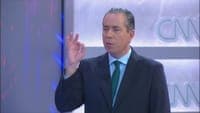
CNN Portugal commentator Rui Calafate asks whether the rise of the candidate backed by IL will be affected by an allegation of harassment made by a former adviser to the Liberals.
The presidential embarrassment
The presidential campaign skirted constitutional debate, focusing on policy and partisan positioning more suited to a head-of-government race than a head-of-state contest. António José Seguro — the Socialist-backed candidate — presents himself as the moderate alternative and argues the Constitution need not be revised, only respected; meanwhile Luís Montenegro will run as his party’s candidate. The piece argues the Republic needs a president who acts as a moderator, respects institutional limits and upholds the separation of powers.

Jorge Pinto endorsement flip‑flop fuels confusion
Reports differ over Jorge Pinto’s final campaign messages: RTP and Observador say he urged voters to back António José Seguro before reversing course and criticising journalists, while other outlets quote Pinto denying he explicitly urged a vote. António José Seguro welcomed what he described as a vote‑concentration move, but the sequence of statements and retractions has created uncertainty in the final stretch of campaigning. Undecided voters and local campaign teams should watch for clarifications that could affect last‑minute tactical voting.
The Socialist Party (Partido Socialista or PS) is Portugal's main centre‑left, social‑democratic party that has been one of the country’s largest parties and has led national governments since 2015 under António Costa. Its decisions shape taxation, housing, health and immigration policies that directly affect residents and expats living in Portugal.
Tactical voting means choosing a less-preferred candidate to achieve a strategic outcome—for example concentrating support to ensure a preferred candidate reaches the second round (segunda volta) or to block a rival. Party leaders urge it when they want to avoid splitting votes among similar candidates and increase the chance of a favourable runoff result.

RTP (Rádio e Televisão de Portugal) is Portugal's state-owned public service broadcaster, operating since 1935 (radio) and 1957 (television). It runs 8 television channels (including RTP1, RTP2, RTP3) and 7 radio stations (Antena 1, 2, 3), plus international services reaching Portuguese diaspora worldwide. Funded by a broadcasting tax on electricity bills and advertising revenue, RTP serves as Portugal's cultural reference, providing quality news, education, and entertainment. Its archive represents "irreplaceable heritage in Portuguese collective memory", and it pioneered online streaming with RTP Play in 2011. RTP connects "Portugal and the Portuguese to themselves, to each other, and to the world"
Statement in the morning, reaction shortly afterwards: an issue troubling Cotrim de Figueiredo
On the penultimate day, the alleged sexual harassment case once again marked João Cotrim de Figueiredo's campaign. In the morning, a former adviser to Iniciativa Liberal issued a statement saying the incidents were reported to the party in 2023. The candidate says he is deeply upset by the matter and claims he is the victim of a character assassination with the complicity of journalists.

Former aide says she reported harassment in 2023; Cotrim criticises journalists
The candidate for Belém accuses the media of echoing an allegation of sexual harassment, which he and the party he once led deny having known about.

'Do you have any idea what you've done to my life?': Cotrim confronts journalists over sexual harassment allegation from a former aide
The presidential candidate says the media should 'look into the nature of the complaint'.
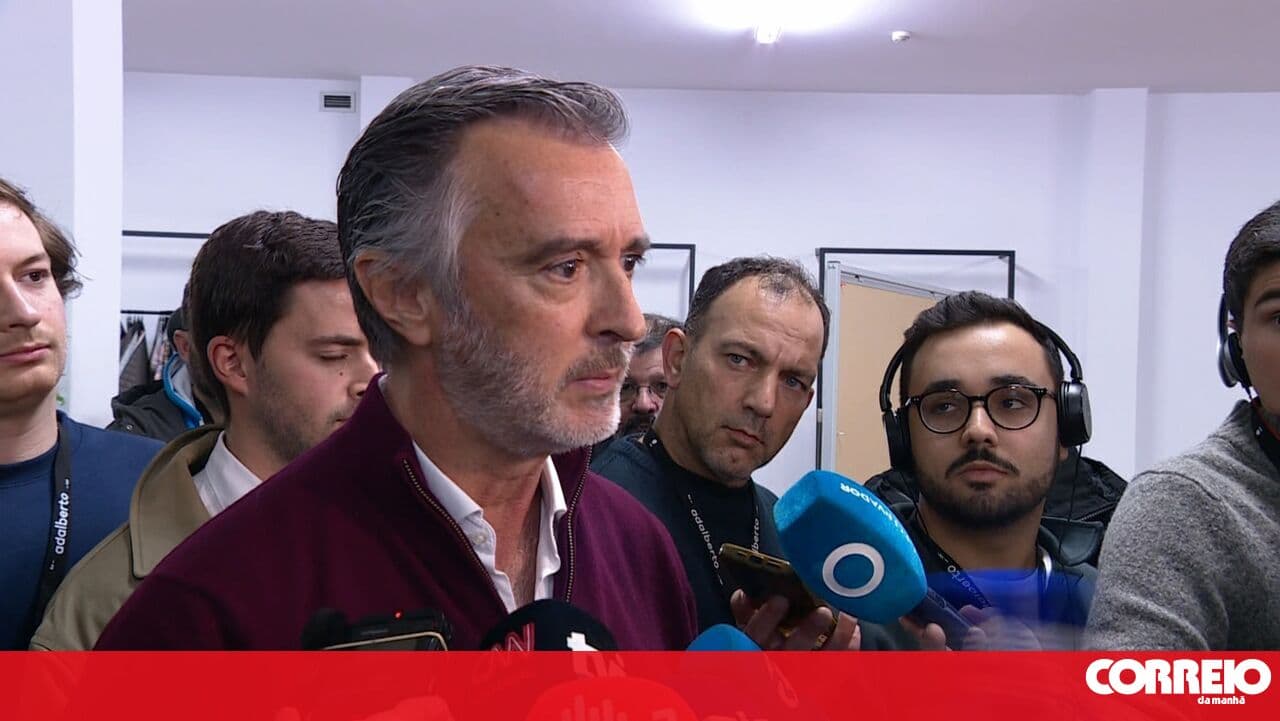
Sexual harassment: Who will Cotrim file the complaint against?
The candidate for Belém insisted he had no knowledge of any internal complaint within the party, despite an alleged internal complaint having been lodged in 2023.

Cotrim de Figueiredo's dark week
In under 24 hours Cotrim de Figueiredo’s campaign was rocked by two controversies — a dispute linked to Ventura’s place in the second round and an allegation of harassment — prompting intense media and commentator reaction. A Catholic University poll that places Cotrim third, despite his insistence he can contest the second round, provided immediate relief and helped dissipate some of the political damage. Commentators including Miguel Santos Carrapatoso, Carlos Rodrigues and Bruno Batista framed the episode as a pivotal, potentially career-defining moment: Rodrigues argued Cotrim never sought the presidency, while Batista called the previous day a disastrous political mistake. The net effect is a campaign bruised but not decisively derailed, with the poll softening public fallout even as scrutiny and debate continue.

The harassment allegation and second-round scenarios: the day that shook Cotrim's campaign
João Cotrim de Figueiredo’s campaign, which had been gaining momentum, suffered a serious setback after a strategic misstep on second-round strategy and the resurfacing of a harassment allegation on social media. By not ruling out support for Ventura, Cotrim exposed himself to attacks and fractured the narrative of steady progress; the harassment allegation — reportedly known within Iniciativa Liberal for two years — compounded the damage and prompted him to decry ‘low‑level’ and ‘dirty’ politics. The episode shifted the campaign’s focus onto Cotrim personally, energised opponents and risked undoing recent gains as rivals consolidated backing ahead of a possible second round.
Related videos

27m
Portugal Resident •
Presidential harassment, is PM autistic & eco hopes crushed? – Natasha Donn's News Review – Ep.7
27m
Portugal Resident •