Portuguese defy distance to vote in person in London
Several Portuguese travelled around two hours to vote in the presidential elections at the Consulate-General in London this morning, where there was a noticeably large turnout; they complained about the lack of an option to vote remotely.

More than 21% of electors have already voted: 'We hope this increase indicates greater voter participation compared with 2021'
André Wemans, spokesman for the National Elections Commission (CNE), says Sunday's voting is proceeding “normally”, despite some “disinformation” on social networks about how to vote.

The highest abstention occurred five years ago during the pandemic
COVID-19 and the automatic registration of Portuguese citizens abroad contributed to increasing the abstention rate in the presidential election, with 60.76% of registered voters abstaining in 2021.
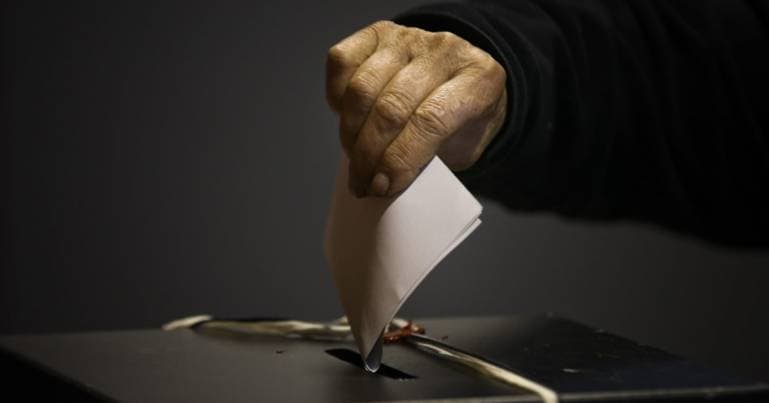
Voting in the presidential election takes place at diplomatic missions
Thousands of voters abroad must travel in person to consulates and embassies to vote in the presidential election.
Emigrants have to travel hundreds of kilometres to vote: 'No love of country can withstand it'
Many emigrants are effectively disenfranchised because presidential voting is strictly in person, forcing citizens abroad to travel hundreds of kilometres to reach polling stations. As a result, abstention among the diaspora consistently exceeds 90%. The practical burdens—time, cost and mobility—raise equity and representation concerns, skew electoral participation towards residents and those with resources to travel, and may distort mandates. The situation highlights a policy trade‑off between electoral integrity and accessibility and strengthens arguments for reforms such as postal ballots, expanded consular voting, secure electronic options or mobile polling. Any reform would need to weigh logistical complexity, security and public trust against the democratic imperative to include citizens abroad.

Emigrants travel hundreds of kilometres to vote abroad
Reporting from Público finds many emigrants must travel hundreds of kilometres to reach Portuguese diplomatic missions to vote, using consulates (consulados) for passports, citizen cards and electoral participation. The piece profiles voters who combine document services and ballots at consular posts and highlights the travel burden for residents abroad who lack nearby polling locations. Those living overseas should check their designated consulate and travel plans well ahead of polling days.
A consulate is a local office representing a foreign country in a city outside the capital that provides consular services such as passport renewal, notary services, help for citizens in distress and often handles voting arrangements for nationals abroad. For example, Brazilians in Portugal commonly use Brazilian consulates (or the embassy) to register and vote in elections, so check which consular district covers your address before you travel to vote.
Reflection Day for a Vote Cremated by the State
Between invalid ballots and excluded citizens, Portugal shows that bureaucracy still weighs more than the voter's intention. We are witnessing the cremation of the most genuine democratic act: voting.

Brazilians must use Portuguese consulates or embassy to vote
Público reports that Portuguese citizens living in Brazil who want to vote in Portugal's presidential election must attend Portuguese consulates (consulados) or the embassy (embaixada) in Brazil to cast their ballot. The note highlights consular voting procedures for expatriates rather than postal or remote voting alternatives. Portuguese nationals abroad, especially dual nationals in Brazil, should confirm their consulate's opening hours and required ID before election day.
A consulate is a local office representing a foreign country in a city outside the capital that provides consular services such as passport renewal, notary services, help for citizens in distress and often handles voting arrangements for nationals abroad. For example, Brazilians in Portugal commonly use Brazilian consulates (or the embassy) to register and vote in elections, so check which consular district covers your address before you travel to vote.
An embassy is a country’s main diplomatic mission located in another country’s capital; it manages political relations, represents its government and offers consular services to citizens. Embassies handle high‑level diplomatic tasks and also coordinate consular activities (like voting or large‑scale citizen services), while local consulates in other cities provide more routine, day‑to‑day assistance.

19:00 — In a second round, the ballot paper with 14 names will be used only in exceptional cases
At 19:00: Authorities say that if a second round is necessary, the ballot paper listing 14 candidates will only be used in exceptional circumstances.

6pm — Second‑round ballot papers will include only the names of the two highest‑polling candidates
The National Election Commission clarifies that ballot papers for the second round will be printed and distributed containing only the two candidates, and assures that any contrary information is false.

Second-round ballot papers will list the names of two candidates
The National Election Commission (CNE) says there could be an “exceptional situation”, notably when ballot papers are not received in time at some location in the world.

Jorge Pinto urges people to vote but admits choosing the "second or even fifth option, out of fear"
The candidate backed by Livre insists he did not withdraw nor call for votes for António José Seguro, but says it is “legitimate” to vote out of “fear”. He asks voters to listen to who will defend and who will attack the Constitution. He also argues that the President should condemn the cases of torture in Lisbon police stations and summon the high-ranking officers of the PSP and GNR.

Portuguese emigrants in the US report difficulties voting in the presidential election
In the 2021 presidential election, abstention among Portuguese voters registered abroad stood at 98.12%, a higher figure than in the 2016 election.

Cotrim's fury, the end of the campaign and 'torture' in the PSP
On the final day of the campaign, candidates try to attract undecided voters and retain their electorate. Cotrim accuses journalists of 'killing' him over the alleged harassment case. And PSP officers are suspected of carrying out torture sessions.

What if Cotrim-Ventura wins on Sunday?
It is important that everyone who identifies with the essentials of our Constitution, and with the rights, freedoms and guarantees it embodies—both civil and social—recognises the danger of this second round. Opinion by Susana Peralta

The presidential embarrassment
The presidential campaign skirted constitutional debate, focusing on policy and partisan positioning more suited to a head-of-government race than a head-of-state contest. António José Seguro — the Socialist-backed candidate — presents himself as the moderate alternative and argues the Constitution need not be revised, only respected; meanwhile Luís Montenegro will run as his party’s candidate. The piece argues the Republic needs a president who acts as a moderator, respects institutional limits and upholds the separation of powers.

Cotrim de Figueiredo's dark week
In under 24 hours Cotrim de Figueiredo’s campaign was rocked by two controversies — a dispute linked to Ventura’s place in the second round and an allegation of harassment — prompting intense media and commentator reaction. A Catholic University poll that places Cotrim third, despite his insistence he can contest the second round, provided immediate relief and helped dissipate some of the political damage. Commentators including Miguel Santos Carrapatoso, Carlos Rodrigues and Bruno Batista framed the episode as a pivotal, potentially career-defining moment: Rodrigues argued Cotrim never sought the presidency, while Batista called the previous day a disastrous political mistake. The net effect is a campaign bruised but not decisively derailed, with the poll softening public fallout even as scrutiny and debate continue.

The harassment allegation and second-round scenarios: the day that shook Cotrim's campaign
João Cotrim de Figueiredo’s campaign, which had been gaining momentum, suffered a serious setback after a strategic misstep on second-round strategy and the resurfacing of a harassment allegation on social media. By not ruling out support for Ventura, Cotrim exposed himself to attacks and fractured the narrative of steady progress; the harassment allegation — reportedly known within Iniciativa Liberal for two years — compounded the damage and prompted him to decry ‘low‑level’ and ‘dirty’ politics. The episode shifted the campaign’s focus onto Cotrim personally, energised opponents and risked undoing recent gains as rivals consolidated backing ahead of a possible second round.
Third-class Portuguese citizens
The article argues that the current presidential election process effectively disenfranchises some Portuguese citizens living abroad, meaning the incoming President will not represent all nationals. It analyses practical and legal barriers facing the diaspora, the democratic and legitimacy implications of unequal voting access, and points to reforms (expanded consular services, remote voting, legislative change) needed to ensure equal political participation for expatriates.

Vera and Lourenço will only be able to vote if there is a second round — and it's because of the day they were born
Polling and electoral data indicate a high probability of a second round in the upcoming Portuguese presidential election — an uncommon outcome in Portugal’s recent democratic history. If a run-off is confirmed, many young people who turn 18 between the first and second rounds (including those identified as Vera and Lourenço) will only be eligible to vote in the second round, because eligibility is determined by age on each voting date. The situation highlights how timing and legal cut-offs can affect youth participation in closely scheduled elections.

Attention, voters: registrations for early voting in the presidential election end today
Registrations for early voting in the presidential election on 18 January close this Thursday. Voters registered in the national territory who opt for early voting will cast their ballots on 11 January; registrations can be completed online at www.votoantecipado.pt or by sending a letter to the General Secretariat. The deadline is final, so eligible voters — including citizens abroad who qualify under the rules — should register now to ensure their participation. The short deadline raises potential administrative and turnout implications for campaign planning and electoral logistics.

Transparency of presidential candidates: heightened duty or invasion of private life?
This analysis examines how demands for transparency from presidential hopefuls in the run-up to the 18 January election have become a tactical weapon between rivals. It explores the tension between legitimate public interest in candidates’ backgrounds and the risk of intrusive exposure of private life, reviews the legal and ethical boundaries, and argues for clearer, proportionate rules and safeguards to balance accountability, privacy and fair campaigning.

From statutes of limitations to the President's intervention: what do the candidates think about justice?
Justice is a central theme in the campaign of the five leading presidential candidates ahead of the 18 January election. Proposals range from Luís Marques Mendes’s call for structural reform, faster proceedings and cross‑institutional pacts to modernise courts, to competing ideas on statutes of limitations and the scope of presidential intervention in judicial matters. The debate frames trade‑offs between efficiency and safeguards, and highlights the need for parliamentary and judicial buy‑in to implement meaningful legal and procedural change.
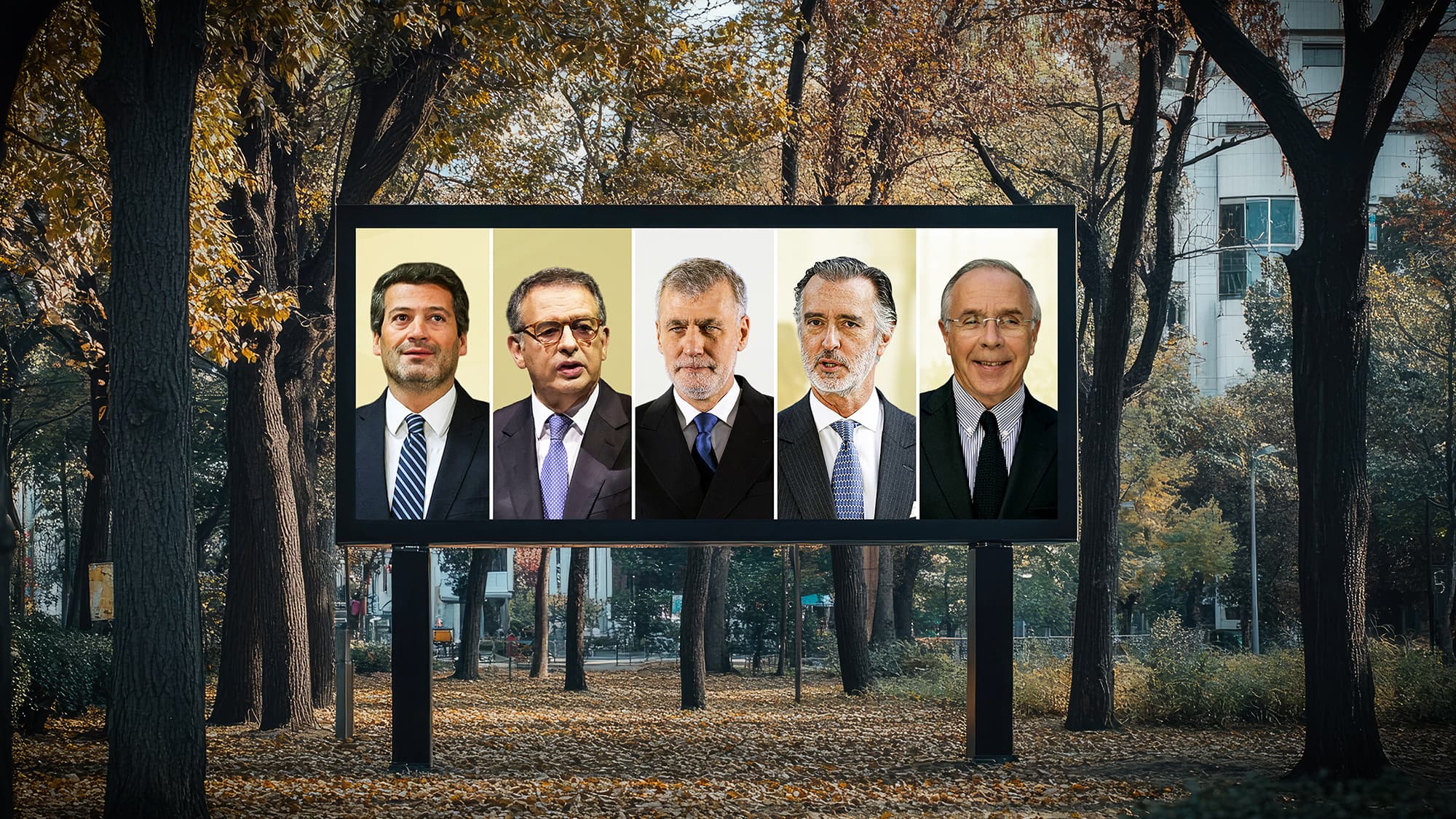
2026, the year of (un)expected political stability
São José Almeida argues that political stability in Portugal in 2026 is not guaranteed: the next occupant of Belém Palace may refuse to follow Marcelo Rebelo de Sousa’s de facto rule that a rejected State Budget should automatically lead to elections. That shift in presidential interpretation would alter the incentives around budget votes, policy-making and election timing, introducing renewed uncertainty into the political landscape.

5am presidential update: You can now apply to vote early
Applications for advance (early) voting in the presidential election are now open. Allowing voters to request advance voting is likely to improve accessibility and convenience—potentially raising turnout among busy voters and expatriates—but also places new demands on election administration. Clear communications on eligibility, registration deadlines and verification procedures, plus monitoring of uptake and administrative capacity, will be important to assess the policy’s effectiveness and integrity.
Related videos

27m
Portugal Resident •
Presidential harassment, is PM autistic & eco hopes crushed? – Natasha Donn's News Review – Ep.7
27m
Portugal Resident •