Once again, our characters are dealing with the stumbling blocks of the Portuguese language. Bibi learns in practice that starting over is just trying again. From 'bondinho' to 'elétrico', from a shy accent to the right word, the Kids from the Bridge celebrate every small victory of daily Luso-Brazilian life. Every immigrant knows this dance of words – and every success is a reason for pride. DN Brasil is a section of Diário de Notícias dedicated to the Brazilian community living in or planning to live in Portugal. The texts are written in Brazilian Portuguese. Kids from the Bridge - red card for racism. Kids from the Bridge - Letter to the sun.
By prioritising authentic communication over rigid memorisation, the school has built a reputation for its hands-on approach: learning by doing! A focus on natural fluency Central to this success is The post Bridging the language gap – nearly 30 years of Portuguese excellence appeared first on Portugal Resident.
Cuddle and snuggle are very difficult to translate, but the Portuguese language is rich, cool, and cheeky, so it is worth experimenting. A chronicle by Miguel Esteves Cardoso.
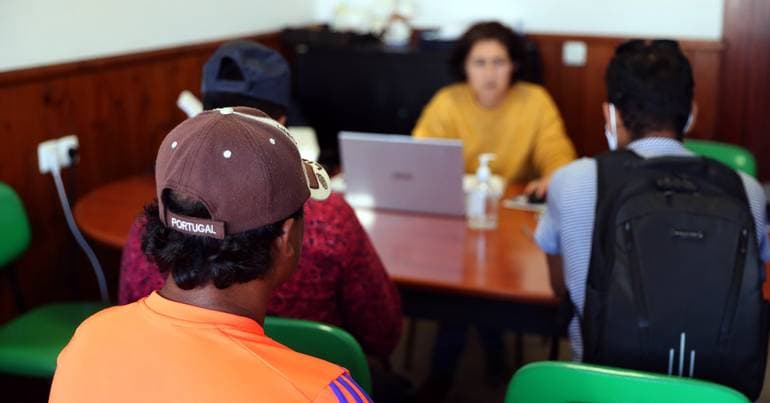
The Calouste Gulbenkian Foundation will allocate a total of €2.5 million to support migrant integration programmes. The “Gulbenkian Integration Initiative (2026-2027)” is open for applications until April 10. In an interview with DN, Pedro Calado, director of the Civil Society Fund, states that despite being a polarising topic today, this is a way to honour the legacy of the foundation's founder, who was a refugee and lived in Portugal. He wrote, “I found the peace I so needed” in 1942. Calado highlights a deep connection between the willingness to discuss immigration and the founder's legacy, noting that the initiative responds to a profound structural transformation in Portuguese society. He cites the increase in people seeking to live in Portugal and the real challenges this poses to public institutions and services. The project aims to mobilise resources and strengthen responses that promote fundamental rights and create effective conditions for inclusion. Calado emphasises the need for action, stating that the foundation recognises the importance of integrating those who live and work in Portugal. The supported projects may include Portuguese language learning, civic education, labour market integration, access to health and education, and the development of personal and professional skills. The foundation's vision is based on the belief that a fairer society is built through practices that promote the inclusion of all communities, particularly immigrants. Calado asserts that immigration is an unavoidable aspect of contemporary Portuguese society, essential for economic functioning and cultural enrichment. He warns of the costs of non-integration, such as territorial marginalisation and social fragmentation. He expects active participation from the host community, encouraging Portuguese citizens to be proactive in integration policies. Ultimately, he hopes to see a more capable Portuguese society that embraces diversity and fosters mutual trust and participation opportunities.
So, is learning Portuguese difficult or not? Marco Neves also discusses an Alentejo regionalism and clarifies whether we can end sentences with prepositions.
Amália demonstrates “a robust command of specific language skills”, with “good understanding of complex utterances and production of coherent text, appropriate grammar and register”, the report says.