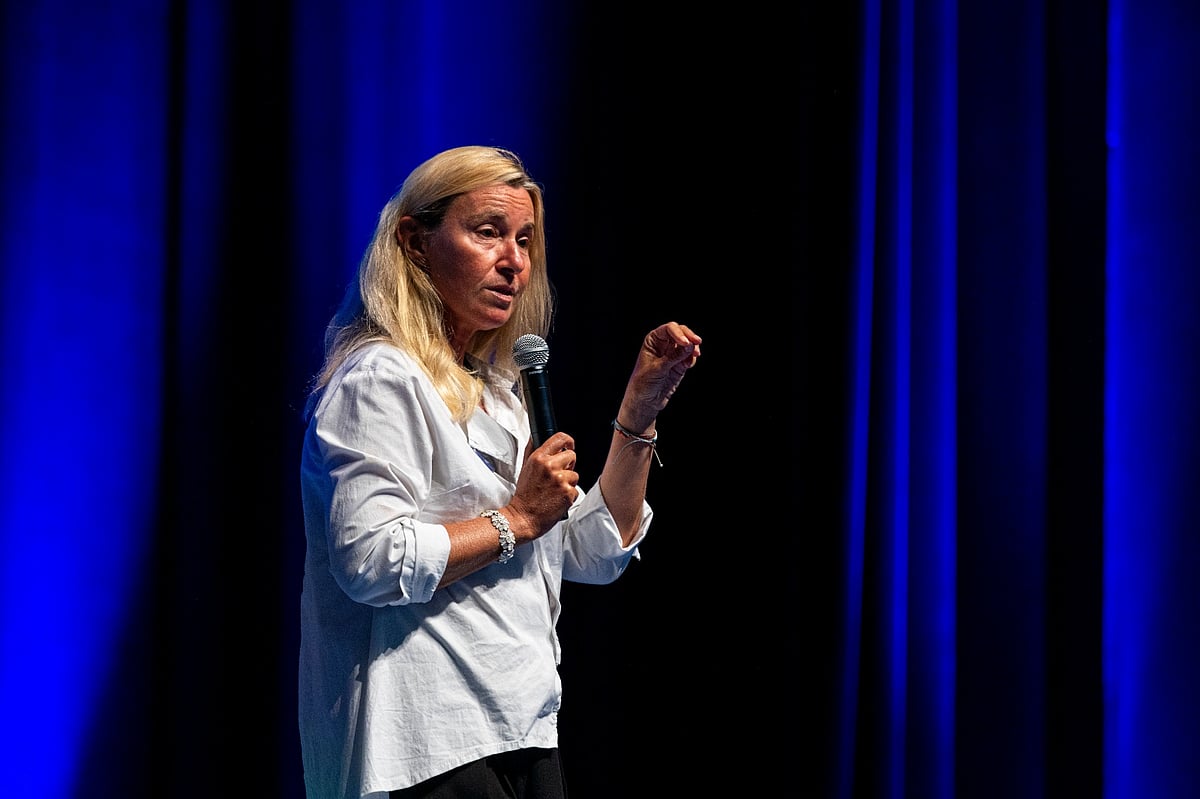
European Commissioner Maria Luís Albuquerque has highlighted her focus on improving financial literacy and strengthening consumer protections across the European Union. In a recent interview, she emphasized the importance of creating accessible investment opportunities for small savers and advocated for targeted, temporary measures to support vulnerable households and businesses during the ongoing energy crisis.
Maria Luís Albuquerque is serving as a European Commissioner and in the story she argued for strengthening supplementary pensions to diversify retirement income and increase the role of insurers as institutional investors. She previously served in national government as Portugal's finance minister (2013–2015), so her comments matter for pension policy discussions in Portugal and at EU level.
The Draghi Report's ambitions force Europe to confront uncomfortable realities: it is falling significantly behind global competitors. The analysis argues that the ‘race’ has been underway for years and that closing the gap requires urgent, active policy choices — including structural reforms, targeted investment and a renewed focus on competitiveness across the single market.
The Spanish Prime Minister guarantees that the government will use all possible resources to ensure the security of Ceuta. Furthermore, the Secretary-General of the PS admits he is not afraid of elections.
I promised to return to the topic I developed last week: the creation of the digital euro, European strategic autonomy, the risks to commercial and cooperative banking, the threats from the US administration, and the presence of a Portuguese unicorn in the revolution launched by Lagarde's ECB. I begin by reaffirming my surprise at the little relevance given by the media to the European Parliament's approval of a European payment system which, if all goes well and receives a similar position from the Council and the Commission, will resolve our dependence on MasterCard, Visa, and other American companies in the European space. Trump has not reacted directly, but behind the diplomatic and economic scenes, the pieces have begun to move. There are veiled threats of tariff increases and cuts in support for those who dare to affront. It is poker time, where each player patiently waits for the revelation of the suits held in each hand. It is necessary, I would say mandatory, to understand that we Europeans are not the only ones moving on this matter. One of the greatest assets of Brazilian diplomacy, led by President Lula, is how he has used the technological success of PIX as a political weapon, a Brazilian payment system being analysed by BRICS members, including China, Russia, and India. BRICS Pay, if realised, would allow for a new payment system that would change, like never before, the assumptions of a financial world anchored in the strength of the dollar. I return to the digital euro. There are many issues to resolve, questions that arise, doubts. Many colleagues are frightened by the possibility that the virtual will change the rules of the game and harm commercial and cooperative banking. They fear 'Big Brother' having all our data available, as if they did not already. I am not in that group. I am optimistic about all processes that streamline and make access more convenient for people. What is seen as a problem can be good news... the need for modernisation will increase security and deepen a relationship of trust and proximity that has defined cooperative members for over a century. We will be what others cannot be, what they have already given up on being; we will have better conditions to execute what distinguishes us. The virtual is not a topic for the future, it is already the present, and tomorrow it will already be the past. Europe is an old place, but the place where one still lives best, the place where Human Rights are most defended. There are dangers on the path, but opportunities to build new hopes, words, and borders. The choice of the Portuguese unicorn Feedzai to lead the fraud protection mechanism for the digital euro is extraordinarily relevant. Nuno Sebastião's company, born in a cubicle in Coimbra and now valued at over two billion dollars, is on the front line of the security of the future of European money, of our money. There is no limit to the dream when it is grounded in knowledge, ambition, and hard work. The greatest pride in so many Portuguese who dare to continue being global sailors and ghost hunters.
The Portuguese government “maintains the political will” to submit a joint bid with Spain to host one of the seven AI Gigafactories that the European Commission will fund. The goal is to create “a major Iberian project with a European dimension,” the Ministry of State Reform reports in a note marking the official launch of the tender.
German Chancellor Friedrich Merz has advocated for cuts of “several hundred million euros” to the European Union (EU) budget proposal presented by Brussels, deeming the plan to increase the bloc's institutional staff by 2,500 people “unacceptable” and “unbalanced.” “We need a budget project with cuts in all areas...
Portugal will debut as host of the European Defence Agency's HEDI-OPEX26 campaign. The Chief of Staff of the Army acknowledged the recognition of military innovation given to Portugal.
European cultural figures, birds, nature, or iconic buildings. There are ten design proposals for the new series of euro banknotes, and Europeans are invited to vote for their favourites on the European Central Bank's website until 21 September.
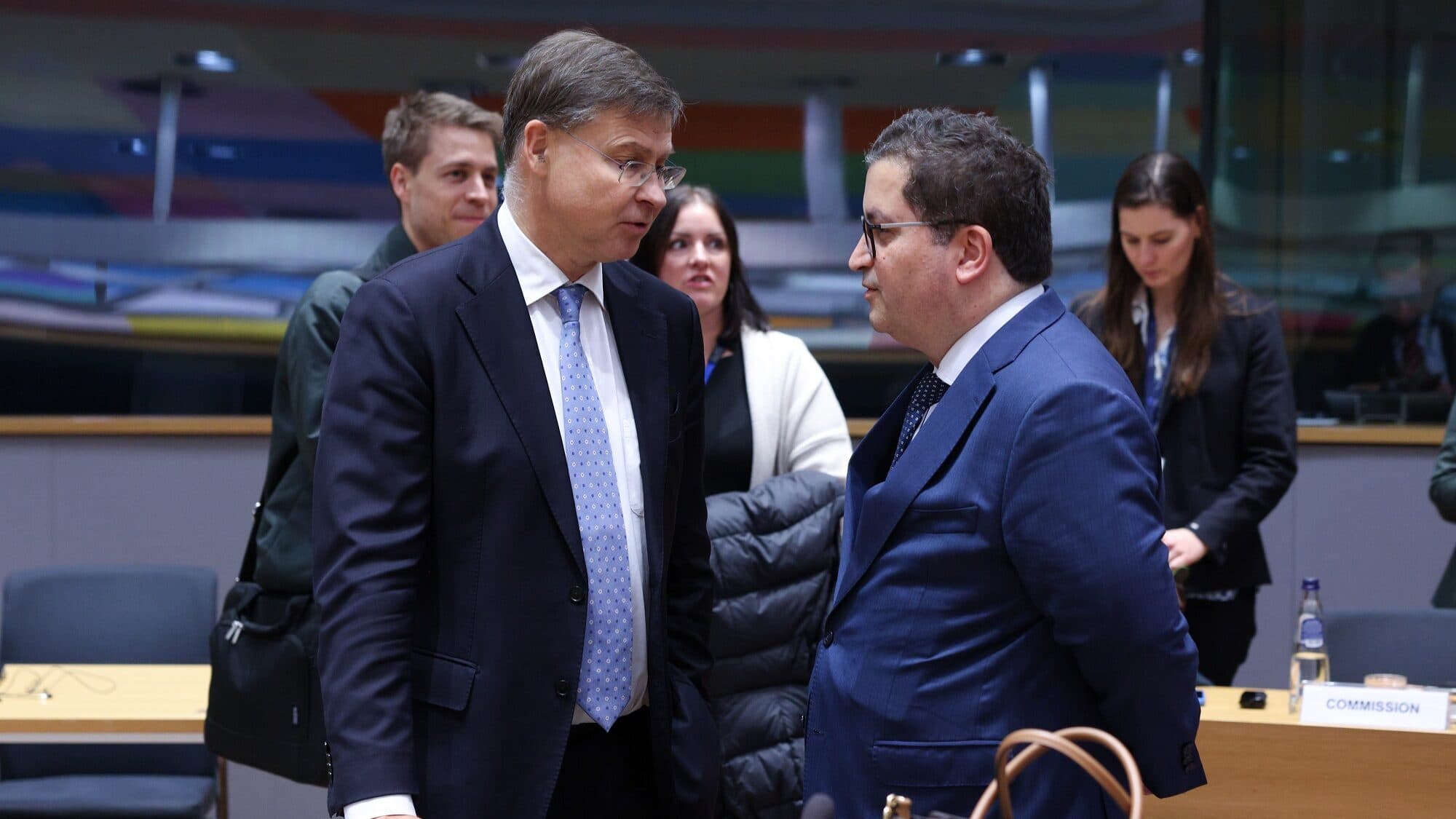
The ministers responsible for energy in Portugal and Morocco met this Monday in Lisbon. During the meeting, it was decided that both countries will request funds from the European Commission to support the construction of an electricity interconnection between Morocco and Portugal. The project is important for both Europe and Africa, she stressed.
The Ukrainian president highlighted the increase in Ukraine's defensive capacity in recent weeks and thanked European partners and the United States for their aid. The celebration of Ukraine's Statehood Day was attended by the President of the European Commission, Ursula von der Leyen.
Airbus Defence and Space, Destinus, MBDA Deutschland, Safran Electronics & Defense, and Thales have signed a Letter of Intent to create the Bliksem EXO Consortium, a European industrial partnership aimed at the development and production of the Bliksem EXO anti-missile system. Ukraine, nine European countries, and several European defence companies have launched...
The German defence company Helsing has raised 1.8 billion dollars (approximately 1.6 billion euros) in a Series E funding round to boost the integration of artificial intelligence (AI) into European defence, valuing the company at 18 billion dollars (approximately 15.8 billion euros). The round...
The European Union (EU) has formally adopted the trade agreement with Mexico, following the approval of the text by the Council of the EU, it was announced this Tuesday. This decision concludes the EU's internal process regarding the trade agreement and confirms that it has completed the internal procedures for the document to enter into force. The Interim Trade Agreement between the EU and Mexico was signed on 22 May 2026, during the EU-Mexico summit, and approved by the European Parliament on 8 July. The partnership is expected to benefit more than 45,000 EU companies that export to Mexico, the vast majority of which are small and medium-sized enterprises. The agreement will improve market access by eliminating most remaining customs duties, expanding opportunities for services, investment, and public procurement, and reducing trade barriers. The agreed document also strengthens the protection of European geographical indications and intensifies cooperation on digital trade, intellectual property, customs and trade facilitation, competition, and critical raw materials. It will enter into force on the first day of the second month following the date on which the EU and Mexico have notified each other of the completion of their respective internal procedures. The European Parliament gives the 'green light' to the EU-US trade agreement and Von der Leyen welcomes the decision.
Hélène Farnaud-Defromont bids farewell to Lisbon after four years in the post. In this interview, she addresses bilateral relations, European common defence issues, the war in Ukraine, and the near political future of her country.
In today's polarised and fragmented European politics, the 2019 consensus among the political centre, that achieving the green transition is both necessary and possible, has collapsed. Opinion by Susi Dennison
Nationalisms raise a question again: what configuration would Europe have if nationalisms, ethnolinguistic identities, and historical territorial memories regained political centrality?
Pedro Duarte, a commentator for CNN Portugal, believes that the need to invest in Defence is far from being a whim of Donald Trump and urges Europe to fend for itself after years of living under US protection.
CNN Portugal commentator Alexandra Leitão acknowledges that Europe must have greater strategic autonomy, including in Defence, in relation to the USA, a country she no longer classifies as a “partner”. She also leaves a question hanging: “Why 5%, when the USA itself spends less than 5%?”
Without a regulation to provide a legal basis, we would leave the European digital space at the mercy of the most heinous crimes, which have already been reported and statistically proven.
The Portuguese government will participate in the new version of the European Tech Champions Initiative, though no specific amount has been set. The 'fund of funds' aims to provide Europe with the financial capacity to prevent innovative companies from 'fleeing' to the US.