Do not leave children alone
About eighty schools have hosted influencers linked to sexual content in campaigns for student associations over the last two years. Not influencers, but pornographers.

Latest news and stories about public safety in education in Portugal for expats and residents.
About eighty schools have hosted influencers linked to sexual content in campaigns for student associations over the last two years. Not influencers, but pornographers.

The article highlights a recent workshop on literacy aimed at promoting critical thinking at the Centro Profuturo in Portugal. The event emphasizes the importance of developing analytical skills through literacy initiatives, contributing to informed citizenship. Additionally, the webpage features various local news updates, including police arrests related to fake accident schemes, community celebrations in Pinhal Novo, delays in housing repairs due to labor shortages after weather events, and the Portuguese President's first open presidency session in the Central Zone following recent weather challenges.

This behaviour is not new, and the minor has reportedly even threatened a teacher. The facts have been reported to the CPCJ and the Public Prosecutor's Office.

“We have to come anyway,” laments a student's grandmother. This is already the second case this week alone.

“We have to come anyway,” laments a student's grandmother. This is already the second case this week alone.

The School Council has appealed to headteachers to exercise caution and responsibility when authorising activities within school premises, following a report that revealed the presence of misogynistic influencers and pornographers in schools.

Trial of teacher accused of mistreatment continues on the 23rd with closing arguments.

The article emphasizes the importance of school directors being vigilant about who is allowed to enter their schools in Portugal, highlighting concerns over security and safety measures to protect students and staff. It underscores the need for strict access control to prevent unauthorized individuals from entering educational institutions.

“Classes have resumed, except in the room that was affected,” said a source from the sub-regional Civil Protection command. They also noted that the alert was received at 07:58, with the fire being extinguished at 08:44.

Fire broke out in the ceramic kiln of an art classroom.

The first phase of the 'Spring Break' operation runs until 27 March, focusing on students from the 9th to the 12th grade.

Protecting schools means protecting youth: offering meaning, belonging, participation, and a future before violence seems like a shortcut to 'solve' the unsolvable. Opinion piece by Miriam Abramovay.

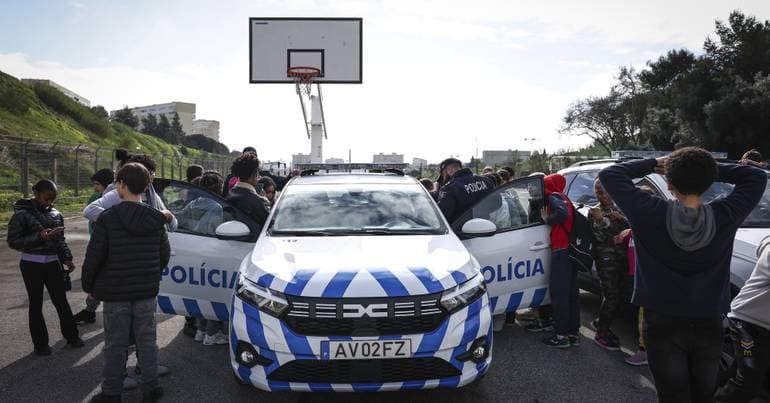
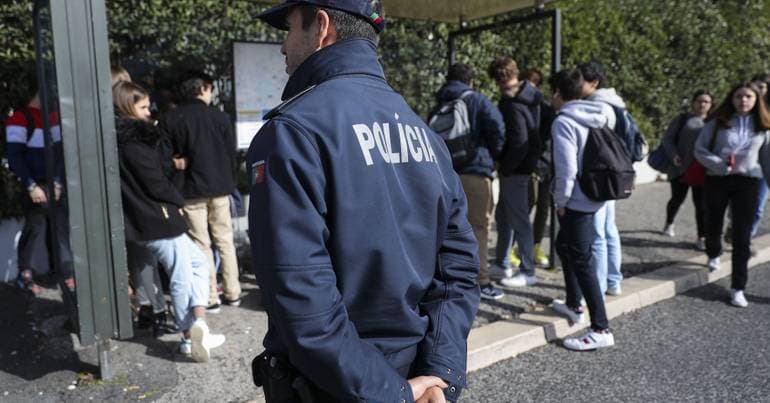
The PSP launches a prevention operation in schools against substance addiction and excessive use of video games and social media. Portugal may follow other countries and ban access.

The minor was not previously flagged by the Commission for the Protection of Children and Young People.

The article reports that the Portuguese Public Security Police (PSP) has launched a new operation targeting schools to combat substance dependencies and gaming addiction among students. This initiative aims to address growing concerns about youth health and safety by monitoring and preventing risky behaviors related to drugs and excessive gaming within educational environments.
The Government is forming a working group to create guidelines for schools to prohibit activities that contradict educational values, following incidents where 79 public schools hosted digital influencers promoting sexual and misogynistic content. This initiative, outlined by the Ministry of Education and Citizenship (MECI), aims to enhance control over external activities in schools and ensure they align with the mission of promoting democratic citizenship, equity, and inclusion. The group will analyze the legal framework regarding external entities in schools and provide clarity on acceptable activities, with a final report due by March 31.

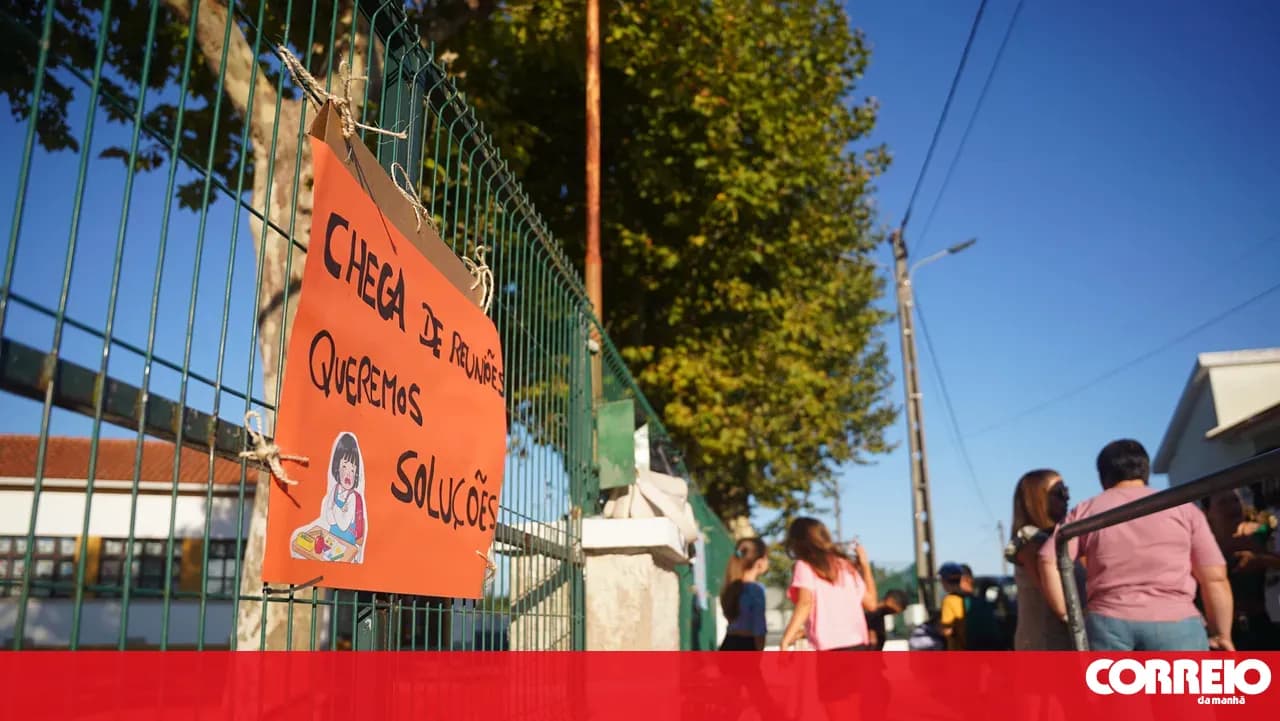
Operational assistants at EB 2,3 de Telheiras are protesting this Thursday. The team has reduced from 20 to 10 workers since 1999. Parents report “brawls”, assaults, and areas without supervision.

Staff demand an increase in teams and warn of the dangers that students face.

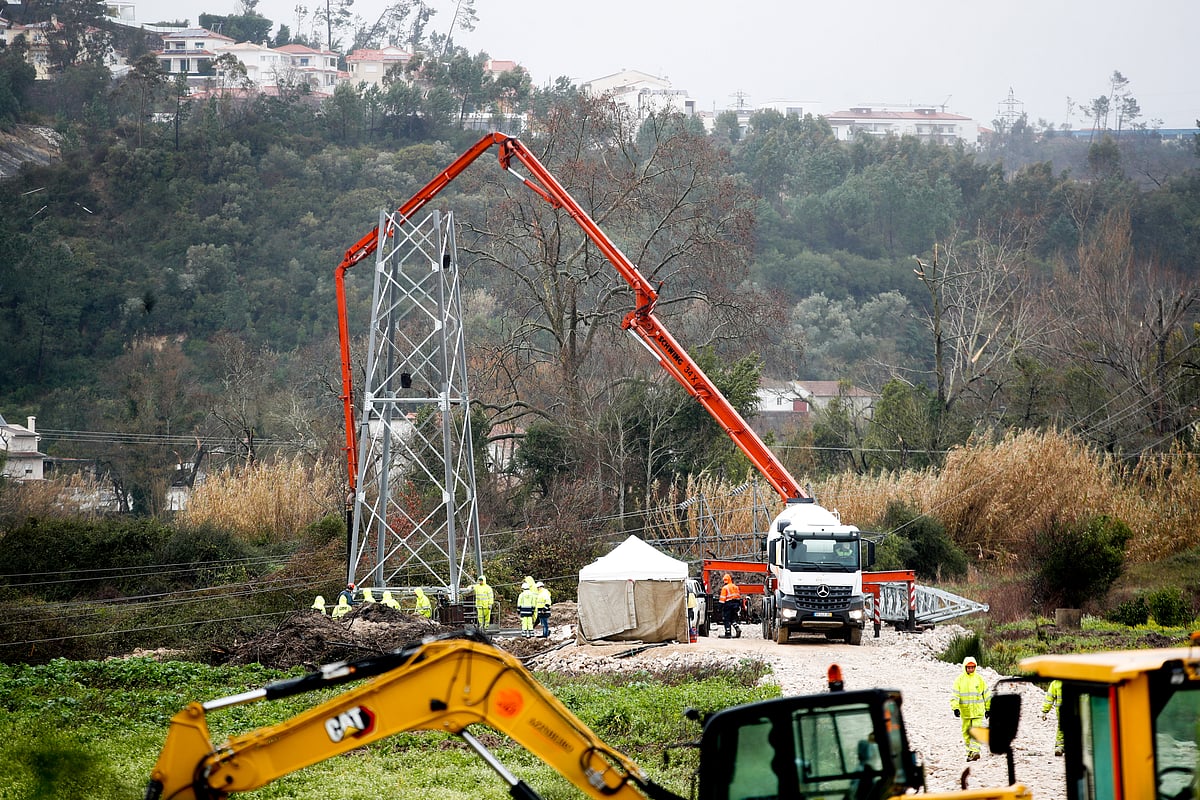
Approximately 1,800 customers of E-Redes in areas affected by storm Kristin remained without electricity as of 5:00 PM on February 22. The EDP group company stated it is focused on restoring electricity supply. Earlier, 4,500 customers were reported without power. The storms have caused significant damage, resulting in 18 fatalities and affecting 90,000 students due to school closures. The Central, Lisbon and Tagus Valley, and Alentejo regions were the most impacted, with estimated damages in Seixal around 15 million euros.
The recent “depressions” that swept across the country have had natural effects on the school network. Besides the damage caused, they revealed the extent to which we have an education system that is more than dual in terms of the conditions under which students, teaching staff, and non-teaching staff work. This results from the asymmetric, ad-hoc, and disjointed way investments are made and resources are allocated in the public education system, often swayed by current programmes, especially those that attract European funding. While it is evident that extreme weather phenomena make it impossible to avoid a certain level of damage, it is equally ridiculous that, after the monumental investment made in Parque Escolar, we have schools that were renovated just a few years ago experiencing roofs flying off and ceilings collapsing, as seen at the Moita Secondary School, where I was a student and began my teaching career. With some humour, a student remarked that, even before the Kristin depression, every day is a surprise, not knowing what will stop functioning. However, there are dozens or hundreds of such cases across the country. In this country, it is still possible to find substantial investments in school equipment, particularly in the so-called CTE (Specialized Technological Centres), funded by the aforementioned European funds, amounting to nearly 500 million euros. This is certainly commendable and necessary to ensure quality education, provided the equipment is actually used and its maintenance and updates are ensured, as well as the schools receiving them being in a position to properly utilise them, rather than accumulating them in makeshift storage or in deactivated rooms. The problem is that we have no guarantee of effective monitoring of the application and return on this investment, and we have had very poor oversight of the Parque Escolar works, which the Court of Auditors has raised successive questions about. There are also no guarantees that, with the decentralisation of competencies that transferred the management of the entire Basic Education network and a large part of Secondary Education to local authorities, there are equitable financial conditions to ensure that increasingly noticeable inequalities do not worsen. It is no longer a matter of any opposition/divergence between public and private education conditions, but rather the choice to deregulate, calling it “flexibility” or, even more hypocritically, “autonomy” or “proximity management,” of the public education network, abandoning any concern for social justice. Deregulatory experiences of this kind have had poor results abroad, despite local decision-makers being concerned about hiding this.

The old Cerco School, previously inaccessible due to drug-related issues, is being repurposed into a local health unit, marking a significant shift towards improving community health and safety.

Storm Ingrid swept across mainland Portugal, bringing worsening weather that forced the closure of dozens of schools—especially in northern districts—and disrupted transport and public services. This live tracker monitors minute-by-minute developments, reports on emergency services' response, safety advisories for the public, transport interruptions and localised impacts on communities and infrastructure. The page focuses on evolving risks, operational updates from authorities and practical guidance for parents, commuters and vulnerable residents.
The PSP has launched a month‑long school operation, 'Violence? No, thank you!', delivering awareness activities for the whole school community on school-based violence, weapons possession/use and juvenile delinquency. Targeting pupils in the 3rd cycle of basic education and secondary schools, the campaign combines prevention and legal deterrence by warning minors that violent acts can carry criminal consequences. The initiative aims to reduce incidents, improve reporting and engage schools, families and staff in safeguarding measures.

Portugal’s Judicial Police (PJ) has launched a first-of-its-kind campaign to tackle online radicalisation among young people, aiming to alert schools and families to warning signs, raise awareness, prevent recruitment and disrupt extremist influence across digital platforms. The initiative is framed as a preventive, educational and investigative effort combining outreach to educators and parents with targeted policing online. Separately, The Guardian reports heightened international tensions as former US President Trump is reported to be considering military options against Iran following a violent crackdown, underscoring how domestic efforts to shield youth from radicalisation sit alongside broader geopolitical risks.