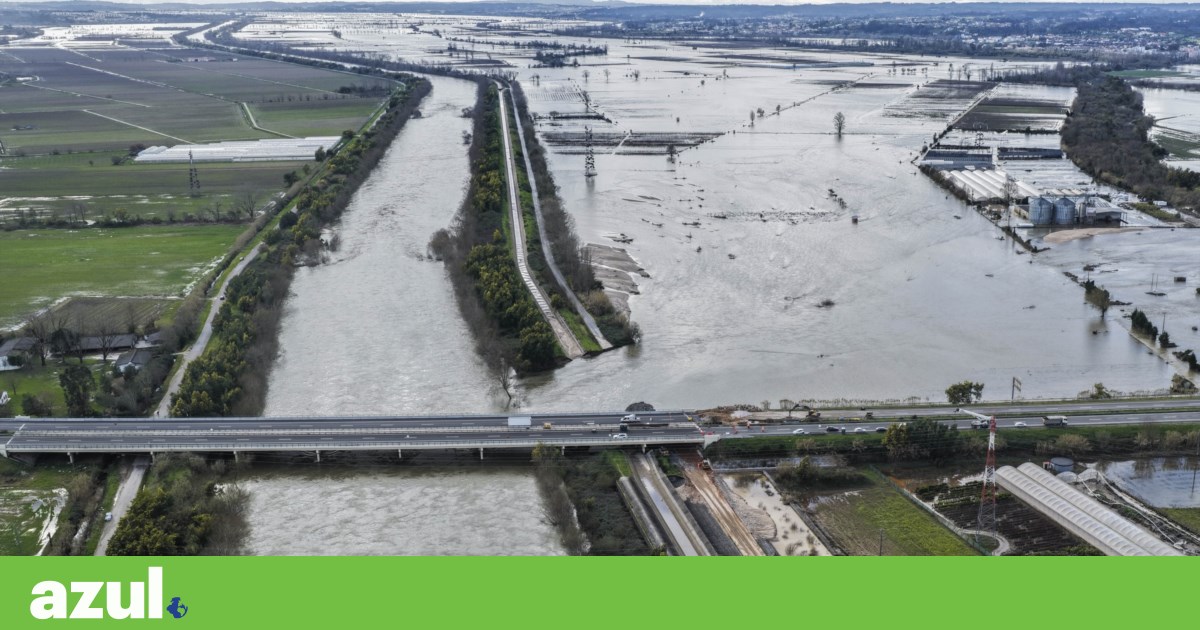
The recent “depressions” that swept across the country have had natural effects on the school network. Besides the damage caused, they revealed the extent to which we have an education system that is more than dual in terms of the conditions under which students, teaching staff, and non-teaching staff work. This results from the asymmetric, ad-hoc, and disjointed way investments are made and resources are allocated in the public education system, often swayed by current programmes, especially those that attract European funding. While it is evident that extreme weather phenomena make it impossible to avoid a certain level of damage, it is equally ridiculous that, after the monumental investment made in Parque Escolar, we have schools that were renovated just a few years ago experiencing roofs flying off and ceilings collapsing, as seen at the Moita Secondary School, where I was a student and began my teaching career. With some humour, a student remarked that, even before the Kristin depression, every day is a surprise, not knowing what will stop functioning. However, there are dozens or hundreds of such cases across the country. In this country, it is still possible to find substantial investments in school equipment, particularly in the so-called CTE (Specialized Technological Centres), funded by the aforementioned European funds, amounting to nearly 500 million euros. This is certainly commendable and necessary to ensure quality education, provided the equipment is actually used and its maintenance and updates are ensured, as well as the schools receiving them being in a position to properly utilise them, rather than accumulating them in makeshift storage or in deactivated rooms. The problem is that we have no guarantee of effective monitoring of the application and return on this investment, and we have had very poor oversight of the Parque Escolar works, which the Court of Auditors has raised successive questions about. There are also no guarantees that, with the decentralisation of competencies that transferred the management of the entire Basic Education network and a large part of Secondary Education to local authorities, there are equitable financial conditions to ensure that increasingly noticeable inequalities do not worsen. It is no longer a matter of any opposition/divergence between public and private education conditions, but rather the choice to deregulate, calling it “flexibility” or, even more hypocritically, “autonomy” or “proximity management,” of the public education network, abandoning any concern for social justice. Deregulatory experiences of this kind have had poor results abroad, despite local decision-makers being concerned about hiding this.