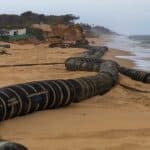
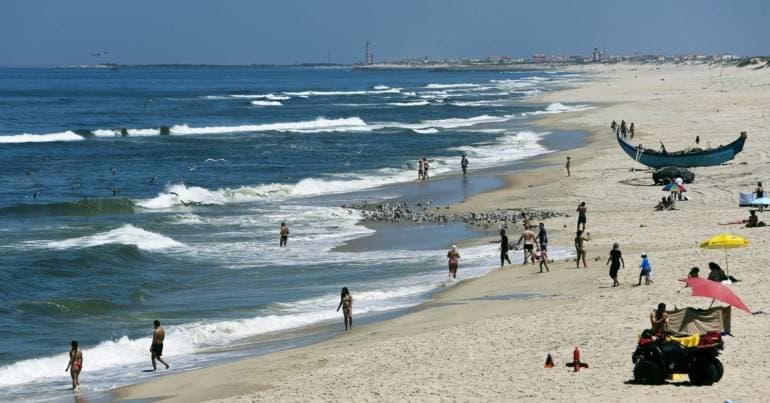
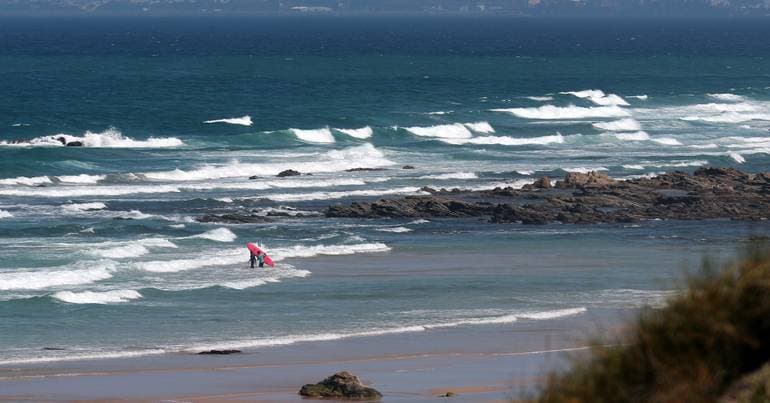
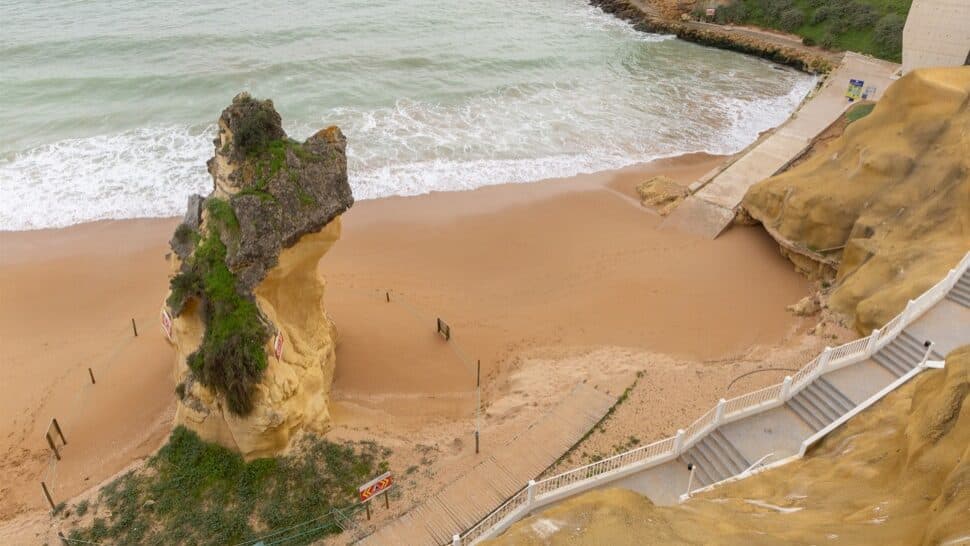
Work has begun to restore sand to some of the Algarve’s most vulnerable beaches, as authorities move to tackle coastal erosion after months of bad weather. The project covers the The post Sand replenishment begins on Algarve beaches appeared first on Portugal Resident.
Home News Algarve to proceed with sand placement on beaches Algarve to proceed with sand placement on beaches Preparatory work for beach sand placement along the Quarteira-Garrão stretch, in Loulé, on the Algarve coast, began on 16 March as a measure to reinforce coastal protection following the
Starting in May, the meteorological phenomenon will begin to have its effects across the globe, including warming sea waters, which will also affect the Portuguese coast. 2026 could once again break temperature records.
The president of the Portuguese Environment Agency says the works will allow for the deposition of approximately 1.3 million cubic metres of sand on beaches most vulnerable to erosion.
Miguel Sanches, director of Sustainable Mobility Management at AESE Business School, explains why mobility has ceased to be a technical issue and has become a central topic of leadership, competitiveness, and quality of life. Listen here to Mobi Boom, the Expresso podcast hosted by Luís Costa.
The article emphasizes the importance of protecting children and young people across various environments—schools, communities, and online interactions. It highlights the need for safeguarding measures to ensure their safety and well-being in different settings. Additionally, the webpage features local news updates from Canal Alentejo, covering topics such as regional reconstruction efforts, recent storms causing damage, the development of a biogas plant in Ferreira do Alentejo, and upcoming events like the Todo-o-Terreno World Championship passing through Portugal and Spain. Overall, the focus is on community resilience, safety, and regional development initiatives in Portugal.
The article titled “Arrancam trabalhos de alimentação artificial de praias” reports on the commencement of artificial nourishment projects for beaches in Portugal. These efforts aim to restore and maintain beach sand levels, combating erosion and ensuring the preservation of coastal environments. The initiative involves adding sand to affected beaches to improve their stability and attractiveness for tourism and local communities. The project reflects Portugal's ongoing commitment to coastal management and environmental conservation.
In the country's largest second-hand chain, with 24 stores between Lisbon and Porto, one person's trash is another's vintage luxury. How does the network that collected nearly 4,000 tonnes of clothing in 2025 operate?
The initiative sparked controversy, but today it serves as an inspiration. Residents of Travessa das Águas, in the Bonfim parish, have turned the street into a garden.
In the APA report, it is explained that the damage recorded in the municipality of Vagos, in built-up areas for public use and enjoyment, was due to coastal overtopping.
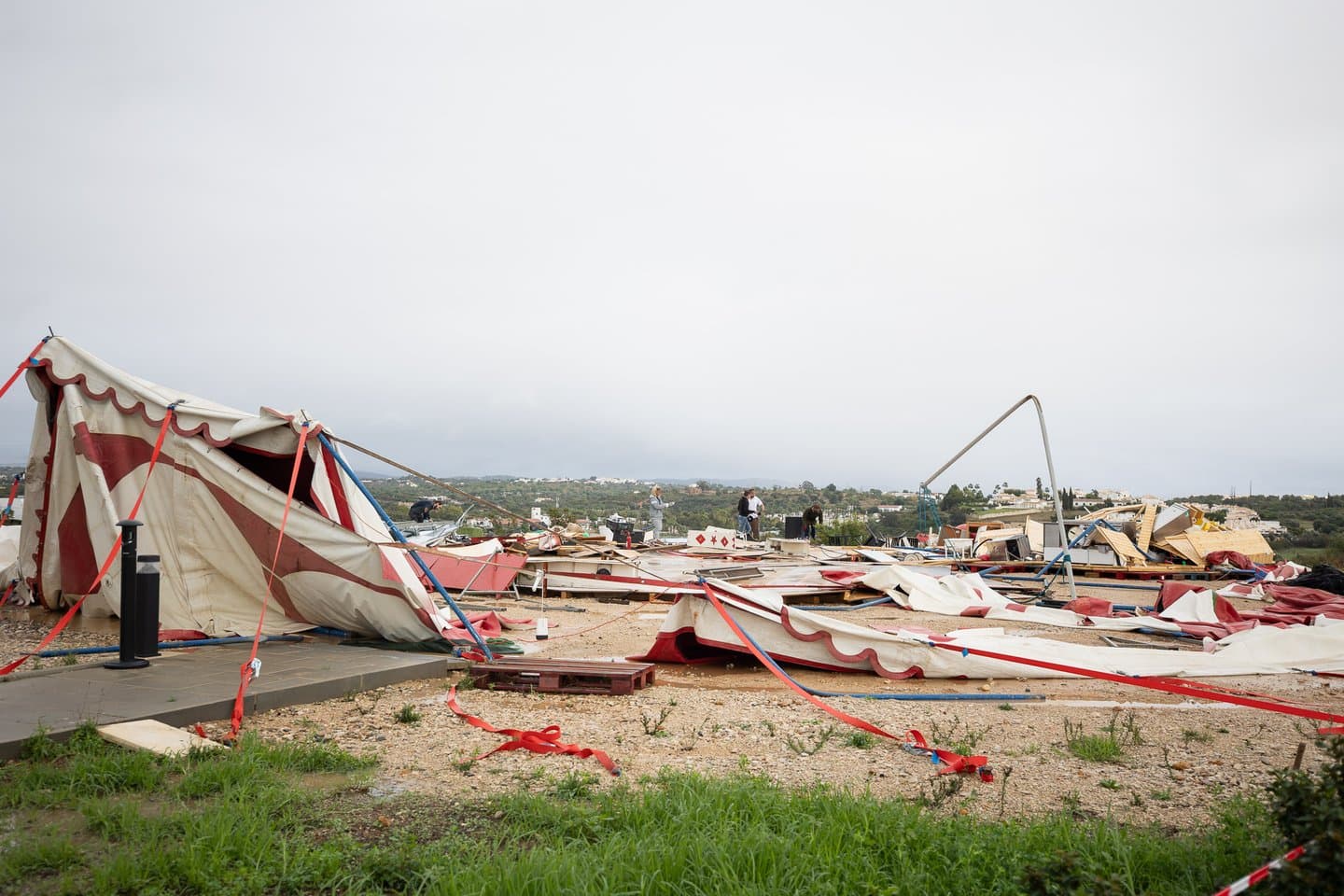
Coastal erosion, cliff instability, and damage to walkways mark the impact of winter on the Alentejo coast. The APA is defining intervention priorities ahead of the bathing season.
Despite growing reports from environmental organisations, multi-million euro fines, and the opening of an investigation by the EU, Shein continues to strengthen its presence in Europe.
Buying an electric car seems like a simple decision: less fuel, less maintenance, and a more sustainable alternative. But the reality has several details that many consumers only discover after the purchase. Listen to this interview with Henrique Sánchez from UVE.
A new report from the Portuguese Environment Agency (Agência Portuguesa do Ambiente or APA) reveals that 35 beaches in the Algarve suffered significant erosion during recent winter storms. Peneco beach in Albufeira saw the most dramatic change, with the shoreline retreating by 24 meters. The agency also warned of increased cliff instability across the region due to the severe weather. Algarve residents should be aware of potential safety hazards and restricted access at affected coastal sites this spring.
APA is the Portuguese Environment Agency (Agência Portuguesa do Ambiente), the national authority that evaluates environmental impacts, enforces environmental law and issues licences or opinions on projects. Its opinions—such as the recent unfavourable view on the Lagoa Salgada mine—carry weight in permitting decisions and can delay or block projects that threaten water or other natural resources.
Dozens of local residents and environmental activists gathered near the Portimão landfill this Thursday morning to call for concrete solutions to the bad smell and swarms of flies that have The post “Enough!”: Dozens protest outside Portimão landfill appeared first on Portugal Resident.
Its mission is to promote knowledge, preservation and environmental education in a fun and engaging way, and to this end, its work is guided by five fundamental values: education, entertainment, The post Awareness is the first step to protection appeared first on Portugal Resident.
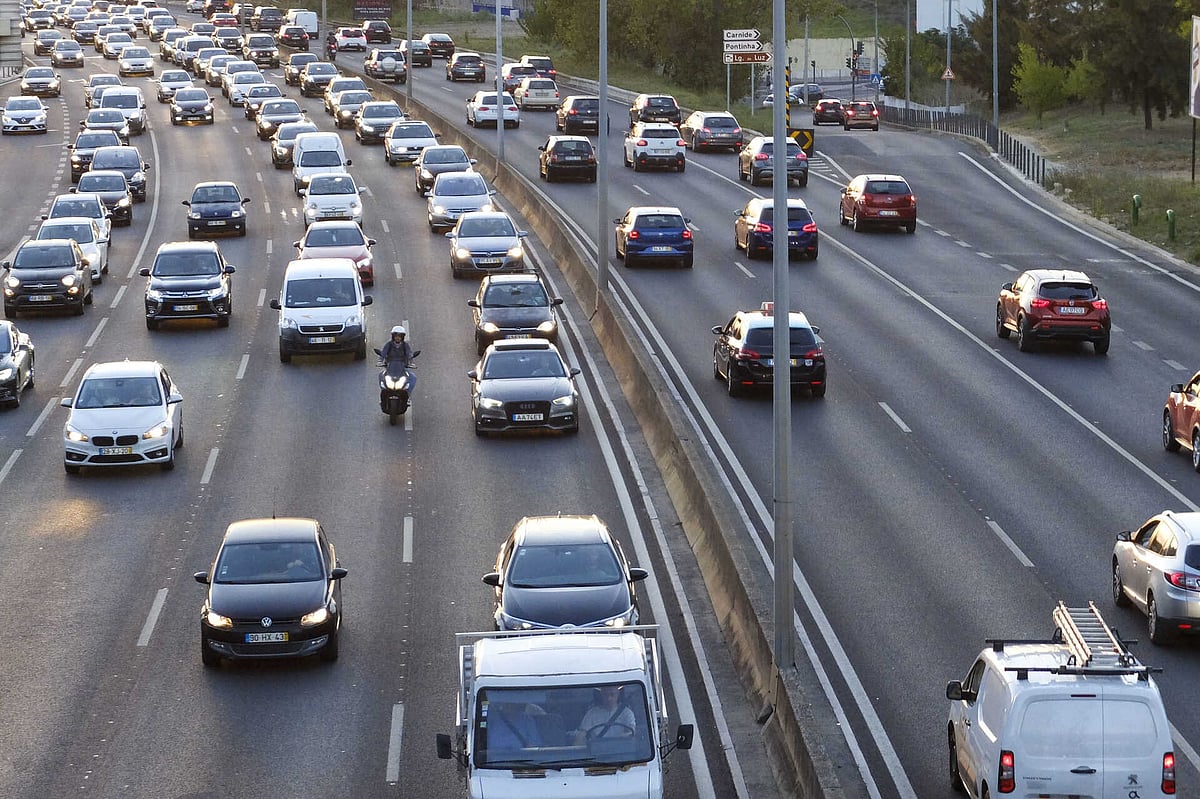
The Portuguese car fleet aged less in 2026, as the proportion of vehicles under four years old rose by five percentage points compared to 2025, according to the ACP Observatory – Electric Mobility in Portugal 2026. Meanwhile, 38% of cars are over 15 years old, also a five percentage point reduction. Electrified vehicles now account for 9% of the total car fleet, an increase of 5.5 percentage points. Petrol gained share (+11 p.p.), while diesel cars fell by 18 p.p. French brands Peugeot and Renault remain in the lead, each with 10% of the fleet, followed by Volkswagen (7%), BMW (6%), and Opel (6%). Over 80% of respondents drive their own car—an increase of 10 p.p.—and 79% travel up to 1,000 km per month, a figure that rose by 20 p.p. Regarding financing, 57% purchased their vehicle outright and 22% used car credit. Cash buyers predominate among drivers over 65, from the Lisbon, West, and Tagus Valley regions, and social class A. Almost half of the Portuguese admit to changing cars every one to five years (a 25 p.p. increase). In terms of purchase preferences, 21% would choose an electric vehicle, 20% a plug-in hybrid, 19% a diesel, 19% a petrol, and 10% a standard hybrid. The average is 1.8 cars per household, a slight decrease compared to 2025. Among owners of electrified vehicles, 82% have owned the car for less than five years, with Tesla and BMW standing out. Regarding charging, 86% charge at home (up 3 p.p.) and 91% use public stations (up 3 p.p.). According to the report, the domestic cost per charge is up to seven euros, and monthly spending on public charging is around 50 euros. Galp Electric and EDP were identified as the main providers. According to the ACP, 1,608 people participated in the study (1,200 with a driving licence plus a boost of 408 electric vehicle drivers) between 28 January and 11 February 2026. A petition has been launched to restrict city centre traffic in Lisbon to electric cars only.
Portugal held 1.56 million tonnes of petroleum reserves in the final quarter of last year, with the government announcing plans to release 10% of these strategic stocks to help stabilize fuel prices amid global supply concerns.
The article discusses the growing concerns about sustainability in the workplace, emphasizing the need to balance organizational development, economic growth, environmental protection, and community well-being. It highlights the challenges posed by an aging workforce in Portugal, where recruitment difficulties and talent retention issues are becoming more pronounced. The article also addresses gender disparities in the workforce, particularly the prevalence of part-time work among women and the implications for productivity and career opportunities. It calls for a demographic analysis within organizations to adapt health support and public policies that promote sustainable practices, benefiting individuals, organizations, and society as a whole.
A new study warns that, by 2050, extreme heat could expose almost half of the world’s population to dangerous conditions — and that global preparedness is inadequate. The analysis projects marked increases in heatwave frequency and intensity, with disproportionate impacts on urban populations, workers, older people and lower-income communities, creating risks for health, wellbeing, labour productivity, displacement and sustainability. Authors call for urgent mitigation (deep emissions cuts) alongside targeted adaptation: heat-resilient infrastructure, equitable access to cooling and water, early-warning systems and planning to reduce inequitable risks.
A 2025 climate assessment found the year was the third warmest on record, driven chiefly by the accumulation of greenhouse gases in the atmosphere and by exceptionally high sea‑surface temperatures across the oceans, highlighting ongoing anthropogenic warming and implications for climate resilience and sustainability.