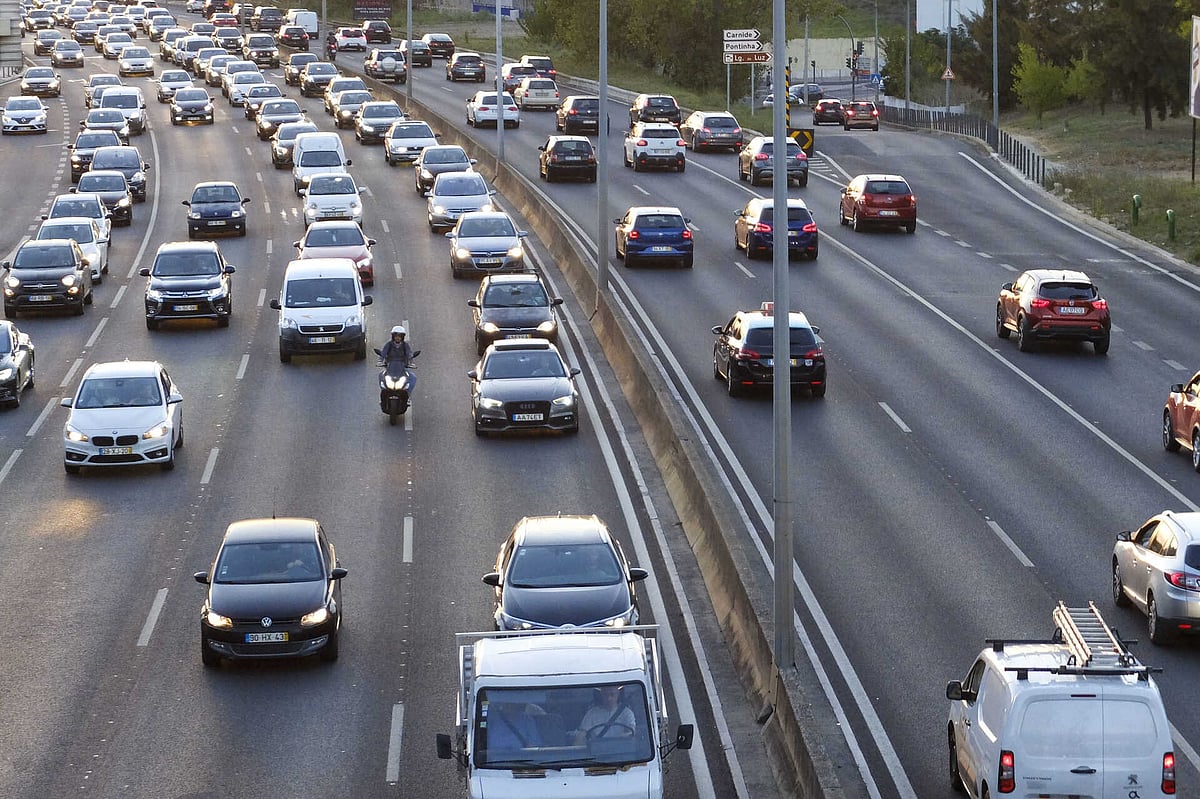
The Portuguese car fleet aged less in 2026, as the proportion of vehicles under four years old rose by five percentage points compared to 2025, according to the ACP Observatory – Electric Mobility in Portugal 2026. Meanwhile, 38% of cars are over 15 years old, also a five percentage point reduction. Electrified vehicles now account for 9% of the total car fleet, an increase of 5.5 percentage points. Petrol gained share (+11 p.p.), while diesel cars fell by 18 p.p. French brands Peugeot and Renault remain in the lead, each with 10% of the fleet, followed by Volkswagen (7%), BMW (6%), and Opel (6%). Over 80% of respondents drive their own car—an increase of 10 p.p.—and 79% travel up to 1,000 km per month, a figure that rose by 20 p.p. Regarding financing, 57% purchased their vehicle outright and 22% used car credit. Cash buyers predominate among drivers over 65, from the Lisbon, West, and Tagus Valley regions, and social class A. Almost half of the Portuguese admit to changing cars every one to five years (a 25 p.p. increase). In terms of purchase preferences, 21% would choose an electric vehicle, 20% a plug-in hybrid, 19% a diesel, 19% a petrol, and 10% a standard hybrid. The average is 1.8 cars per household, a slight decrease compared to 2025. Among owners of electrified vehicles, 82% have owned the car for less than five years, with Tesla and BMW standing out. Regarding charging, 86% charge at home (up 3 p.p.) and 91% use public stations (up 3 p.p.). According to the report, the domestic cost per charge is up to seven euros, and monthly spending on public charging is around 50 euros. Galp Electric and EDP were identified as the main providers. According to the ACP, 1,608 people participated in the study (1,200 with a driving licence plus a boost of 408 electric vehicle drivers) between 28 January and 11 February 2026. A petition has been launched to restrict city centre traffic in Lisbon to electric cars only.
Electric vehicles reach 9% of the car fleet in Portugal and petrol share grows by 11%
Thursday, 12 March 2026RSS
Context & Explainers
Sustainability (sustentabilidade) means meeting present needs without reducing the ability of future generations to meet theirs, covering environmental, economic and social dimensions. For residents it affects local planning, jobs and services—look for municipal or company targets, timelines and measurable actions when assessing how sustainable a place or employer is.