President Demands Ongoing Support for Domestic Violence Victims

Tuesday, 24 November 2026AI summary
President Demands Ongoing Support for Domestic Violence Victims
Photo: Getty Images/iStockphoto

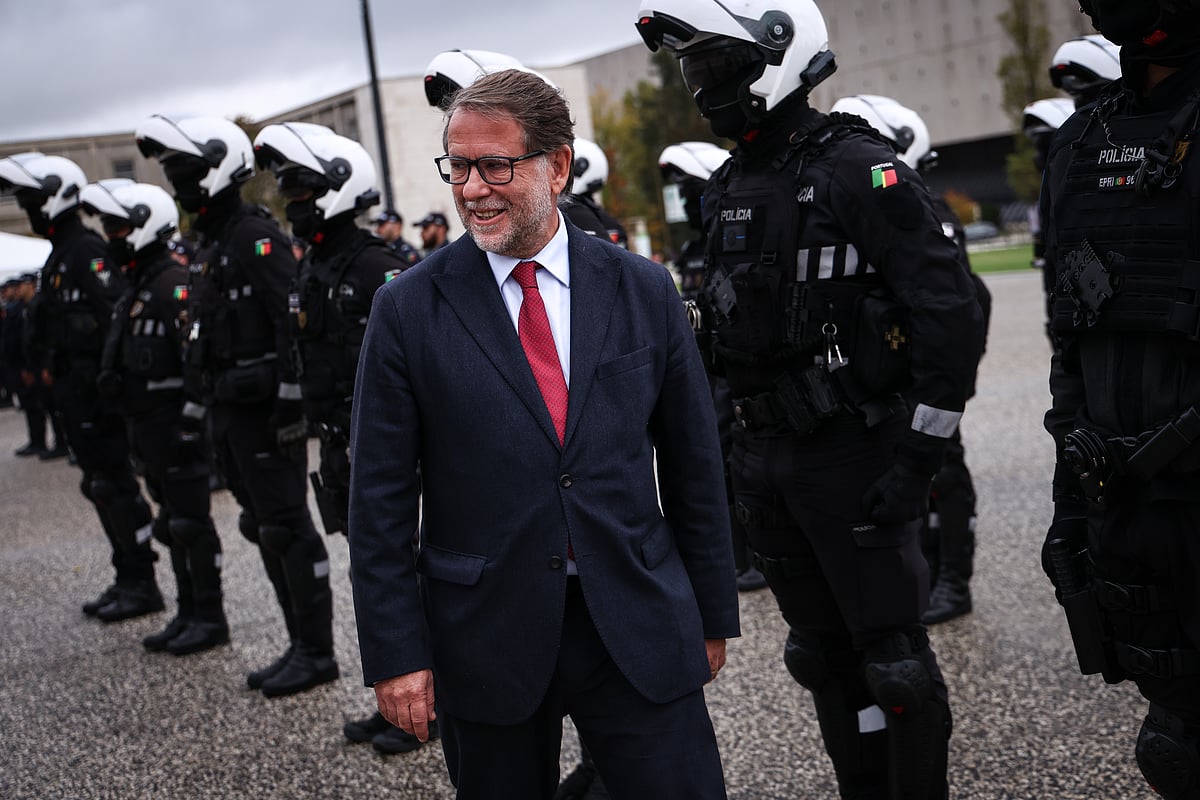
President António José Seguro called for extended monitoring and assistance for domestic violence victims after their formal legal status expires, warning that many are left without support. Speaking after visiting the Espaço Júlia specialized support center in Lisbon to mark the International Day for the Elimination of Violence against Women, Seguro described domestic violence as a horrendous crime and pledged not to remain silent.

His appeal comes after the Lisbon Municipal Assembly (Assembleia Municipal de Lisboa) approved proposals from the Socialist Party (Partido Socialista or PS) and Communist Party (Partido Comunista Português or PCP) to expand shelter capacity and establish 24-hour victim assistance. Across Portugal, police register approximately 30,000 domestic violence complaints annually, and the National Republican Guard (Guarda Nacional Republicana or GNR) launched an awareness campaign this week to encourage reporting.

Context & Explainers

GNR (Guarda Nacional Republicana)

The GNR (Guarda Nacional Republicana) is Portugal's national gendarmerie—a military police force founded in 1911, with origins dating to 1801. With over 22,600 personnel, GNR patrols 94-96% of Portuguese territory, covering rural areas, medium towns, and highways. Members are military personnel subject to military law, responsible for public order, customs, coastal control, environmental protection (SEPNA), firefighting/rescue (GIPS), border control, and ceremonial guards. ​ GNR vs. PSP: The PSP (Polícia de Segurança Pública) is Portugal's civilian police force, covering major cities (Lisbon, Porto, Faro) and large urban areas—only 4% of territory but roughly half the population. PSP handles airport security, diplomatic protection, and private security regulation. Both share core missions (public order, crime prevention), but differ in nature: GNR is military with military training; PSP is civilian with police-focused training.

PCP (Partido Comunista Português)

The Portuguese Communist Party (PCP or Partido Comunista Português) is a Marxist‑Leninist party founded in 1921 out of the revolutionary trade‑union and anarcho‑syndicalist movement, becoming the Portuguese section of the Comintern in 1923. Banned after the 1926 coup, it went underground and became a central force of resistance to the Estado Novo dictatorship, organizing clandestine unions, anti‑fascist struggle and supporting the colonial liberation movements. After the 1974 Carnation Revolution, the PCP was pivotal in land reform, nationalisations and embedding social rights in the 1976 Constitution, especially in the Alentejo and Setúbal regions where it has long been very strong.

Today the PCP is a smaller but still influential party rooted in the CGTP trade‑union confederation and local government, holding a handful of Assembly seats and one MEP in the Left group. It advocates a “patriotic and left‑wing alternative”: defence of workers’ rights, public services and national sovereignty, strong criticism of EU and NATO constraints, and support for socialist countries and anti‑imperialist causes.

António José Seguro
  • President of Portugal (since March 9, 2026)
  • Party: Independent. Former leader of the Socialist Party (PS), Partido Socialista
  • Center-left

António José Martins Seguro (born March 11, 1962, in Penamacor) is a lawyer, political scientist, and the current President of the Portuguese Republic, inaugurated on March 9, 2026 after winning the two-round presidential election in January–February 2026.

Career: He led Socialist Youth (1990–1994), served as MEP (1999–2001), was Minister Adjunct to PM António Guterres (2001–2002), and led the PS parliamentary group (2004–2005). Elected PS Secretary-General in 2011 with 68%, he led the opposition during Portugal's bailout era. In 2014, António Costa defeated him in party primaries by a landslide, prompting Seguro's resignation and a decade-long retreat from politics. He returned in 2025, launching the movement UPortugal and announcing his presidential candidacy in June. He received official PS backing in October 2025 and won the presidency in February 2026.

Political philosophy: Seguro positions himself as representing a "modern and moderate" left, advocating financial responsibility while opposing austerity. As President, he has emphasized institutional trust, efficient governance, and a collaborative relationship with the government while maintaining rigorous constitutional oversight.