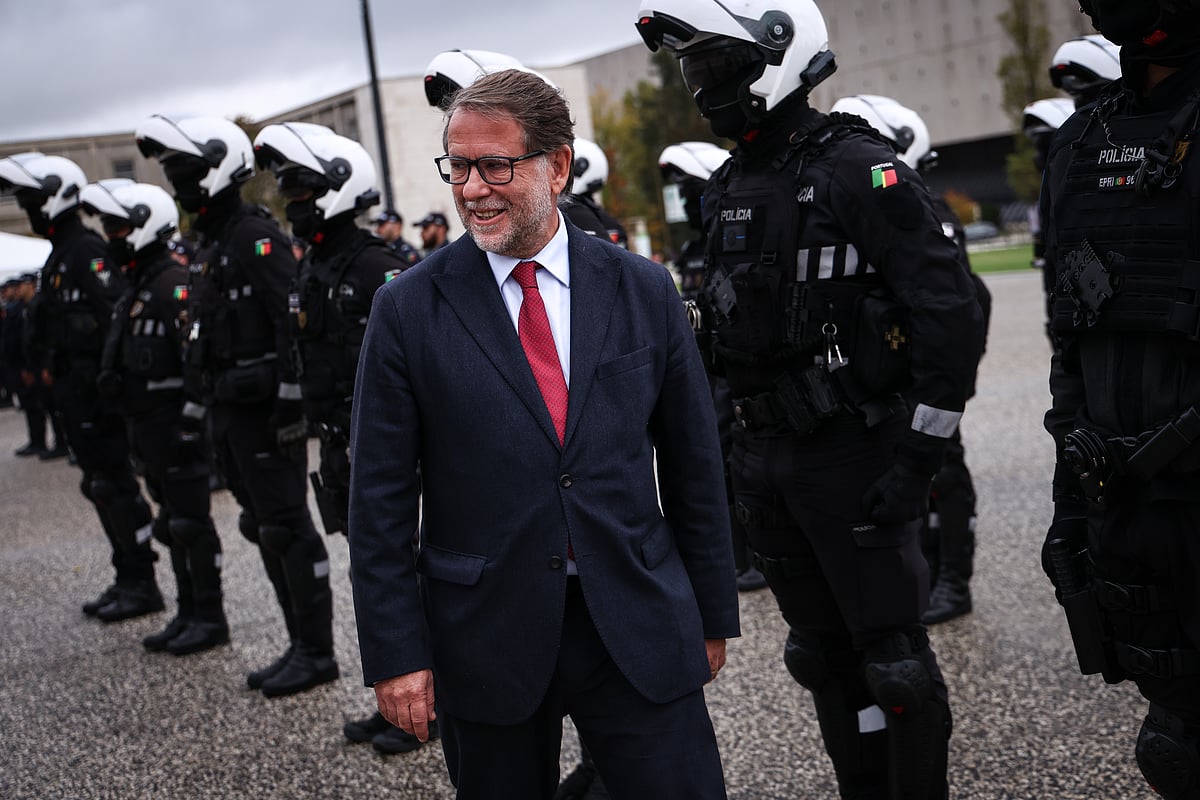
Minister of Internal Administration Luís Neves announced that the government is open to bringing forward police salary increases to January 2027. Speaking after talks with trade unions from the Public Security Police (Polícia de Segurança Pública or PSP) and associations from the National Republican Guard (Guarda Nacional Republicana or GNR), Neves scheduled another negotiation round for Friday. Police unions had criticized the government's initial proposal on career restructuring and special duty supplements as insufficient.
Government Signals Openness to Police Salary Hikes in January
Tuesday, 17 November 2026AI summary
Context & Explainers
Luís Neves will take office on Monday as Minister of Internal Administration. He graduated in law and has worked at the Judicial Police since 1995, where he served as coordinator of a national unit and developed a long career in criminal investigation.

The PSP (Polícia de Segurança Pública) is Portugal's national civilian police force, founded in 1867. Responsible for defending Republican democracy and safeguarding internal security and citizens' rights, the PSP polices major cities—Lisbon, Porto, Faro—and large urban areas, covering only 4% of Portugal's territory but roughly half the population. Led by a National Director under the Ministry of Internal Affairs, its approximately 21,500 officers handle preventive policing, crime investigation, public order, airport security, diplomatic protection, private security regulation, firearms licensing, and border control (since 2023).
PSP vs. GNR: The PSP is civilian with police-focused training and urban jurisdiction, while the GNR (Guarda Nacional Republicana) is military (gendarmerie) with military training, covering 96% of Portugal's rural and suburban territory. Both share core public safety missions but differ fundamentally in nature, training, and geographic responsibility.

The GNR (Guarda Nacional Republicana) is Portugal's national gendarmerie—a military police force founded in 1911, with origins dating to 1801. With over 22,600 personnel, GNR patrols 94-96% of Portuguese territory, covering rural areas, medium towns, and highways. Members are military personnel subject to military law, responsible for public order, customs, coastal control, environmental protection (SEPNA), firefighting/rescue (GIPS), border control, and ceremonial guards. GNR vs. PSP: The PSP (Polícia de Segurança Pública) is Portugal's civilian police force, covering major cities (Lisbon, Porto, Faro) and large urban areas—only 4% of territory but roughly half the population. PSP handles airport security, diplomatic protection, and private security regulation. Both share core missions (public order, crime prevention), but differ in nature: GNR is military with military training; PSP is civilian with police-focused training.
4 sources
- Luís Neves expresses openness to increasing police salaries in January 2027cmjornal.pt ·
- MAI expresses openness to increasing police salaries in January 2027dn.pt ·
- MAI open to increasing police salaries in Januaryobservador.pt ·
- Government expresses willingness to increase police salaries in Januarycnnportugal.iol.pt ·