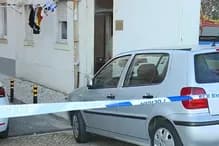
Pilgrims surround impatient driver who drove into the Senhor dos Passos procession in Nazaré
The PSP police prevented a mass collision after a car broke through a blockade, but had to protect the foreign man who was behind the wheel.

Latest news and stories about police in Portugal for expats and residents.
This page has only 1 story and is not indexed by search engines.
The PSP police prevented a mass collision after a car broke through a blockade, but had to protect the foreign man who was behind the wheel.

Public Security Police (PSP) officers intervened on Sunday, 15 March, to stop a 56-year-old foreign national from driving his vehicle through a religious procession in Nazaré. Despite clear signage and warnings, the driver attempted to force his way through hundreds of pilgrims, causing panic before police successfully intercepted the car and ensured the safety of the participants. No alcohol was detected in the driver's system, and he was identified by authorities following the incident.

A 74-year-old foreign national was arrested in the act.

The head of the Mouraria police station stated they only had one computer to process complaints. Sixteen people contributed.

A mother and daughter have launched the 'Adota Cães Heróis' (Adopt Hero Dogs) project, which partners with the Portuguese Public Security Police (PSP) and the Army to find homes for retired service dogs. The initiative carefully screens potential adopters to ensure they understand the specific needs of these animals, aiming to provide them with a comfortable retirement as a reward for their years of public service.
Growing insecurity and complaints about the lack of resources for officers at the 4th precinct on Rua da Palma have led residents to organise a collection. Local officials are calling for more police action to prevent rising fear.

The officer was transported to the São Francisco Xavier Hospital in Lisbon.

Suspect approached during a police inspection attempted to flee but was intercepted and arrested.

Suspect approached during a police inspection attempted to flee but was intercepted and arrested.

A police pursuit of a car that failed to obey a stop order ended in a collision between a car and a motorcycle, resulting in one injury on the 25 de Abril Bridge.

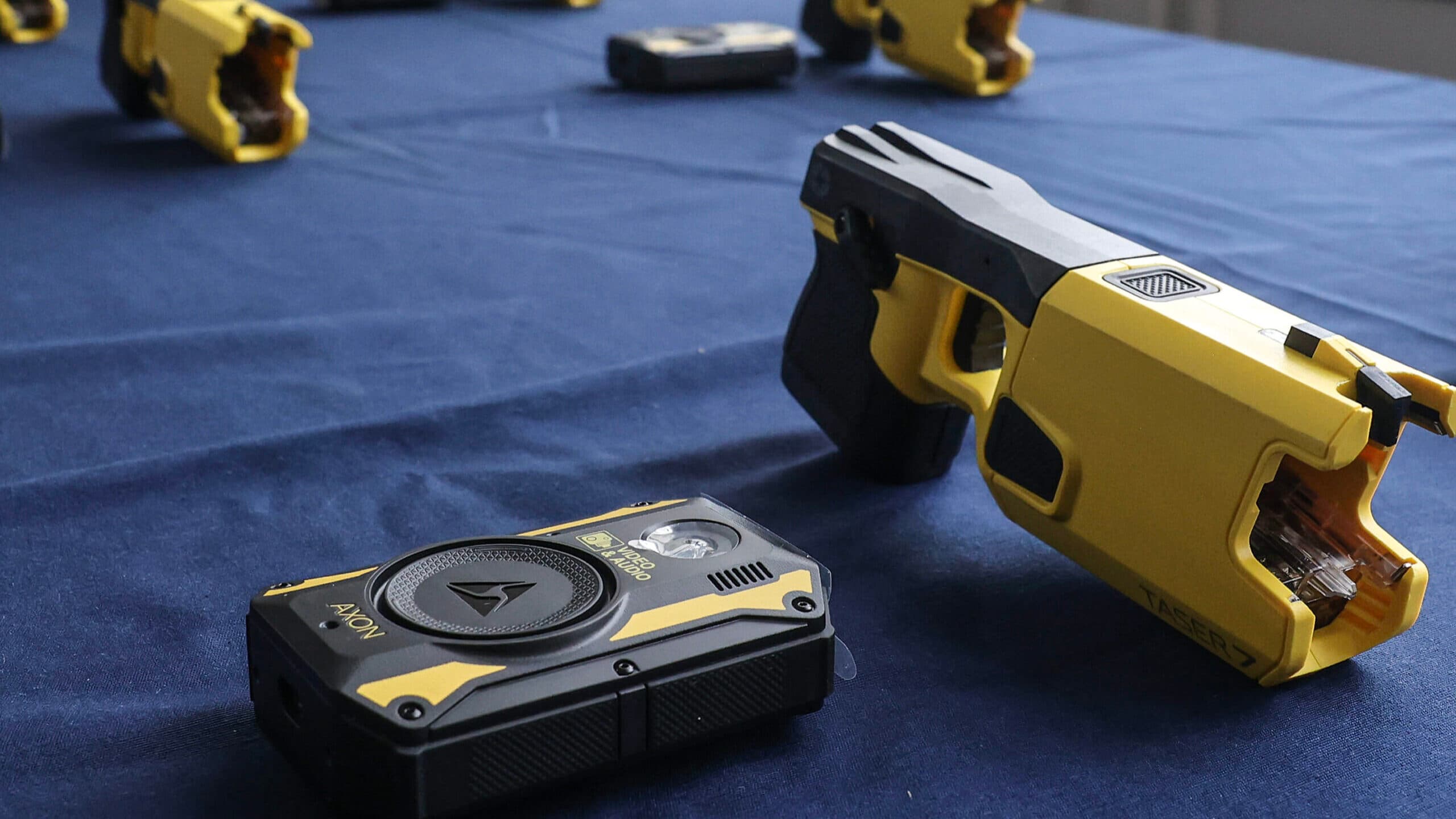
Home News Portuguese police to have tasers Portuguese police to have tasers The PSP and GNR will be reinforced with 1,500 ‘tasers’, and the Government has approved a budget of €4. 3 million for the acquisition of these electric immobilisation devices this year.

The government has approved a 4.3 million euro expenditure to equip police forces with 1,500 new tasers this year. The non-lethal electric weapons will be distributed between the Public Security Police (Polícia de Segurança Pública or PSP) and the National Republican Guard (Guarda Nacional Republicana or GNR). The Ministry of Internal Administration (Ministério da Administração Interna) stated the move aims to improve operational effectiveness and safety for officers. Residents should note that the rollout is planned for 2026.

The PSP (Polícia de Segurança Pública) is Portugal's national civilian police force, founded in 1867. Responsible for defending Republican democracy and safeguarding internal security and citizens' rights, the PSP polices major cities—Lisbon, Porto, Faro—and large urban areas, covering only 4% of Portugal's territory but roughly half the population. Led by a National Director under the Ministry of Internal Affairs, its approximately 21,500 officers handle preventive policing, crime investigation, public order, airport security, diplomatic protection, private security regulation, firearms licensing, and border control (since 2023).
PSP vs. GNR: The PSP is civilian with police-focused training and urban jurisdiction, while the GNR (Guarda Nacional Republicana) is military (gendarmerie) with military training, covering 96% of Portugal's rural and suburban territory. Both share core public safety missions but differ fundamentally in nature, training, and geographic responsibility.

The GNR (Guarda Nacional Republicana) is Portugal's national gendarmerie—a military police force founded in 1911, with origins dating to 1801. With over 22,600 personnel, GNR patrols 94-96% of Portuguese territory, covering rural areas, medium towns, and highways. Members are military personnel subject to military law, responsible for public order, customs, coastal control, environmental protection (SEPNA), firefighting/rescue (GIPS), border control, and ceremonial guards. GNR vs. PSP: The PSP (Polícia de Segurança Pública) is Portugal's civilian police force, covering major cities (Lisbon, Porto, Faro) and large urban areas—only 4% of territory but roughly half the population. PSP handles airport security, diplomatic protection, and private security regulation. Both share core missions (public order, crime prevention), but differ in nature: GNR is military with military training; PSP is civilian with police-focused training.
The man was arrested by officers. He will remain in prison until he receives an electronic tag.

The new minister defended the importance of providing working conditions for security force professionals, without specifying what he intends to do.

A man reported to the Judiciary Police that he lost the money after accepting a job offer.

Pedro Fonseca, previously responsible for anti-corruption investigations, has been appointed deputy national director of the Polícia Judiciária (PJ).
A man was driving with a blood alcohol level above the criminal limit and was arrested by the PSP (Public Security Police).

The events date back to 2004.

The district commander warned of attempted scams and urged the public to contact the police force if they require assistance.

The district commander of the PSP in Leiria said today there are no records of looting or pillaging, warned about scam attempts and urged the public to contact the PSP if they need assistance.

Since 2013, the police have already destroyed 325,000 weapons, preventing them from being used to commit crimes.

The PSP reports that, between 2013 and 2026, it destroyed more than 325,345 weapons of various models and calibres, seized in operations or handed in by members of the public and disposed of by that police force.