Latest news and stories about public opinion in Portugal for expats and residents.
This page has only 2 stories and is not indexed by search engines.
Chega MP Pedro Pinto is set to respond to the Intercampus survey carried out for Correio da Manhã.

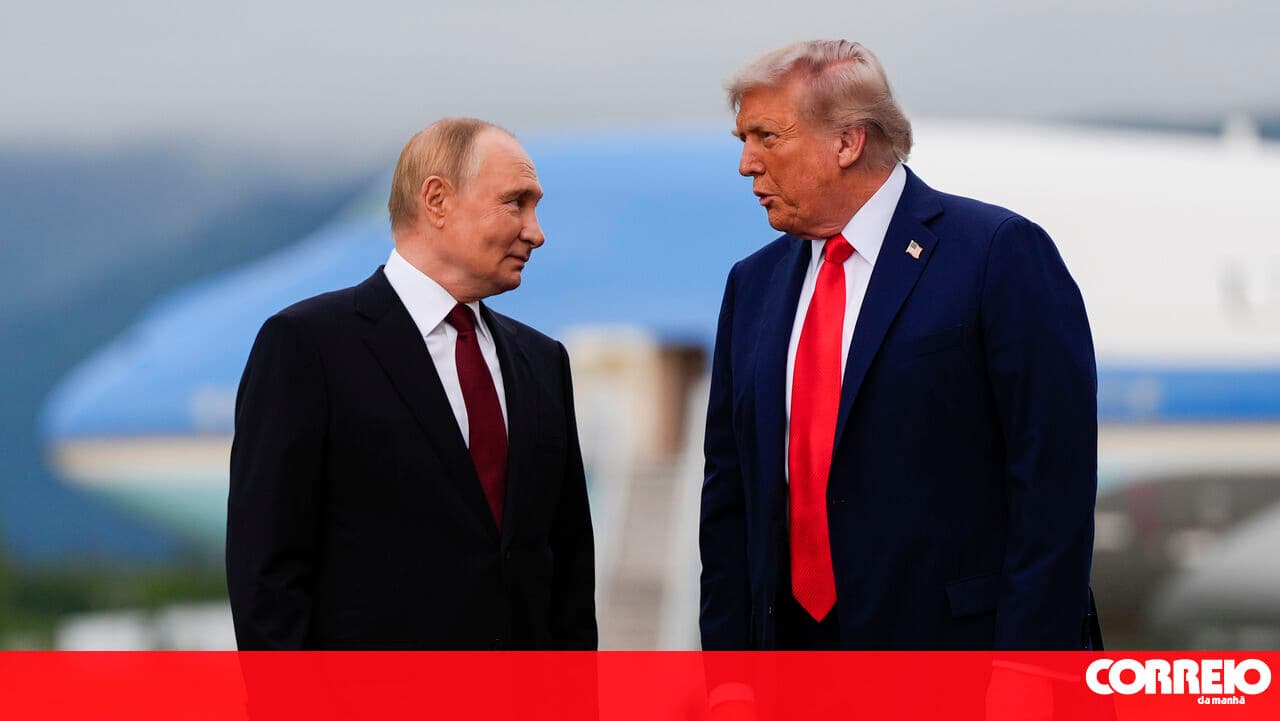
The Patriarch of Lisbon says the rise in the number of foreigners in Portugal does not call into question the Christian identity of Portuguese society. He also accuses several world leaders of being unsettled individuals who only want war.
The Patriarch of Lisbon said that immigration does not challenge or undermine Portugal's Christian identity and values.

The Patriarch of Lisbon said immigration does not threaten or call into question the Christian foundations of Portuguese society, asserting that newcomers do not compromise the nation's Christian identity.
João Cotrim de Figueiredo's social media accounts saw the number of followers increase by 19.7% — between 12 and 15 January — in the week when first André Ventura's 'rather unfortunate moment' emerged and then the allegation of sexual harassment surfaced, which has already led the candidate to criticise the media...

António Costa Pinto, a political scientist and academic, says there is a clear lack of literacy and that the Portuguese do not know how to interpret polls. He also warns about differences between tracking polls.

The world is sick and Portugal isn't feeling very well either. Words have lost their meaning and those in power have lost all shame — and those who want power have too. Newspeak has jumped from Orwell's dystopian literature and become common currency in the real world. Absurdity is commonplace and everything means its opposite.
The candidate says he hears every day on the street that the public are very angry with the political system.

There is an implicit logic in these collective letters that deserves to be deconstructed: the idea that thirty accounts of no harassment would carry more weight than a single account of harassment. Opinion by Helena Gonçalo Ferreira

A tracking poll has become an unexpected focal point of the campaign and the target of daily criticism. What does it measure, how reliable is it, and why did it get things wrong in the past? Conversation with Alexandre Picoto.

By Carlos Rodrigues

The volume of bets on the eventual winner of the elections reached US$108 million this week.

With 24 hours left, Jorge Pinto ultimately opened the door to a vote for António José Seguro, echoing suggestions that had come from social media and public opinion.

António Salvador, of Intercampus, says that polls are “very relevant”, but it is necessary to understand the difference between the various types.

Alexandre Picoto, of Pitagórica, said that polls “have entered the political fray” and that the institutes responsible for them should not have to respond to politicians' criticisms.

António Gomes, of GfK, describes the phrase 'there are polls for every taste' as 'unfortunate' and says there are 'generally minimal differences' between the various surveys.

Clinical psychologist Carolina de Freitas Nunes was on NOW this Thursday and spoke about some of the psychological traits of the presidential candidates who have been appearing in polls as the frontrunners.

The days are approaching when candidates will present themselves as optimistic about the results they expect to achieve. And they have reason to be optimistic, because it was a brilliant campaign.

It feels as if it happened in another life, but there was a time when he seemed invincible. Everything has changed, except his conviction that he will overcome the prejudices people have about him and the poll results.

He entered this race admitting he was only running because Passos decided to stay at home. Now he's first in almost all polls. In this conversation, he talks about the days on the campaign trail and the day after.

Henrique Gouveia e Melo's campaign was in Sintra this Tuesday evening, where the candidate said the polls had not discouraged him.

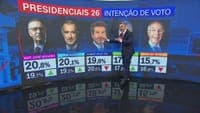
On the day Ventura overtakes Seguro for the first time in women's voting intentions, the daily poll shows a further drop for Marques Mendes (the fifth straight) and for Gouveia e Melo. The number of undecided voters has returned to minimal levels.

Day 6 of the tracking poll reshuffles the leading pack: António Seguro returns to first place, André Ventura is overtaken and drops to third, while João Cotrim de Figueiredo continues to climb and for the first time joins the leading pair in contention for a second-round spot. The instant poll records a five-way technical tie among top contenders, reflecting continued volatility. The aggregated three‑day sample (7–9 Jan 2026) comprises 608 telephone interviews (CATI), drawn via randomly generated mobile numbers with landlines used when necessary; sampling quotas covered gender, three age brackets and 20 geographic strata. At a 95.5% confidence level the maximum margin of error is ±4.06%; 1,201 contact attempts produced a 50.62% response rate and undecided voters were distributed proportionally. Campaigns responded briskly: Mendes’s team dismisses the polls, insisting he will finish first and advance to the second round, while Rangel predicted a surprise from Mendes; columnist Miguel Esteves Cardoso noted an unpredictable, anti‑poll restlessness among voters. Technical direction was by Rita Marques da Silva and the full technical sheet has been deposited with ERC for consultation.

A new IPPS/ISCTE opinion poll finds that almost half of Portuguese expect 2026 to bring continuity at the national level, with a majority forecasting political stability next year. Respondents were asked about expectations for their families, the nation and the international situation: while domestic outlooks skew towards stability and steady consumption confidence, many express concern about a possible deterioration in international affairs. The results highlight a cautious public mood—optimistic about internal political continuity but wary of external risks.