Abstention, the spectre that threatens forecasts for Sunday's election
For this episode we invited João António, director of the Centre for Opinion Studies and Polling at the Catholic University of Portugal (CESOP).

Latest news and stories about public opinion in daily life in Portugal for expats and residents.
This page has only 2 stories and is not indexed by search engines.
For this episode we invited João António, director of the Centre for Opinion Studies and Polling at the Catholic University of Portugal (CESOP).

It's early voting day.
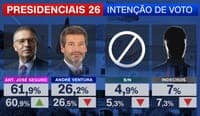
Seguro continues to lead comfortably in voting intentions. Daily polling shows the firmness of voting intentions but also the reasons for mobilisation behind each candidate. See all the data here.

PÚBLICO and RTP publish a poll ahead of the 8 February presidential run-off between António José Seguro and André Ventura. The coverage situates the run-off within broader party shifts evident in recent legislative elections, arguing this realignment may be irreversible and that both the PS and PSD must rethink strategies to stay politically relevant. Commentators note a widespread lack of conviction in either candidate’s stated values — framing abstention as a responsible choice for some voters — and CNN Portugal’s João Marcelino interprets Marques Mendes’s endorsement of Seguro as signalling the PSD leadership’s and prime minister’s tactical aims for the run-off.

The Patriarch of Lisbon says the rise in the number of foreigners in Portugal does not call into question the Christian identity of Portuguese society. He also accuses several world leaders of being unsettled individuals who only want war.
He entered this race admitting he was only running because Passos decided to stay at home. Now he's first in almost all polls. In this conversation, he talks about the days on the campaign trail and the day after.

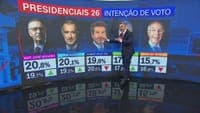
Day 6 of the tracking poll reshuffles the leading pack: António Seguro returns to first place, André Ventura is overtaken and drops to third, while João Cotrim de Figueiredo continues to climb and for the first time joins the leading pair in contention for a second-round spot. The instant poll records a five-way technical tie among top contenders, reflecting continued volatility. The aggregated three‑day sample (7–9 Jan 2026) comprises 608 telephone interviews (CATI), drawn via randomly generated mobile numbers with landlines used when necessary; sampling quotas covered gender, three age brackets and 20 geographic strata. At a 95.5% confidence level the maximum margin of error is ±4.06%; 1,201 contact attempts produced a 50.62% response rate and undecided voters were distributed proportionally. Campaigns responded briskly: Mendes’s team dismisses the polls, insisting he will finish first and advance to the second round, while Rangel predicted a surprise from Mendes; columnist Miguel Esteves Cardoso noted an unpredictable, anti‑poll restlessness among voters. Technical direction was by Rita Marques da Silva and the full technical sheet has been deposited with ERC for consultation.

Presidential candidate speaks of manipulated opinion polls.

The candidate for Belém sees the prime minister's participation in his presidential campaign as natural.

A press roundup covering a poll on the colonies, growing pressure on Marques Mendes, and what is (and isn't) known about immigrants.