Paulo Portas' inauguration marks a new stage in the 900th anniversary celebrations of the founding of Portugal
The swearing-in of Paulo Portas signals a new phase in the commemorative events marking the 900th anniversary of Portugal's foundation.

Latest news and stories about portuguese history in Portugal for expats and residents.
The swearing-in of Paulo Portas signals a new phase in the commemorative events marking the 900th anniversary of Portugal's foundation.

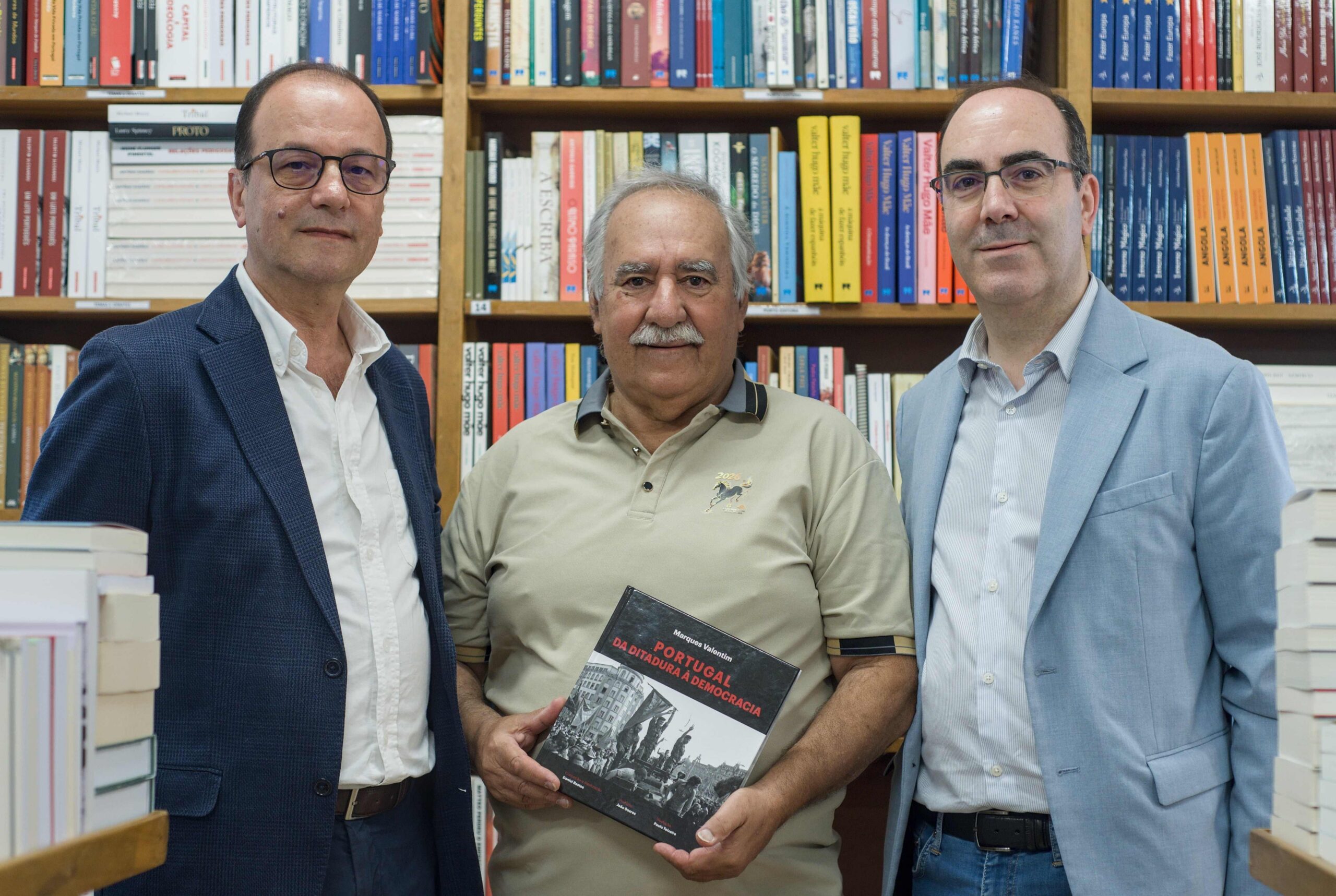
The city of Viana do Castelo held an event for the launch of the book titled 'Portugal: from Dictatorship to Democracy'.

For the first time, a high-ranking dignitary of the Portuguese Catholic Church, responsible for the diocese of the country's second-largest city, declared his opposition to the regime.

50 years later, Eanes remains our president with the best image among the population. But how can the election of the 41-year-old young general be explained? And what role did he play in democracy?

Whether by a stroke of luck or geographical chance, much has been said about the Gulbenkian Foundation over the last 70 years. But there are still facts to be told about its origin: an identity problem created at birth and the mark of the Portuguese dictator. Now, the founder's great-grandson has left, never to return.

She went down in history as the 'Carnation Celeste'. Decades after the 25th of April, her granddaughter decided to take family memories and write a book that tells the true story of her grandmother.

In a time marked by the speed of opinion and the growing polarisation of the public sphere, it may be important to recover a certain ethics of debate. Opinion by Luís de Miranda Correia

The book detailing Portugal's transition from an authoritarian regime to a democratic state will have its official launch in Lisbon tomorrow.
Faced with the genius of Camões, the temptation to find in the poet a politically useful hero has never ceased to be transversal across both the right and the left.

The publication of a piece over 50 years old reminds us that those who possess freedom excessively make it captive and turn others into captives. Opinion by Nuno Pacheco

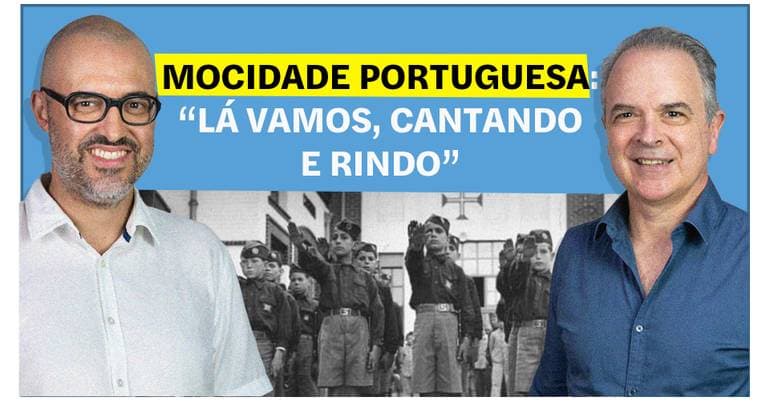
90 years ago, in 1936, the Mocidade Portuguesa and the Legião Portuguesa were founded. What were these organisations, what were their objectives, and what was their true importance in the dynamics of the Estado Novo?

90 years ago, in 1936, the Mocidade Portuguesa and the Legião Portuguesa were founded. What were these organizations, what were their objectives, and what was their real importance in the dynamics of the Estado Novo?

The maturity of a people is also measured by how they look at their past. Insecure societies turn history into propaganda; confident societies turn it into knowledge.

Half a century after the 1976 Constitution, Portugal celebrates its National Day while reflecting on the complex transition from the Salazar dictatorship. Once branded a 'radioactive fossil' of the fascist regime and the 'Day of the Race,' the holiday was nearly abolished after the 1974 revolution. This article explores how political leaders, including Mário Soares and António Ramalho Eanes, successfully 'decolonized' the date by shifting its focus from colonial ideology to the Portuguese diaspora, ultimately rebranding it as the 'Day of Portugal, Camões, and the Portuguese Communities.'

A new book detailing Portugal's shift from an authoritarian regime to a democratic state is being released this June in both Lisbon and the Portuguese community in Toronto.

Despite the anti-parliamentarianism, anti-communism, and some folklore regarding the 'militarisation of politics', neither the 28th of May, the Military Dictatorship, nor the Estado Novo were fascist.

The film 'Pai Nosso: The Last Days of Salazar' is inspired by true events from the life of the man responsible for one of the darkest periods in Portugal's history.
Alice Brito dodges the clichés and Manichaeism of the Salazar dictatorship to reveal, through the lives of the people, how authoritarianism intruded into the intimate sphere. It is no small feat. It is, in fact, almost everything.

The Republic, which had created so many hopes, was living through difficult days. Crises followed one another, and enemies multiplied. This was the ideal environment for a coup that turned into a dictatorship, and which would become enchanted by a young Salazar.

It is one of Portugal's most important monuments, due to its architectural value and the historical and political tradition that gave it its name.

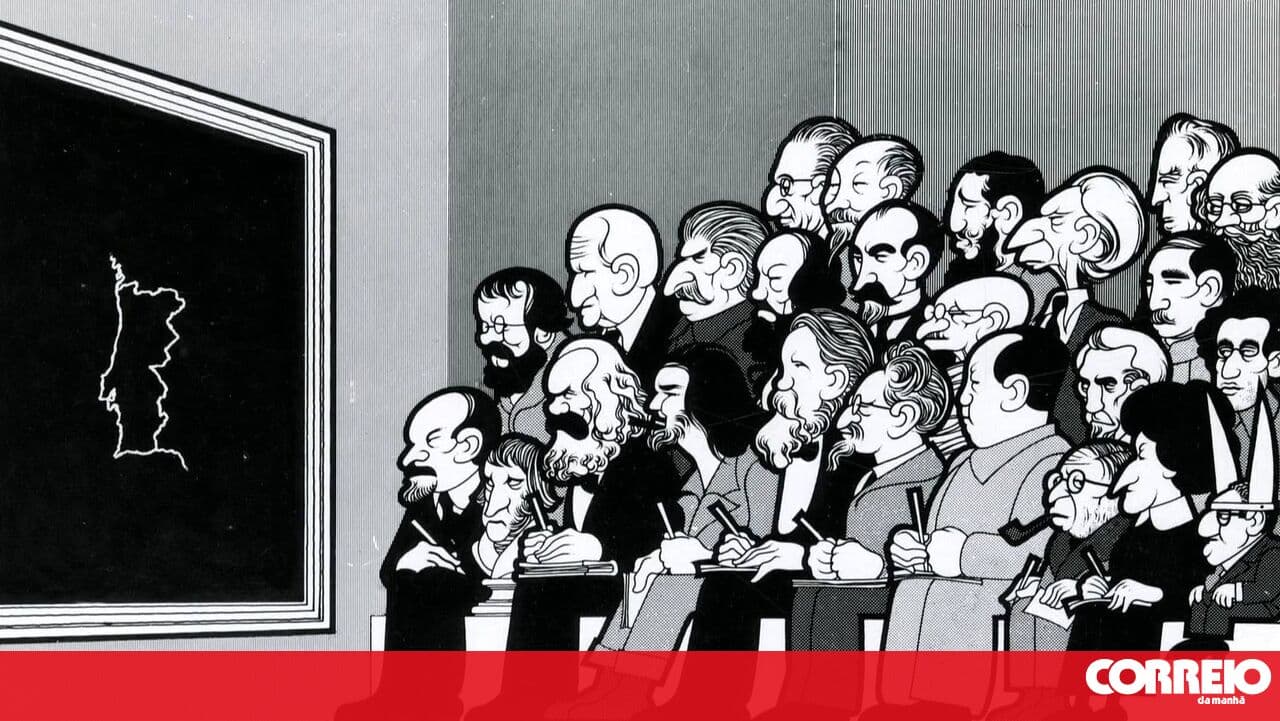
João Abel Manta was a visual artist, architect, painter, and illustrator, but was best known for the drawings that defined the 25th of April revolution. Also, Aston Villa beat Liverpool 4-2.

He was the author of iconic works such as the 'The people are with the MFA' posters and hundreds of caricatures over the years. He died at the age of 98.

Fascinated by the example of 100 women from Portuguese high society who enlisted to care for our soldiers in World War I, director Cláudia Alves tells all in 'Damas'.

He designed the covers for the two songs used as signals for the 25th of April revolution: 'E Depois do Adeus' and 'Grândola, Vila Morena'. A communist militant and anti-fascist, his paintings and public art can be found on the streets and in the underground.

The 25th of April 1974 paved the way for profound social changes that shaped the country – including in science and technology.

The fundamental law that remained in force the longest in Portugal owes its success to the flexibility of a text that proved capable of adapting to the changing political will of the country over 72 years.

Mafalda Anjos, a commentator for CNN Portugal, analyses the importance of António José Seguro's speech at the solemn session commemorating the 25th of April.

At the solemn session in Parliament to mark the 52nd anniversary of April 25th, the President of the Republic warned that “freedom does not disappear all at once, it disappears little by little.” We are following the main moments of the day here.
An analysis of how the 1974 Carnation Revolution is portrayed and covered by media outlets in Portugal.

In the second part of the conversation, lawyer António Garcia Pereira recalls the cases he is most proud of having won in court and then takes a journey back in time to some of the moments that marked him, such as when he saw a colleague murdered in front of him by a Pide agent at the university, or how he experienced the 25th of April and escaped a burst of machine-gun fire from a window, which hit a young girl he tried to save by dragging her under a vehicle.