Latest news and stories about local accommodation in Portugal for expats and residents.
In a municipality with a socialist tradition, Seguro came out on top with 34.85%.

According to the 2021 Census, there were 8,507 dwellings in Castro Marim and, of these, 58.2% were owners' second homes and only 32.1% served as the owners' usual residence.

The municipality of Penela has an area of 134.8 square kilometres, occupying 0.2% of the national territory. In size, it ranks 215th out of Portugal's 308 municipalities.

Patrícia Barão, the new head of the largest association of estate agents, praises the Government's measures but says they were “poorly communicated”. She calls for changes to the law to give landlords more “confidence”.

Heavy snow and light winds made the mountain scenery appealing to visitors.

The Grant-holder Statute prevents grant-holders from being paid to teach at their host institution. Changing a single clause would allow the institution to top up the grant. Opinion piece by Federico Herrera

Orlando Ramalho recalls the prime minister's promise that 'no one was going to be left without a home'. It has yet to be fulfilled.

On the banks of the Tagus, with the Samouco salt pans nearby, Praia do Sal Resort has created the country's first package inspired by ornitherapy, combining well-being with a connection to nature through birds.

Rising rental costs are forcing many households to take in unrelated people or share accommodation with strangers to afford housing, creating overcrowding, reduced privacy and added financial stress. Reports highlight families and single parents accepting lodgers or merging households as a survival strategy amid tight supply and high rents. Tenants and those searching for rental housing should factor in increased competition and consider contract safeguards before taking on housemates.
Update: Público republishes Lusa interviews with personal testimonies that detail crowded living arrangements and financial stress, including accounts of mothers sharing rooms with daughters and of households foregoing appliances, reinforcing earlier reporting on worsening overcrowding and basic-living pressures caused by high rents.
In Lisbon, Vitória lives with her boyfriend and her daughter in a three-bedroom flat shared with another family — a mother who has two daughters. In Porto, Gabriela sleeps in the same room as her two 16-year-old daughters. There are increasing cases of families sharing homes.

Faced with high housing prices, these teachers turned to the housing programme run by Oeiras City Council, which has supported 78 teachers since 2019. They describe what it's like to live in a residence.

The nightclub's extended opening hours are on a trial basis and the decision was taken based on reports from the authorities. The council wants to maintain the area's dynamism without compromising tranquillity.

The Douro region has secured €20 million of approved investment, but further projects are stalled or cannot go ahead because of insufficient financing.

Overnight stays in tourist accommodation in the European Union (EU) set a new record in 2025, reaching 3.08 billion, which represents a 2% increase compared with the previous year, according to data released on Friday by Eurostat. Portugal ranks sixth among the countries with the lowest growth. Portugal recorded 89.6 million ...

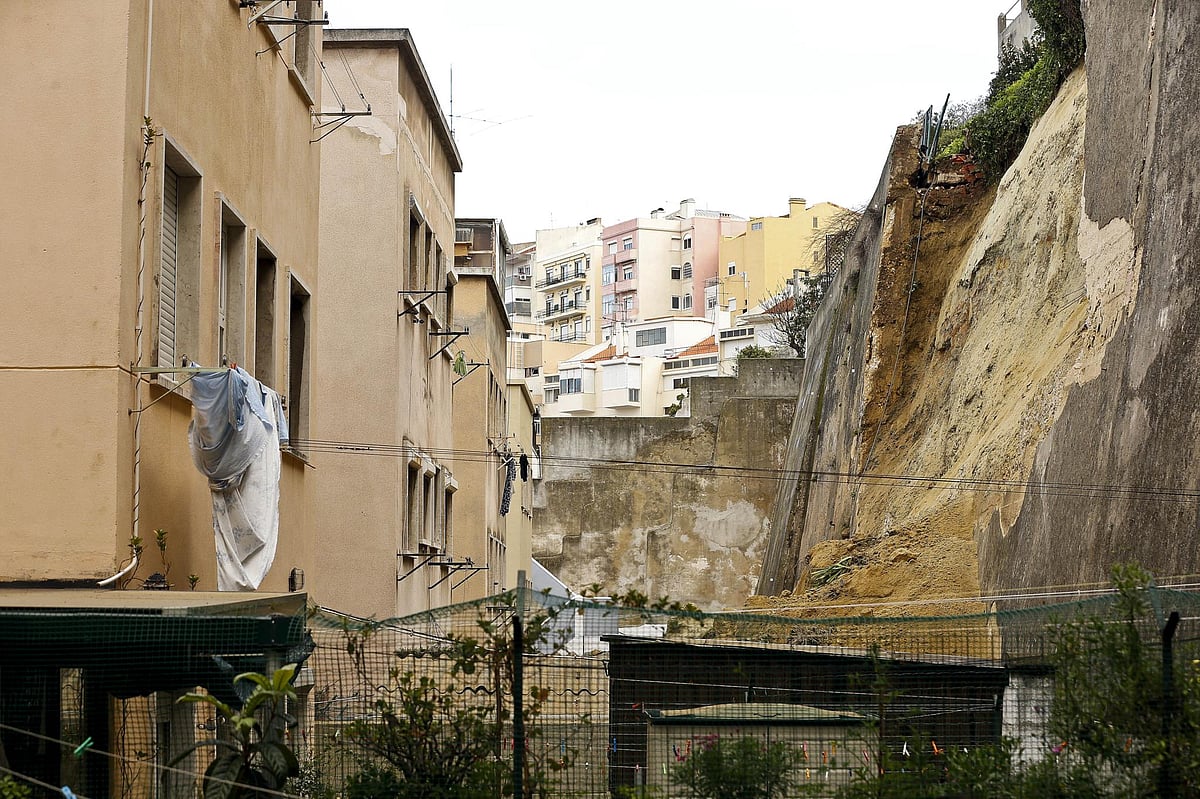
This scenario repeats every year. A seafront restaurant is at imminent risk of collapse.

The Socialist Party (Partido Socialista or PS) in Lisbon is advancing proposals to require private urban-development projects to transfer land to the municipality so it can be used for public housing. Reporting indicates the measure is aimed at increasing the stock of affordable homes in the capital by leveraging development schemes. Those seeking housing in Lisbon should follow council debates — prospective buyers, tenants and developers could be affected if the rule changes land-use obligations.
The Socialist Party (Partido Socialista or PS) is Portugal's main centre‑left, social‑democratic party that has been one of the country’s largest parties and has led national governments since 2015 under António Costa. Its decisions shape taxation, housing, health and immigration policies that directly affect residents and expats living in Portugal.
Public housing (in Portuguese, habitação pública) is housing provided or subsidised by the state or municipalities to make rent or ownership affordable for low‑ and middle‑income households. Requiring developers to transfer land to municipalities frees space for new public housing projects, which can increase supply and ease rental pressure in cities — something those seeking long‑term housing should watch.

Socialist Party (PS)
Portugal's other traditional major party suffered a historic collapse in the 2025 election, dropping from 78 to 58 seats and falling to third place for the first time in democratic history. The party was led by Pedro Nuno Santos from January 2024 until his resignation following the May 2025 defeat. José Luís Carneiro, a 53-year-old former Minister of Internal Administration known for his moderate positioning within the party, was elected unopposed as the new Secretary-General with 95% of votes in June 2025. The Socialist Party governed Portugal from 2015 to 2024, including an absolute majority from 2022 to 2024 under António Costa, who resigned in November 2023 amid a corruption investigation. The PS previously led the innovative "Geringonça" (contraption) coalition government from 2015-2019, a minority government supported by the Left Bloc and Portuguese Communist Party that reversed austerity measures and presided over economic recovery.

Official reporting says average house rents rose 5.3% in 2025, with the largest regional increase in Madeira (6.9%). The rise will matter most to tenants and those searching for rentals — renters should expect continued pressure on budgets and factor increases into housing searches and lease negotiations.

Reports claim more than 700,000 homes are currently empty in Portugal, with many left off the market because owners feel insecure and others needing renovation. Coverage highlights both market and structural issues that keep properties unused. For expats looking to buy, rent or renovate, this signals opportunities in some areas but also warns of renovation costs and local regulatory or fiscal hurdles.

Housing prices have risen to levels that many describe as obscene, driven by a mix of constrained local supply, strong demand, low borrowing costs and investor activity. The resulting price inflation has undermined affordability, altered living choices and intensified regional disparities in property markets. Policy responses and planning changes will be central to cool inflation and expand accommodation options in affected areas.

The Socialist Party (PS) will submit a bill titled “Coming Home” to Parliament proposing the creation of transitional residences aimed at reducing social institutionalisation. The policy seeks to shift care from large institutions to local, secure accommodation that supports reintegration, bridging healthcare and housing needs. Analytically, the measure could advance deinstitutionalisation and community-based care, but its success will depend on funding, local delivery capacity, regulatory safeguards and clear pathways to permanent housing.

Nuno Leal, co‑CEO of Doutor Finanças, says the tax measures in the government’s housing plan — due to be debated in Parliament on Friday — should help increase supply in the market. He concedes the package tends to favour property owners and landlords but considers it “relatively balanced”, noting the measures are centred on those who hold property while aiming to ease supply constraints. The assessment focuses on likely effects on rental supply and owner incentives rather than specific legislative detail.

The Government's housing plan, due for debate and a vote on Friday, is expected to pass after Chega signals it will abstain. Although Chega's final voting decision is not yet locked in, the party led by André Ventura intends to abstain so it can later table and negotiate amendments during the committee stage. The abstention effectively allows the bill to advance despite the Government lacking a clear majority, with potential implications for property costs, local housing policy and market regulation as the measure moves to detailed scrutiny.

Benfica members approved the “Benfica District” project at an extraordinary General Assembly, with 59.24% voting in favour. The development — a campaign pledge of re-elected president Rui Costa — aims to transform the area around the Estádio da Luz, increase stadium capacity and will have material implications for the club's revenue streams, the local property market and urban infrastructure planning.


Portugal Resident •