The Ministry of Education is investigating reports that nearly 80 schools were visited by digital influencers linked to adult content during student association campaigns over the last two years. The investigation follows media reports revealing weaknesses in school management bodies that allowed these individuals to participate in student activities. Parents should be aware that the government has announced new guidelines to prohibit any school activities that contradict educational values.
Over 2,400 organisations are warning of severe child protection risks following the expiration of the European legal framework for monitoring online child sexual abuse.
The PSD will submit a bill proposing age verification at social media account creation to enforce a ban on under-13s and restrict access for under-16s. The measure, described as sensible and largely inevitable in an editorial, aims to protect children and reduce pressures such as the pursuit of likes, though it raises practical enforcement and privacy concerns about verification methods.
A gathering in Porto brings together protesters wearing red capes and white masks with a red cross over the mouth, holding signs that read 'abuse is not a parental right'.
We forced manufacturers of toys and electrical equipment to incorporate safety into the product itself. In the digital ecosystem, the principle should be exactly the same.
A three-year-old boy was found alone early this Wednesday (August 19) on the stairs of a building in Braga, where he had been left in the care of his 15-year-old sister since the weekend, according to a police source. The sister returned some time later, claiming she had gone to buy food, as their mother had left the home over the weekend and has not yet been located by authorities. Both children were taken to Braga Hospital as a precaution and are doing well, with efforts now underway to determine their immediate care. The children's father had been involved in domestic violence cases and was recently found dead in Braga Prison. The Braga Commission for the Protection of Children and Young People stated that the case is being handled by a Multidisciplinary Technical Support Team (EMAT) attached to the local court, a specialized Social Security unit that assists courts in child protection and civil guardianship proceedings.
Maria João Leote de Carvalho, a researcher at CICS.Nova, states that “immediate removal to a shelter may be necessary when violence persists.” The numbers and severity of violence are rising.
A 15-year-old boy killed his mother using a chokehold. Initially perceived as a monstrous act, the story reveals a cycle of abuse: the boy and his 4-year-old sister were victims of physical and psychological mistreatment, which the boy had previously reported. The mother, in turn, was a victim of severe domestic violence by her husband, who is currently awaiting trial. This case highlights a collective failure by state authorities—including police and child protection services—to intervene despite clear warning signs. The tragedy underscores the inadequacy of bureaucratic processes in high-risk domestic violence cases, where urgent action is required but often delayed, leading to fatal consequences.
The child reported that the mother assaulted and threatened to kill his four-year-old sister. Dismissing the evidence and considering the youth manipulative, the court refused institutionalisation and the return of the children to Brazil under the guardianship of the paternal family, as reported by CM.
The family of the youth who killed his mother in Algés had been monitored by the Oeiras Commission for the Protection of Children and Young People (CPCJ) since 2024 due to their 'fragile situation', with judicial oversight beginning in 2025 following a failure to comply with measures.
The Commission for the Protection of Children and Young People was monitoring the case and issued alerts a year ago. The Cascais juvenile court had applied a protection order since mid-2025. A 15-year-old boy and his 4-year-old sister were victims of abuse by their mother, who has now been killed by her son.
The children, who were previously abandoned in Alcácer do Sal, have been taken from their grandmother's care in France, while their mother and stepfather continue to be held in custody in Portugal.
The origin of the injuries remains unclear. Authorities have not found evidence of a crime, but the court has already initiated proceedings to protect the siblings. The child is expected to be discharged in the coming days.
The problem of domestic violence, when it involves children, requires serious reflection on the limitations of the protection system and on what we are willing to accept as the cost of decision-making. Opinion by Hélio Bento Ferreira
Safeguarding is the set of policies, practices, and cultures that ensure all children, young people, and vulnerable adults are protected from violence, abuse, neglect, and exploitation. It is not just a set of rules, but a way of organizing institutions to be safe, competent, and responsible places. This commitment is not exclusive to the Catholic Church; it must be adopted by all organizations working with children and youth, including schools, sports clubs, non-profits, youth movements, cultural associations, and public and private entities. Protection is a collective duty. For safeguarding to be real and effective, it must be based on three structural principles: transparency, accountability, and compliance. Transparency involves clear processes and open communication. Accountability requires creating structures to explain decisions, document procedures, and respond to victims. Compliance serves as the starting point through codes of conduct and mandatory training, but the institutional culture is what truly protects. It is urgent to abandon informal models based on goodwill and instead implement structured systems, continuous training, and active supervision to address both traditional and emerging risks, such as digital abuse.
For one day, they were newspaper headlines. Lara, eight years old, killed to hurt her father. A four-year-old girl thrown from an eighth floor. Children at the centre of reports against those who should have protected them. Beyond the headlines, what remains is what the headlines silence: what they felt, no one wanted to know.
Following recent cases of children killed within a family context, Manuel Coutinho, president of the Institute for Child Support, discusses risk signs, protection failures, and domestic violence. He emphasises that children exposed to domestic violence are also victims and issues a warning: “Hitting is not an act of love.”
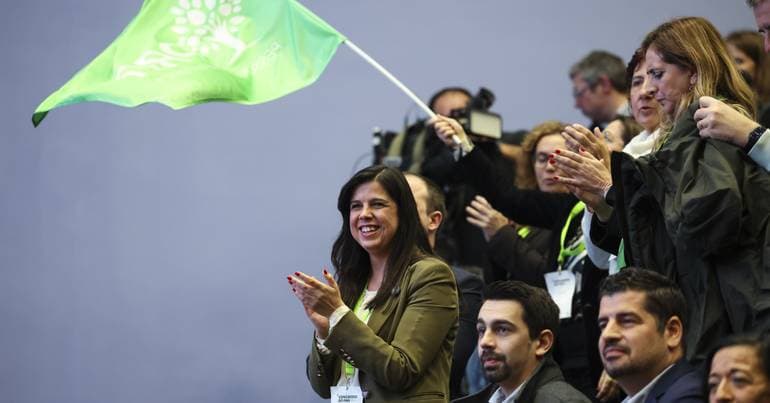
PAN urgently suggests the creation of a national campaign to prevent violence against children, which would allow for the identification of signs of domestic violence and provide information on how to report it and access support.
Document reveals that cases investigated in 2025 are related to the exploitation of minors for begging. Four of the six occurrences were detected in Montijo.
The Communists believe that Portugal 'has good legislation for the protection of children's rights', but lacks the 'resources for its proper implementation'. The solution involves improving the 'functioning of the CPCJ'.
The channel showed the faces of two minor victims of a particularly heinous crime, in a clear violation of the Law for the Protection of Children and Young People in Danger and the Journalists' Code of Ethics.