

Whaling activity in Peniche. Project is digitising historical heritage
There is a project from the New University of Lisbon to digitise the marks of whaling in Peniche.
rtp.pt

Latest news and stories about historical heritage in Portugal for expats and residents.
There is a project from the New University of Lisbon to digitise the marks of whaling in Peniche.
When we hold a document or a rare archaeological piece, or interpret a monument, we become aware that historical memory is a striking force, allowing us to relive the presence of the generations that preceded us. The UNESCO World Heritage Committee recently met in Busan, South Korea, and among the decisions adopted are important examples that resonate with us. Firstly, the cases of the Belle Époque, which correspond to the magnificent theatres of the Amazon. The exceptional value of these monuments symbolises a concept of global Art that mobilises wills and poses a permanent challenge in favour of heritage as a living reality. It is important to say that the association of the two theatres stems from the importance of their diversity. The city of Belém, in Grão Pará, was founded as Feliz Lusitânia in 1616 by Francisco Caldeira de Castelo Branco, opposite the island of Marajó, with the aim of controlling river traffic on the great equatorial river. The city became unique for its layout and pleasant climate. Conversely, the city of Manaus was born in an adverse setting, a swamp where a heterogeneous population and indigenous people had a subsistence economy. In 1850, the Brazilian government delimited the new State of Amazonas and Manaus was designated as its capital, in an unhealthy and swampy environment, fertile in mosquitoes, with the risk of dangerous epidemics. Indigenous people extracted a white liquid from trees, cauchu, which settlers used to waterproof boots and clothing. With the development of industrialisation, latex was discovered for broader purposes, and Charles Goodyear invented the vulcanisation process using sulphur at high temperatures, which allowed for the manufacture of rubber tyres. The rest of the story is well known: thanks to the intervention of John Boyd Dunlop in 1888 and the action of Edouard Michelin, the demand for rubber gained extraordinary momentum in the second half of the century. The Amazon was the centre of this production, and Belém and Manaus were at the heart of the new industrialisation. The population increased significantly, and large shipping companies established direct links to European ports. The Theatro da Paz in Belém was born in 1878, inspired by the architecture of La Scala in Milan, with crystal chandeliers, wall frescoes, gold leaf decorations, bronze statues, Portuguese stones, and Italian marble. The Theatro Amazonas in Manaus was designed by Italians and stood out for the richness of its Carrara marble, Finnish flooring, and Scottish steel, all to demonstrate maximum refinement. Signs of decay soon appeared. The British acquired rubber tree seeds and spread rubber production throughout the empire, gradually removing the monopoly from the Amazon. In four decades, the golden age gave way to decline. During the First World War, Manaus was already a shadow of its former self. Only in 1960 would the free trade zone allow for a certain recovery of its former aura. Now, the UNESCO classification recalls an ancient glory and allows us to affirm how cultural heritage is a way of eternalising the human adventure. Likewise, we take pride in the historical classification of six plantations in São Tomé and Príncipe (Monte Café, Água Izé, Diogo Vaz, S. João, Suny, and Belo Monte), which allows us to remember the courage and dignity of the women and men who lived and worked there hard, keeping their legacy alive.

The parish council president criticises the current state of the property and states they are acting out of a “duty to defend the historical heritage of São Vicente and the interests of the community they represent.”

Albufeira was not born with mass tourism, although it has become synonymous with the phenomenon in Portugal. In the centre of the Algarve city, we discover the heritage that survives and its stories.

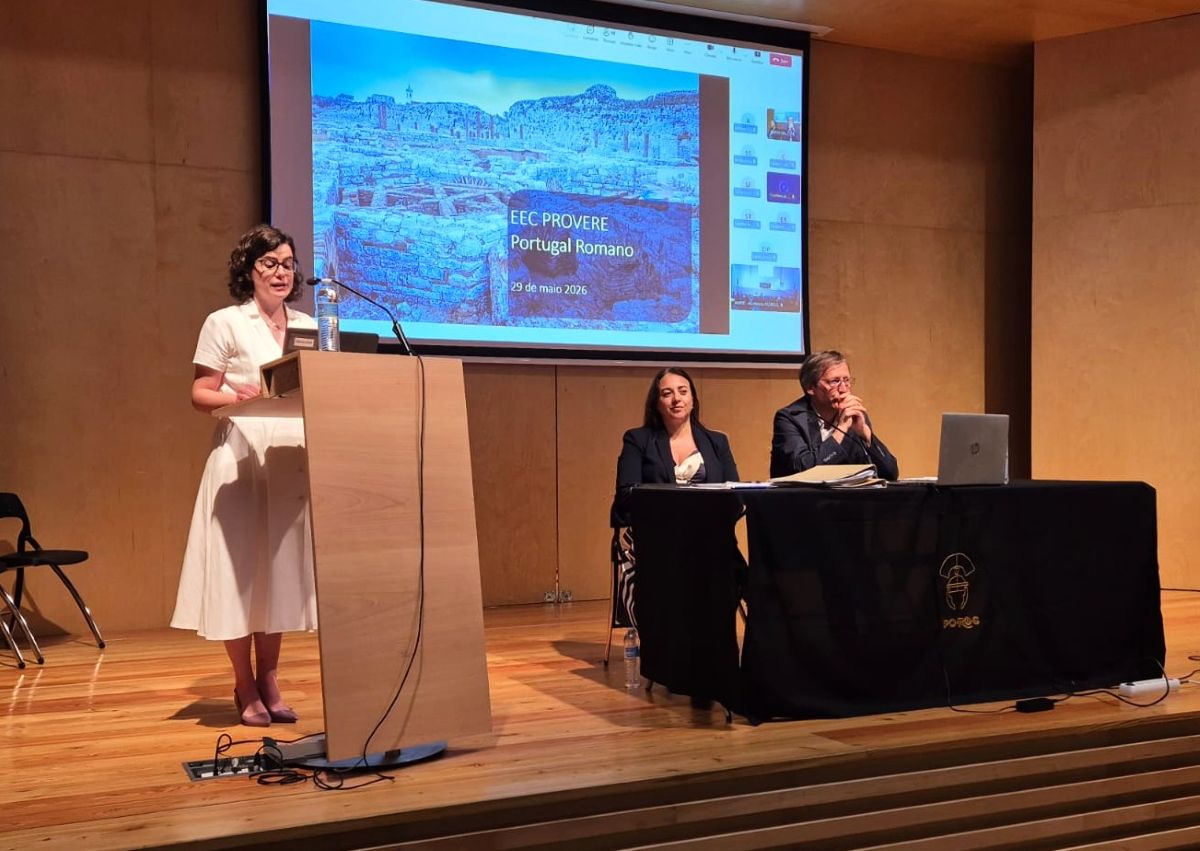
The Roman Portugal project is implementing a new strategy to enhance and promote historical heritage sites within the Central Region of the country.
A report on the visit of the Duke and Duchess of Edinburgh to Porto Cathedral, highlighting their encounter with Portuguese historical heritage.
