Today's news: Casa Pia, locum doctors and cannabis
Casa Pia, from the Portuguese first division, is accused by the Public Prosecutor's Office of having received more than one million euros from the Russian club FC Akhmat and of concealing the origin of the money to circumvent European Union sanctions. The decree-law that changes the rules for locum doctors in the Service ...

Belém's powers are broader than previously thought.
Portuguese people did not know that the president is the manager of hospital emergency services.

Cotrim de Figueiredo and abortion legislation: 'It seems unreasonable to me that a decision can be taken without the father's knowledge'
The presidential candidate, a guest of Santana Lopes, said on Tuesday in an interview on Now that he would like the father's opinion to be incorporated 'with greater legal force' in cases of voluntary termination of pregnancy (IVG, abortion). 'It seems unreasonable to me in a democratic society that a decision can be taken without the father's knowledge of the being whose life is to be terminated,' he said.

Revista de imprensa. Novo Banco avança para o Supremo contra Vieira e mensalidades de lares disparam
A press roundup reporting that Novo Banco has escalated legal action to the Supreme Court against Vieira, while monthly fees at residential care homes have risen sharply.

Teresa Almeida re-elected president of the Lisbon CCDR
Teresa Almeida was validated by 70% of local councillors in indirect elections. Education and health are due to be transferred to the CCDRs in 2026, while a revision of the PROT will unify 52 municipalities into a single instrument.
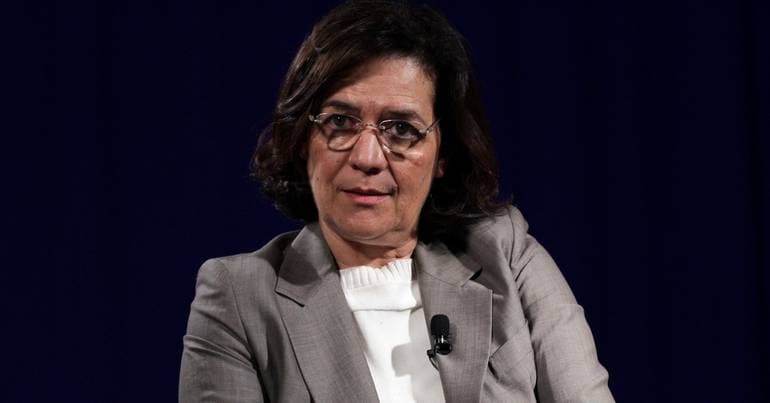
Church received 95 compensation claims for sexual abuse: 84 proceed to financial compensation
The Commission also reveals that some people did not attend interviews with the Commission of Inquiry nor did they request a rescheduling.
Concerned about emergency response, firefighters request an urgent meeting with the Prime Minister
Associations insist on creating a single command structure and say the Framework Law on Civil Protection “should be approved before the Framework Law on Health”, reminding that they are the ones “on the front line”.


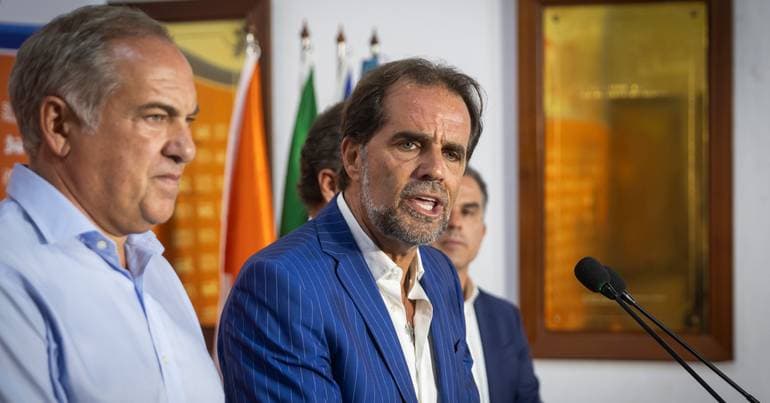
Albuquerque seeks reversal of rule on mobility allowance
Miguel Albuquerque is preparing an initiative to revoke the requirement that beneficiaries have no debts to the tax authorities and social security. “We will never jeopardise fundamental rights,” he says.
Parliament approves Elderly Statute but age doesn't explain old age (nor the €800‑a‑day bill of abandonment)
This Statute is a victory because it is better than not having one: it promises protection against violence, priority in queues and the sacred right to grow old in one’s own home. But let’s be honest: it is a compilation document, not a revolutionary one. It gathers scattered rights but forgets the tools to enforce them. The text talks about the dignity of the carer, yet remains deafeningly silent on their pay, regulation and real support.

11h Associação de Apoio ao Recluso: queixas sobre falta de condições nas prisões pecam por defeito
At 11:00, the Prisoners' Support Association says complaints regarding the lack of adequate conditions in prisons are fundamentally flawed or insufficient.

State paid ~€1.5m to prisoners; hundreds of claims pending
Press reviews report the Portuguese state has paid about €1.5 million in compensation to prisoners since 2016, while roughly 854 compensation claims remain pending, with individual awards noted in reports between about €12,000 and €144,000. The figures underline ongoing legal and human-rights concerns over prison conditions and backlog in resolving claims. Expats working in social services, law or advocacy should watch for potential reforms and budgetary consequences as the justice system responds to mounting claims.

"It doesn't hold much weight": Firefighters' League responds to Civil Protection's doubts over legality of task force supporting INEM
The Firefighters' League created a task force to bolster emergency assistance and support INEM in response to the current strain on emergency medical services. However, Civil Protection has called an emergency meeting, claiming the measure has no legal basis. On CNN Portugal, António Nunes, president of the Portuguese Firefighters' League, answers the accusations.
Portuguese Firefighters' League rejects claim that ambulance reinforcement is illegal and criticises Civil Protection
The president of the Portuguese Firefighters' League (LBP) rejected suggestions that the ambulance task force, set up to bolster support, is 'illegal' and expressed regret over statements from Civil Protection, which said today it will open an investigation into the operation.
Civil Protection opens proceedings against ambulance reinforcement
Civil Protection says the ambulance reinforcement created by the Portuguese League of Firefighters amounts to “a parallel system, without any legal framework”.

Civil Protection launches inquiry into ambulance reinforcement by the League of Portuguese Firefighters, deeming it illegal
Civil Protection will open an inquiry into the 'task-force' of ambulances created by the League of Portuguese Firefighters (LBP) for pre-hospital rescue, considering the operation illegal and that it was 'marginally created', the body revealed. In a response sent to Lusa, the National Authority for Emergency and Civil Protection (ANEPC) says it will open a ...

New measures for health in Portugal
Home News New measures for health in Portugal New measures for health in Portugal On 8 January, the President of the Republic promulgated a decree providing for the centralisation of external emergency services within the National Health Service ( SNS), the so-called regional emergency services.

Parliament approves Older Persons' Statute; PCP voted against
The statute includes a set of rights covering protection of personal integrity and measures to combat violence, health and social protection, as well as culture, education, leisure, housing and mobility.

Marcelo promulgates government's health reform
President Marcelo Rebelo de Sousa has promulgated the government’s health reform while formally requesting improvements to three related decree-laws. His interventions focus on the decree-law that centralises emergency services regionally and on the new regime for hiring locum doctors, where he identified unclear requirements and potential incompatibilities. The request for clarification signals legal and policy concerns that could prompt amendments, highlighting tensions between centralised emergency planning and the need for a flexible medical workforce.

Trump demands total control of Venezuelan resources
El Nacional reports that Donald Trump pressed Venezuela’s interim government for total control of the country’s oil resources — a demand with clear geopolitical and economic consequences that raises questions about sovereignty, access to revenues and the role of external actors in a fragile political transition. Separately, Jornal Público’s analysis shows that between 2019 and 2024 some 75 per cent of drivers who died with alcohol in their system had blood-alcohol levels meeting the threshold for a criminal offence, spotlighting enforcement gaps, road-safety policy failures and the need for improved prevention and data collection. Taken together, the items illustrate linked governance challenges: contested control over strategic resources on one hand, and systemic public‑safety and criminal‑justice issues on the other.

Marcelo Rebelo de Sousa expects to sign into law 'shortly' the SNS measures returned to the Government
The Portuguese president says he will soon sign into law the legislative measures for the National Health Service (SNS) that were returned to the Government for reconsideration.

4 hours ago — Number of homicides in 2025 was the highest since 2018
Jornal de Notícias reports that at least 108 people were intentionally murdered in 2025, marking the highest number of homicides since 2018. Separately, the President of the Republic returned three decree-laws to the Government that sought to implement reforms in the health sector, a move with legal and political implications for emergency services, public safety and ongoing healthcare policy changes. These developments highlight rising concerns about violent crime alongside contested attempts to reshape healthcare governance.

3h — President of the Republic returns legislative instruments relating to the health sector to the Government
Live update (3h): President Marcelo has returned several decree-laws (diplomas) on the health sector to the Government, asking for improved formulations rather than vetoing the measures outright. The Government says it will identify opportunities to refine the texts and will not abandon the reform agenda; the move delays implementation and creates scope for legal, political and technical adjustments to the planned healthcare reforms.