Latest news and stories about education quality in government in Portugal for expats and residents.
Pupils warned that, even though they are minors, there will be consequences if they commit acts that could be classified as crimes.
The PSP has launched a month‑long school operation, 'Violence? No, thank you!', delivering awareness activities for the whole school community on school-based violence, weapons possession/use and juvenile delinquency. Targeting pupils in the 3rd cycle of basic education and secondary schools, the campaign combines prevention and legal deterrence by warning minors that violent acts can carry criminal consequences. The initiative aims to reduce incidents, improve reporting and engage schools, families and staff in safeguarding measures.

The operation 'Violence? No, thank you!' will run until the end of the month and is aimed at pupils in the 3rd cycle of basic education and in secondary education.

Argues that prohibiting artificial intelligence in universities is unrealistic and misguided, highlighting the impracticality of an outright ban and the negative consequences for teaching, learning and academic progress.

In one of the three polling stations run by the Union of Parishes of Oliveira, children vote on the transport they use to get to school, on school meals and on sport — or even on superheroes.

Marcelo Rebelo de Sousa is preparing to step down from active politics and return to the classroom.

A union representative says pupils have been 'permanently soaked' in container classrooms since the start of the €13 million building works. The municipal council says it will award the contract for a covering next week.

On a day packed with campaign events, the presidential candidate renewed his appeal for votes from both the left and the right, positioning himself as the solution against 'extremisms'. 'The campaign ends today, but our work does not,' he told supporters.
Of the 222 schools surveyed, 57% have teachers who agreed to postpone their retirement. The regional distribution does not correspond to the areas where the teacher shortage is most pronounced, warns MEP.

Seguro asks voters to support sending the health sector and state schools to a second round (run-off).

Most school groupings have teachers who agreed to postpone retirement this year, according to a survey by Missão Escola Pública, which questions the effectiveness of the measure.

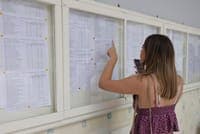
The reduction from two to one higher-education entrance test has not been finalised. The National Commission for Access to Higher Education warns about deadlines and says the change would involve a time-consuming process.

It seems the minister has embraced the new trend of academic capitalism which, according to some authors, combines the scientific pursuit of truth with the economic maximisation of profits. Opinion piece by Alberto Amaral

A survey by the civic movement Missão Escola Pública finds large gaps in staffing: about one third of schools reported teacher shortages during the first term, with problems spreading into the Centro and Norte regions and retirements flagged as a contributing factor. School leaders warn of repeated class disruptions and reliance on temporary cover, prompting calls for faster hiring and retention measures. Parents and those arranging schooling should confirm local staffing and contingency plans with individual schools.
An Missão Escola Pública (Public School Mission) is a grassroots civic movement in Portugal that has spent months surveying heads of school groupings ( agrupamentos de escolas ) and standalone schools to collect complaints and evidence about problems in the education system. Its months-long survey compiles school leaders' reports to inform public debate and policy discussions, so those working in schools or parents should be aware of its findings.

The unfortunate decision by the Ministry of Education (MECI) affects thousands of pupils across hundreds of schools, undermining a process that has been developing for decades and that requires continuity to produce lasting effects.

Unions and headteachers describe a moment of crisis in schools.
The overall state of Portuguese science should concern us all, at a time when the future funding and organisation of national science is being debated. Opinion by João Ramalho-Santos

The former leader of BE (Left Bloc) recalled that the 'geringonça' lowered tuition fees and cut transport prices. Catarina says she did “all of that against the right and against Seguro's collaboration with Passos”.

Teresa Almeida was validated by 70% of local councillors in indirect elections. Education and health are due to be transferred to the CCDRs in 2026, while a revision of the PROT will unify 52 municipalities into a single instrument.

The President of the Council of Rectors warns that the word “freely” is missing from the text on the autonomy of higher education institutions, for example.

Since September 2025 — when the 'Escola Segura' 25/26 operation began — the GNR has recorded 16 cases of addiction-related behaviour and 77 instances of disruption to school activities.

Portugal’s Judicial Police (PJ) has launched a first-of-its-kind campaign to tackle online radicalisation among young people, aiming to alert schools and families to warning signs, raise awareness, prevent recruitment and disrupt extremist influence across digital platforms. The initiative is framed as a preventive, educational and investigative effort combining outreach to educators and parents with targeted policing online. Separately, The Guardian reports heightened international tensions as former US President Trump is reported to be considering military options against Iran following a violent crackdown, underscoring how domestic efforts to shield youth from radicalisation sit alongside broader geopolitical risks.

The government will introduce compulsory Physical Education for 1st‑cycle pupils in public schools from the next school year, affecting around 330,000 children. The Budget Law commits to hiring the teachers needed to deliver the measure but does not specify how much will be invested or the number of weekly hours to be allocated. The lack of detail raises implementation questions — recruitment timelines, teacher training, regional distribution, and fiscal impact — and creates uncertainty about curriculum time and equity of provision across schools.