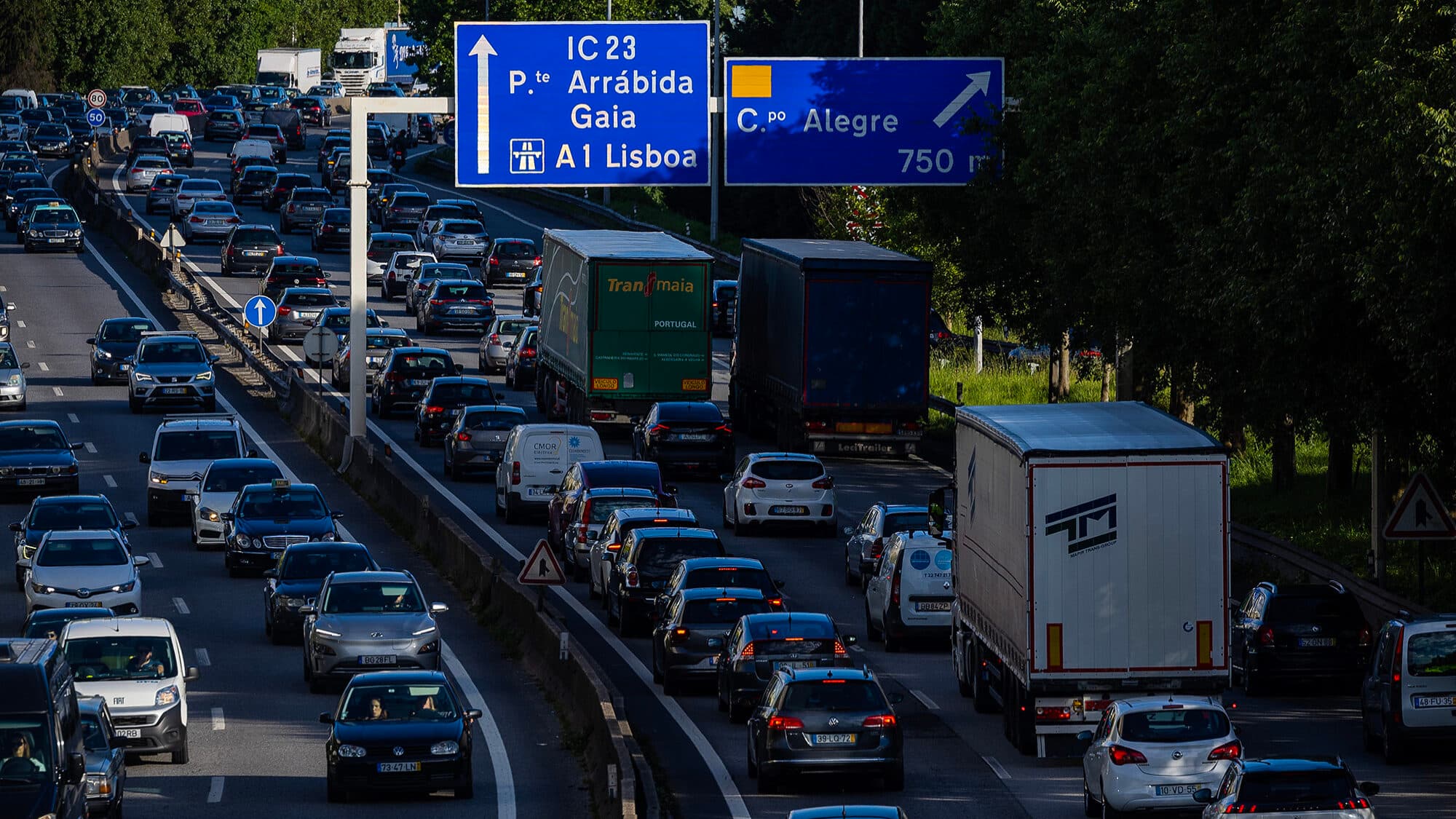
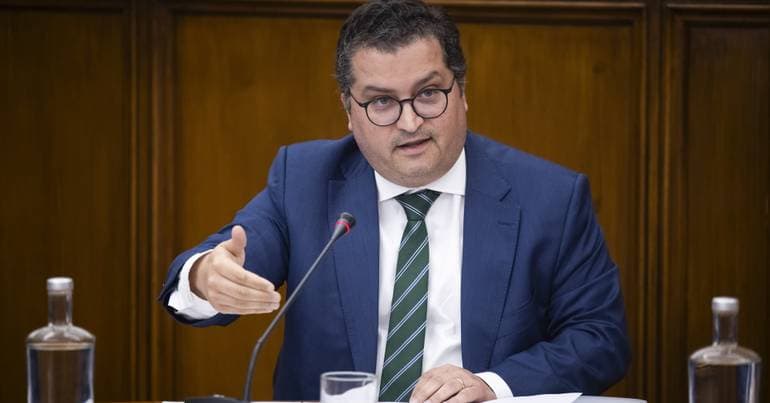
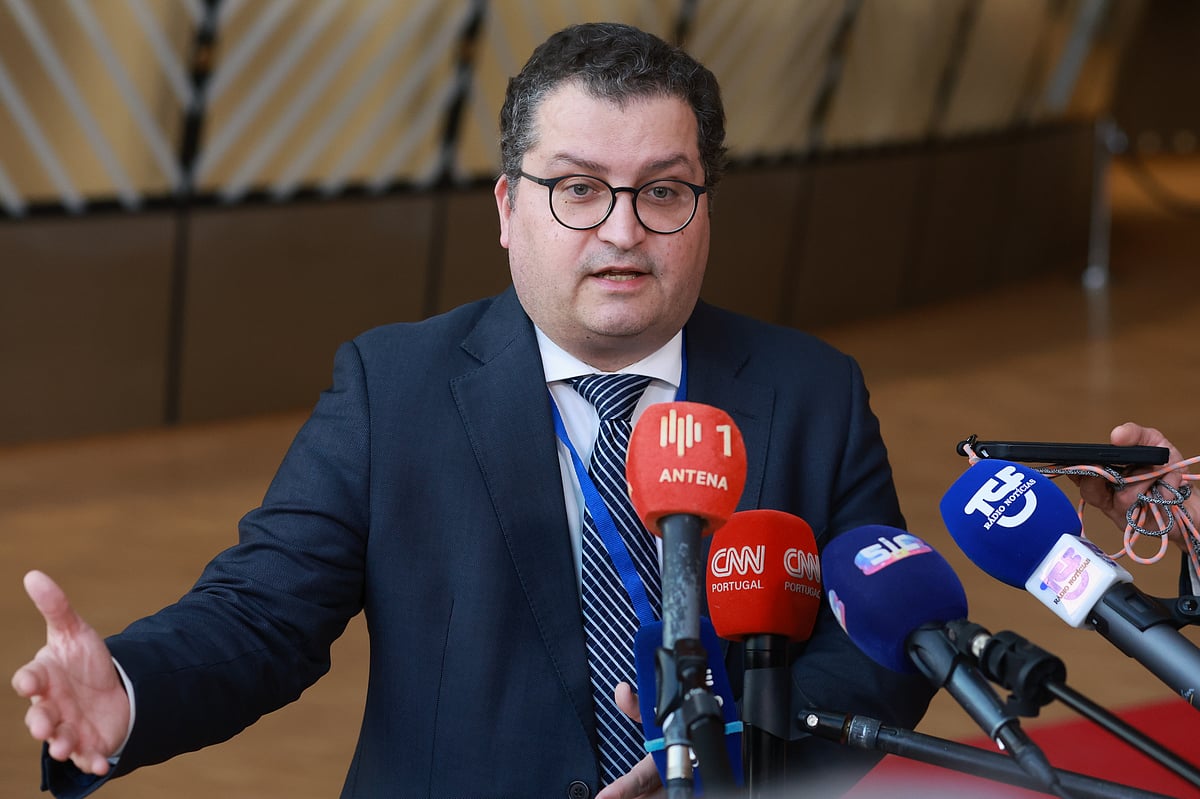
The government has approved a change to the payment model for the Single Circulation Tax (Imposto Único de Circulação or IUC). Minister of the Presidency António Leitão Amaro announced that the tax will now be settled on fixed dates rather than being tied to the month of a vehicle's registration.
The IUC is the Imposto Único de Circulação (IUC), Portugal's annual vehicle circulation tax charged on cars, motorcycles and other vehicles. If you own or import a vehicle as an expat you must pay the IUC each year to the tax office (rates depend on age, engine size and emissions), and recent news says the payment date will be fixed on the calendar.
New legislation published in the Diário da República authorizes the government to change the payment model for the Single Circulation Tax (Imposto Único de Circulação or IUC). Starting in 2027, the tax will move to a fixed payment schedule rather than being tied to a vehicle's registration month. The transition year of 2027 will feature single or split payments depending on the tax amount, with a permanent format taking effect in 2028.
The IUC is the Imposto Único de Circulação (IUC), Portugal's annual vehicle circulation tax charged on cars, motorcycles and other vehicles. If you own or import a vehicle as an expat you must pay the IUC each year to the tax office (rates depend on age, engine size and emissions), and recent news says the payment date will be fixed on the calendar.
The Official Journal (Diário da República) is Portugal's government gazette where laws, decrees and public contracts are formally published and take legal effect. Public‑private partnership approvals and other official notices — like the launch of the Central Algarve Hospital PPP — are published there so residents and businesses can find the authoritative text.
President Marcelo Rebelo de Sousa has delayed his decision on a decree-law aimed at reducing VAT on construction to 6% and lowering IRS on rents up to 2300 euros to 10%, creating uncertainty for the housing sector.
In Portugal, nearly 651,000 taxpayers were exempt from the Municipal Property Tax (IMI) in 2024 due to low incomes and reduced property values. This exemption affected 650,907 taxpayers, covering over 2 million rural and urban properties. The criteria for exemption include a gross income cap of €16,398.1 and a property value limit of €71,296.4. The IMI collection for municipalities was €1,500.3 million, showing a slight decrease from the previous year. The OECD has suggested reforms to the property tax system to support the housing market.
Montenegro announced two measures this week amidst political pressure regarding the tenure of Luís Neves: an extraordinary supplement for pensioners earning up to 1,611 euros, to be paid in December, and an income tax (IRS) cut up to the 6th bracket. These moves, which mirror tactics used by the previous administration under Costa, are viewed as short-term political maneuvers to secure support rather than addressing long-term structural issues like the sustainability of the Social Security system or meaningful tax reform. Despite the government's claims of tax relief, the incremental nature of these changes provides little real benefit to families, serving primarily as a tool for political survival at the taxpayers' expense.
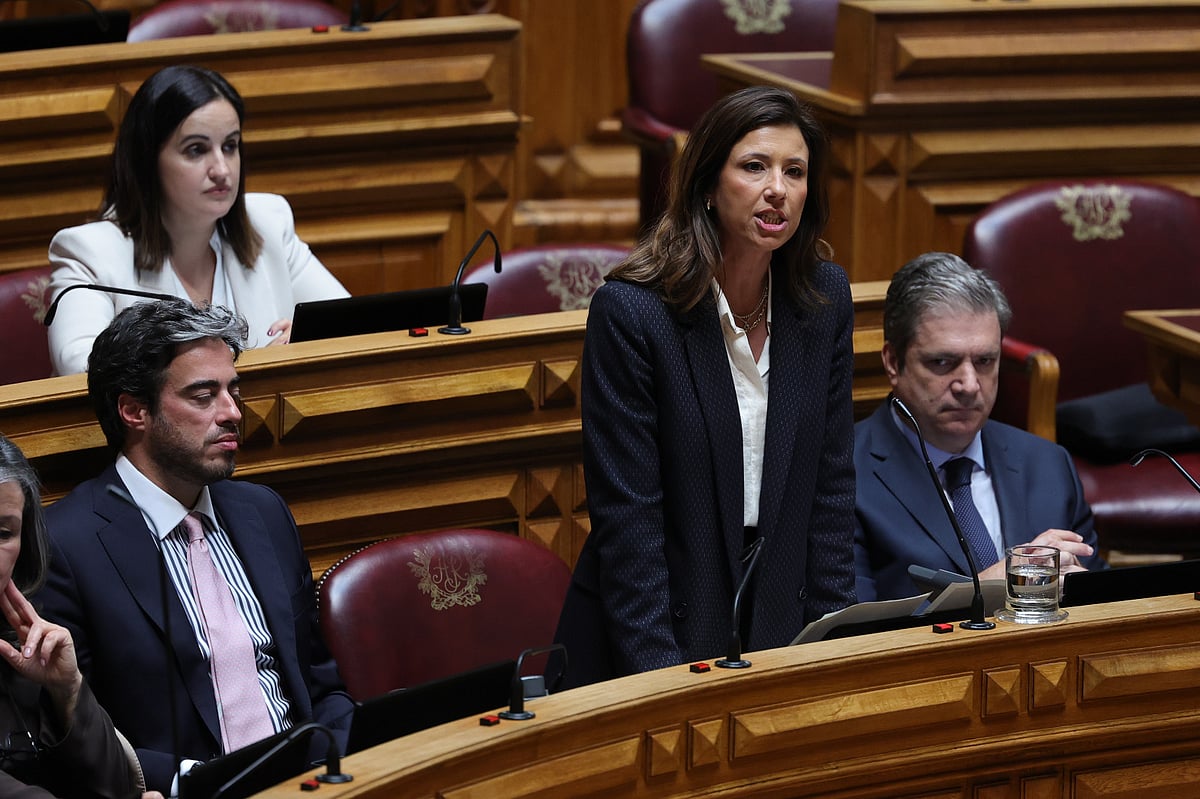
It is “urgent” to move forward with reforms to the State, Social Security, the tax system, and the Justice system, according to the liberal leader, who admits she was satisfied with the new appeal from Passos Coelho. Mariana Leitão expects a more dialogic PSD and says the Prime Minister must fulfil what he promised during the campaign and listen more to the parties.
The parliamentary sessions of the Liberal Initiative (IL), taking place next Monday and Tuesday, will be dedicated to what the party considers 'urgent reforms the country needs,' bringing figures close to the party to panels held at a hotel in Porto. On Monday morning, after the opening speech by parliamentary leader Mário Amorim Lopes, MP and former IL leader Carlos Guimarães Pinto will debate State Reform with economist Ricardo Arroja. On Tuesday morning, a panel on Tax Reform will feature Mário Amorim Lopes and university professors Pedro Brinca and Luís Aguiar-Conraria, the latter of whom was appointed as an economic advisor to the President of the Republic, António José Seguro. The event will conclude with a closing address by IL president Mariana Leitão.
To issues already under discussion, such as the restructuring of the Court of Auditors and the INEM, are now added the reduction of IRS, the cases involving Neves, and the purchase of frigates. Parental leave should be finalised soon.
There is a new reduction in IRS withholding tax rates up to the 6th bracket, meaning for those with incomes up to 43,090 euros. The measure will cover more than two million households and will be applied retroactively to January.
With a highly unpopular Government, dragged down by Luís Neves & Co., Montenegro needed to change the subject. He announced the extraordinary pension supplement and the reduction of income tax. It is more expenditure, less revenue, and a smaller buffer for a negative economic cycle.
The Wall Street Journal reports that Jacob Coxon left the company due to fears that the technological race is creating self-improving systems capable of escaping human control.
Margarida Davim, a commentator for CNN Portugal, also analysed the measures announced by the Government this Tuesday. Luís Montenegro stated that the executive will grant an extraordinary supplement to pensions and reduce income tax.
PS Secretary-General José Luís Carneiro accused the Government of profiting from rising fuel prices and revealed that he submitted a proposal to Parliament to reduce VAT on fuel and food. During a visit to the AgroSemana agricultural fair, Carneiro highlighted that this is the third time the Socialist Party has proposed such a measure, which has previously been rejected by the AD, the Liberal Initiative, and Chega. He claimed the Government has gained over one billion euros in tax revenue due to inflation and fuel price increases, arguing that the upcoming record price hike will further burden citizens. Carneiro also criticised Prime Minister Luís Montenegro for his perceived insensitivity to the rising cost of living.
The leader of the Liberal Initiative (IL) claims the middle class is 'under attack' and has become 'invisible' to those in government. Mariana Leitão accused the PS and PSD of abandoning the middle class because it no longer carries the same electoral weight as it once did. During the 'A’Gosto da Liberdade' event in Quarteira, Leitão criticised Prime Minister Luís Montenegro for failing to deliver on promises of reform and tax cuts, labelling his proposed sovereign wealth fund as 'confiscation'. She proposed three key measures: simplifying and lowering income tax (IRS), cutting bureaucracy, and reforming the pension system to introduce individual capitalisation accounts for younger generations.
The president of the Iniciativa Liberal party, Mariana Leitão, will advocate for the need to pursue reformism in Portugal during the 'A’Gosto da Liberdade' event in Quarteira. The party plans to unveil a comprehensive tax reform that goes beyond minor adjustments to corporate and personal income taxes, aiming to reduce the burden on producers. The speech is also expected to address reforms in Social Security, Civil Protection, and Justice, while criticizing the government's perceived lack of courage to implement structural changes.
With no room to announce measures, Montenegro chose to raise expectations: recovering TAP's losses and using the new position in REN to lower energy costs. And he could not resist hinting that he will lower income tax again and provide a bonus to pensioners.
Starting in 2028, the IUC will be settled on a fixed date instead of the month of vehicle registration. In 2027, there will be a transition period with the tax being paid in October.
The EU Council has issued recommendations for Portugal, focusing on key areas such as healthcare investment, housing market accessibility, tax system reform, and pension sustainability.
Miranda Sarmento announced a tax justice reform and advocated for further cuts to personal and corporate income tax, as well as measures to reduce state bureaucracy, on the sidelines of the Franco-Portuguese Conference.
The Minister of Finance stated this Friday, June 19, that the Government will “move forward shortly” with the reform of tax justice, specifically with a review of tax rates. During a speech at the Franco-Portuguese Economic Conference in Lisbon, Joaquim Miranda Sarmento highlighted necessary measures to address the country's main constraints, namely in human capital, bureaucracy, and the labour market. Regarding fiscal simplification, he indicated that the reform of tax justice and tax litigation will proceed shortly, including a review of rates. Furthermore, he highlighted the reform of the State to “extinguish and reduce the number of entities, but above all to combat bureaucracy, and in those entities where” there is “perfect awareness that they are a bureaucratic problem, such as the APA [Portuguese Environment Agency], ICNF [Institute for Nature Conservation and Forests], IRN [Institute of Registries and Notaries], and CCDR [Commission for Coordination and Regional Development].” The minister also signalled the need to continue reducing marginal IRS (personal income tax) and IRC (corporate income tax) rates, noting that even though they are no longer the highest in the OECD, they are “still quite high.” For this year, Miranda Sarmento emphasized that, “despite all the difficulties,” it will be possible to achieve “growth of around 2% of GDP, well above the Eurozone average,” a balanced budget, and continued reduction of public debt. At this conference, focused on relations between Portugal and France, the minister listed examples of investments in Portugal, such as BNP Paribas and Natixis, projects which, as a whole, “are critical to the Portuguese economy.” The banking sector is “another success story,” he added, pointing out that “15 years ago the banks were in a very difficult situation; today they are resilient, well-capitalised, profitable, and proof of this was the purchase of Novo Banco by BPCE.” Miranda Sarmento: tax revenue shows that Portugal is doing better than people say. IRS and IRC reductions “are to be implemented,” guarantees the Secretary of State for the Budget.
The Minister of Finance says the executive will move forward with changes to tax justice and advocates for more fiscal simplification and less bureaucracy
The payment of the tax in the month of vehicle registration is coming to an end. In 2027, amounts up to 500 euros will be paid in a single instalment in October. In 2028, IUC amounts over 100 euros may be paid in two or three instalments.
The new partial VAT refund scheme for self-construction of housing is an invitation to tax fraud and the declaration of values below the actual cost of land, the head of the Order of Notaries told Lusa. Among the tax relief measures to increase housing supply, published on May 20...