
Latest news and stories about property market in finance in Portugal for expats and residents.

Colloquial, possibly ironic question about whether Portugal's Alentejo region has become wealthier — likely referring to rising property prices, agricultural profits, investment or tourism.
Natural and climate-related disasters, such as floods and heatwaves, pose a risk to the financial resilience of the European Union (EU), with these phenomena having an increasing impact on access to housing, according to environmental organisation WWF. 'What is not insurable is not financeable.' Property owners and businesses in areas ...

Soaring housing costs are forcing households to share single properties, with extremes of up to six families under one roof, while many workers are taking on additional employment — including third jobs — to meet rent and mortgage bills. The situation points to a shortage of affordable accommodation, rising pressure on the local property market and public services, and wider impacts on health, education and the labour market.
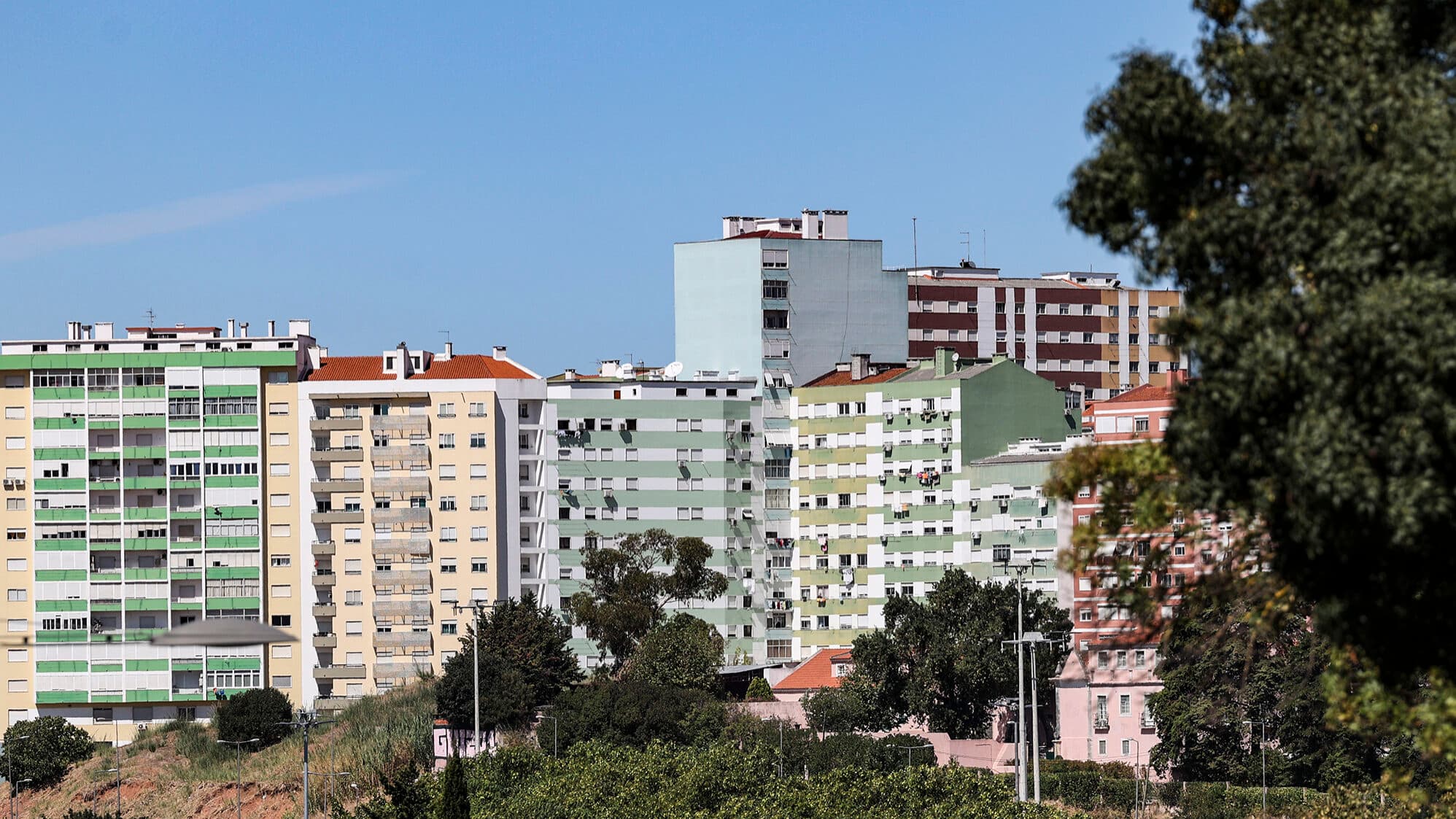
Soaring rental costs and a shortage of affordable housing have pushed many Portuguese families to take in unrelated flatmates or move into shared accommodation as their only viable option.
House rents per square metre rose by 4.9% in December 2025 compared with the same month in 2024 and recorded an average annual change of 5.3% over the whole of last year.

In Lisbon, Vitória lives with her boyfriend and her daughter in a three-bedroom flat shared with another family — a mother who has two daughters. In Porto, Gabriela sleeps in the same room as her two 16-year-old daughters. There are increasing cases of families sharing homes.

Economist João Rodrigues de Santos warns that a public guarantee scheme is encouraging young people to take on mortgages with high repayments and minimal financial headroom, just as Portugal faces major international uncertainty. With wages among the third‑worst in the EU, the end of pandemic-era supports and the prospect of rising interest rates, many borrowers — including first-time buyers and expats — are exposed to rapid financial distress. The combination of weak income growth, a heated property market and policy incentives to lend underestimates downside risks; the commentator argues for tighter underwriting, better safety nets and targeted borrower support to reduce systemic vulnerability.
Update: The economist reiterated in a CNN Portugal piece that the public guarantee is actively pushing young buyers into mortgages with high repayments and little buffer amid heightened international uncertainty. He highlighted that the withdrawal of pandemic-era supports and the prospect of rising interest rates mean many borrowers — notably first-time buyers and expatriates — could rapidly fall into financial distress, strengthening his call for stricter underwriting standards and targeted safety nets to contain systemic risk.

The Development Bank has budgeted €4 billion in guarantees to finance construction, refurbishment and support for housing cooperatives aimed at delivering more affordable homes, according to reporting on the plan. Observers note the measure fills a recent policy gap after a year with few sector‑specific supports and is intended to leverage private lending. Those looking for affordable purchase or cooperative housing should monitor forthcoming programme details and application windows.
The Development Bank in Portugal refers to the state-backed development institution, Banco Português de Fomento (Portuguese Development Bank), which provides financing tools, guarantees and co-investment for strategic public-interest projects. In the housing context it can issue guarantees and support loans for construction or refurbishment of affordable homes and for housing cooperatives, so budgeted sums from the bank directly affect affordable housing schemes.

Home News Which municipalities in Portugal registered the highest increase in house prices? Which municipalities in Portugal registered the highest increase in house prices? According to data released by “ Confidencial Imobiliário”, cited by Executive Digest, Portugal registered a 23.

The agency keeps the rating and outlook stable but warns that trade tensions, geopolitical risks and housing problems could limit growth. Portugal is heading for a third consecutive surplus.

The Douro region has secured €20 million of approved investment, but further projects are stalled or cannot go ahead because of insufficient financing.

A report finds that housing availability in 72 municipalities is inadequate to satisfy current buyer and renter demand.
Real estate agency Porta da Frente Christie's has sold a flat in Cascais for €6.5 million.
The Euribor rate rose this Friday for three and six months and fell at 12 months compared with Thursday. With today’s changes, the three-month rate, which advanced to 2.033%, remained below the six-month (2.143%) and 12-month (2.248%) rates. The six-month Euribor rate, which moved ...

Dinheiro Vivo reports that buying a house in metropolitan and tourist areas in Portugal can be up to seven times more expensive than elsewhere, with Lisbon averaging around €650,000 and other hot spots like Madeira and Faro also well above national norms. The data underline stark regional price divergence that affects affordability and relocation choices. Those searching for housing should factor in significant local premiums and consider suburban or inland alternatives.
Housing prices in Portugal are highest in Lisbon and many coastal areas (notably parts of the Algarve), often two to three times more expensive than interior regions, while Porto and other coastal cities sit in between and inland areas can be much cheaper. Nationally the typical price per square metre is lower than the EU median, while Lisbon is pricier than most Portuguese regions but still generally cheaper than central Paris or London, so prospective buyers should compare city, coastal and interior markets before deciding.

Inflation has hit the hospitality sector, but for neighbourhood cafés and many restaurants the main threat is pressure from the property market. With every patisserie that closes, the neighbourhood crumbles.

A market report highlights Lisbon — especially historic centre parishes such as Santa Maria Maior, Santo António and Misericórdia — consolidating as a European option for North American buyers, with foreign demand concentrated in central neighbourhoods. Consultants say the trend reflects both lifestyle demand and investor interest, which can push prices and reduce rental stock in prime areas. Those seeking housing in Lisbon should note increased competition in central districts and check neighbourhood supply if relocating or investing.

Official reporting says average house rents rose 5.3% in 2025, with the largest regional increase in Madeira (6.9%). The rise will matter most to tenants and those searching for rentals — renters should expect continued pressure on budgets and factor increases into housing searches and lease negotiations.

Outlets report small day-to-day Euribor shifts: three- and six-month Euribor rates rose slightly while the 12-month rate fell or eased marginally, with published short-term averages around 2.02–2.05% (three-month), ~2.13% (six-month) and roughly 2.25% (12-month) depending on the source. The changes are modest but relevant for borrowers with products indexed to short-term Euribor: expats with variable-rate mortgages or loans should check how their lender updates payments and consider whether a switch to a fixed rate or lender review is advisable.
Euribor (Euro Interbank Offered Rate) is the benchmark interest rate at which European banks lend to one another and is widely used as the reference for variable‑rate mortgages in Portugal. Changes affect monthly payments directly: the recent figures reported were 2.034% (3‑month), 2.104% (6‑month) and 2.255% (12‑month), so a rising Euribor typically increases costs for borrowers with tracker or variable loans.

Housing prices have risen to levels that many describe as obscene, driven by a mix of constrained local supply, strong demand, low borrowing costs and investor activity. The resulting price inflation has undermined affordability, altered living choices and intensified regional disparities in property markets. Policy responses and planning changes will be central to cool inflation and expand accommodation options in affected areas.

A housing package has been approved in principle, covering a set of fiscal measures alongside a separate proposal to simplify planning permission. The combined measures are intended to stimulate the property market by altering tax/incentive settings and speeding development approvals, but key details — specific fiscal instruments, implementation timelines and regulatory safeguards — remain to be finalised. The ultimate impact will hinge on policy design, resourcing of planning authorities and market response.

The executive director of AM48 — a property developer managing over €220m in assets — says the housing package has been well received by the sector but warns that there are insufficient financial instruments to enable companies to deliver the programme. She welcomes the government's policy direction but highlights a gap in project financing that could limit implementation and investment. Without targeted credit lines, risk-sharing mechanisms or incentives for private developers, market momentum may stall despite positive policy measures. Strengthening specific financing tools and public–private cooperation is needed to translate the package into completed housing projects.

Nuno Leal, co‑CEO of Doutor Finanças, says the tax measures in the government’s housing plan — due to be debated in Parliament on Friday — should help increase supply in the market. He concedes the package tends to favour property owners and landlords but considers it “relatively balanced”, noting the measures are centred on those who hold property while aiming to ease supply constraints. The assessment focuses on likely effects on rental supply and owner incentives rather than specific legislative detail.

Economist Vera Gouveia Barros argues that the most effective element of the Construir Portugal programme is tax relief on rentals, citing an ‘almost mechanical effect’ from a proposed 10% autonomous IRS rate for rents up to €2,300. She suggests this tax cut will directly influence rent levels and landlord behaviour, with likely quick transmission into the market. However, the package omits a dedicated room‑rental option — a gap that could limit lower‑cost housing supply and options for students, workers and expats. Barros’ analysis implies policymakers should pair fiscal incentives with targeted measures for small‑unit and shared accommodation and monitor market adjustments to avoid unintended rent inflation or supply imbalances.

During a heated parliamentary debate, Prime Minister Luís Montenegro warned that moderation in residential property prices — for both buying and renting — is inevitable after what he described as recent 'risky measures.' He framed the policy changes as drivers of a market correction, signalling likely cooling pressures on affordability and activity in Portugal’s housing market and prompting renewed scrutiny of government housing and economic policy.

The State’s €1,550 million fund to guarantee up to 100% housing finance for young people is almost fully committed: €1,460 million (94%) has already been allocated to banks, leaving under €90 million available for future distributions. The near-exhaustion of the guarantee reduces headroom for new beneficiaries and shifts pressure onto banks and policy makers to consider whether to broaden, renew or restrict the scheme, with implications for the housing market and public finances.

A wave of policy and market changes due to take effect in 2026 will raise the cost of housing for Portuguese households and alter incentives across the sector. Measures affecting rents, mortgage lending rules and tax treatment of construction and property are set to impact owners, tenants and prospective buyers, with knock-on effects for affordability, market dynamics and the state budget. The package will reframe public incentives and regulatory risk for investors and households alike, requiring households and professionals to reassess financing, renting and development decisions.


Goldcrest Advisers - Portugal Buyer's Agent •