

Portugal reports a suspected case of fraud involving European Union funds
Authorities are investigating a potential misuse of EU financial resources within the country.

Latest news and stories about eu funds in finance in Portugal for expats and residents.
Authorities are investigating a potential misuse of EU financial resources within the country.
The Portuguese government expects to receive 100% of the funds allocated under the Recovery and Resilience Plan (Plano de Recuperação e Resiliência or PRR). Officials stated that while grants are guaranteed, they anticipate receiving the full loan portion as well, provided no unforeseen circumstances arise.
The PRR (Plano de Recuperação e Resiliência) is Portugal's national program under the EU's NextGenerationEU recovery fund, worth approximately €22.2 billion — roughly €16.6 billion in grants plus €5.6 billion in loans. Approved in 2021, it funds reforms and investments across housing, digital transition, climate action, healthcare, and public administration.
Payments from the European Commission are tied to specific milestones and targets. Missed deadlines or incomplete reforms can delay disbursements, affecting public works, infrastructure projects, and social programs that depend on PRR funding.
The PRR is one of the largest investment programs in Portugal's recent history and touches areas from affordable housing construction to hospital modernization, school renovation, and green energy transition. Progress is monitored by the European Commission through regular reviews.

Portugal has submitted a seventh request to the European Commission to reprogram its Recovery and Resilience Plan (Plano de Recuperação e Resiliência or PRR). The move follows a suggestion from Brussels to ensure the country meets its established milestones and avoids the potential return of funds.
The PRR (Plano de Recuperação e Resiliência) is Portugal's national program under the EU's NextGenerationEU recovery fund, worth approximately €22.2 billion — roughly €16.6 billion in grants plus €5.6 billion in loans. Approved in 2021, it funds reforms and investments across housing, digital transition, climate action, healthcare, and public administration.
Payments from the European Commission are tied to specific milestones and targets. Missed deadlines or incomplete reforms can delay disbursements, affecting public works, infrastructure projects, and social programs that depend on PRR funding.
The PRR is one of the largest investment programs in Portugal's recent history and touches areas from affordable housing construction to hospital modernization, school renovation, and green energy transition. Progress is monitored by the European Commission through regular reviews.

The Public Prosecutor's Office has uncovered a fraudulent scheme where several companies allegedly obtained 3.2 million euros in European funds under the Portugal 2020 program. The Judicial Police (Polícia Judiciária or PJ) halted the operation last week, which involved companies primarily based in the districts of Évora, Santarém, and Setúbal.

The PJ (Polícia Judiciária) is Portugal's national criminal investigation police agency, founded in 1945. Operating under the Ministry of Justice and supervised by the Public Ministry (prosecutors), the PJ is a "higher criminal police body" specializing in serious and complex crimes. Mission: The PJ assists judicial and prosecuting authorities by investigating terrorism, organized crime, homicide, kidnapping, drug trafficking, corruption, cybercrime, financial crime, and money laundering. It conducts forensic examinations, operates Portugal's Interpol and Europol liaison offices, and maintains specialized units including the National Counterterrorism Unit and National Anti-Corruption Unit. Difference from PSP/GNR: While PSP (civilian urban police) and GNR (military rural police) focus on preventive policing, public order, and investigating minor crimes, the PJ exclusively handles serious crime investigation requiring specialized technical and scientific expertise. PSP and GNR report to the Ministry of Internal Affairs; PJ reports to the Ministry of Justice. PJ officers receive higher pay and prestige but face greater operational risk.

Carla Castro argues that government funds are increasingly being diverted from infrastructure projects to cover current operational expenses, leading to a mortgaged future.
Four public entities have withdrawn from an anti-fraud think tank focused on European funds, including the Inspectorate-General of Finance and the Prosecutor-General's Office.

Prime Minister Luís Montenegro has secured assurances from the European Commission that Portugal will not forfeit Recovery and Resilience Plan funds impacted by recent severe weather, following a request for flexible, ingenious solutions.
The Government has altered the governance model for European funds, removing the statutory right to appeal decisions by fund managing authorities. The change, approved by the Council of Ministers on 9 January but not yet published in the Diário da República, is presented as a simplification intended to make fund administration clearer and more effective. While the amendment may speed up decision-making and reduce administrative burdens, it eliminates a direct procedural remedy for beneficiaries and stakeholders — including SMEs, NGOs and expat nationals — and raises questions about accountability, transparency and conformity with national and EU administrative-law protections. Key issues to monitor are the final text published in the Official Gazette, any alternative oversight or review mechanisms that are put in place (internal review, ombudsman, monitoring committees or judicial review), and the potential for legal or political challenges that could arise if ordinary remedies are perceived as insufficient.

Jorge Veloso, outgoing president of Anafre, said it is a disappointment to end his term without parishes being able to apply for EU community funds as promised by recent governments. He described the continued exclusion of freguesias from those funding streams as constraining local development projects and municipal budgets, and said it raises questions about the implementation and prioritisation of state policy for local government support.
Compete will open five funding calls in January for large companies, accounting for roughly one third of the programme’s corporate allocation under Portugal 2030, the agency’s president told ECO dos Fundos. The calls come with strengthened support rates aimed at accelerating project implementation and unlocking private investment. For large firms, the tranche presents a concentrated opportunity to secure EU-backed grants that could expedite capital expenditure, support job-creating projects and align corporate investment with Portugal 2030 priorities. The measure also signals an administrative push to deploy funds faster, with potential sectoral and regional impacts depending on application uptake and award conditions.

The 3rd edition of the European Funds Showcase in Lisbon focuses on providing support through a dedicated help desk, holding information sessions, and presenting awards.

An analysis of whether Portugal effectively utilised or squandered the resources from the Recovery and Resilience Facility.

Portugal stands out among European nations for the high frequency of changes implemented in its Recovery and Resilience Plan (PRR).

José Manuel Fernandes visited a pig production unit in Alentejo and confronted the local CCDR: between 2021 and 2027, the region has 1.1 billion [euros] — with zero allocated to agriculture.

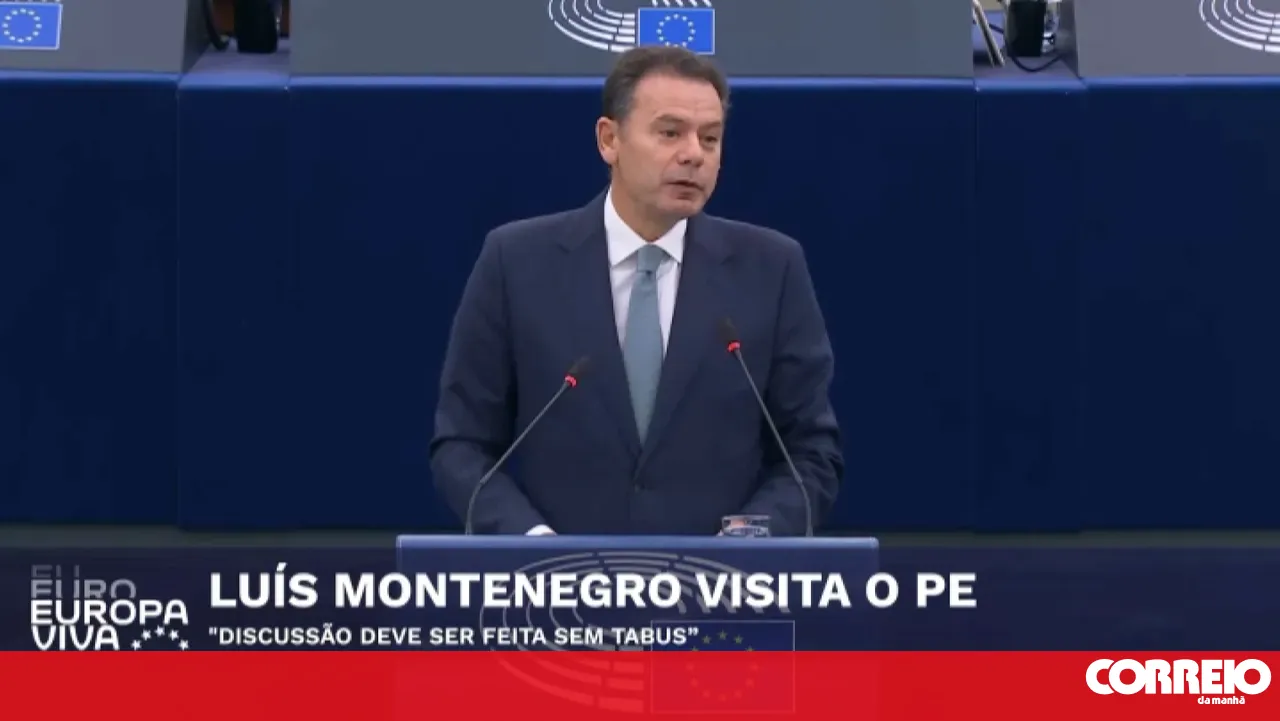
Portuguese Prime Minister, Luís Montenegro, argued in Strasbourg for maintaining cohesion and agricultural funds, confronted the 'frugal' countries and called for new sources of financing.
The European Court of Auditors has flagged a potential instance of fraud related to the Portugal 2020 funding programme.
Regarding the RRP, the court did not detect any failures in meeting the targets and milestones for the amounts received by Portugal.
The Portuguese Prime Minister heads to Strasbourg with the goal of avoiding further cuts to European cohesion and agriculture funds. Costa, Ursula, and Southern countries are allies in a pressured Europe.
Portugal faces the possibility of a reduction in European Union funding allocations beginning in the 2028 budget cycle.

Portugal faces the possibility of a reduction in European Union funding allocations beginning in the 2028 budget cycle.

It is possible to “create the conditions to mitigate risks” of a potential loss of funds and continue to develop Madeira, considers Raffaele Fitto.

Portugal had an extraordinary opportunity and a very demanding deadline. This Government chose to reprogram what was necessary, accelerate what was behind schedule, and concentrate efforts on execution.

On August 31, the execution period of the Recovery and Resilience Plan (RRP) formally ended, concluding an extraordinary investment and reform programme created by the European Union (EU) to respond to the greatest economic crisis since the Second World War, following the Covid-19 pandemic. Five years later, the evaluation finally begins...

An analysis of the seven revisions made to the European recovery fund's implementation strategy.
The time limit for Portugal to implement the Recovery and Resilience Plan is coming to an end.

The government official states that Portugal needs to adapt to a future with reduced financial support from the European Union.

Portugal 2030 reached a 20.8% execution rate by the end of July, corresponding to 4.7 billion euros in funding, according to the program's latest monthly bulletin.
Following the fulfillment of commitments made to the European Commission, the total amount received by Portugal has reached 17.23 billion euros. Only the 10th and final payment request remains to be submitted.
The Mission Structure for Social Communication (#PortugalMediaLab) released this Friday the official list of national newspapers eligible for advertising projects financed by European funds. The mandatory nature of this publication in the press was reintroduced in 2024, with the Government having set the eligibility criteria and tables in June of this year.

The new PRR disbursement is expected to raise the funds received from the plan to €17.2 billion. There are 96 targets left to meet by August 31, but some works will continue after the deadline.

Portugal’s secretary of state for planning and regional development has said “the country cannot accept” a reduction in funding for cohesion and agriculture that exceeds the European Union average in The post Portugal “cannot accept EU cuts in cohesion, farming funds” – government appeared first on Portugal Resident.
